The Ultimate Care Guide for Your Dew Drop Necklace
Learn expert cleaning and storage tips to keep your dew drop necklace sparkling. Discover safe methods for glass, crystal, and metal teardrop pendants.

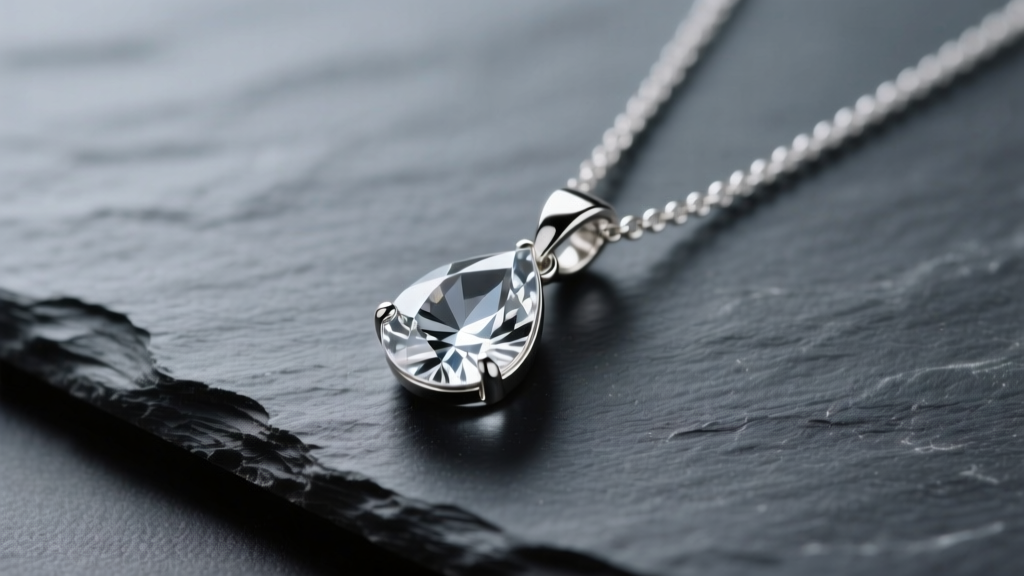
The dew drop necklace is a masterclass in minimalist elegance, capturing the fleeting beauty of morning moisture in a permanent, wearable form. However, the very design that makes the teardrop silhouette so captivating—its delicate, tapering apex and light-refracting surface—also makes it uniquely vulnerable to damage, cloudiness, and structural stress. Whether your pendant is crafted from borosilicate glass, natural rock crystal, or cast resin, maintaining its optical clarity and structural integrity requires a highly specific approach to jewelry care.
In this comprehensive guide, we break down the exact chemical and physical protocols required to clean, store, and maintain your dew drop necklace, ensuring it remains as luminous as the day you acquired it.
The Anatomy of a Dew Drop Pendant: Why Material Dictates Care
Before applying any cleaning solution, you must identify the exact material of your dew drop pendant. The teardrop shape inherently features an acute angle at its bottom point (the apex). In materials with a lower Mohs hardness scale rating, this apex is a primary failure point for chipping and micro-fractures.
- Borosilicate Glass (Mohs 5.5 - 6.0): Highly resistant to thermal shock but susceptible to surface scratching from abrasive polishing compounds.
- Natural Rock Crystal / Quartz (Mohs 7.0): Durable and scratch-resistant, but often contains natural inclusions that can expand and cause internal fracturing if exposed to sudden temperature changes.
- Jewelry Resin / Polymer (Mohs 2.0 - 3.0): Extremely lightweight and shatter-resistant, but highly porous. Resin absorbs skin oils and reacts poorly to alcohol-based solvents, which will permanently cloud the surface.
Furthermore, the chain suspending the pendant—typically 925 sterling silver or 18k gold vermeil—requires entirely different chemical care to prevent the removal of delicate plating or the acceleration of silver sulfide tarnish.
Step-by-Step Cleaning Protocols by Material
Forget generic jewelry dips; they are often too harsh for the nuanced materials used in modern dew drop necklaces. Follow these material-specific protocols for optimal light refraction and surface preservation.
Borosilicate Glass and Rock Crystal
The primary enemy of glass and crystal dew drops is calcium carbonate buildup from hard tap water and sebum (skin oil) accumulation. To restore optical clarity without risking the apex:
- Prepare the Solution: Mix 1 part 70% isopropyl alcohol with 3 parts distilled water in a shallow glass bowl. Never use tap water, as dissolved minerals will leave microscopic water spots that dull the 'dew' illusion.
- Targeted Agitation: Dip a soft-bristled, baby-hair makeup brush into the solution. Gently sweep the brush around the bail (the loop connecting the pendant to the chain) and the setting prongs, where dust and lotion accumulate.
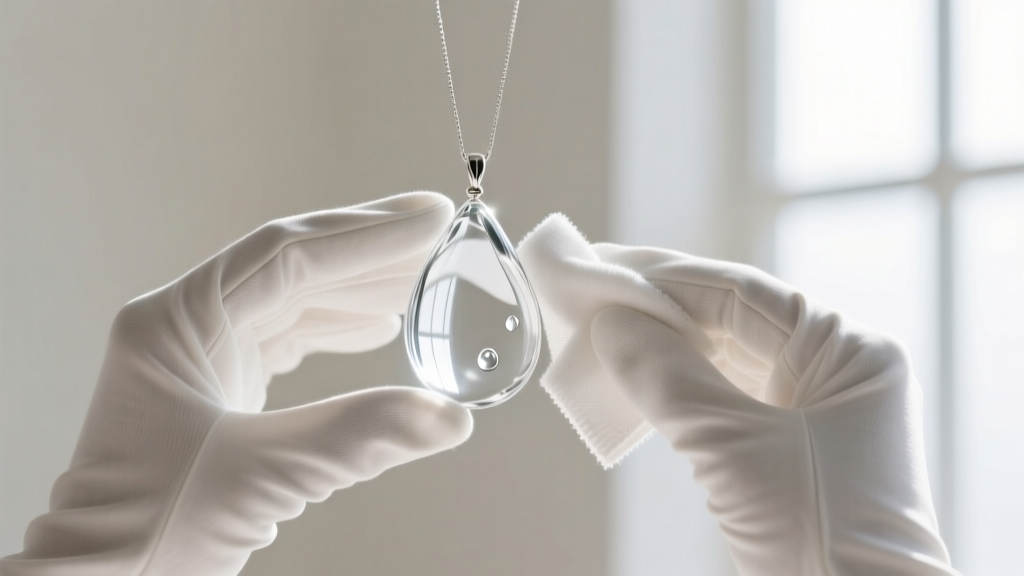
- The Apex Wipe: Do not scrub the bottom point of the teardrop in a circular motion. Instead, pinch a lint-free microfiber cloth and pull it gently upward from the apex to the rounded top, supporting the point with your index finger to prevent lateral stress.
- Drying: Allow the pendant to air dry on a clean paper towel. The alcohol will evaporate rapidly, leaving a streak-free finish.
Resin and Polymer Teardrops
Resin dew drop necklaces require a much gentler touch. Alcohol and ammonia will cause a chemical reaction that results in irreversible 'crazing' (a network of fine surface cracks).
Expert Tip: For resin pendants, use only a single drop of pH-neutral dish soap (like Dawn) diluted in lukewarm distilled water. Wipe with a damp cotton pad and immediately pat dry. Never let resin air-dry, as water spots will permanently etch into the soft polymer surface.
Sterling Silver and Gold Vermeil Chains
The chain of your dew drop necklace requires separate attention. According to The Silver Institute, sterling silver tarnishes when it reacts with hydrogen sulfide in the air, forming silver sulfide. To clean the chain without damaging the pendant:
- Unclasp the necklace and remove the pendant if the bail allows.
- Use a jeweler's polishing cloth impregnated with micro-abrasives and anti-tarnish agents.
- Pull the chain through the cloth using a 'shoeshine' motion. Never use liquid silver dips, as they can strip the rhodium plating often used on high-end dew drop settings and will leave a chemical residue that is nearly impossible to rinse out of tiny cable links.
The Ultrasonic Cleaner Trap: A Warning for Teardrop Shapes
While ultrasonic cleaners are a staple in professional jewelry workshops, they are notoriously dangerous for dew drop necklaces. These machines operate by generating high-frequency sound waves (typically 40kHz) in a liquid bath, creating microscopic vacuum bubbles that violently collapse against the jewelry—a process known as cavitation.
When these cavitation bubbles collapse near the sharp, acute apex of a glass or crystal dew drop, the localized shockwaves can easily exceed the material's tensile strength. This results in micro-chipping at the tip or, in the case of quartz with natural internal inclusions, catastrophic internal shattering. Furthermore, the intense vibrations can loosen the adhesive or tension settings holding the dew drop in its metal bezel, causing the pendant to drop out of its setting entirely.
Strategic Storage to Protect the Apex
How you store your dew drop necklace is just as critical as how you clean it. The teardrop shape is notoriously difficult to store because the pointed apex can easily scratch adjacent gemstones or snap if pressure is applied to the side of the pendant.
| Storage Method | Pros | Cons | Best For |
|---|---|---|---|
| Individual Flannel Pouch | Prevents silver tarnish; protects apex from impact. | Chain can tangle if not laid flat before closing. | Daily wearers; travel. |
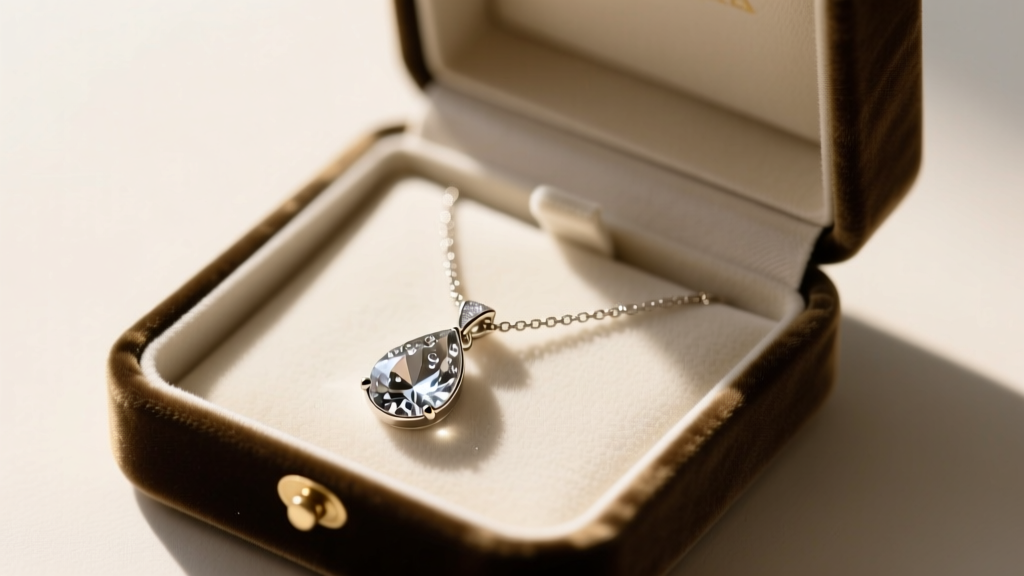
| Compartmentalized Velvet Box | Keeps pendant isolated; visually appealing. | Exposes silver chain to air, accelerating oxidation. | Long-term display; dressy occasions. |
| Hanging Jewelry Organizer | Prevents chain tangling completely. | Pendant swings and can strike walls or other pieces. | Necklaces with heavy, solid metal dew drops. |
| Anti-Tarnish Ziplock Bag | Cheap; highly effective at blocking sulfur gases. | Condensation can occur if sealed in humid environments. | Long-term storage; seasonal rotation. |
For optimal preservation, we recommend the 'Flat-Roll' method. Lay the chain in a serpentine pattern on a piece of anti-tarnish tissue paper, place the dew drop pendant in the center, and roll the tissue into a loose cylinder before placing it in a drawer. This immobilizes the apex and prevents the chain from knotting.
Routine Maintenance and Troubleshooting Guide
Even with meticulous care, environmental factors will eventually impact your necklace. Here is how to troubleshoot the most common issues encountered with dew drop jewelry, backed by gemological best practices outlined by the Gemological Institute of America (GIA).
Troubleshooting: Persistent Cloudiness on Glass
If your glass dew drop looks milky even after an alcohol wipe, it likely has hard water etching or a buildup of aerosolized cosmetics (like hairspray). The Fix: Soak the glass pendant (avoiding the metal bail) in a 50/50 mixture of distilled white vinegar and distilled water for exactly five minutes. The mild acetic acid will dissolve the calcium deposits. Rinse immediately with distilled water and dry with a microfiber cloth. Do not exceed five minutes, as prolonged acid exposure can degrade the metal setting.
Troubleshooting: A Loose Bail or Setting
The constant pendulum motion of a teardrop necklace puts repetitive stress on the bail (the loop). If you notice the pendant sitting at an angle, the jump ring connecting it to the chain may have warped open. The Fix: Do not attempt to squeeze the jump ring closed with standard pliers, as this will crush the delicate metal and scratch the glass. Use two pairs of flat-nose, nylon-jawed pliers to gently twist the jump ring ends back into alignment, ensuring the seam is perfectly flush.
Your Maintenance Schedule
- After Every Wear: Wipe the pendant with a dry, clean microfiber cloth to remove acidic skin oils and perfumes before storing.
- Monthly: Perform the distilled water and mild soap cleaning protocol, checking the bail and jump ring for signs of metal fatigue or loosening.
- Bi-Annually: Polish the sterling silver or gold vermeil chain with a treated jeweler's cloth to remove early-stage silver sulfide tarnish.
By respecting the unique geometry and material science of your dew drop necklace, you ensure that its light-catching brilliance remains uncompromised for years to come. Treat the apex with care, avoid harsh chemical dips, and your pendant will continue to mimic the pristine beauty of morning dew.


