2026 Style Guide: The Diamond Choker Necklace Gold Trend
Explore the 2026 diamond choker necklace gold trend. Discover expert sizing, karat comparisons, diamond grades, and styling frameworks for chokers.

The 2026 Evolution of the Gold Diamond Choker
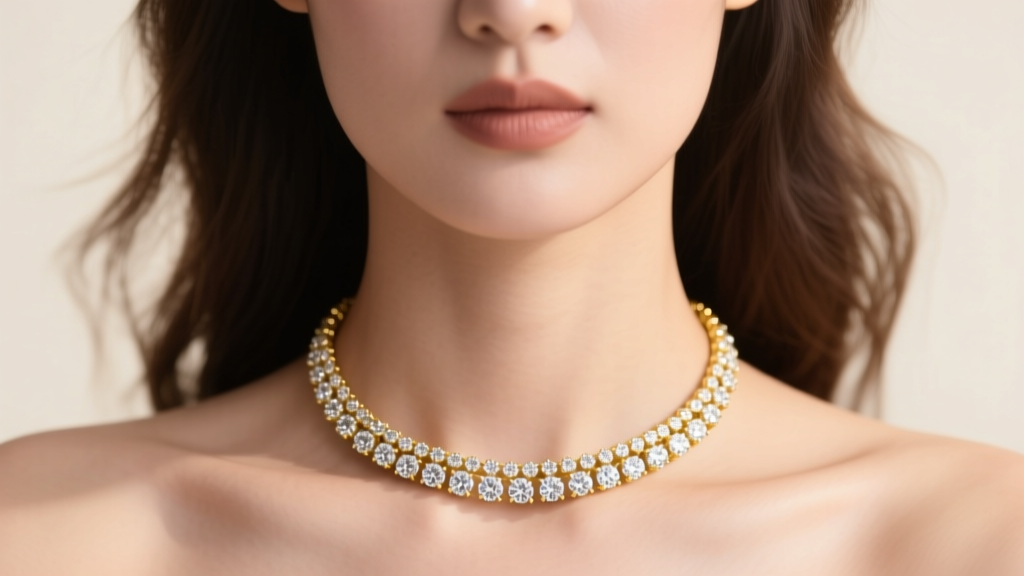
The diamond choker necklace gold aesthetic has undergone a radical transformation as we navigate 2026. Moving away from the ultra-delicate, barely-there chains that dominated the early 2020s, today's collectors and stylists are gravitating toward structured, architectural collars and substantial tennis chokers. This shift represents a broader industry pivot toward 'statement minimalism'—pieces that are visually commanding yet retain clean, unembellished lines. According to Vogue's recent jewelry trend analysis, the modern choker is no longer just a nostalgic 90s callback; it is a foundational element of contemporary fine jewelry wardrobes, characterized by mixed diamond cuts like alternating baguette and round brilliants set in rigid gold frameworks.
Material Specifications: Karats, Alloys, and Melee Grades
When investing in a gold diamond choker, understanding the metallurgy and gemology is non-negotiable. The constant friction between a choker and the collarbone demands specific alloy compositions to ensure longevity.
18k Gold (75% pure gold): Offers a rich, buttery yellow hue but is inherently softer. For a choker, 18k gold requires a thicker wire gauge (minimum 1.8mm) or a reinforced internal armature to prevent warping from daily neck movement and tension.
14k Gold (58.3% pure gold): The superior choice for tension-heavy pieces. The higher presence of copper and zinc in 14k alloys provides the tensile strength necessary to secure micro-prongs over years of wear. Furthermore, individuals with higher skin acidity may find that the copper content in 14k rose gold causes slight tarnishing on the skin-facing side of the clasp over time. Opting for a rhodium-plated interior or sticking to 14k white gold mitigates this issue.
Regarding the diamonds, chokers rely heavily on 'melee' stones (diamonds weighing under 0.15 carats each). As noted by the Gemological Institute of America (GIA), melee diamonds are often sold in bulk parcels, making individual grading difficult. However, for a high-end choker, you must demand stones in the VS2-SI1 clarity range and G-H color. Lower grades (I1 or J-K) will appear cloudy or yellowish when set densely in a gold channel or pave setting, destroying the piece's light return.
| Gold Alloy | Purity | Durability | Best Choker Style |
|---|---|---|---|
| 18k Yellow | 75% | Moderate | Fluid tennis chokers, occasional wear |
| 14k White | 58.3% | High | Architectural collars, daily wear |
| 14k Rose | 58.3% | High | Mixed-metal layering, vintage motifs |
Sizing Mechanics and Clasp Engineering
A choker's fit is its most critical attribute; a miscalculation of even half an inch transforms a sleek silhouette into an uncomfortable restraint. The standard choker length is 14 to 15 inches, but this is not a universal metric. To find your exact specification, measure the circumference of your lower neck and add exactly 1.25 inches. This allows for natural swelling and breathing room without the necklace sliding down to the collarbone.
Consider the seasonal variance in your neck circumference; heat and humidity can cause minor fluid retention, making a 14-inch choker feel restrictive in August compared to January. Some bespoke jewelers now offer micro-adjustable extension chains (adding 0.5 inches) integrated seamlessly into the box clasp design to accommodate these physiological shifts.
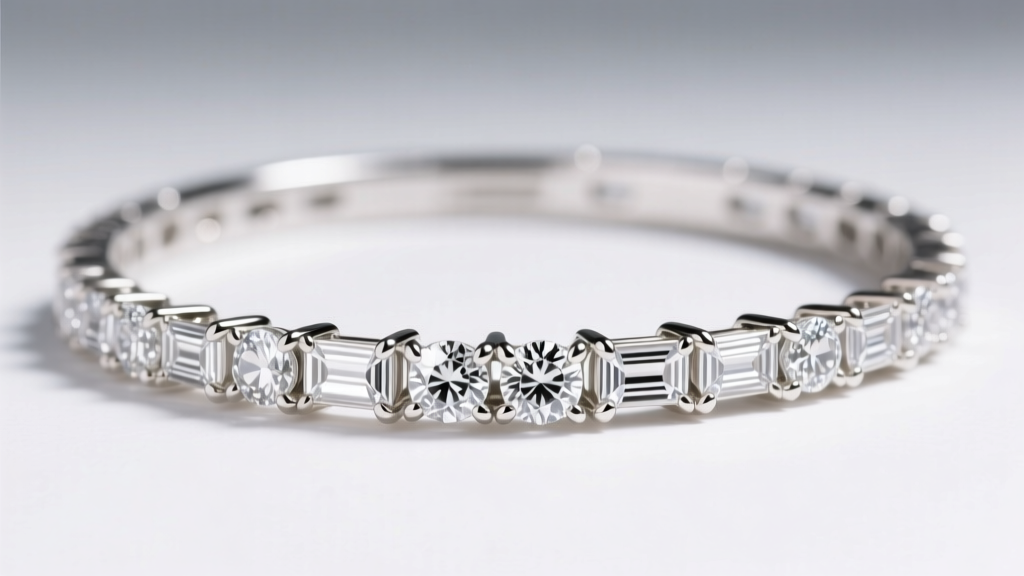
For pieces exceeding 3.0 Total Carat Weight (TCW), the clasp engineering must be robust. Avoid standard lobster clasps, which can snag on hair and fail under the weight of a diamond collar. Instead, insist on a hidden tongue box clasp equipped with dual figure-8 safety catches. These safeties are laser-welded to the clasp housing and provide a secondary mechanical lock, ensuring that if the primary tongue dislodges, the necklace remains secured to your neck.
2026 Styling Frameworks: Necklines and Layering
Styling a diamond choker necklace gold piece requires an understanding of geometric contrast. The rigid horizontal line of a choker interacts dynamically with different garment necklines.
- Sweetheart and V-Necklines: This is the optimal pairing. The choker sits flush against the upper neck, while the V-shape of the garment draws the eye downward, elongating the torso and allowing the diamonds to act as a brilliant focal point without competing with fabric.
- Crew Necks and Turtlenecks: In 2026, wearing a gold diamond choker over a tight black turtleneck is a masterclass in high-low styling. The dark, matte fabric acts as a light-absorbing backdrop, maximizing the scintillation of the diamonds. Ensure the choker sits at least half an inch above the fabric line to prevent abrasion.
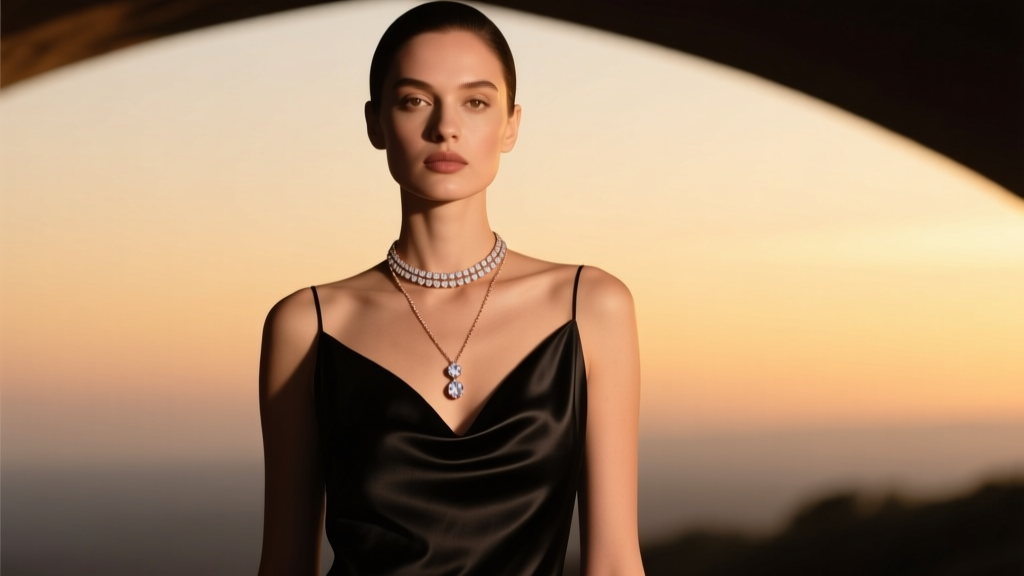
- Layering: The 'stacked choker' trend has evolved. Rather than wearing multiple identical chains, pair a 2mm 14k white gold diamond choker (14 inches) with a 16-inch solitaire pendant on a 1mm cable chain. This creates a deliberate, asymmetrical cascade that feels intentional rather than cluttered.
Investment Value and Market Pricing
The pricing landscape for the diamond choker necklace gold market has bifurcated in 2026 due to the maturation of the lab-grown diamond sector.
Natural Diamond Chokers: A 14k gold tennis choker featuring 4.0 TCW of natural, ethically sourced VS-clarity melee diamonds typically commands between $7,500 and $12,000. These pieces retain strong secondary market value, particularly when accompanied by proper gemological documentation and brand provenance.
Lab-Grown Diamond Chokers: Identical in chemical composition and optical performance, a lab-grown equivalent (4.0 TCW, 18k gold) now retails between $2,800 and $4,500. While they offer incredible visual impact and allow buyers to afford larger carat weights and wider millimeter spreads, their resale value remains a fraction of the retail price.
When purchasing, always verify the gold weight (in grams) and the exact TCW. Many mass-market jewelers obscure these metrics, using terms like 'diamond accent' to mask the use of sub-0.5mm chips that lack brilliance. Demand full transparency on the diamond millimeter spread and the precise gold alloy weight to ensure you are paying for true fine jewelry, not fashion costume pieces.


