The Toussaint Necklace Explained: History & Styling Guide
Discover the history of the Toussaint necklace, from Cartier's 1931 archives to Ocean's 8. Learn how to style cascade and bib necklaces today.

The Legend of the Toussaint Necklace: A Beginner's Guide
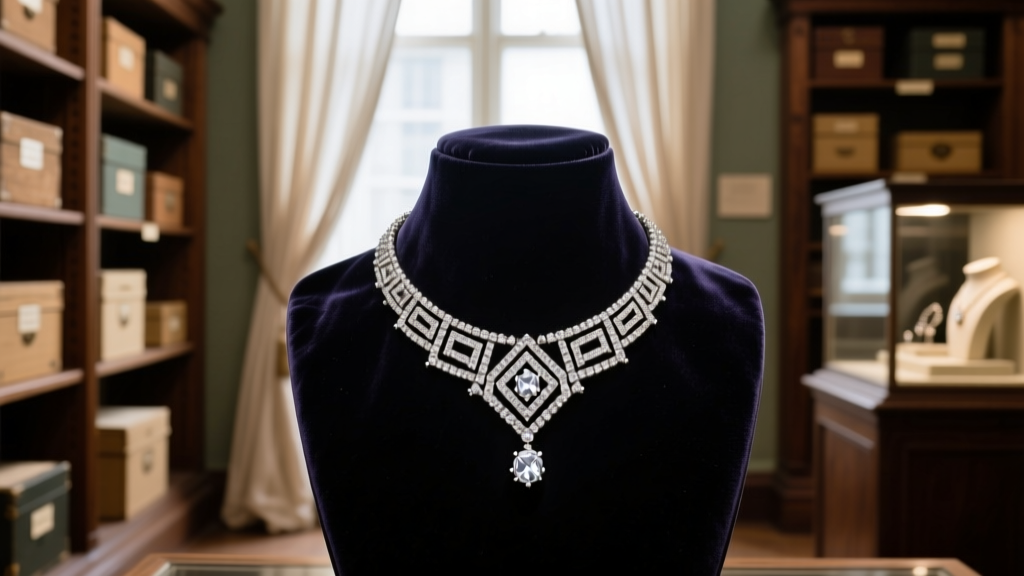
When most people hear about the Toussaint necklace, they immediately think of the heist film Ocean's 8, where a fictionalized version of the jewel served as the ultimate target. However, the real history of the Toussaint necklace is far more fascinating than its Hollywood counterpart. For jewelry enthusiasts and beginners alike, understanding this piece offers a masterclass in high jewelry design, historical opulence, and the mechanics of statement necklaces.
The original Toussaint necklace was commissioned in 1931 by the Maharaja of Nawanagar, Digvijaysinhji Ranjitsinhji Jadeja. It was designed by Jacques Cartier and named in honor of Jeanne Toussaint, Cartier’s legendary Director of Fine Jewelry, famously known as "La Panthère." According to Cartier's official heritage archives, the original piece was not the all-white diamond cascade seen in the movie, but rather a breathtaking bib necklace featuring a vivid cascade of colored diamonds—pinks, blues, and greens—anchored by a massive antique cushion-cut diamond.
Anatomy of a Masterpiece: Engineering the Cascade
To truly appreciate the Toussaint necklace, one must look past the gemstones and examine the structural engineering. A cascade or "bib" necklace of this magnitude is not simply a string of stones; it is a complex, articulated piece of wearable architecture.
The Central Stone and Articulation
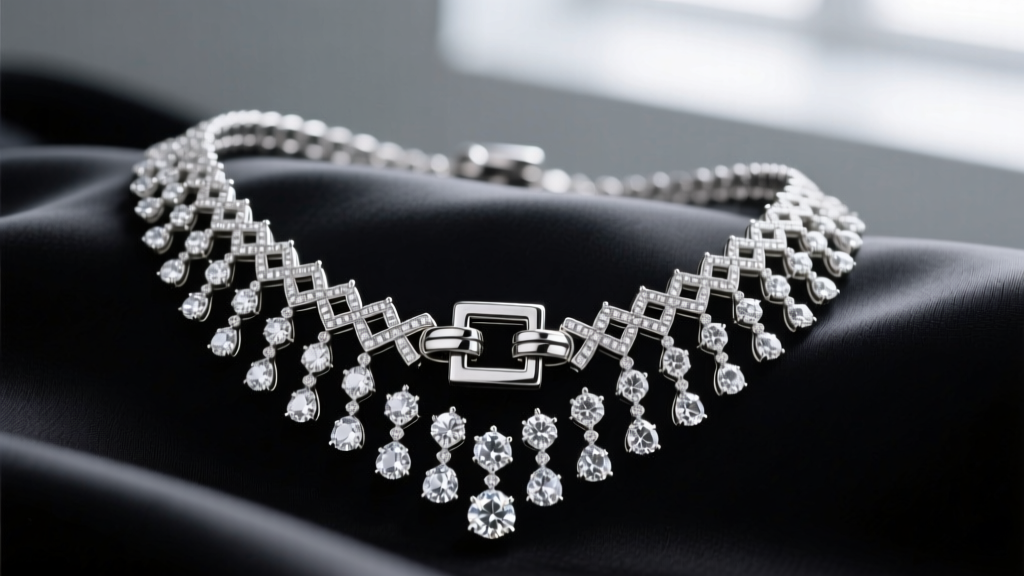
The historical centerpiece of the Nawanagar commission is widely believed to be the "Queen of Holland," a legendary 136.25-carat antique cushion-cut diamond. As noted by gemological historians and resources like the Gemological Institute of America (GIA), setting a stone of this size requires a reinforced platinum bezel or heavy prong setting to prevent torque damage. The surrounding cascade links are articulated with microscopic jump rings, allowing the platinum lattice to drape over the collarbone like heavy silk rather than sitting rigidly like a metal collar.
The Clasp and Weight Distribution
High-carat cascade necklaces can easily exceed 150 to 200 grams. A standard lobster clasp would snap under this dynamic weight. Authentic Toussaint-style replicas and high-end statement pieces utilize a double-barrel box clasp with a figure-8 safety catch. This mechanism distributes the tensile stress across a wider surface area and features a secondary wire latch that prevents total loss if the primary internal tongue loosens over time.
Toussaint-Inspired Styles: A Comparative Guide
While you may not be commissioning a $100 million Cartier original, the "Toussaint silhouette" has influenced several accessible necklace categories. Here is how to differentiate the styles inspired by this legendary piece:
| Style Type | Defining Characteristics | Weight & Drape | Best Neckline Pairing |
|---|---|---|---|
| Bib Necklace | Multiple strands or a solid mesh covering the upper chest like a bib. | Heavy; sits flat against the sternum. | Strapless or Sweetheart |
| Cascade Necklace | Graduated drops or articulated links falling from a central collar. | Medium-Heavy; moves fluidly with the body. | Deep V-Neck or Plunge |
| Festoon Necklace | Multiple draped garlands or swags suspended between fixed points. | Medium; creates a draped, vintage silhouette. | Scoop Neck or Boatneck |
| Collar Necklace | Rigid or semi-rigid bands sitting tightly at the base of the neck. | Light to Medium; structural and upright. | Off-the-Shoulder or Halter |
How to Style a Statement Cascade Necklace
Styling a piece with the visual gravity of the Toussaint necklace requires an understanding of visual proportion and the "Rule of Thirds." The goal is to let the jewelry act as the focal point without overwhelming your frame.
- The V-Neck Synergy: A deep V-neck mirrors the triangular silhouette of a cascade necklace, creating a continuous, elongating line down the torso. Avoid crew necks, which will visually clash with the bottom edge of the pendant drops.
- Balance the Metals: If your cascade necklace is set in white gold or platinum (or rhodium-plated silver for budget-friendly alternatives), keep your earrings minimal. Diamond studs or small hoops prevent the "costume" effect that occurs when too many high-impact pieces compete for attention.
- Fabric Matters: Heavy, articulated necklaces can snag on loose weaves, lace, or chunky knits. Always pair statement bibs and cascades with high-sheen, tightly woven fabrics like silk crepe, satin, or fine merino wool to allow the metal to glide smoothly.

Buying Guide: Recreating the Look Today
If you want to capture the essence of the Toussaint necklace without the auction-house price tag, modern materials offer incredible alternatives. When shopping for a Toussaint-inspired cascade, prioritize the setting and the stones.
Stone Alternatives
For the ultimate brilliance, look for Moissanite or high-grade Cubic Zirconia (5A CZ). Moissanite offers a higher refractive index (2.65) than diamond (2.42), giving it an intense "fire" that mimics the colored diamond cascade of the 1931 original. If you prefer colored stones, lab-grown sapphires and rubies provide the exact hue of the historical Nawanagar piece at a fraction of the cost of mined gems.
Metal Bases
Avoid thin brass or copper bases, which will bend under the weight of a multi-strand cascade. Look for 925 Sterling Silver or 18k Gold Vermeil (a thick layer of 18k gold over sterling silver). Vermeil provides the rich, warm tone of vintage Cartier gold while maintaining the structural rigidity required for heavy statement pieces.
Caring for Heavy Statement Jewelry
Statement necklaces require specific maintenance to preserve their articulation and stone security.
- Never Hang Them: Hanging a heavy cascade necklace on a standard jewelry tree will stretch the jump rings and warp the metal lattice over time. Always store them flat in a padded, velvet-lined tray.
- Avoid Ultrasonic Cleaners: While ultrasonic cleaners are great for solid diamond solitaires, the high-frequency vibrations can loosen the micro-pave settings often used in the intricate links of a bib necklace. Instead, use a soft-bristled baby toothbrush with warm water and a drop of mild dish soap, gently brushing the back of the settings where skin oils accumulate.
- Check the Clasp Annually: The internal tongue of a box clasp can compress over time. Have a jeweler check the tension and tighten the figure-8 safety wires once a year to prevent accidental loss.
The Toussaint necklace remains a pinnacle of jewelry design, proving that true luxury lies not just in the carat weight of the stones, but in the masterful engineering that allows them to be worn. Whether you are investing in a lab-grown diamond cascade or styling a vintage-inspired crystal bib, understanding the anatomy of these pieces ensures you wear them with the confidence they demand.


