Style Guide: Wearing a Diamond Heart Necklace in 2026
Discover how to style a diamond heart necklace in 2026. Explore layering techniques, chain lengths, and diamond grading tips for this timeless trend.

The 2026 Shift: From Maximalist to Micro-Hearts
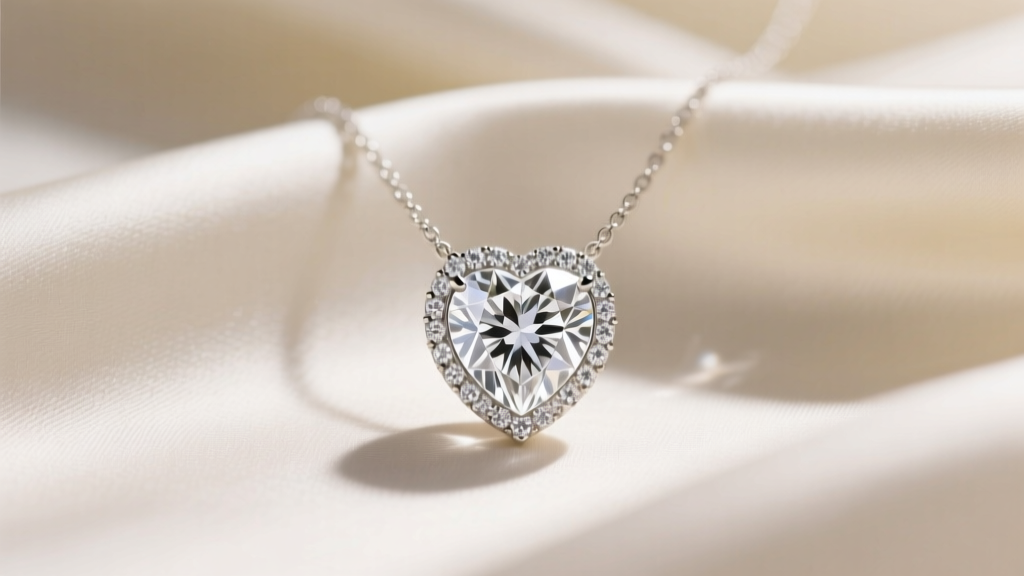
The heart motif has long been a staple in fine jewelry, but 2026 marks a definitive pivot in how we wear it. Moving away from the heavy, pave-encrusted, and overly sentimental designs of the early 2010s, this year's aesthetic champions the 'micro-heart' and the bezel-set solitaire. Wearing a diamond heart necklace is no longer reserved for Valentine's Day or anniversaries; it has become a foundational element of the curated, everyday luxury stack. The modern approach favors clean lines, asymmetric layering, and subtle brilliance that catches the light without overwhelming the neckline.
According to trend forecasters and luxury retail data, searches for minimalist heart pendants have surged, driven by a desire for pieces that bridge the gap between vintage nostalgia and contemporary quiet luxury. Whether you are investing in a family heirloom or purchasing your first fine jewelry staple, understanding the nuances of this specific silhouette is crucial for both style and longevity.
Anatomy of a Diamond Heart: Grading and Proportions
Heart-shaped diamonds are classified as 'modified brilliant cuts.' Because of their complex geometry, they require exceptional cutting precision to avoid the dreaded 'bow-tie' effect—a dark shadow across the center of the stone caused by light blockage. When selecting a diamond heart necklace, you must look beyond the standard 4Cs and focus heavily on proportions and symmetry.
The Length-to-Width Ratio
The ideal length-to-width (L/W) ratio for a classic heart diamond sits between 0.90 and 1.10. A ratio below 0.90 results in a wide, squat heart, while anything above 1.10 looks elongated and loses the iconic silhouette. For pendants, a ratio of exactly 1.00 provides the most balanced look when resting against the collarbone.
Vulnerability Points: The Cleft and The Point
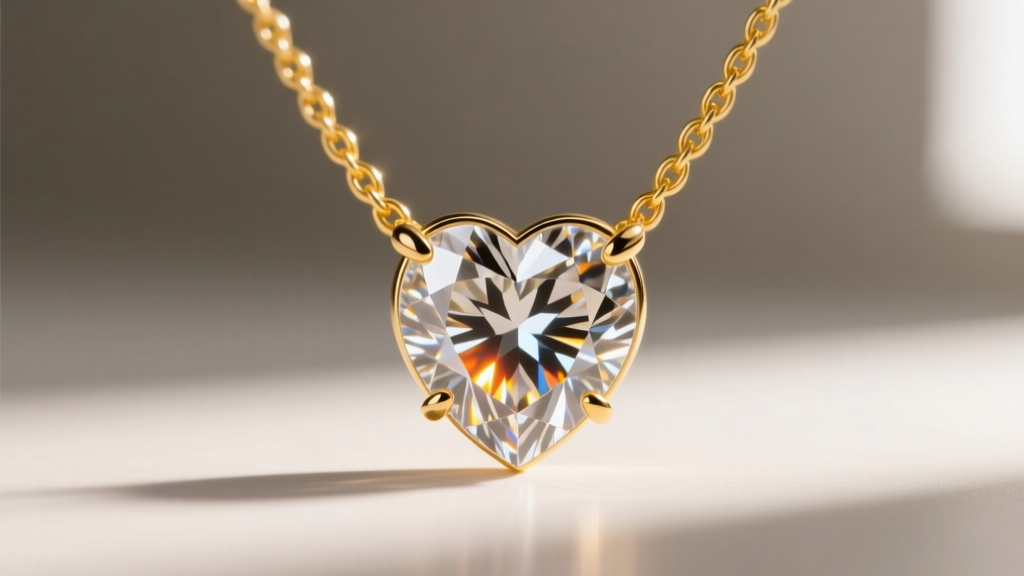
Structurally, the heart shape has two major weak points: the cleft (the V-shaped dip at the top) and the point (the bottom tip). The Gemological Institute of America (GIA) notes that sharp corners on fancy-shaped diamonds are highly susceptible to chipping if struck against a hard surface. Therefore, a high-quality heart pendant must feature a protective V-prong at the bottom point and either a reinforced bezel or double-prongs at the top cleft. Never purchase a heart pendant with standard round prongs at the tip; it is a structural failure waiting to happen.
Chain Selection and Length Matrix
The chain you pair with your pendant dictates the entire vibe of the necklace. A delicate heart can easily be overpowered by a thick chain, while a heavy chain can snap if paired with a fragile link. Below is a structural guide for pairing chains with heart pendants ranging from 0.15ct to 0.50ct.
| Chain Type | Ideal Thickness | Best Length | Style Profile | Avg. Price (14k Gold) |
|---|---|---|---|---|
| Cable Chain | 0.9mm - 1.1mm | 16 inches | Classic, delicate, everyday | $120 - $180 |
| Box Chain | 1.0mm - 1.2mm | 18 inches | Modern, geometric, durable | $150 - $220 |
| Snake Chain | 1.2mm - 1.5mm | 15 inches (Choker) | Sleek, liquid-metal, vintage | $180 - $250 |
| Paperclip Chain | 1.5mm (hollow) | 17 inches | Trendy, textured, layered | $200 - $300 |
Pro Tip: Always ensure the chain's end loop (the bail) is large enough to slide over the clasp if you plan to remove the pendant. Heart pendants often have fixed, soldered bails, meaning you must thread the chain through the bail before clasping it around your neck.
Mastering the Layered Stack
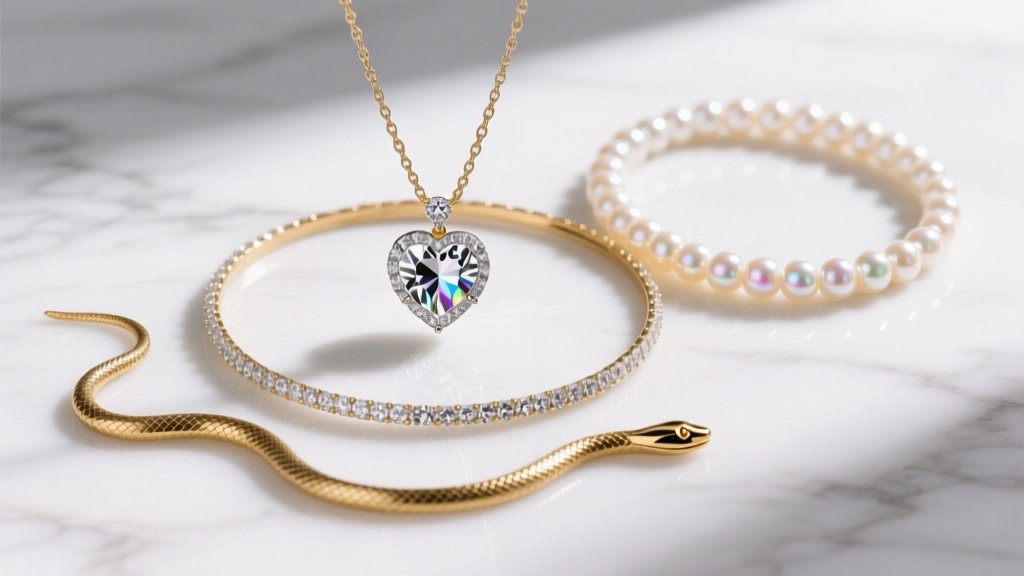
In 2026, wearing a diamond heart necklace in isolation is still elegant, but the true style currency lies in the asymmetric stack. The goal is to create depth without tangling. Here is a foolproof three-piece framework that works for both crewneck tees and deep V-neck blouses.
The 3-Piece Asymmetric Stack
- Layer 1 (14 inches): A 2mm freshwater pearl choker or a solid 14k gold herringbone chain. This sits tight against the base of the throat and anchors the stack.
- Layer 2 (16 inches): Your primary diamond heart necklace. A 0.25ct to 0.40ct heart pendant on a 1.0mm box chain sits perfectly in the hollow of the collarbone.
- Layer 3 (18.5 inches): A heavier, textured chain—such as a 2.5mm curb or paperclip chain—featuring a small, non-diamond accent charm (like a solid gold crescent moon or a tiny emerald bead) to offset the heart's symmetry.
'The secret to a flawless necklace stack is maintaining a strict 1.5 to 2-inch gap between each chain. Any closer, and the clasps will tangle and the pendants will scratch one another.' — Master Jeweler & Stylist
Ethical Sourcing and Market Pricing
The diamond market has bifurcated sharply between natural and lab-grown stones, giving consumers more agency over their budgets and ethical preferences. When shopping for a diamond heart necklace, understanding the current pricing landscape is essential to avoid overpaying.
For a 0.30-carat heart diamond with VS2 clarity and G color (the sweet spot for eye-clean brilliance and near-colorless facing), the pricing breakdown in 2026 looks like this:
- Lab-Grown Diamond (14k Gold Setting): $450 - $650
- Natural Mined Diamond (14k Gold Setting): $1,200 - $1,600
If you opt for a natural stone, insist on a Kimberley Process certification and look for brands that adhere to the standards set by the Responsible Jewellery Council (RJC). For lab-grown stones, verify that the foundry uses renewable energy, as the carbon footprint of CVD (Chemical Vapor Deposition) diamond growth can be surprisingly high if powered by coal grids.
Long-Term Care and Prong Maintenance
Because heart-shaped diamonds require specialized prong placement, they demand a stricter maintenance schedule than round brilliants. The V-prong at the bottom tip bears a disproportionate amount of tension. Over time, everyday wear, lotions, and friction from clothing can cause the metal to fatigue or pull away from the stone.
The 6-Month Checkup Rule
Have a professional jeweler inspect the V-prong and the cleft prongs every six months. They will use a loupe to check for 'lifting'—where the metal no longer sits flush against the diamond's girdle.
At-Home Cleaning Protocol
Avoid ultrasonic cleaners if your heart pendant features a 'halo' of micro-pave diamonds surrounding the center stone. The high-frequency vibrations can easily shake loose the tiny melee stones. Instead, use the industry-standard manual method:
- Soak the necklace in a bowl of warm water with three drops of mild, phosphate-free dish soap for 15 minutes.
- Gently agitate the diamond with a clean, extra-soft baby toothbrush, paying special attention to the culet (the bottom tip) where skin oils and makeup accumulate.
- Rinse under lukewarm running water with the drain securely plugged.
- Pat dry with a lint-free microfiber cloth. Never use tissue paper, as the wood fibers can micro-scratch the gold setting.
By treating your diamond heart necklace not just as a romantic token, but as a precision-cut gemological asset, you ensure it remains a brilliant, structurally sound cornerstone of your wardrobe for decades to come.


