Viking Chain Necklace Troubleshooting: Fix Stretching & Tarnish
Learn how to troubleshoot common viking chain necklace issues. Expert fixes for stretching, tarnish, and clasp failures to restore your historic weave.

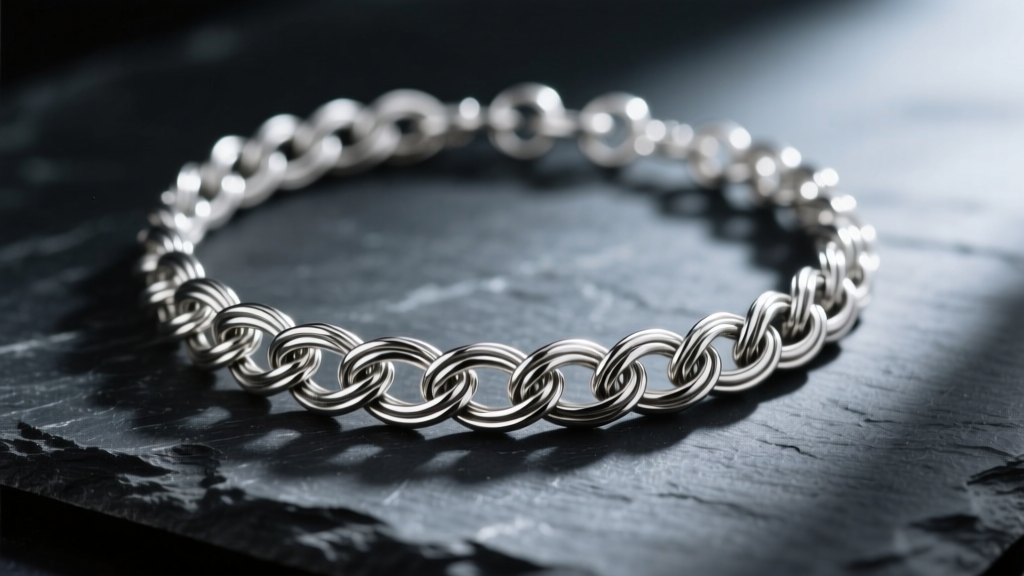
The Anatomy of a Viking Chain Necklace: Why It Fails
The viking chain necklace, historically known as Trichinopoly or Viking knit, is a masterpiece of wire manipulation. Unlike cast or soldered chains, this tubular braid relies entirely on the tension and interlocking friction of continuous wire loops. While visually stunning, this structural reliance on tension makes it uniquely susceptible to specific failure modes. Most modern replicas are woven using 24-gauge or 26-gauge dead-soft sterling silver or copper wire. Because the wire is annealed (softened) to allow for tight weaving, the finished chain lacks the rigid memory of half-hard or work-hardened metals.
As of 2026, the resurgence of historical jewelry techniques has led to a flood of mass-produced, loosely woven viking chains on the market. These lower-quality pieces are highly prone to catastrophic stretching, deep-seated tarnish, and end-cap blowouts. Understanding the metallurgy and mechanics of your chain is the first step in effective troubleshooting.
Troubleshooting Issue #1: Chain Stretching and Distortion
The most common complaint among viking chain necklace owners is sudden elongation. Because the weave acts similarly to a Chinese finger trap, any downward pulling force causes the tubular structure to compress in diameter and lengthen. Once a viking chain stretches, it loses its structural integrity, becoming thin, brittle, and prone to snapping.
The Mandrel and Draw Plate Resizing Technique
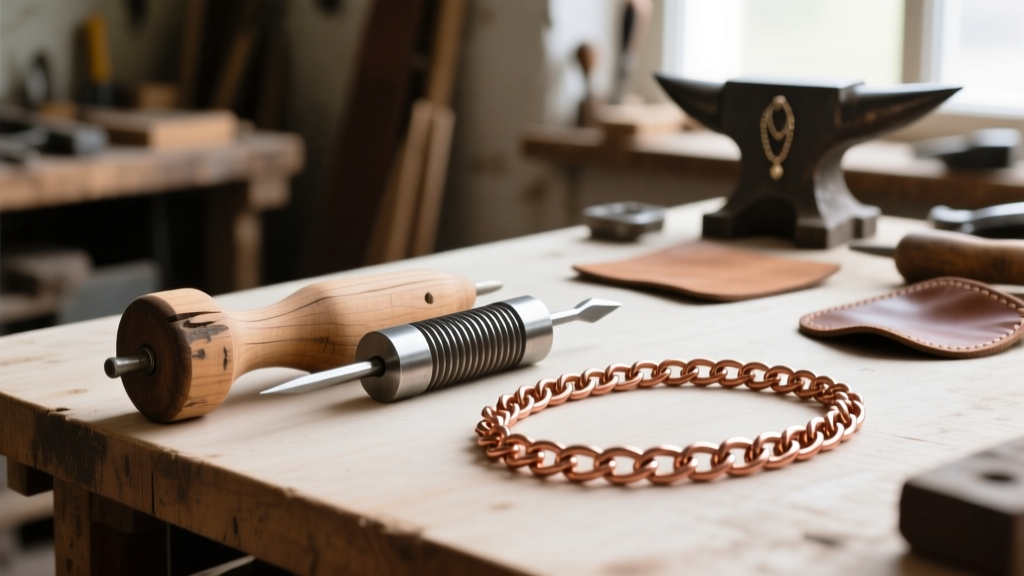
Do not attempt to stretch the chain back into shape by pulling. Instead, you must use compressive force to restore the original gauge. Professional jewelers use two primary methods:
- The Wooden Mandrel Method: For minor stretching, thread the chain onto a smooth, polished wooden or steel mandrel that matches the chain's original inner diameter. Gently roll the mandrel on a flat, hard surface while applying light downward pressure. This compresses the weave radially, forcing the wire loops to stack tightly together again.
- The Steel Draw Plate Method: For severe distortion, a steel draw plate is required. Lubricate the chain with beeswax or a specialized wire-drawing compound. Thread the chain through a hole that is exactly 0.5mm smaller than the chain's current stretched diameter. Pull the chain through using smooth, steady pliers. Warning: Never pull through a hole more than 1mm smaller, or you will shear the wire loops.
Troubleshooting Issue #2: Deep Tarnish in Intricate Weaves
The dense, overlapping wire loops of a viking chain necklace create microscopic crevices that trap dead skin cells, sebum, and environmental sulfur. Standard polishing cloths cannot reach the interior wires, leaving the chain looking dull and gray. Furthermore, using aggressive liquid silver dips (thiourea-based) can cause chemical burn spots on the dead-soft wire, leading to premature breakage.
The Electrochemical Cleaning Bath (Step-by-Step)
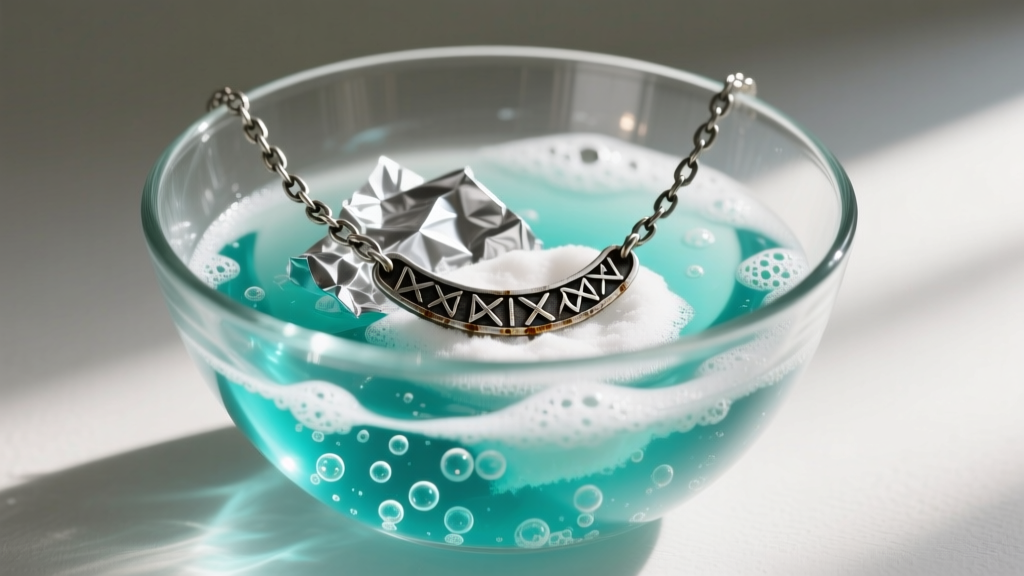
The safest and most effective way to remove deep tarnish from a viking weave without abrasion is an electrochemical reduction bath. This method converts silver sulfide (tarnish) back into elemental silver using a galvanic reaction. According to the The Silver Institute, this is the preferred method for intricate silver pieces.
- Line a glass or ceramic bowl with heavy-duty aluminum foil, shiny side up.
- Place your viking chain necklace directly on the foil. Ensure the silver is touching the aluminum.
- Boil enough water to submerge the chain. Add 1 tablespoon of baking soda and 1 teaspoon of non-iodized salt per cup of water.
- Pour the hot solution over the chain. You will see immediate bubbling as the sulfur transfers from the silver to the aluminum foil.
- Leave for 3 to 5 minutes. Remove with wooden tongs, rinse thoroughly in distilled water, and pat dry with a microfiber cloth.
Cleaning Methods Comparison Chart
| Cleaning Method | Abrasion Risk | Effectiveness on Deep Weaves | Best Use Case |
|---|---|---|---|
| Polishing Cloth | Low | Poor (Surface only) | Weekly maintenance |
| Ultrasonic Cleaner | Medium (Can loosen wire ends) | Excellent | Heavy soil, but avoid if end-caps are glued |
| Chemical Silver Dip | High (Chemical etching) | Good | Emergency cleaning only; requires heavy rinsing |
| Electrochemical Bath | None | Excellent | Deep tarnish removal without wire damage |
Troubleshooting Issue #3: Clasp Slippage and End-Cap Blowouts
A viking chain necklace terminates in cone-shaped end caps that hide the messy, tucked-in wire ends. The structural weak point is the jump ring connecting the end cap to the clasp. If a standard 20-gauge or 22-gauge jump ring is used, the weight of the heavy woven chain will easily pull the ring open, causing the necklace to drop and the end cap to unravel.
Upgrading the Findings
To solve clasp slippage, you must upgrade the jump rings and the clasp type. The Jewelry Making Daily experts recommend using heavy-gauge findings for woven chains:
- Jump Rings: Replace any ring thinner than 18-gauge. For heavy sterling silver viking chains, use 16-gauge or 14-gauge soldered jump rings. Soldered rings have no seam to pull apart.
- Clasp Selection: Avoid lightweight lobster clasps. The bulk of a viking chain requires a heavy-duty toggle clasp or a custom-forged S-hook made from 12-gauge wire. Toggle clasps distribute the weight evenly and are easier to manipulate with one hand.
- End-Cap Security: If your end cap feels loose, do not use jewelry glue. Take it to a jeweler to have the loop laser-welded or soldered with easy silver solder. As noted by the Gemological Institute of America (GIA), proper soldering ensures the structural integrity of silver findings without compromising the adjacent woven wire.
Preventative Maintenance Framework
Troubleshooting is only half the battle; preventing damage ensures your viking chain necklace lasts for decades. Adopt this simple maintenance framework:
The Golden Rule of Viking Knit: Never pull, tug, or hang a viking chain necklace by its clasp. Always store it coiled in a soft pouch to prevent it from catching on other jewelry and stretching.
Remove the necklace before sleeping, swimming, or engaging in physical labor. The dead-soft wire will work-harden and become brittle if subjected to repetitive bending or exposure to chlorine. By understanding the unique physics of the Trichinopoly weave and utilizing the correct compressive and chemical cleaning techniques, you can keep your historical jewelry looking pristine for years to come.


