How to Size and String a Custom Beaded Necklace Men Love
Learn how to size, select stones, and string a durable beaded necklace men love. Step-by-step DIY guide with material specs and knotting techniques.


Men's jewelry has evolved significantly, and by 2026, the demand for bespoke, handcrafted accessories has never been higher. A custom beaded necklace men can wear daily requires more than just sliding stones onto a cheap elastic band. It demands an understanding of proportion, material durability, and structural integrity. Whether you are crafting a piece for yourself or designing a custom gift, building a masculine beaded necklace from scratch allows you to control every variable, from the Mohs hardness of the stones to the tensile strength of the stringing wire. This comprehensive guide will walk you through the exact specifications, sizing mathematics, and professional finishing techniques required to create a high-end, durable beaded necklace men will actually want to wear.
The Anatomy of a Masculine Beaded Necklace
The most common mistake beginners make when designing a beaded necklace men will wear is selecting the wrong bead diameter. While women's jewelry frequently utilizes delicate 4mm or 6mm beads, masculine aesthetics generally call for heavier, more substantial profiles. The sweet spot for men's beaded necklaces is 8mm to 10mm. An 8mm bead offers a versatile, understated look that pairs well with casual t-shirts and button-downs, while a 10mm bead provides a bold, statement-making presence that anchors streetwear or relaxed linen outfits. Beads larger than 12mm are typically reserved for single focal pendants or wrist bracelets, as they can feel overly bulky and heavy around the cervical spine when used for a full necklace strand.
Material selection is equally critical. According to the GIA Gem Encyclopedia, understanding the Mohs scale of hardness is vital for durability. Matte black onyx (Mohs 7) and natural tiger eye (Mohs 7) are excellent choices because they resist scratching from daily wear. Lava rock (Mohs 5-6) offers a rugged, porous texture that is highly popular in contemporary men's fashion, though it requires more careful handling. For a mixed-media approach, integrating sustainably sourced sandalwood or ebony wood beads alongside stone adds a tactile warmth and reduces the overall weight of the piece.
Step 1: Precision Sizing for the Male Neck
Getting the length right is non-negotiable. A necklace that sits too high will feel like a choker and restrict movement, while one that is too long will swing awkwardly and catch on clothing. The industry standard for a men's beaded necklace is 20 inches, which typically rests just below the collarbone. However, neck circumferences vary wildly. To find the perfect length, use a flexible fiberglass measuring tape rather than a rigid ruler or a piece of string, which can stretch and yield inaccurate data.
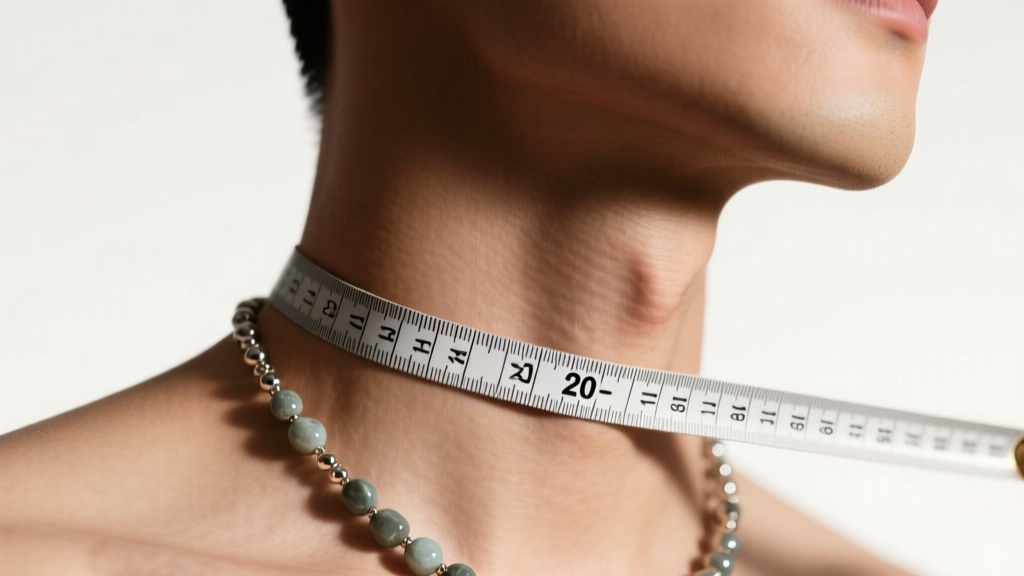
Once you have determined the target length, you must calculate the exact number of beads required. This prevents running out of materials mid-project and ensures symmetrical tension. Below is a reference chart for standard men's necklace lengths based on the two most common bead diameters.
| Target Length | Style Profile | 8mm Bead Count (Approx.) | 10mm Bead Count (Approx.) |
|---|---|---|---|
| 18 Inches | Crew / High Neck | 57 Beads | 45 Beads |
| 20 Inches | Standard Collarbone | 63 Beads | 50 Beads |
| 22 Inches | Long / Matinee | 70 Beads | 56 Beads |
| 24 Inches | Pendant / Chest Drop | 76 Beads | 60 Beads |
Note: These counts assume a bead hole size of 1.0mm to 1.5mm and account for the negligible space taken up by the stringing material. Always purchase 10% more beads than your calculated count to account for breakage or manufacturing defects.
Step 2: Selecting Heavy-Duty Stringing Materials
Never use standard elastic cord for a stone beaded necklace men will wear daily. Elastic degrades rapidly when exposed to sweat, UV light, and the sharp inner edges of drilled gemstones. When the elastic inevitably snaps, you lose your materials and your credibility. Instead, professional jewelers rely on nylon-coated stainless steel beading wire or high-tensile braided micro-cord.
For heavy stone beads like 10mm onyx or tiger eye, a 49-strand, 0.018-inch or 0.024-inch nylon-coated stainless steel wire (such as those produced by the Soft Flex Company) is the gold standard. The 49-strand construction provides a supple, fabric-like drape that prevents the necklace from kinking or holding rigid loops, a common failure mode in cheaper 7-strand wires. If you prefer a more rustic, organic look and are using lighter wood or lava rock beads, a 1.5mm braided nylon micro-cord offers exceptional knot-holding capability and a matte finish that blends seamlessly with natural stones.
Step 3: The Stringing and Finishing Process
With your materials prepped and your beads counted, lay them out on a felt beading mat in your desired pattern. If you are mixing textures—for example, alternating three matte onyx beads with one polished tiger eye bead—map the entire sequence before threading begins.
- Thread the Wire: Cut your 49-strand wire about 4 inches longer than your target necklace length to allow room for finishing. Thread the wire through a crimp bead, then through the loop of your chosen clasp, and pass the wire back through the crimp bead to form a secure loop.
- String the Beads: Slide your beads onto the wire, ensuring the tail end of the wire is being swallowed by the first few beads. This hides the excess wire inside the necklace itself.
- Tension Check: Once all beads are strung, hold the necklace up in a U-shape. The beads should sit flush against one another without gaps, but the wire must not be pulled so tight that the necklace becomes rigid. A lack of flexibility will cause the wire to fatigue and snap over time.
Hiding the Knot Inside a Focal Bead
If you are using braided micro-cord instead of wire, you will need to tie off the ends. The surgeon's knot is the most secure choice for nylon cord. To maintain a clean, uninterrupted aesthetic, design the necklace with a single 12mm or 14mm large-hole focal bead (such as a carved ebony tube or a matte black stainless steel cylinder) positioned at the back of the neck.

Pass both ends of the cord through the focal bead from opposite sides so they meet in the center. Tie a tight surgeon's knot inside the hollow chamber of the bead. Apply a single drop of G-S Hypo Cement—a precision adhesive favored by watchmakers and jewelers—directly onto the knot. Trim the excess cord to a 2mm tail, and push the knot deep into the bead cavity. The result is an invisible closure that maintains the structural integrity of the piece without the need for bulky metal clasps.
Care and Maintenance for Stone and Wood Beads
A high-quality beaded necklace men will cherish requires specific maintenance protocols. Unlike precious metals, natural stones and woods react poorly to harsh chemicals and ultrasonic cleaners. Lava rock, being highly porous, will absorb lotions, colognes, and sweat, which can alter its color and degrade the stringing material from the inside out. Advise the wearer to remove the necklace before swimming in chlorinated pools or applying skincare products.
Pro Tip: To restore the luster of dry sandalwood or ebony beads, gently rub them with a microfiber cloth lightly dampened with food-grade mineral oil once every six months. Avoid olive oil or synthetic lubricants, which can turn rancid and emit an unpleasant odor over time.
For stone beads like tiger eye and onyx, a simple wipe-down with a damp cloth and mild dish soap is sufficient to remove daily grime. By following these exact sizing, stringing, and maintenance protocols, you will create a bespoke, heavy-duty beaded necklace men will view not just as an accessory, but as a permanent fixture of their personal style. For further reading on bead sizing and drilling tolerances, the Fire Mountain Gems resource library offers excellent technical charts for advanced jewelry makers.


