How to Clean and Care for Your Girls Crew Disney Necklace
Learn expert cleaning and maintenance tips to keep your girls crew Disney necklace shining. Protect enamel, prevent tarnish, and store it safely.

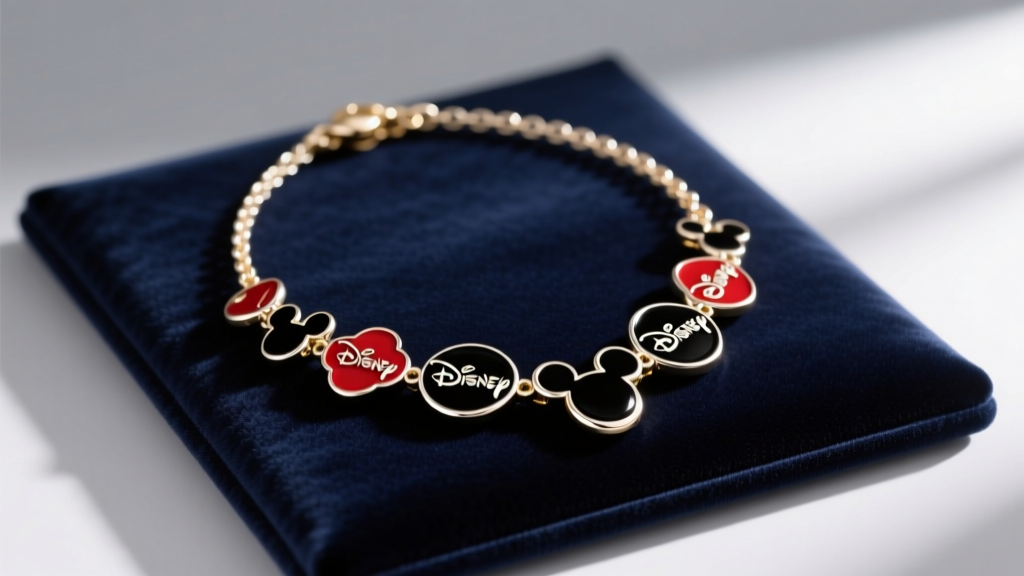
Understanding the Anatomy of Your Girls Crew Disney Necklace
A custom or boutique girls crew Disney necklace is more than just a fun accessory; it is a complex piece of jewelry that combines multiple materials into one delicate wearable. Typically, these necklaces feature a 925 sterling silver base chain, often plated with 14k or 18k gold vermeil. The charms—usually showcasing iconic silhouettes, script lettering, and character motifs—frequently incorporate cold enamel (epoxy resin) or vitreous enamel fills to achieve those signature vibrant reds, yellows, and blacks. Some designs may also include pave-set cubic zirconia (CZ) accents for added sparkle.
Because this specific style mixes porous metals, delicate plating, and temperature-sensitive enamel, standard jewelry cleaning methods can actually cause irreversible damage. Understanding the exact material composition of your necklace is the first step in preserving its magic and ensuring the chain remains untangled and bright for years to come.
The Step-by-Step Cleaning Protocol for Enamel and Plated Charms
When it comes to cleaning the charms on your necklace, gentleness is paramount. The Gemological Institute of America (GIA) notes that enamel and plated surfaces require strictly non-abrasive, non-chemical cleaning approaches to prevent clouding or stripping. Follow this exact protocol every 4 to 6 weeks, or whenever the pendant loses its luster.
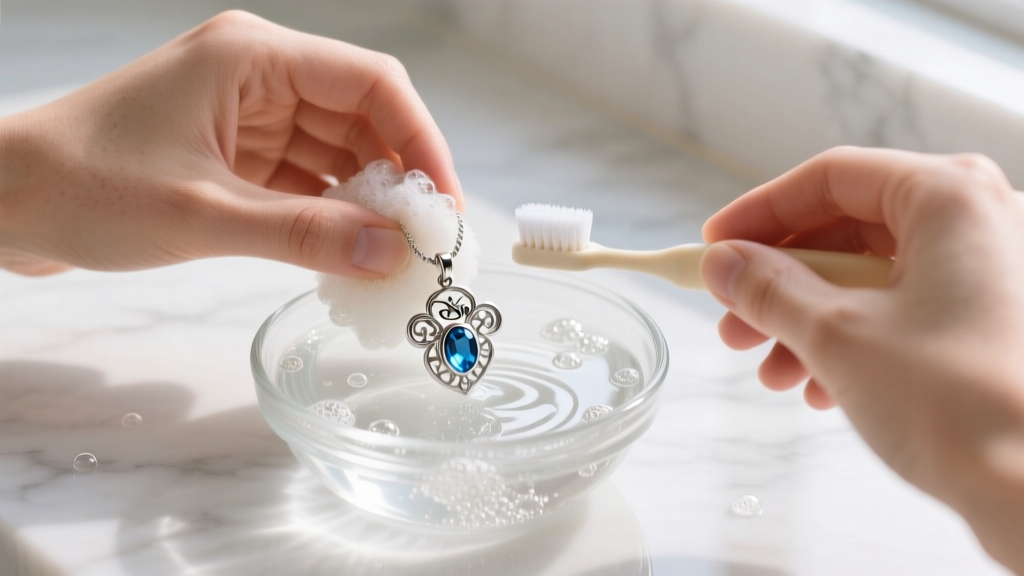
- Prepare a Lukewarm Bath: Fill a small glass bowl with lukewarm distilled water. Add exactly two drops of phosphate-free, mild dish soap (such as original blue Dawn). Avoid hot water, as extreme heat can cause the metal base and the enamel fill to expand at different rates, leading to micro-cracking or popped enamel.
- Targeted Agitation: Submerge only the pendant (keep the chain out if possible to prevent weakening the silk or cotton threads sometimes used in chain links). Use an extra-soft baby toothbrush to gently sweep over the enamel and CZ stones. Do not scrub the gold plating aggressively; let the soap lift the oils.
- The Distilled Rinse: Rinse the charm under a gentle stream of distilled water. Tap water contains chlorine and hard minerals that can leave microscopic water spots on the plating and dull the CZ stones.
- Microfiber Drying: Pat the pendant completely dry with a clean, lint-free microfiber cloth. Never use paper towels or tissues, as their wood-pulp fibers can leave micro-scratches on high-polish gold plating and soft enamel.
The Danger Zone: What to Absolutely Avoid
Many well-meaning jewelry owners accidentally ruin their favorite pieces by using aggressive, old-school cleaning hacks. To protect the structural integrity and aesthetic of your necklace, strictly avoid the following:
- Ultrasonic Cleaners: The high-frequency sound waves used in ultrasonic baths will shatter cold enamel and shake loose the adhesive holding pave CZ stones in their micro-prongs.
- Steam Cleaners: The intense, localized heat of a jewelry steamer will melt epoxy-based cold enamel instantly and can cause gold flash-plating to blister or peel.
- Liquid Silver Dip: While silver dip instantly removes tarnish from bare sterling silver, it contains harsh thiourea chemicals that will strip gold plating down to the base metal and leave a permanent white, chalky residue inside the crevices of your enamel charms.
- Toothpaste and Baking Soda: Both are highly abrasive. Baking soda ranks at 2.5 on the Mohs hardness scale, which is hard enough to scratch 18k gold plating and leave permanent swirl marks on glossy enamel.
Tackling Tarnish and Chain Maintenance
The chain of a girls crew Disney necklace is usually a delicate 0.8mm to 1.2mm cable or rolo chain. Because sterling silver naturally reacts with sulfur in the air to form silver sulfide (tarnish), the un-plated crevices of the chain links or the exposed jump rings will eventually darken. According to the Silver Institute, mechanical polishing is the safest method for plated and mixed-material chains.
Use a treated jeweler's polishing cloth (such as a Sunshine cloth) which is impregnated with micro-abrasives and anti-tarnish agents. Gently pinch the chain links between the cloth and pull the chain through. Do not use the cloth directly on the enamel charms, as the micro-abrasives will eventually dull the glossy finish. If your lobster clasp becomes stiff or sticky due to lotion buildup, place a single drop of mineral oil on the clasp mechanism, work it open and closed, and wipe away the excess with a cotton swab.
Untangling Delicate Chains Without Breaking Them
Fine 0.8mm chains are notorious for tangling, especially when stored loosely in a jewelry box. Pulling at a tight knot will stretch the links, permanently weakening the metal's crystalline structure and leading to inevitable breakage. Instead, lay the tangled necklace flat on a hard, smooth surface. Sprinkle a generous amount of baby powder or cornstarch directly over the knot. The powder acts as a dry lubricant, reducing the friction between the metal links. Use two fine sewing needles to gently pick the knot apart from the center outward. Once untangled, wipe the chain with a microfiber cloth to remove the powder.
Long-Term Storage and Anti-Tarnish Strategies
Proper storage is just as critical as cleaning. Leaving your necklace exposed to ambient humidity and airborne pollutants accelerates the tarnishing process exponentially. Follow these professional storage guidelines:
"The key to preserving plated and enameled jewelry is isolating it from moisture, sulfur, and physical friction. Individual, airtight storage is non-negotiable for long-term preservation."
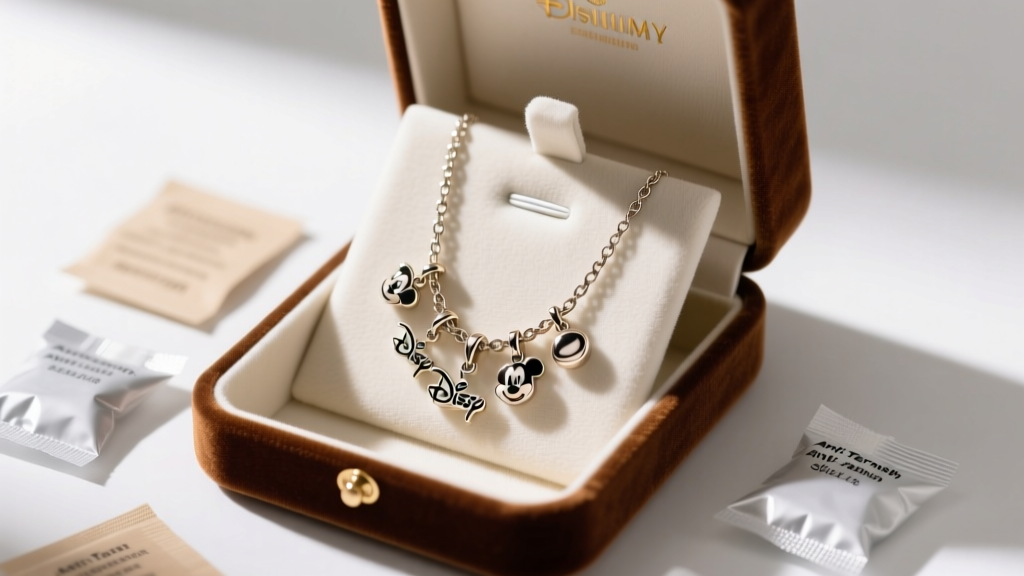
- Airtight Ziplock Bags: Store the necklace in a small, resealable polyethylene bag. Squeeze out as much air as possible before sealing.
- Anti-Tarnish Strips: Place a 3M anti-tarnish strip inside the bag. These strips absorb sulfur compounds from the air and are effective for up to 6 months.
- Silica Gel Packets: Include a small silica gel packet to control ambient moisture, which acts as a catalyst for the tarnishing chemical reaction.
- Hanging vs. Laying Flat: If using a jewelry box, hang the necklace on a velvet-lined hook to prevent tangling. Ensure the charms do not swing and hit other metal pieces, as gold plating is soft and will scratch easily upon impact.
Quick Reference: Material Care Chart
| Material Component | Safe Cleaning Method | What to Avoid | Maintenance Frequency |
|---|---|---|---|
| 14k/18k Gold Plating | Mild soap, lukewarm water, microfiber | Silver dip, baking soda, ultrasonic | Every 4 weeks |
| Cold Enamel (Epoxy) | Damp microfiber cloth, gentle wiping | Steam, hot water, alcohol, perfume | As needed |
| 925 Sterling Silver Chain | Treated polishing cloth (Sunshine) | Paper towels, harsh liquid dips | Every 2 months |
| Cubic Zirconia (CZ) | Soft baby toothbrush, distilled water | Hairspray, lotions, ultrasonic | Every 4 weeks |
Daily Wear Rules: When to Take It Off
To minimize the need for deep cleaning, adopt a "last on, first off" rule for your jewelry. Your necklace should be the very last thing you put on after applying perfume, hairspray, and body lotions, as the alcohol and oils in these products will degrade gold plating and cloud enamel. Conversely, it must be the first thing you take off when you get home. Always remove the necklace before swimming (chlorine and saltwater will rapidly destroy gold vermeil and silver), exercising (sweat is highly acidic and accelerates tarnish), or sleeping (body weight can easily crush delicate 0.8mm chain links and bend the charm bails).
Restoring Worn Plating and Enamel Damage
Despite your best efforts, daily friction from clothing will eventually wear through gold flash-plating, revealing the brass or silver base metal beneath. If the chain or charm begins to look patchy or brassy, do not attempt to paint over it with craft supplies. Take the necklace to a professional bench jeweler who can perform a light polish and electroplate a fresh layer of 14k or 18k gold. If a piece of cold enamel has chipped or fallen out, a jeweler can mix a custom-colored jewelry-grade epoxy to fill the void, seamlessly restoring the character's vibrant colors. By combining gentle daily habits with professional maintenance when necessary, your necklace will remain a cherished, sparkling staple in your collection for years.


