Mother of Pearl Gold Necklace: Expert Guide to Nacre & Settings
Discover the technical details behind a mother of pearl gold necklace. Learn about nacre grading, gold karat pairings, and setting durability.

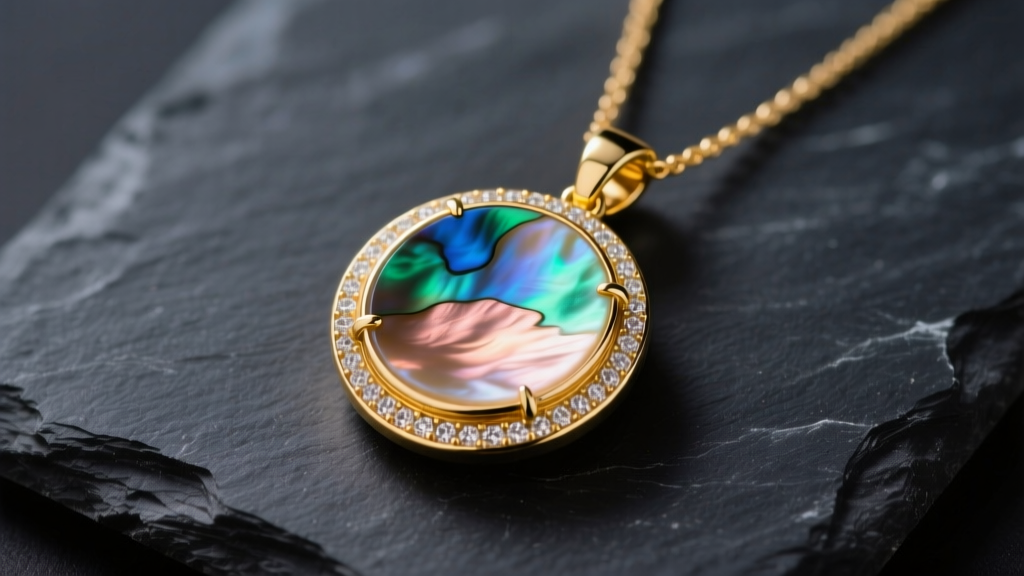
When evaluating a mother of pearl gold necklace, most consumers focus solely on the play of color across the pendant's surface. However, as a gemological standard, the true value and longevity of this organic-inorganic hybrid rely on a complex interplay of nacre thickness, crystalline structure, and metallurgical setting techniques. This guide bypasses superficial style advice to explore the technical specifications, failure modes, and precise grading metrics that define a high-caliber mother of pearl gold necklace in today's market.
The Material Science of Nacre: Beyond the Iridescence
Nacre is not a solid stone; it is a biomineral composite. According to mineralogical data from the Mindat mineralogical database, the iridescence of mother of pearl is caused by the interference of light passing through microscopic platelets of aragonite (a crystalline form of calcium carbonate) bound together by an organic polymer called conchiolin. This 'brick and mortar' microstructure means that the quality of a mother of pearl gold necklace depends heavily on the ratio of aragonite to conchiolin.
Gem-grade nacre, typically harvested from the Pinctada maxima (South Sea oyster), features dense, tightly packed aragonite platelets that yield a deep, mirror-like luster and high structural cohesion. Commercial-grade nacre, often from faster-growing freshwater mussels, contains higher conchiolin concentrations. This results in a chalky, opaque appearance that is highly susceptible to environmental degradation and physical chipping.
Thickness and Cross-Section Grading
Thickness is equally critical to the structural integrity of the pendant. While a standard commercial piece might feature a 0.5mm nacre veneer glued to a resin or porous shell backing, a premium mother of pearl gold necklace will utilize a solid 2.0mm to 3.0mm cross-section of pure nacre. Thinner veneers are prone to 'crazing'—a network of fine cracks that develop when the organic conchiolin matrix dries out and shrinks at a different rate than the aragonite platelets.
Gold Karat Pairings: Structural Integrity vs. Aesthetic
The choice of gold karat for the setting and chain dramatically impacts the necklace's lifespan. Pure gold (24k) is entirely unsuitable for securing organic gems due to its low yield strength. Below is a technical comparison of gold alloys used in fine jewelry manufacturing for nacre settings.
| Gold Alloy | Vickers Hardness (HV) | Setting Suitability | Best Application |
|---|---|---|---|
| 22k Gold (91.6%) | ~90 HV | Poor | Decorative chain links only; too soft for prongs or bezels. |
| 18k Gold (75.0%) | ~125 HV | Excellent | High-end bezel settings; offers ideal balance of malleability and grip. |
| 14k Gold (58.3%) | ~150 HV | Superior | Prong settings and heavy-duty clasps; maximum structural rigidity. |
For a high-end mother of pearl gold necklace, an 18k yellow or rose gold bezel is the industry standard. The alloy provides enough tensile strength to hold the stone securely while remaining malleable enough for a jeweler to burnish the metal tightly against the nacre without applying excessive pressure that could fracture the gem.
The Bezel Setting Advantage for Fragile Organics
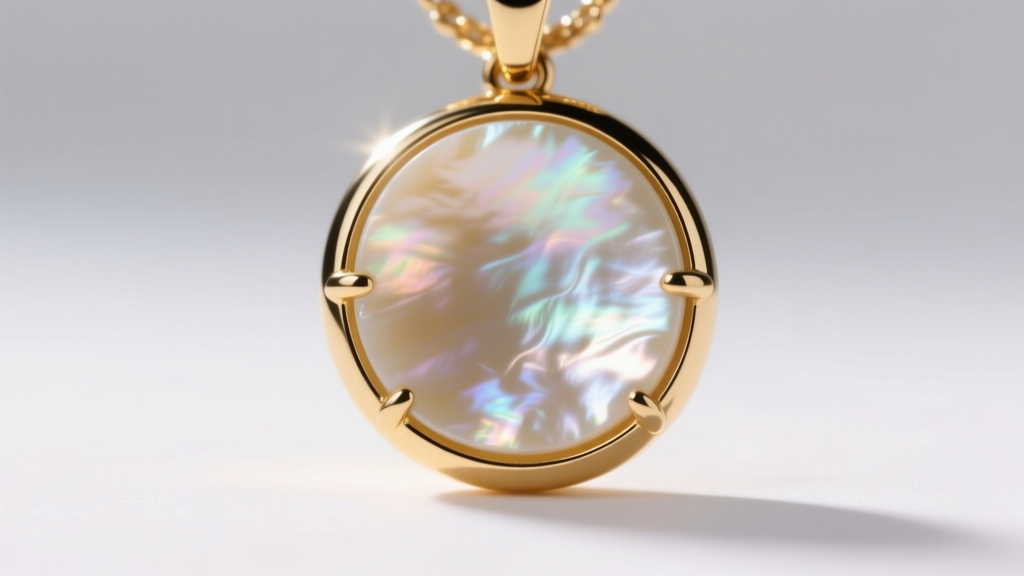
Prong settings concentrate stress on four to six microscopic points along the nacre's edge. Because mother of pearl lacks a defined cleavage plane and is relatively brittle (rating 2.5 to 4.5 on the Mohs scale), point-stress inevitably leads to chipping. A properly engineered bezel setting distributes pressure evenly across the entire circumference. Expert bench jewelers will typically mill the bezel wall to a precise thickness of 0.3mm to 0.5mm. Any thicker, and the metal overpowers the delicate iridescence of the nacre; any thinner, and the wall risks warping during the burnishing process, leaving gaps where moisture and skin oils can infiltrate and degrade the conchiolin.
Identifying Failure Modes: Delamination and Crazing
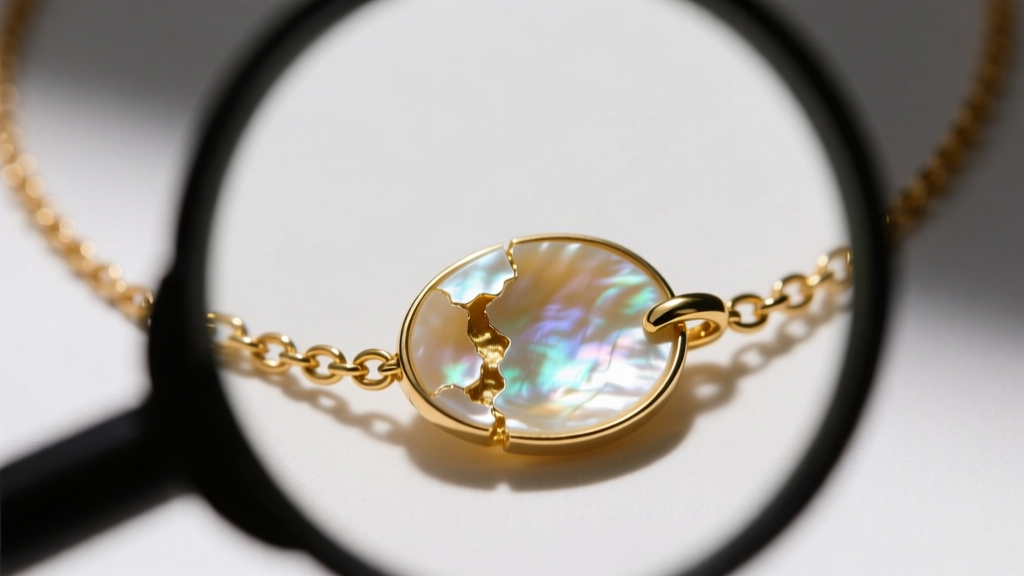
Understanding how a mother of pearl gold necklace fails is crucial for both buyers and collectors. The two primary failure modes are delamination and chemical etching.
'Organic gems are essentially in a state of suspended decay. The conchiolin matrix is highly reactive to the acids present in human perspiration and the alkaline compounds found in commercial jewelry cleaners.' — Gemological Institute of America (GIA)
- Delamination: This occurs when the layers of nacre begin to separate, often appearing as a cloudy, white blister beneath the surface. It is frequently caused by the use of ultrasonic cleaners. The high-frequency cavitation bubbles implode against the nacre, shattering the microscopic conchiolin bonds.
- Chemical Etching: Exposure to chlorine (in swimming pools) or sulfur compounds causes the calcium carbonate to dissolve microscopically, leaving the surface pitted and dull. Once etched, the aragonite platelets cannot be polished back to their original luster without removing significant material, which compromises the stone's thickness.
Pricing Framework: What You Should Actually Pay
The pricing of a mother of pearl gold necklace is heavily dictated by the origin of the nacre, the manufacturing technique (hand-fabricated vs. cast), and the gold weight. Use this framework to evaluate market listings:
Tier 1: Commercial Freshwater (Entry Level)
Price Range: $150 – $400
Specifications: 0.5mm - 1.0mm freshwater nacre veneer, often backed by resin. Set in 10k or 14k gold using cast, mass-produced bezels with visible seams. The nacre will exhibit a flat, chalky white appearance with minimal orient (the rainbow-like play of color).
Tier 2: Cultured Saltwater (Mid-Range)
Price Range: $600 – $1,500
Specifications: 1.5mm - 2.0mm solid nacre from Pinctada fucata (Akoya oysters). Set in 14k or 18k gold with hand-soldered bezels. The luster is sharp, and the orient is visible under direct lighting. Chains in this tier are typically solid cable or rope chains weighing 2 to 4 grams.
Tier 3: Gem-Grade South Sea (Investment Level)
Price Range: $2,000 – $5,000+
Specifications: 2.5mm+ solid, unbacked nacre from Pinctada maxima. Exhibits deep, mirror-like luster with intense peacock or silver-blue overtones. Set in 18k or 22k gold (for the chain) with an 18k hand-fabricated bezel. The pendant is often carved or inlaid with precision, and the clasp features a secure, dual-trigger mechanism.
Expert Care Protocols for Longevity
To preserve the structural and optical integrity of your mother of pearl gold necklace, implement the following maintenance protocols:
- The 'Last On, First Off' Rule: Always put your necklace on after applying cosmetics, perfumes, and hairsprays. Remove it immediately upon returning home to minimize contact with sebum and environmental pollutants.
- Hydration Maintenance: Nacre requires a minimal level of ambient humidity to prevent the conchiolin from drying out. Store the necklace in a sealed polyethylene bag with a slightly damp (not wet) cotton ball during dry winter months or in arid climates.
- Proper Cleaning Technique: Never use ultrasonic machines, steam cleaners, or chemical dips. Wipe the nacre gently with a microfiber cloth lightly dampened with distilled water. For the gold setting, use a soft-bristled baby toothbrush and a drop of pH-neutral dish soap, carefully avoiding the seam where the gold meets the nacre.
By understanding the material science and metallurgical requirements of these pieces, you can confidently select a mother of pearl gold necklace that will maintain its structural integrity and breathtaking iridescence for generations.