Authentic Necklace Hello Kitty: Metallurgy, Enamel, and Chain Specs
Explore the technical specs of an authentic necklace Hello Kitty collectors trust. We analyze enamel types, metal grades, and chain failure modes.

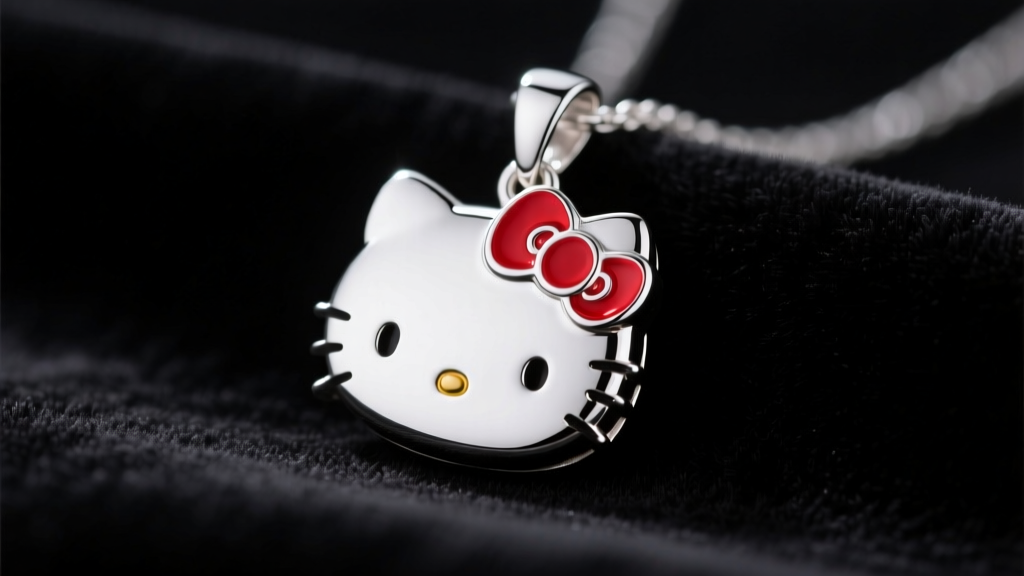
When evaluating the secondary market for Sanrio jewelry, the term necklace hello kitty yields thousands of results, ranging from $15 gas station trinkets to $800 limited-edition U-Treasure platinum pieces. For serious collectors and jewelry technicians, distinguishing between an authentic, precision-engineered pendant and a mass-produced counterfeit requires looking past the branding and into the metallurgy, enamel chemistry, and structural mechanics of the chain.
This technical deep dive explores the exact manufacturing specifications, material grades, and failure modes associated with authentic Hello Kitty necklaces, providing a definitive framework for authentication and quality assessment.
The Metallurgy of Sanrio: Base Metals vs. Precious Alloys
Authentic Sanrio jewelry is produced by licensed manufacturers who must adhere to strict assay standards. The most common authentic base is 925 sterling silver, often finished with a rhodium flash to prevent tarnishing. Counterfeits typically rely on zinc alloys or low-grade brass, plated with a microscopically thin layer of silver or nickel. According to the GIA Gem Encyclopedia, understanding the specific gravity and alloy composition is the first step in verifying precious metal authenticity.
Sterling Silver vs. Brass Alloys
Genuine sterling silver Hello Kitty pendants are cast using the lost-wax method. The wax model is burned out at 700°C, and molten 925 silver (an alloy of 92.5% silver and 7.5% copper) is injected at approximately 893°C. This results in a dense, porosity-free casting that captures the precise micro-details of Hello Kitty's whiskers and bow texture.
Conversely, counterfeit pendants are often die-struck or cast from zinc alloys. Zinc alloy castings suffer from high porosity and require heavy polishing, which blunts the sharp, iconic lines of the character's silhouette. Furthermore, the copper content in cheap brass alloys reacts with skin acidity, causing rapid oxidation and the dreaded 'green neck' effect.
| Material Grade | Density (g/cm³) | Tarnish Rate | Typical Authentic Price Range |
|---|---|---|---|
| 925 Sterling Silver (Rhodium Plated) | 10.36 | Low (if plated) | $80 - $250 |
| 18K Yellow Gold | 15.60 | None | $600 - $1,200+ |
| Brass (Rhodium Flash) | 8.40 - 8.70 | High (once plated wears) | $20 - $45 (Licensed Mass Market) |
| Zinc Alloy (Counterfeit) | 6.60 - 7.10 | Extreme | $5 - $15 |
Enamel Application: Cold Epoxy vs. Vitreous Glass
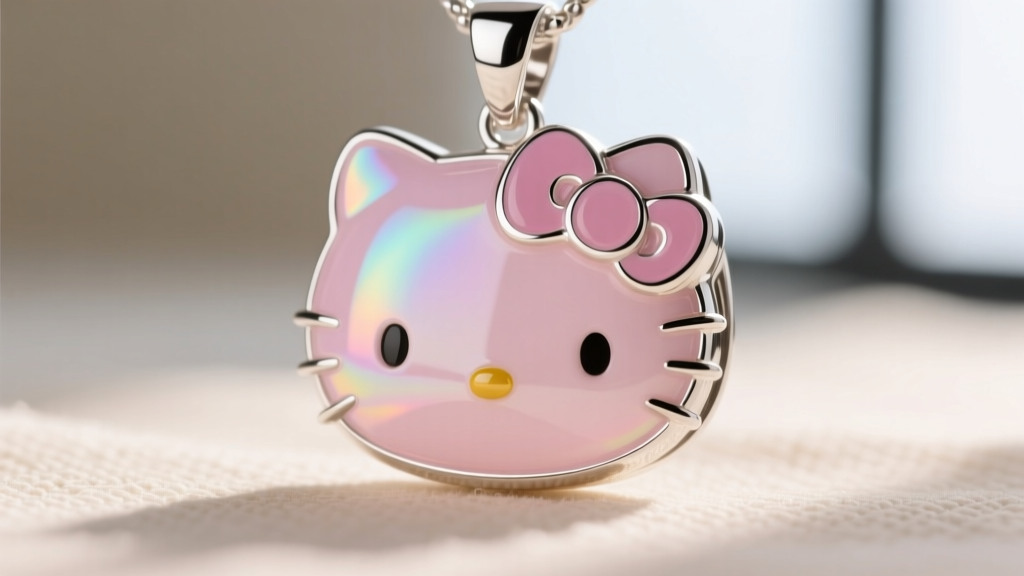
The signature red bow and yellow nose of a Hello Kitty pendant are achieved through enameling. The longevity and visual depth of these colors are primary indicators of manufacturing quality.
Identifying Enamel Degradation and Failure Modes
High-end authentic pieces (such as those from Japanese department store exclusives) utilize vitreous glass enamel. This requires firing ground glass frit at temperatures exceeding 800°C, fusing it permanently to the metal substrate. Vitreous enamel is impervious to UV light and will never yellow.
However, 90% of licensed mass-market Hello Kitty necklaces use cold enamel (a two-part epoxy resin). While modern UV-inhibited epoxies are durable, they are still susceptible to specific failure modes over a 3-to-5-year lifespan:
- Shrinkage and Pull-Away: As epoxy cures and ages, it loses solvents and shrinks. This causes the red bow enamel to pull away from the silver bezel, creating a microscopic gap where dirt accumulates.
- UV Yellowing: The white enamel used for the face on cheaper models often lacks adequate UV stabilizers, leading to a distinct yellowish tint after prolonged sun exposure.
- Thermal Cracking: Cold enamel expands and contracts at a different rate than the silver substrate. Leaving the necklace in a hot car can cause the enamel to craze or crack.
CAD and Prototyping Constraints in Character Jewelry
Designing licensed character jewelry involves strict geometric constraints managed via Computer-Aided Design (CAD). Sanrio's official licensing department requires that the 3D mesh of a Hello Kitty pendant perfectly matches their 2D vector guidelines. This presents unique challenges for CAD designers, particularly regarding draft angles and undercuts during the molding phase.
To ensure the vulcanized rubber mold can release the wax pattern without tearing, designers must incorporate a minimum 2-degree draft angle on all vertical surfaces. However, adding draft angles to Hello Kitty's perfectly flat face would distort her iconic look. To solve this, high-end manufacturers use multi-part modular molds or CNC-machined aluminum master molds, which allow for zero-draft vertical walls, preserving the exact geometric integrity of the character while maintaining manufacturing viability. This level of CAD precision is entirely absent in the counterfeit market, where 3D scanning of existing pendants introduces compounding dimensional errors.
Chain Mechanics and Clasp Engineering
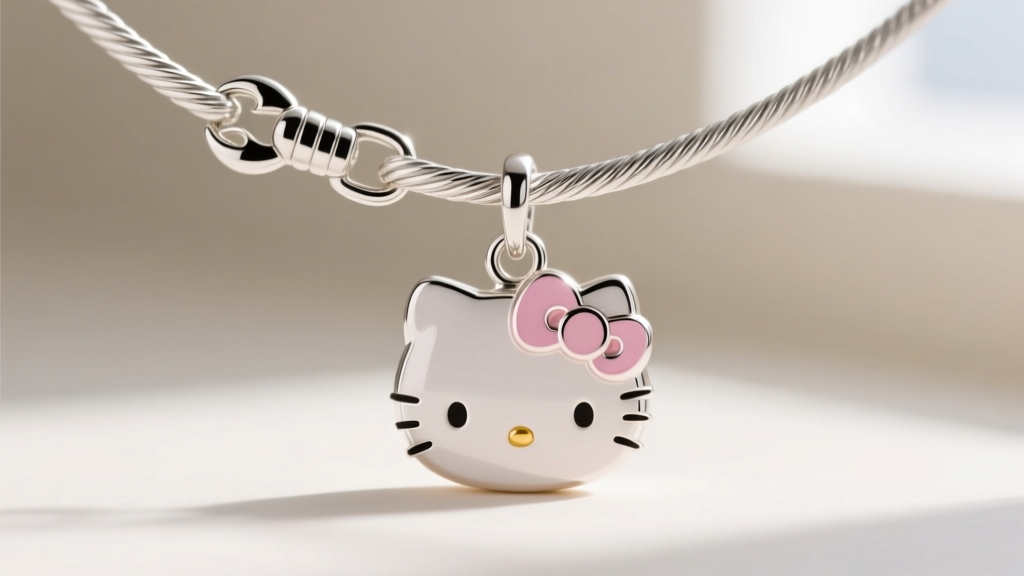
A pendant is only as secure as its chain. Authentic Sanrio necklaces typically pair their pendants with 1.0mm to 1.2mm cable or box chains, engineered to support the dynamic load of a 3-gram to 6-gram pendant.
Cable vs. Box Chains: Tensile Strength
Cable chains, consisting of uniform oval links, are the industry standard. However, the critical failure point is rarely the chain itself; it is the jump ring connecting the chain to the pendant bail. According to jewelry structural engineering principles, unsoldered jump rings will twist open under lateral stress. Authentic premium necklaces feature laser-soldered or flush-soldered jump rings, ensuring the ring can only open if the metal itself snaps (requiring over 15 lbs of tensile force).
Expert Tip: When inspecting a vintage necklace hello kitty piece, always test the spring ring clasp. Counterfeit clasps use weak internal springs that fail to fully retract, leaving a 0.5mm gap that easily snags on knitwear and eventually bends the clasp gate out of shape.
Authentication Framework: Spotting Counterfeits
Because Sanrio is one of the most heavily counterfeited brands globally, relying on the presence of a '925' stamp is insufficient. Counterfeiters frequently stamp zinc alloys with 'S925' to deceive buyers. A true authentication framework requires a multi-point inspection, aligned with the hallmarking standards outlined by The London Assay Office.
- The Copyright Stamp: Authentic pieces will feature a microscopic '© SANRIO' stamp, usually located on the back of the pendant or on the small metal tag attached to the chain. The font should be crisp, sans-serif, and deeply struck.
- Proportional Accuracy: Sanrio's brand guidelines dictate exact proportions. Hello Kitty's face is a perfect 5:4 height-to-width ratio, and her bow is always positioned at a precise 30-degree angle on her left ear. Fakes often distort these ratios during the molding process.
- Magnet Test: While sterling silver is non-magnetic, some counterfeit chains use nickel or steel cores plated in silver. A strong neodymium magnet will instantly reveal a steel core chain.
Conclusion
Evaluating a necklace hello kitty collectors seek requires a shift from aesthetic appreciation to metallurgical scrutiny. By understanding the differences between lost-wax sterling casting and die-struck zinc, recognizing the chemical limitations of cold epoxy enamel, and inspecting the structural integrity of soldered jump rings, you can confidently navigate the secondary market. Whether you are acquiring a modern U-Treasure collaboration or a vintage 1990s boutique piece, these technical specifications remain the ultimate arbiter of authenticity and quality.


