Vintage Mesh Necklace Value: Pricing & Buying Guide
Discover the true value of a vintage mesh necklace. Learn pricing tiers, material grades, failure modes, and how to authenticate rare pieces.

The Enduring Appeal of the Vintage Mesh Necklace
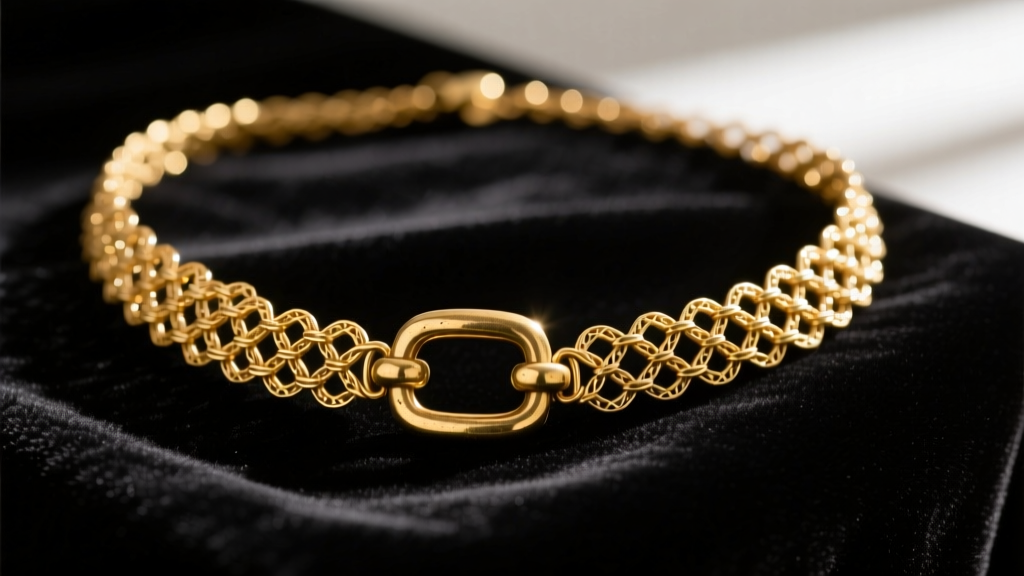
As we navigate the 2026 vintage jewelry market, the vintage mesh necklace remains a highly coveted category for both serious collectors and everyday wearers. Unlike standard link chains, mesh necklaces are engineered from hundreds of interlocking micro-wires, creating a fluid, fabric-like drape that catches the light beautifully. However, assessing the true budget and value of these pieces requires a deep understanding of metallurgy, weave architecture, and historical manufacturing techniques. Many buyers overpay for heavily worn, base-metal pieces simply because they feature a complex weave, while others miss out on undervalued solid gold or signed mid-century masterpieces. This guide provides a rigorous, expert-level framework for evaluating, pricing, and authenticating vintage mesh necklaces.
The Architecture of Mesh: Weave Types and Durability
The value of a vintage mesh necklace is intrinsically tied to its structural architecture. Not all mesh weaves are created equal; some are engineered for fluid movement, while others prioritize rigid structural integrity. Understanding the weave type is your first step in value assessment.
Milanese Mesh
Originating from traditional armor-making techniques, Milanese mesh consists of fine, flat wires woven in a continuous, interlocking spiral. It is highly flexible, resistant to kinking, and lays flat against the collarbone. Vintage Milanese mesh from the 1930s and 1940s, particularly in wide choker formats, commands a premium due to the sheer volume of metal and labor required to produce it.
Snake Mesh
Snake mesh is formed by tightly interlocking rings that create a smooth, tubular, scaly surface. While visually stunning and incredibly fluid, vintage snake mesh is notoriously fragile. If bent at a sharp angle, the rings permanently deform. A vintage snake mesh necklace in pristine, un-kinked condition is rare and highly valued, whereas a kinked piece loses up to 60% of its market value.
Foxtail Mesh
Foxtail chains feature V-shaped links arranged in a continuous, overlapping pattern. This structure makes foxtail mesh exceptionally durable and resistant to the kinking that plagues snake mesh. Vintage foxtail pieces, especially those crafted in solid 14k or 18k gold, represent some of the most secure and valuable investments in the mesh category.
Material Breakdown: Decoding the Metallurgy
The most critical factor in determining a vintage mesh necklace's value is the base metal and the plating method. According to the Gemological Institute of America (GIA), understanding the distinction between gold-filled, vermeil, and electroplated metals is essential for accurate appraisal.
Gold-Filled (GF) vs. Gold-Plated (GP)
Gold-filled mesh is the gold standard for vintage costume jewelry. By law, gold-filled items must contain a layer of gold that constitutes at least 5% (1/20th) of the total weight of the item, mechanically bonded to a brass or copper core under high heat and pressure. A stamp reading "1/20 12K GF" indicates a highly durable piece that can withstand decades of wear without exposing the base metal. Conversely, gold-plated (GP) or electroplated mesh features a microscopic layer of gold applied via electrical current. This layer is often less than a micron thick and will eventually wear away, exposing the base metal beneath. Gold-filled vintage mesh commands three to five times the price of identical gold-plated designs.
Vermeil and Solid Precious Metals
Vermeil refers to a heavy gold plating over a sterling silver base. Vintage vermeil mesh is highly desirable because even if the gold wears thin, the underlying silver retains intrinsic melt value and resists the green/black oxidation associated with copper cores. Naturally, solid 14k or 18k gold mesh necklaces sit at the apex of the value hierarchy, priced primarily by their gram weight plus a craftsmanship premium.
The Value Matrix: Pricing Tiers for 2026
To help you navigate estate sales, auction houses, and online vintage boutiques, we have compiled a comprehensive pricing matrix based on current market data and historical sales records. As noted by the Lang Antiques University, provenance and maker's marks drastically alter the final valuation of vintage jewelry.
| Tier | Material & Maker Profile | Condition Requirements | Estimated Market Value (USD) |
|---|---|---|---|
| Tier 1: Entry / Decorative | Unsigned base metal, heavy gold-plate, high wear or minor kinks. | Wearable but shows copper bleed, clasp fatigue, or surface scratches. | $35 - $85 |
| Tier 2: Mid-Century Collectible | Signed costume makers (Trifari, Monet, Napier), 1/20 12K or 14K Gold-Filled. | Excellent condition, no kinks, original clasps intact, crisp hallmarks. | $120 - $350 |
| Tier 3: Couture & High-End | Signed couture (Miriam Haskell, Schiaparelli), intricate Milanese weaves, or early Art Deco pieces. | Pristine, museum-quality condition with original presentation boxes or provenance. | $450 - $1,200 |
| Tier 4: Fine Jewelry Asset | Solid 14k/18k Gold or Platinum mesh, signed by houses like Buccellati or Tiffany & Co. | Excellent structural integrity; valued primarily on precious metal weight + brand premium. | $1,500 - $5,000+ |
Critical Failure Modes: Inspecting Vintage Mesh
When conducting a budget and value assessment, you must inspect the piece for specific failure modes that are unique to mesh construction. A visually appealing necklace can be structurally compromised, rendering it a poor investment.
- Accordion Stretch: Common in snake and tubular mesh. If the necklace has been pulled or snagged, the interlocking rings separate and lose their tension, creating a permanent, stretched gap that resembles an accordion. This is unrepairable and instantly downgrades the piece to Tier 1.
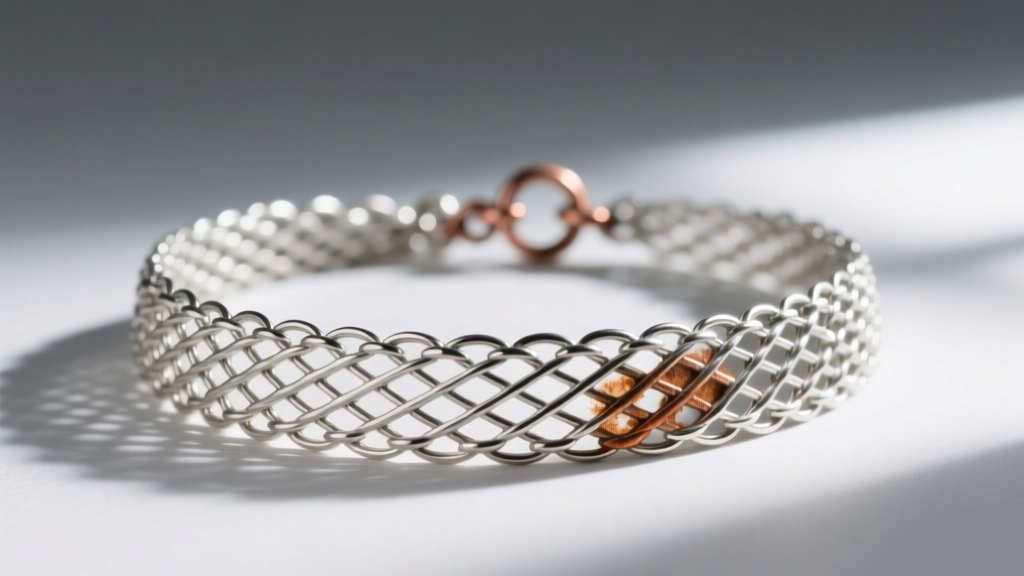
- Copper Bleed (Blackening): When gold-plated or poorly bonded gold-filled mesh is exposed to moisture and skin acids, the underlying copper or brass core oxidizes. This creates dark, black or green patches that seep through the microscopic pores of the plating. While light surface tarnish can be cleaned, deep copper bleed is permanent.
- Clasp Fatigue and Replacement: Original clasps are vital for authentication and value. Pre-1940s pieces often feature trombone clasps or early C-clasps, while mid-century pieces utilize spring rings or fold-over safety clasps. If a modern lobster clasp has been soldered onto a vintage mesh chain, the piece loses its historical integrity, reducing its collector value by up to 30%.
- Edge Fraying: In flat Milanese mesh, the edges are often capped with a solid metal border. If this border wire snaps or pulls away from the woven body, the entire mesh structure can begin to unravel. Always run your fingers along the edges of flat mesh to check for sharp, protruding wires.
Authentication and Dating Your Mesh Piece
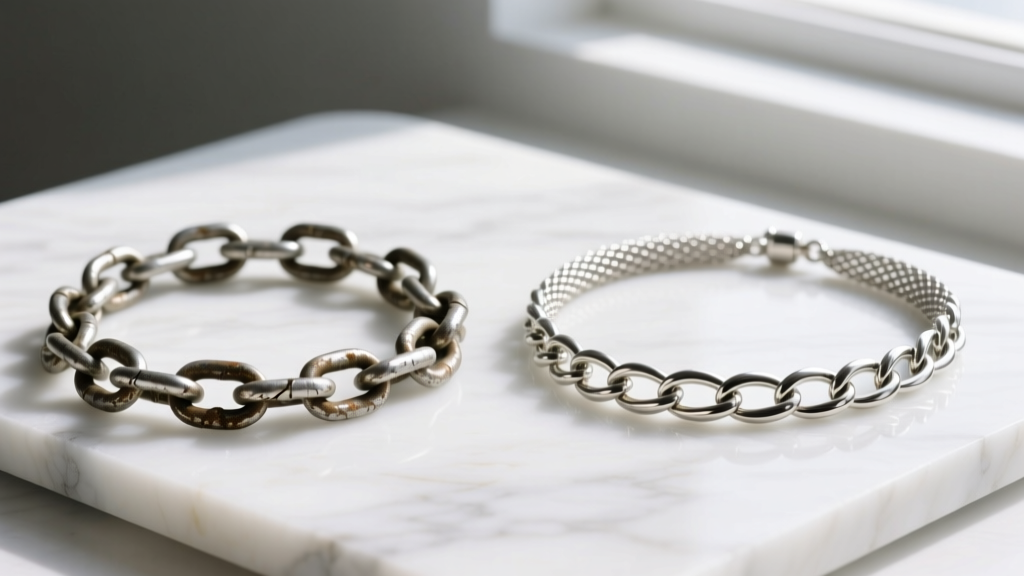
Dating a vintage mesh necklace requires a synthesis of hallmark analysis, clasp identification, and weight assessment. Begin by examining the clasp and the end caps for microscopic stamps. A "1/20 12K GF" stamp is a reliable indicator of mid-20th-century American manufacturing. If the piece is marked simply "GOLD PLATED" or lacks any hallmark, it is likely a later 1970s or 1980s fashion piece, which carries significantly less historical value.
Pay close attention to the drape and weight. High-quality vintage mesh, particularly gold-filled or solid gold examples, possesses a distinct, heavy fluidity. It should feel cool to the touch and drape like liquid metal. Lightweight, stiff, or overly rigid mesh is often a sign of modern, mass-produced base-metal alloys that mimic the vintage aesthetic without the structural integrity.
Maintenance: Preserving the Value of Your Investment
Proper maintenance is crucial for preserving the resale value of a vintage mesh necklace. Never use ultrasonic cleaners or harsh chemical dips on gold-filled or plated mesh. The high-frequency vibrations of an ultrasonic cleaner can shatter the delicate micro-wires of a snake mesh, while chemical dips will strip the gold layer entirely, exposing the base metal. Instead, use a soft, lint-free microfiber cloth and a mild solution of warm water and phosphate-free dish soap. Gently dab the mesh—never scrub or twist—and allow it to dry completely flat on a towel before storing it in an anti-tarnish pouch. By understanding the intricate metallurgy, recognizing the specific weave architectures, and rigorously inspecting for structural failure modes, you can confidently navigate the market and acquire a vintage mesh necklace that offers both enduring beauty and genuine financial value.


