Horseshoe Cross Necklace: Technical Guide to Metals & Fit
Explore the technical details of the horseshoe cross necklace. Learn about metal grades, casting methods, chain pairings, and sizing for western jewelry.

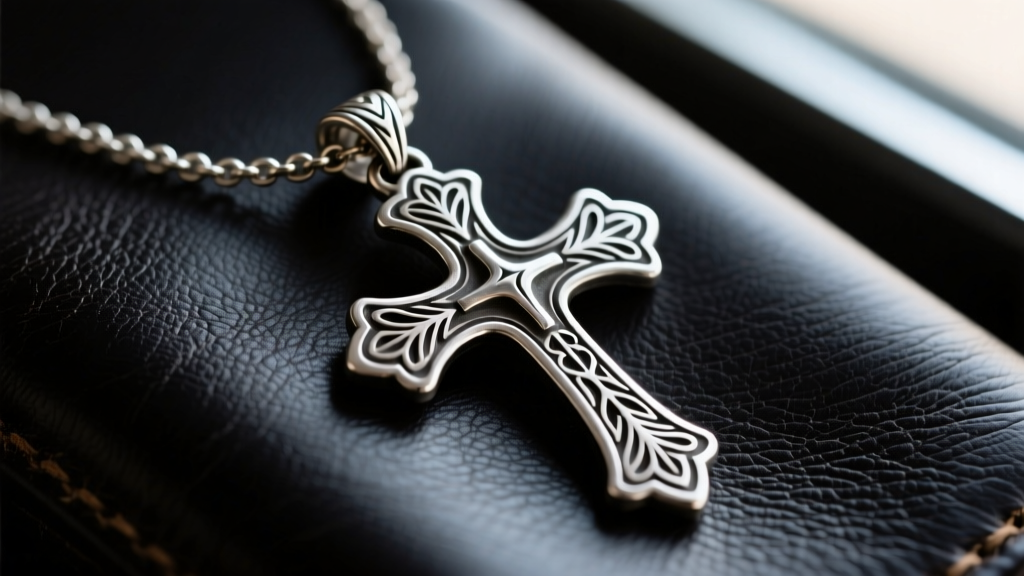
The horseshoe cross necklace represents a unique intersection of equestrian heritage, rural symbolism, and spiritual iconography. Unlike standard geometric pendants, merging the open parabola of a horseshoe with the rigid, intersecting axes of a cross presents distinct structural and metallurgical challenges for jewelers. This deep dive explores the technical specifications, casting methodologies, and precise chain pairings required to evaluate, wear, and maintain these complex Western and Southwestern jewelry pieces.
The Anatomy of a Horseshoe Cross Pendant
Designing a horseshoe cross necklace requires balancing visual weight with structural integrity. The horseshoe typically acts as the outer frame or upper arch, while the cross is either suspended within the negative space or fused directly through the center axis. From an engineering standpoint, the intersection points where the cross meets the inner curve of the horseshoe are high-stress zones. If the pendant is cast too thinly in these areas, it becomes prone to micro-fractures and eventual snapping under the tensile stress of daily wear.
Dimensional Ratios and Bail Sizing
Standard everyday horseshoe cross pendants generally measure between 1.0 inch to 1.5 inches in height, with a width of 0.75 inches to 1.0 inch. Statement pieces, often worn over clothing, can exceed 2.5 inches. The bail—the loop that connects the pendant to the chain—must be proportionally scaled. A high-quality piece will feature a soldered, heavy-duty oval or hidden bail with an inner diameter of at least 4.0mm to 5.0mm. This specific dimension is critical, as it accommodates the heavier gauge chains traditionally paired with Western jewelry without causing excessive friction or wear on the bail interior.
Metallurgy and Casting Techniques
The vast majority of premium horseshoe cross necklaces are forged from 925 Sterling Silver. Pure silver (999 fine) is too soft (Mohs hardness of 2.5) for intricate, protruding designs like the tips of a cross or the calks of a horseshoe. By alloying 92.5% silver with 7.5% copper, the Mohs hardness increases to approximately 3.0, providing the necessary durability while retaining the metal's luster. For high-end tiers, 14k yellow gold (58.5% gold alloyed with silver and copper) is utilized, offering superior tarnish resistance and a warmer hue that complements rustic aesthetics.
Lost-Wax Investment Casting vs. Stamping
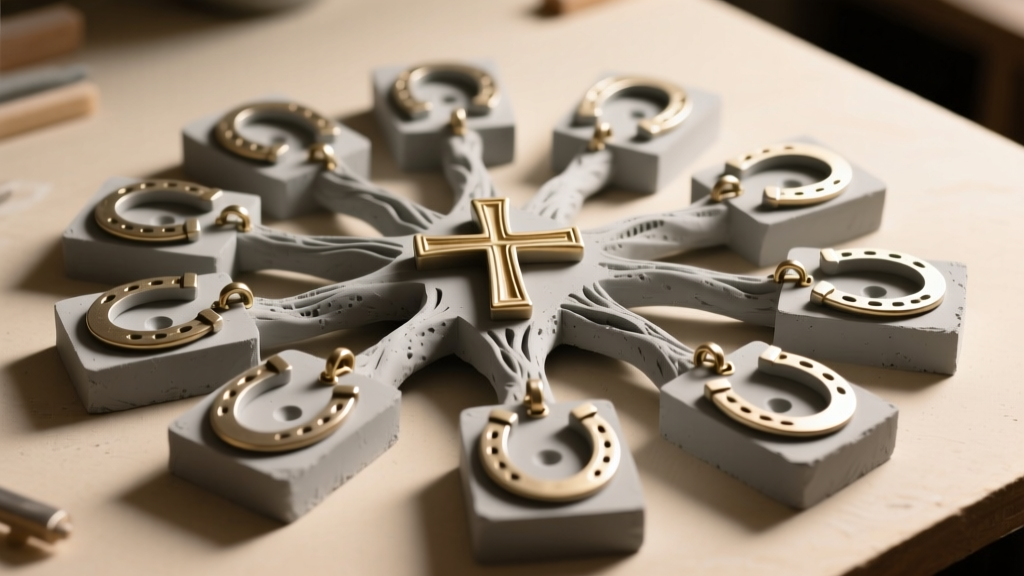
Authentic, detailed horseshoe cross pendants are produced via lost-wax investment casting. A master model is carved in wax, attached to a sprue base, and encased in a silica-based investment plaster. The mold is heated in a kiln to 1,350°F, melting the wax and leaving a precise negative cavity. Molten sterling silver is then forced into the cavity via centrifugal force or vacuum suction. This method captures microscopic details, such as braided wire textures or floral Western engravings. Conversely, mass-produced, low-cost alternatives are often die-stamped from thin sheet metal. Stamped pendants lack three-dimensional depth, feature hollow backs, and are highly susceptible to bending.
Oxidation, Patina, and Stone Inlay
To achieve the rustic, antique look characteristic of Western jewelry, artisans apply a chemical patina. The most common agent is Liver of Sulfur (potassium sulfide). When the sterling silver pendant is submerged in a heated liver of sulfur solution, it reacts with the copper alloy to form silver sulfide, turning the metal black. The jeweler then uses a flex-shaft tool with a silicone polishing wheel or a tumbling machine with steel shot to polish only the raised, high-friction areas. This leaves the recessed engravings and the interior of the horseshoe dark, creating stark, legible contrast.
Integrating Turquoise and Onyx
Many Southwestern variations of the horseshoe cross necklace incorporate cabochon stone inlays. Genuine Kingman or Sleeping Beauty turquoise is often bezel-set into the center intersection of the cross. Technically, the bezel wire (usually 24-gauge or 26-gauge fine silver) must be perfectly annealed and burnished over the stone's edge to prevent moisture intrusion, which can degrade the stone's matrix over time. Black onyx is also frequently used for a sharper, more modern monochromatic contrast against oxidized silver.
Chain Pairings: Gauge and Link Styles
The structural harmony of a horseshoe cross necklace relies heavily on the chain. A delicate cable chain will look visually unbalanced and fail to support the weight of a solid cast pendant. Western and rustic pendants demand chains with high tensile strength and visual density. Below is a technical breakdown of the optimal chain pairings based on pendant weight and bail clearance.
| Chain Style | Recommended Width | Pendant Weight Capacity | Visual Profile |
|---|---|---|---|
| Rope Chain | 2.5mm - 4.0mm | Up to 25 grams | Twisted, highly reflective, traditional Western |
| Figaro Chain | 3.0mm - 5.0mm | Up to 30 grams | Patterned (3 small, 1 long link), masculine, flat |
| Curb Chain | 2.5mm - 4.5mm | Up to 35 grams | Interlocking flat links, durable, low-profile |
| Wheat Chain | 1.5mm - 2.5mm | Up to 15 grams | Braided oval links, flexible, intricate texture |
When selecting a chain, always verify the clasp mechanism. A standard spring-ring clasp is insufficient for a heavy solid silver pendant. Opt for a heavy-duty lobster clasp or a secure toggle clasp to prevent accidental unfastening and subsequent loss of the piece.
Authenticity and Hallmark Verification
The market is saturated with counterfeit Western jewelry. When evaluating a horseshoe cross necklace, inspect the back of the pendant or the inside of the bail for hallmarks. A legitimate piece will bear a '925' stamp for sterling silver or '14K' / '585' for gold. Be highly skeptical of terms like 'Tibetan Silver,' 'Alpaca,' or 'Nickel Silver.' According to the Gemological Institute of America (GIA), these are base metal alloys containing copper, nickel, and zinc, with absolutely zero silver content. They can cause severe contact dermatitis and will corrode rapidly when exposed to sweat and humidity.
Maintenance and Tarnish Prevention
Maintaining the high-contrast oxidized finish of a horseshoe cross necklace requires specific care protocols. Never use liquid silver dips or ultrasonic cleaners. Liquid dips contain thiourea and harsh acids that will strip the intentional liver of sulfur patina from the recessed areas, leaving the pendant looking flat and uniformly white. Ultrasonic vibrations can also fracture porous inlaid stones like turquoise or loosen the adhesive in doublet stones.
For routine maintenance, gently wipe the raised, polished areas of the pendant with a dry, treated jeweler's cloth (such as a Sunshine cloth). Store the necklace in an airtight polyethylene bag alongside a 3M anti-tarnish strip to absorb ambient sulfur compounds in the air, which are the primary catalysts for unwanted surface tarnish.
By understanding the metallurgical composition, casting quality, and proper chain mechanics, collectors and wearers can confidently select a horseshoe cross necklace that is not only symbolically resonant but structurally engineered to last generations. For further reading on metal patination and jewelry care, the Ganoksin Jewelry Making Community offers extensive technical resources on oxidation and finishing techniques.


