Glass Teardrop Necklace Care: Cleaning & Maintenance Guide
Learn expert cleaning and maintenance tips for your glass teardrop necklace. Discover safe solutions, storage hacks, and wire-wrap preservation techniques.

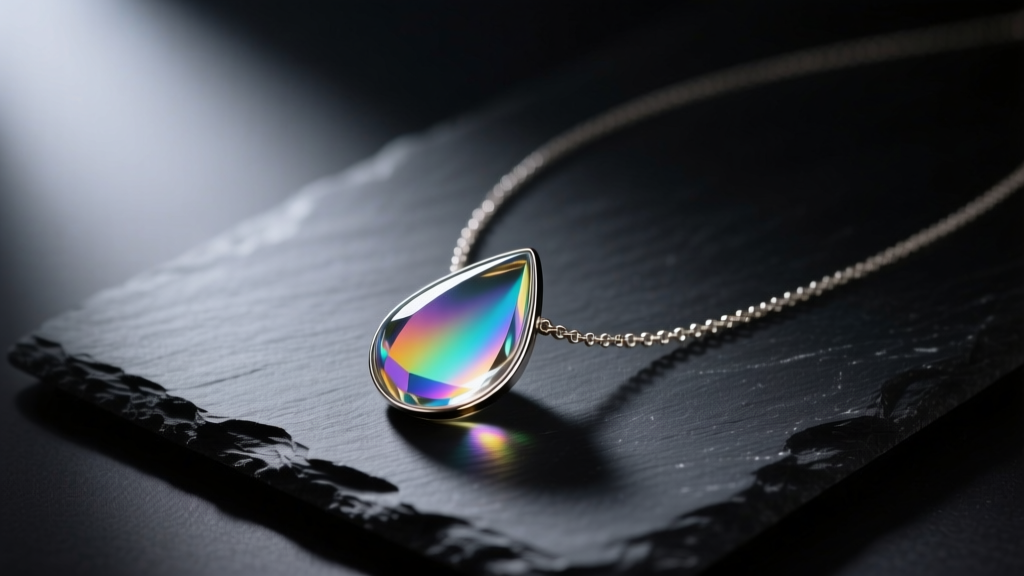
Understanding Your Glass Teardrop Composition
A glass teardrop necklace is more than just a simple accessory; it is a wearable piece of art that interacts dynamically with light. However, glass is an amorphous solid, meaning its molecular structure lacks the rigid crystalline lattice of gemstones like quartz or diamond. This unique structure makes glass susceptible to specific environmental stressors, chemical etching, and thermal shock. Before you apply any cleaning solution, you must identify the specific type of glass used in your pendant, as the wrong chemical can permanently cloud or degrade the surface.
Soda-Lime vs. Borosilicate Glass
Most artisan lampwork teardrops are crafted from either soda-lime or borosilicate glass. Soda-lime glass is softer (around 5.5 on the Mohs hardness scale) and highly vulnerable to thermal shock. If you wear a soda-lime glass teardrop necklace in cold weather and then step into a hot, steamy bathroom, the rapid temperature differential can cause micro-fractures. Borosilicate glass, which contains boron trioxide, boasts a Mohs hardness of roughly 6.5 and a remarkably low coefficient of thermal expansion. It is far more durable but still requires gentle, non-abrasive cleaning to maintain its high-gloss finish.
Dichroic and Lead Crystal Teardrops
Dichroic glass teardrops are created by stacking micro-layers of metal oxides (like titanium, chromium, and zirconium) onto a glass substrate. These metallic layers are incredibly sensitive to ammonia and harsh alcohols, which can oxidize the coatings and dull the color-shifting effect. Lead crystal, often used in vintage or high-end vintage-style teardrops, contains at least 24% lead oxide. This gives it a high refractive index and a satisfying weight, but it drops the Mohs hardness to around 5.0, making it highly prone to scratching and chemical etching from acidic cleaners.
The Hardware: Wire-Wrap and Bail Integrity
The glass pendant is only half the equation; the hardware securing it is equally critical. Most glass teardrop necklaces utilize either a glued-in bail, a pinch bail, or a custom wire-wrap. If your teardrop is top-drilled and secured with a wire wrap, you must regularly inspect the metal for work hardening.
- 20-Gauge and 22-Gauge Wire: Artisans frequently use 20-gauge or 22-gauge dead-soft sterling silver or copper wire for wrapping. Over time, the natural movement of your body causes the wire to bend and flex at the loop points. This repetitive stress causes 'work hardening,' where the metal becomes brittle and eventually snaps.
- Pinch Bails: These rely on tension and tiny metal prongs gripping the glass. Temperature fluctuations can cause the metal to expand and contract, loosening the grip. Gently squeeze the prongs with nylon-jaw pliers every six months to ensure a secure hold.
- Adhesive Bails: If your bail is glued directly to the flat surface of the glass, avoid soaking the pendant in hot water. Heat softens cyanoacrylate and jeweler's epoxy, which can cause the bail to detach and the glass to shatter on the floor.
Step-by-Step Cleaning Protocols by Glass Type
According to conservation guidelines from the Getty Conservation Institute, glass should always be cleaned using the least aggressive method possible. Never use ultrasonic jewelry cleaners for any glass teardrop necklace, as the high-frequency vibrations can exploit invisible internal flaws and shatter the pendant.
| Glass Type | Mohs Hardness | Safe Cleaning Agent | Strictly Avoid | Special Notes |
|---|---|---|---|---|
| Soda-Lime | 5.5 | Distilled water + mild dish soap | Ammonia, Ultrasonic | Dry immediately to prevent hard water spotting. |
| Borosilicate | 6.5 | Isopropyl alcohol (70%) | Abrasive polishing cloths | Highly resistant to thermal shock and chemicals. |
| Dichroic | 5.5 - 6.0 | Microfiber cloth only | Windex, Silver dip, Alcohol | Chemicals will strip the metallic oxide layers. |
| Lead Crystal | 5.0 | Distilled water + drop of baby shampoo | Vinegar, Lemon juice, Baking soda | Acids will permanently etch and cloud the surface. |
The Distilled Water Wash Method
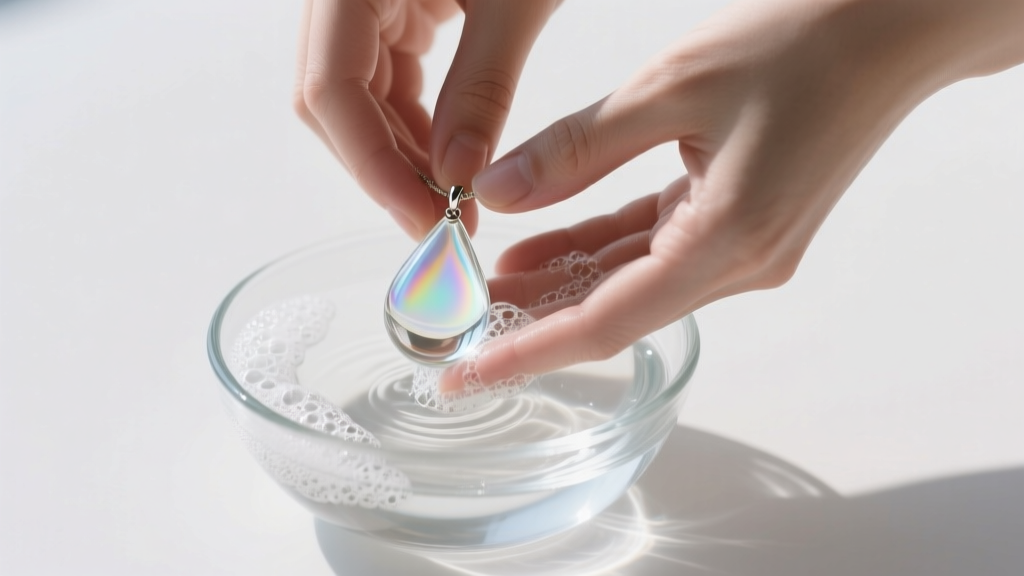
For standard soda-lime and borosilicate glass teardrops, the safest and most effective cleaning method involves distilled water. Tap water contains dissolved minerals like calcium and magnesium that leave stubborn, chalky deposits on the glass surface. Mix a few drops of pH-neutral dish soap (like Dawn) into a bowl of lukewarm distilled water. Submerge the glass teardrop—avoiding the chain if it is made of oxidizable metals—and gently agitate. Use a clean, ultra-soft baby toothbrush to lightly sweep the crevices around the bail. Rinse with pure distilled water and pat dry with a lint-free microfiber cloth.
Chain Maintenance: Preventing Tarnish and Tangles
The chain of your glass teardrop necklace requires its own specific care regimen, heavily dependent on the metal composition. As noted by Jewelers of America, proper metal maintenance prevents structural degradation and skin irritation.
Sterling Silver (925)
Sterling silver contains 7.5% copper, which reacts with sulfur and moisture in the air to form silver sulfide (tarnish). To clean the chain without damaging the glass teardrop, use a treated silver polishing cloth. Never apply liquid silver dip while the glass pendant is attached, as the harsh thiourea chemicals in silver dips can permanently etch dichroic coatings and cloud lead crystal.
Gold-Filled (14/20 GF)
Gold-filled chains consist of a thick layer of 14k gold mechanically bonded to a brass core. They are highly resistant to tarnish but can accumulate skin oils and lotions. Clean gold-filled chains with a simple mixture of warm water and mild soap. Avoid any polishing compounds, as you risk wearing through the gold layer and exposing the brass underneath.
Archival Storage to Prevent Micro-Scratches
Storing your glass teardrop necklace correctly is just as important as cleaning it. Glass sits at a 5.5 to 6.5 on the Mohs scale, meaning it will be easily scratched by quartz, amethyst, topaz, or diamond jewelry. Conversely, glass will scratch softer metals like pure gold, silver, and copper.
The Polyethylene Rule
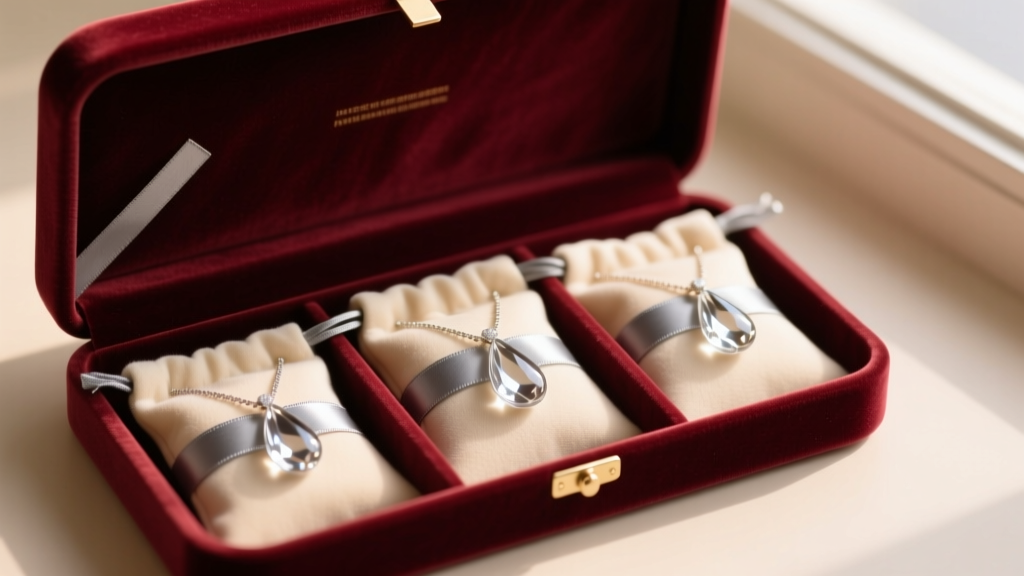
Always store your necklace in an individual polyethylene (PE) ziplock bag or a soft, unbleached cotton pouch. Never use polyvinyl chloride (PVC) plastic bags. PVC off-gasses hydrochloric acid over time, which can cause irreversible chemical etching on the surface of your glass teardrop and rapidly corrode sterling silver chains. Include a small silica gel packet and a 3M anti-tarnish strip inside the polyethylene bag to control humidity and absorb atmospheric sulfur.
What to Do If Your Glass Teardrop Chips or Cracks
Despite your best efforts, accidents happen. If your glass teardrop necklace sustains a chip or a hairline fracture, stop wearing it immediately. A hairline fracture compromises the structural integrity of the entire piece, and the tension from the bail can cause it to snap unpredictably. Do not attempt to glue a cracked glass pendant with superglue; cyanoacrylate adhesives have a different refractive index than glass and will create a glaring, cloudy white line along the fracture. For valuable artisan pieces, consult a professional lapidary or glass artist who can assess whether the piece can be safely re-shaped, polished, or re-fired in a kiln to heal the fracture.


