How to Shine Silver Necklace: Expert 925 Alloy Guide
Master how to shine silver necklace pieces with our expert metallurgy guide. Learn electrochemical reduction, 925 alloy care, and tarnish prevention.

The Metallurgy of 925 Silver and the Chemistry of Tarnish
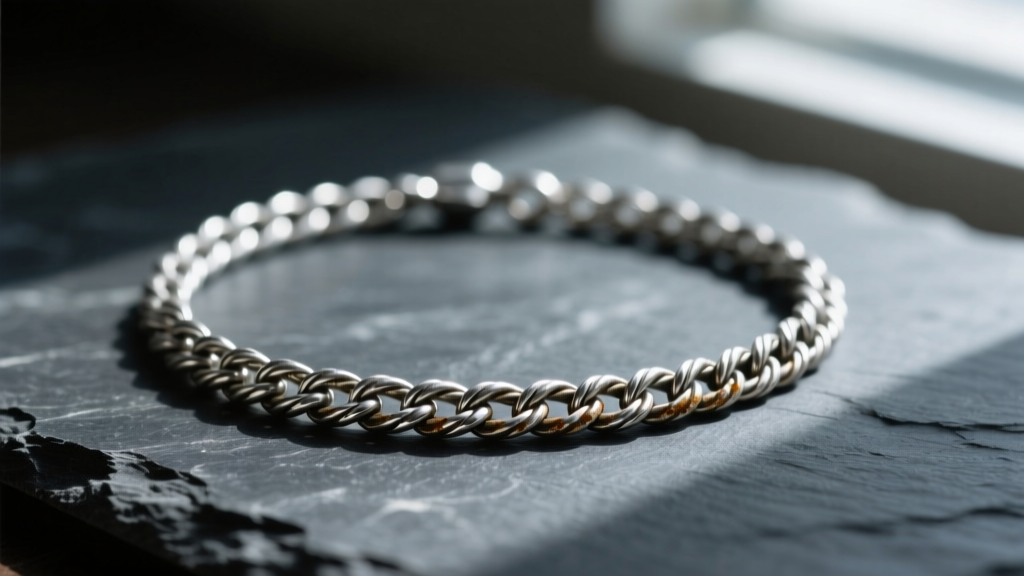
Understanding how to shine silver necklace pieces requires a foundational grasp of metallurgy. Pure silver (999 fine) is highly resistant to tarnish but lacks the tensile strength required for durable jewelry chains and clasps. To solve this, jewelers alloy pure silver with copper, creating 925 sterling silver (92.5% silver, 7.5% copper). While this copper addition provides structural integrity, it also introduces the primary catalyst for tarnish.
Contrary to popular belief, silver tarnish is not primarily silver oxide; it is silver sulfide (Ag2S). When the copper in the 925 alloy is exposed to trace amounts of hydrogen sulfide (H2S) in the atmosphere, a galvanic reaction occurs. The copper oxidizes first, creating microscopic galvanic cells on the surface of the necklace, which then accelerates the sulfidation of the silver. This results in the yellow, brown, and eventually black film that obscures the metal's natural luster. According to the Gemological Institute of America (GIA), environmental factors such as high humidity, airborne sulfur pollutants, and even the natural acidity of the wearer's skin can drastically accelerate this chemical process.
Electrochemical Reduction vs. Mechanical Abrasion
When determining how to shine silver necklace chains, pendants, and lockets, professionals divide methods into two distinct categories: electrochemical reduction and mechanical abrasion. Each interacts with the 925 alloy on a molecular level, and choosing the wrong method can permanently alter the surface topography of your jewelry.
| Method | Mechanism | Material Loss | Best Application |
|---|---|---|---|
| Electrochemical (Ionic Bath) | Reverses sulfidation via electron transfer | Zero (0 microns) | Heavy, uniform black tarnish on chains |
| Mechanical (Polishing Cloths) | Micro-abrasion of the tarnished surface layer | Low (1-3 microns) | Light yellowing, maintenance, high-polish finishes |
| Chemical Dips (Thiourea) | Acidic dissolution of silver sulfide | High (Strips copper) | Avoid for 925 jewelry (causes porosity) |
| Ultrasonic Cavitation | High-frequency sound waves dislodge debris | Zero (but risks structural damage) | Diamond pendants, sturdy links without soft gems |
The Ionic Bath: Step-by-Step Electrochemical Reduction
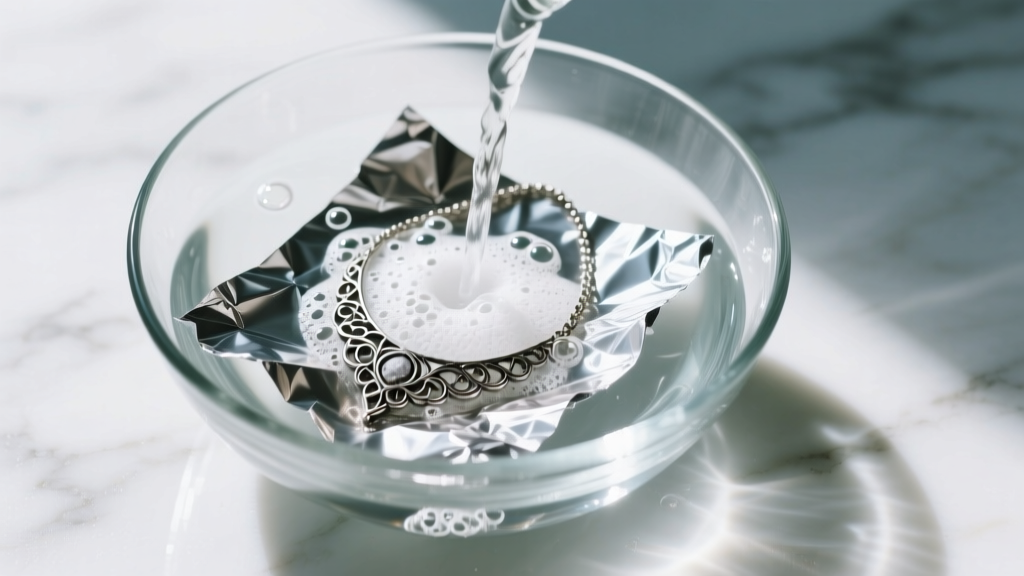
For heavily tarnished chain necklaces where mechanical polishing would require hours of tedious work and result in unnecessary metal loss, electrochemical reduction is the superior choice. This method utilizes a sacrificial anode to reverse the chemical reaction, converting silver sulfide back into pure silver without removing any of the underlying alloy.
Formulating the Electrolyte Solution
- Prepare the Anode: Line a heat-safe glass or ceramic bowl with heavy-duty aluminum foil, ensuring the shiny side faces up. The aluminum will act as the sacrificial anode.
- Heat the Solvent: Bring one liter of distilled water to a rolling boil (100°C). Distilled water is critical; tap water contains dissolved minerals and chlorides that can cause localized pitting on the silver.
- Add the Electrolyte: Stir in exactly two tablespoons (approx. 30 grams) of sodium carbonate (washing soda). Do not use sodium bicarbonate (baking soda), as its lower pH reduces the conductivity of the solution and slows the electron transfer rate.
- Initiate the Reaction: Place the silver necklace into the bowl, ensuring it makes direct physical contact with the aluminum foil. This physical connection is mandatory to close the electrical circuit.
- Monitor the Reduction: As the 3Ag2S + 2Al + 6H2O → 6Ag + 2Al(OH)3 + 3H2S reaction occurs, you will notice bubbling and a distinct sulfuric odor. Leave the necklace in the bath for 3 to 5 minutes.
- Neutralize and Dry: Remove the necklace with wooden tongs, rinse thoroughly under warm distilled water, and pat dry with a lint-free microfiber cloth.
Advanced Mechanical Polishing and Micron Loss
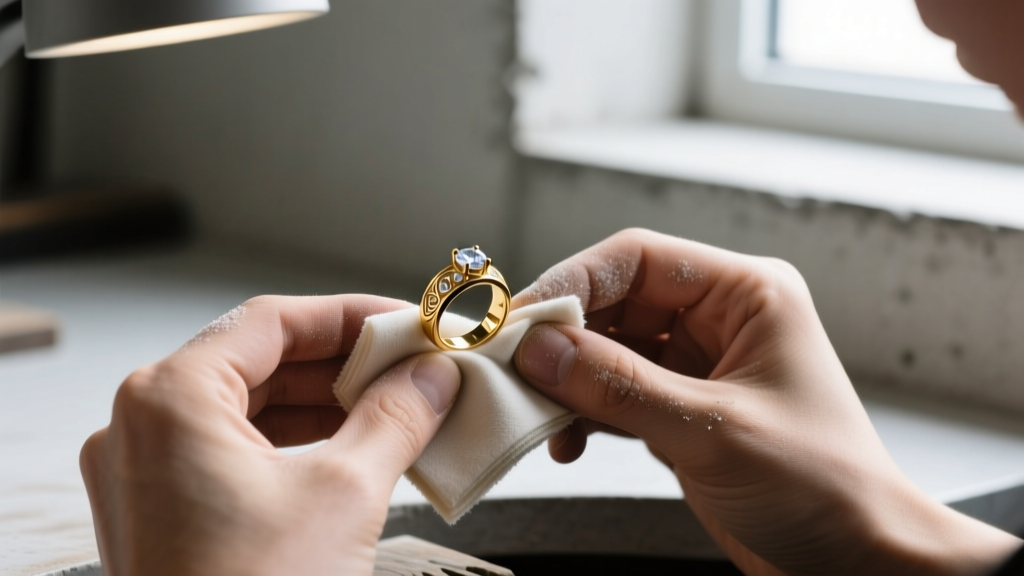
While the ionic bath is excellent for chains, it can sometimes leave the silver with a matte or slightly milky finish. To achieve a mirror-like specular reflection, mechanical polishing is required. However, every time you mechanically polish a necklace, you are removing a microscopic layer of the 925 alloy.
Professional jewelers use precipitated calcium carbonate or finely graded jeweler's rouge (iron oxide) suspended in a wax binder. When learning how to shine silver necklace pendants with intricate details, avoid harsh silica-based pastes. Silica particles are often larger than 10 microns and will leave micro-scratches that catch light diffusely, making the silver look dull over time. Instead, use a high-quality impregnated polishing cloth. According to conservation guidelines from the Smithsonian Museum Conservation Institute, gentle, unidirectional rubbing with a treated cloth removes only 1 to 2 microns of metal per session, preserving the integrity of hallmarks and engraving over decades of wear.
Ultrasonic Cleaners: Frequencies and Structural Caveats
Ultrasonic cleaners are a staple in professional jewelry workshops, but they must be used with precise technical parameters. Standard jewelry ultrasonics operate at a frequency of 42,000 Hz (42 kHz). At this frequency, the machine creates microscopic vacuum bubbles in the cleaning solution that implode against the metal surface—a process known as cavitation.
While cavitation is highly effective at blasting away sebum, dead skin cells, and environmental grime from the crevices of a rope or box chain, it poses severe risks to certain necklace components. The intense localized shockwaves can loosen the prongs securing gemstone pendants, fracture porous stones like turquoise or opals, and strip away intentional oxidized antiquing (blackening) applied to recessed areas of a pendant to enhance its relief. If you must use an ultrasonic cleaner for a sturdy silver chain, limit the cycle to 90 seconds and use a mild, non-ammoniated surfactant solution heated to exactly 50°C to maximize cavitation efficiency without thermal shock.
The Danger of Thiourea Chemical Dips
Many commercial 'instant' silver dips rely on thiourea and hydrochloric acid. While they instantly dissolve silver sulfide, they do so by aggressively stripping the copper from the surface layer of the 925 alloy. This leaves behind a microscopically porous, pure-silver surface that appears bright white initially. However, because the surface is now highly porous, it possesses a vastly increased surface area, causing the necklace to retarnish at an exponentially faster rate. Furthermore, the acidic residue can become trapped in the microscopic gaps of chain links, leading to long-term structural embrittlement. Expert jewelers universally advise against thiourea dips for fine 925 necklaces.
Long-Term Passivation and Storage Protocols
Once you have successfully restored the shine to your silver necklace, the final step is passivation—slowing the inevitable return of silver sulfide. Storing 925 silver in a standard cardboard jewelry box or a humid bathroom environment guarantees rapid retarnishing due to the presence of sulfur-based compounds in wood glues, paper, and ambient moisture.
- Activated Carbon Strips: Place 3M anti-tarnish strips inside your storage enclosure. These strips utilize activated carbon and zinc particles to preferentially absorb hydrogen sulfide gas before it can reach the silver.
- Relative Humidity Control: Tarnish requires moisture as a catalyst for the electrochemical reaction. Include silica gel desiccant packets in your storage bags to maintain the relative humidity (RH) below 40%.
- Barrier Bags: Store the necklace in an airtight, anti-tarnish polyethylene bag. Avoid standard plastic zip bags, as many cheap plastics off-gas sulfur compounds during degradation.
Expert Insight: If your silver necklace features a rhodium flash plating (a common practice to prevent tarnish and add a white-gold-like luster), never use the ionic aluminum bath or abrasive pastes. Rhodium is a platinum-group metal that does not tarnish, and polishing it will simply wear away the expensive plating, exposing the raw 925 alloy beneath.
By understanding the exact chemical and physical forces at play, you can maintain the brilliant luster of your 925 sterling silver necklaces for generations, avoiding the destructive pitfalls of commercial quick-fixes and relying instead on proven metallurgical science.


