Troubleshooting Your Red Heart Silver Necklace: Expert Fixes
Learn how to clean, repair, and restore your red heart silver necklace. Expert troubleshooting for tarnish, loose stones, and broken 925 chains.

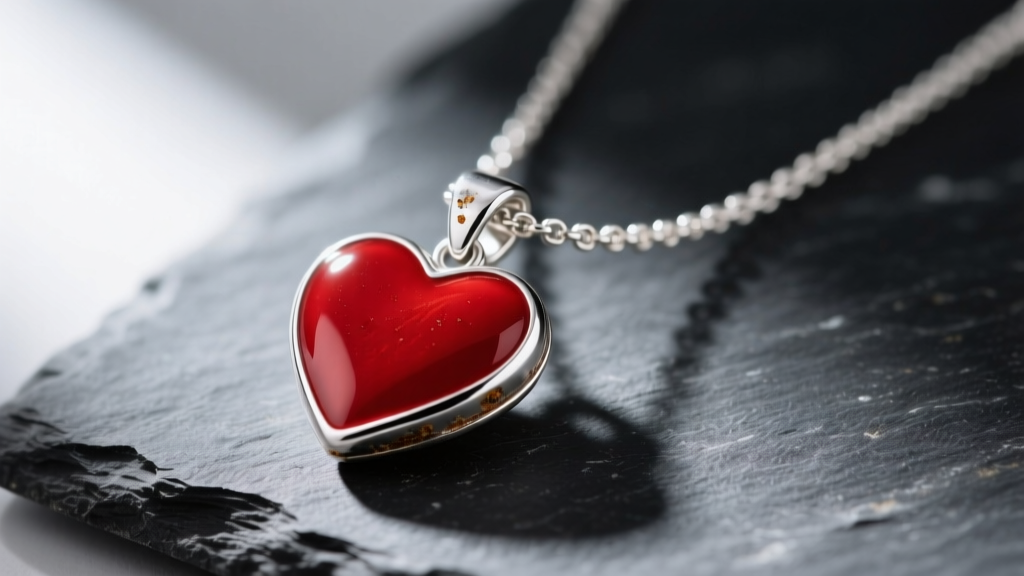
A red heart silver necklace is a timeless piece of jewelry, often carrying deep sentimental value. However, the combination of sterling silver and delicate red centerpieces—whether enamel, glass, ruby, or garnet—creates unique vulnerabilities. When your favorite pendant tarnishes, chips, or snaps, generic jewelry advice can actually cause irreversible damage. As a domain expert in jewelry metallurgy and gemology, I have compiled this comprehensive troubleshooting guide to help you diagnose, clean, and repair your necklace safely.
The Anatomy of a Red Heart Silver Necklace: Identify Your Materials
Before applying any cleaning solution or repair technique, you must accurately identify the materials. The term 'silver' is often misused, and the 'red' element dictates your entire troubleshooting strategy.
Identifying the Silver
Look for a hallmark on the bail or the back of the pendant. According to the Federal Trade Commission guidelines, genuine sterling silver must be marked '925', indicating 92.5% pure silver and 7.5% alloy (usually copper). The copper is what gives the metal strength, but it is also the primary culprit behind tarnish and blackening. If your piece is marked '999', it is fine silver, which is highly tarnish-resistant but too soft for daily wear chains. If there is no mark, or it says 'SP' (Silver Plated), aggressive polishing will strip the silver layer entirely, exposing the base brass or copper beneath.
Identifying the Red Centerpiece
- Vitreous Enamel: Fired glass fused to metal. It has a high gloss, feels cold to the touch, and is highly prone to shattering if dropped.
- Cold Enamel / Resin: Essentially painted epoxy. It feels slightly warm, may show microscopic bubbles, and will melt or cloud if exposed to harsh chemicals or heat.
- Garnet or Ruby: Natural gemstones. Rubies (Mohs hardness 9) are incredibly durable, while garnets (Mohs 6.5-7.5) are more susceptible to scratching and thermal shock.
- Red Glass / Cubic Zirconia: Often used in fashion jewelry. Glass (Mohs 5.5) scratches easily, and CZ can become cloudy if exposed to ultrasonic cleaners.
Troubleshooting Tarnish: Safe Cleaning Methods Matrix
Silver tarnish is a chemical reaction between the copper alloy in 925 silver and sulfur in the air, forming silver sulfide (Ag2S). Removing it requires care to avoid damaging the red centerpiece. Below is a decision matrix for safe cleaning based on your specific material combination.
| Red Material | Silver Polishing Cloth | Baking Soda & Foil Bath | Chemical Silver Dip | Ultrasonic Cleaner |
|---|---|---|---|---|
| Vitreous Enamel | Safe (Avoid enamel edges) | Risky (Can dull glaze) | Unsafe (Causes clouding) | Unsafe (Shatters enamel) |
| Resin / Cold Enamel | Safe | Unsafe (Discolors resin) | Unsafe (Melts resin) | Unsafe (Destroys adhesive) |
| Ruby / Garnet | Safe | Safe for Ruby, Risky for Garnet | Unsafe (Strips gem oils) | Safe for Ruby, Unsafe for Garnet |
| Red Glass / CZ | Safe | Safe | Unsafe (Strips coatings) | Unsafe (Fractures glass) |
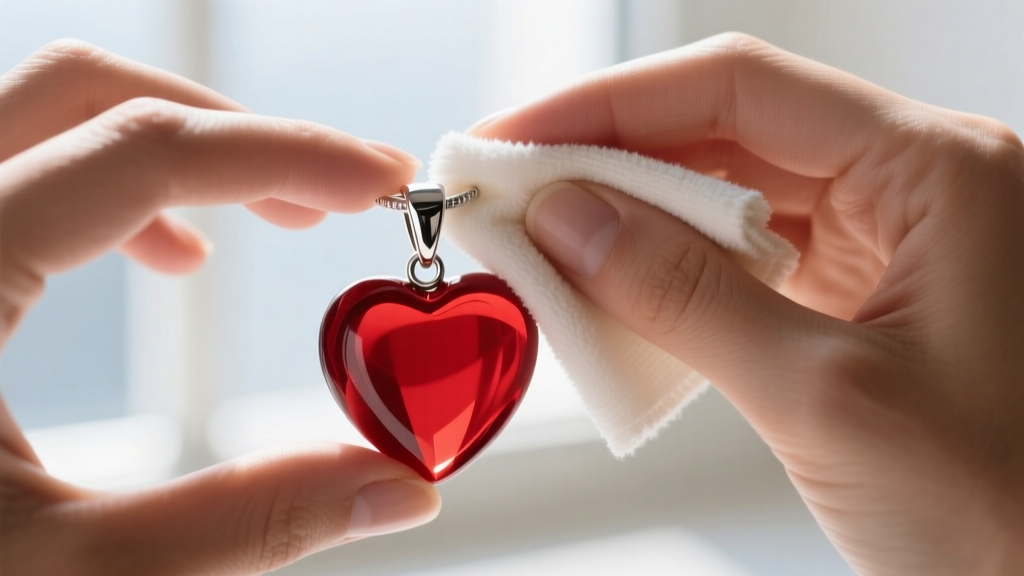
For the safest, most universally effective method across all red heart silver necklace variants, use a high-quality microfiber silver polishing cloth impregnated with jeweler's rouge. Gently buff the silver bail and the back of the pendant. As noted by the Gemological Institute of America (GIA), abrasive pastes and liquid dips should be avoided on any jewelry featuring porous stones, treated gems, or organic adhesives.
Fixing Physical Damage: Chipped Enamel and Loose Stones
Physical trauma is the most common reason a red heart silver necklace requires professional intervention. The repair path depends entirely on the nature of the damage.
The Epoxy Rescue for Loose Gems
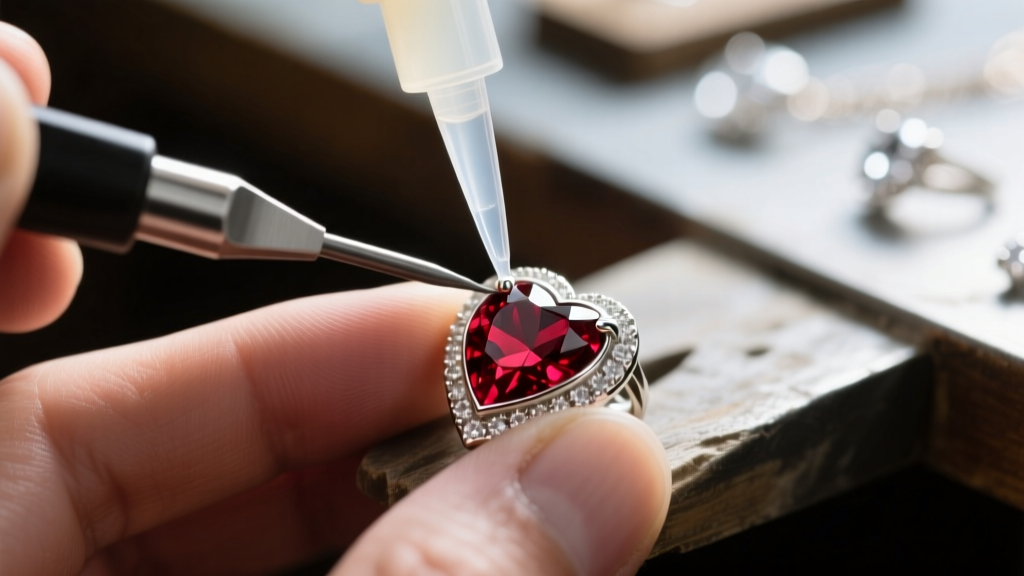
If your red garnet or ruby has fallen out of its bezel or prong setting, do not use standard super glue (cyanoacrylate). Super glue cures brittle, turns white over time, and will permanently ruin the gemstone's pavilion. Instead, use a two-part jeweler's epoxy like E6000 or G-S Hypo Cement.
- Clean the empty silver bezel with a cotton swab dipped in isopropyl alcohol to remove skin oils and old adhesive.
- Apply a microscopic dot of epoxy to the silver seat, avoiding the edges so it doesn't squeeze out.
- Use a wax-tipped jewelers pick to place the red stone.
- Let it cure undisturbed on a flat surface for 24 hours.
Dealing with Enamel Fractures
If the red vitreous enamel on your heart pendant has chipped or cracked, DIY repair is virtually impossible. Vitreous enamel requires a kiln firing at approximately 1,400°F (760°C) to melt the glass powder. Attempting to fill a chip with clear nail polish or resin will result in a yellowing, uneven patch that devalues the piece. For high-end enamel pieces, you must send the pendant to a specialist enamelist who can carefully grind out the damaged cell and re-fire the glass. For costume jewelry, it is often more cost-effective to replace the pendant entirely.
Chain and Clasp Failures: Why 925 Silver Snaps
A frequent complaint with silver necklaces is the chain snapping or the clasp failing. Sterling silver work-hardens over time. As the metal bends and flexes against your skin and clothing, the molecular structure becomes brittle, eventually leading to micro-fractures, usually right at the jump ring connecting the clasp.
Upgrading the Clasp
Many red heart silver necklaces come standard with a 'spring ring' clasp. These are notoriously weak; the tiny internal spring fails, or the thin silver lever bends outward, causing the necklace to slip off. Upgrade your necklace with a 925 sterling silver lobster claw clasp. Lobster claws feature a solid internal mechanism and a thicker outer shell, providing vastly superior security for heavy pendants.
Soldering Jump Rings
If your chain keeps breaking at the connection point, the issue is likely an open jump ring. Mass-produced jewelry often uses unsoldered jump rings that can easily be pulled apart by a snagged pendant. Take your necklace to a local bench jeweler to have the jump rings laser-welded or silver-soldered closed. According to technical resources from Rio Grande jewelry supply, soldering the jump rings adds less than a dollar to the repair cost but increases the structural integrity of the chain connection by over 400%.
Preventative Maintenance for Long-Term Wear
Troubleshooting is only half the battle; preventing the damage in the first place will keep your red heart silver necklace looking pristine for decades.
Expert Insight: Never store your silver necklace in a bathroom. The high humidity combined with sulfur compounds found in many personal care products, hairsprays, and even rubber bands will accelerate silver sulfide formation exponentially. Store your piece in an airtight polyethylene bag with a 3M anti-tarnish strip.
Furthermore, be mindful of the 'red' element during daily activities. If your pendant features a red resin or cold enamel center, remove it before applying sunscreen or hand sanitizer, as the alcohol and UV filters will dissolve the resin's topcoat, leaving it permanently cloudy. If it is a ruby or garnet, remove the necklace before entering a chlorinated pool; while the stone may survive, the chlorine will aggressively attack the copper alloy in the 925 silver, causing deep, irreversible pitting.
By understanding the specific metallurgy and gemology of your piece, you can move beyond generic cleaning hacks and apply targeted, professional-grade troubleshooting to your red heart silver necklace, ensuring it remains a vibrant and secure staple in your jewelry collection.


