Styling a Necklace With Crescent Moon: 2026 Celestial Trends
Discover how to style a necklace with crescent moon pendants in 2026. Explore celestial trends, layering techniques, and the best precious metals.

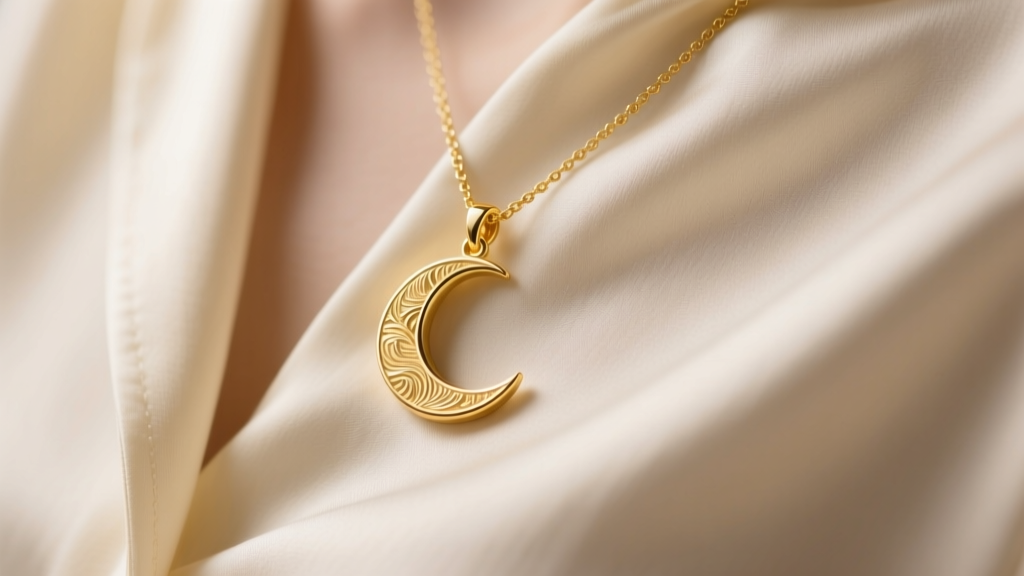
The 2026 Evolution of Celestial Jewelry
Celestial motifs have cycled through jewelry trends for decades, but the 2026 iteration of the necklace with crescent moon pendants represents a distinct departure from the past. We are officially moving beyond the ultra-thin, flat-stamped charms that dominated the mid-2010s minimalist era. Today, lunar jewelry is sculptural, asymmetrical, and heavily textured. Designers are embracing the raw, cratered topography of the moon, translating it into three-dimensional gold and silver pieces that catch the light from every angle.
According to recent trend forecasting by Vogue, the modern consumer is gravitating toward talismanic jewelry that feels both ancient and distinctly contemporary. A crescent moon necklace is no longer just a dainty accessory; it is a statement piece that anchors a curated stack. Whether forged in hammered recycled gold or cast in oxidized sterling silver, the crescent moon remains a powerful symbol of transition and intuition, making it a deeply personal addition to any jewelry wardrobe.
Sculptural Textures and Asymmetry
The defining characteristic of the 2026 crescent moon trend is texture. Jewelers are utilizing advanced lost-wax casting techniques to create pendants that mimic the actual topographical surface of the moon. Expect to see deep craters, ridged edges, and matte-finished interiors contrasted with high-polish outer rims. Furthermore, asymmetry is key. Rather than perfectly symmetrical crescents, the latest designs feature irregular, organic curves that look as though they were carved from raw meteorites.
This shift toward sculptural designs also impacts the weight of the pendants. While a standard 2015 moon charm might weigh less than a gram, today's premium crescent pendants often range from 3 to 6 grams. This added weight requires a fundamental shift in how we select the accompanying chains, a topic we will explore in detail below.
Gemstone Accents: The GIA Perspective on Lunar Stones
When a necklace with crescent moon motifs incorporates gemstones, the choices in 2026 are highly deliberate. The Gemological Institute of America (GIA) notes a surge in demand for cabochon-cut moonstones and lab-grown diamond pavé. Moonstone, with its adularescence (the billowy light effect that seems to float just below the surface), is the undisputed champion of lunar jewelry.
However, the setting techniques have evolved. Instead of traditional prong settings, modern crescent pendants utilize flush or gypsy settings for diamonds, embedding them directly into the 'craters' of the gold moon. This creates a subtle, starry-night effect without the snagging issues associated with raised prongs. For those seeking a pop of color, deep blue lapis lazuli and teal apatite are being inlaid into the negative space of the crescent, creating a striking visual contrast against yellow and rose gold.
Material Grades and Pricing Tiers
Investing in a celestial pendant requires understanding the metallurgy behind the piece. The table below outlines the standard material grades, hallmarks, and 2026 pricing expectations for high-quality crescent moon necklaces.
| Metal Type | Hallmark / Purity | Best For | Average Price Range (2026) |
|---|---|---|---|
| 18k Yellow Gold | 750 | Heirloom pieces, rich color contrast with moonstone | $850 - $2,400 |
| 14k Solid Gold | 585 | Everyday wear, high durability, affordable luxury | $350 - $900 |
| Sterling Silver | 925 | Oxidized/vintage finishes, budget-conscious buyers | $80 - $250 |
| Platinum | 950 | Diamond pavé settings, hypoallergenic needs | $1,500 - $3,500+ |
| Gold Vermeil | 925 base + 2.5μm 18k | Trend-driven styling, temporary wear | $120 - $200 |
Note: Always verify the hallmark. For vermeil, ensure the gold plating is at least 2.5 microns thick to prevent premature wear on the high-friction bail area.
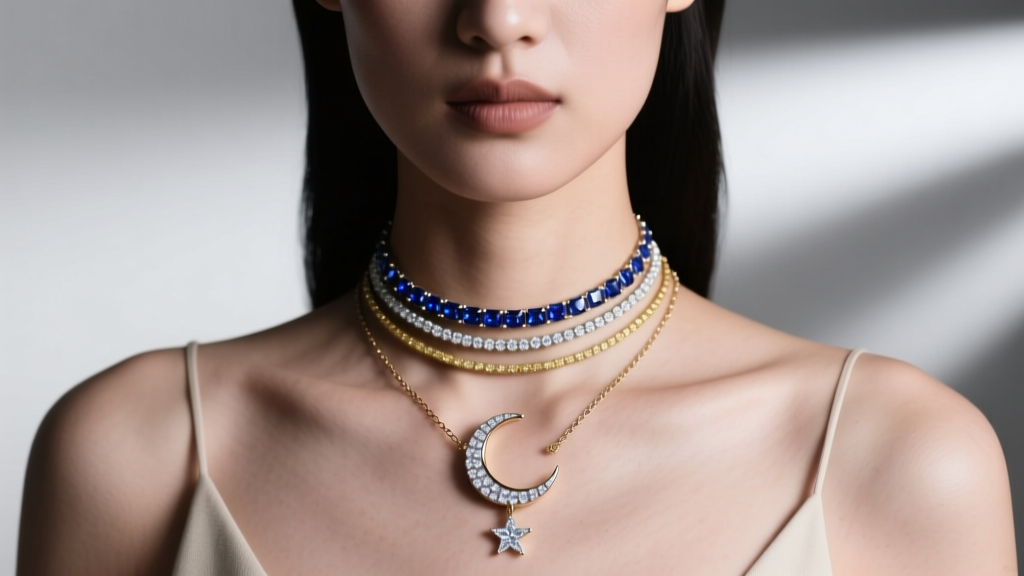
Chain Architecture: Matching Links to Lunar Weight
A common failure point in jewelry styling is pairing a heavy, sculptural pendant with a chain too delicate to support it. The pendulum effect of a 4-gram crescent moon will quickly snap a 22-gauge (0.6mm) cable chain. To ensure longevity and aesthetic harmony, follow these chain-pairing guidelines:
- For Lightweight Crescents (1-2 grams): A 1.0mm (18-gauge) cable or box chain is ideal. It provides a delicate, barely-there look that lets the moonstone or diamond pavé take center stage.
- For Medium Sculptural Pieces (3-4 grams): Opt for a 1.2mm to 1.5mm wheat chain. The woven, braided texture of a wheat chain complements the organic, cratered texture of a hammered moon pendant beautifully.
- For Heavy, Oversized Moons (5+ grams): A 2.0mm (14-gauge) paperclip chain or a thick rolo chain is mandatory. The flat links of a paperclip chain provide a modern, industrial contrast to the romantic lunar motif, a juxtaposition that is highly trendy in 2026.
Neckline Geometry: Where the Moon Should Rest
The visual impact of your necklace with crescent moon pendant depends heavily on the drop length and the neckline of your garment. The crescent shape naturally draws the eye along its curve, so placement is critical.
The 16-Inch Choker Drop
Best suited for crew necks, boat necks, and off-the-shoulder tops. A small, diamond-studded crescent resting just above the collarbone acts as a luminous focal point without competing with the fabric's edge. Avoid large, heavy pendants at this length, as they will flip and tangle.
The 18-Inch Princess Drop
The most versatile length, ideal for V-necks and scoop necks. The downward curve of the V-neck mirrors the cradle of the crescent moon, creating a harmonious geometric flow. An 18-inch drop allows a medium-sized, textured gold moon to rest perfectly in the hollow of the throat.
The 20 to 24-Inch Matinee Drop
Reserved for open collars, button-down shirts, and draped silk blouses. At this length, the pendant rests on the sternum. This is the ideal drop for heavy, oversized crescent pendants or for executing a complex layered stack.
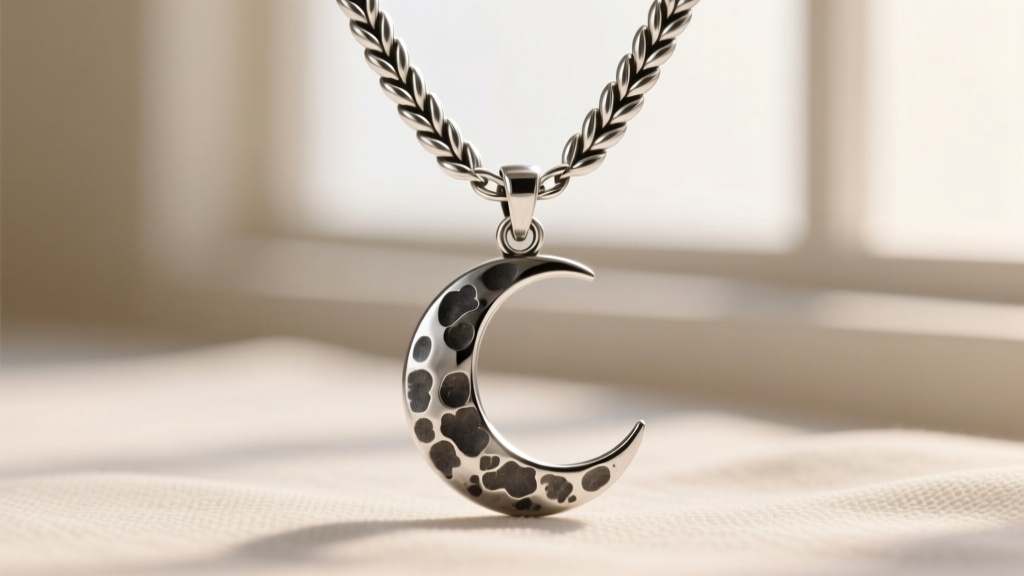
The 'Eclipse' Layering Framework
Layering celestial jewelry requires a structured approach to avoid a cluttered, tangled mess. The 2026 'Eclipse Stack' is a three-piece framework designed to create depth and movement around a central crescent moon pendant.
- The Anchor (15-16 inches): Start with a simple, unadorned 1.5mm herringbone or snake chain. This provides a liquid-metal base layer that catches the light and frames the neck.
- The Focal Point (17-18 inches): This is where your primary necklace with crescent moon pendant sits. Choose a piece with significant texture or a vibrant gemstone inlay. Ensure the bail (the loop the chain passes through) is wide enough to prevent friction against the anchor chain.
- The Satellite (20-22 inches): Finish the stack with a longer, asymmetrical element. A single, bezel-set diamond on a delicate 1.0mm chain, or a tiny lightning bolt pendant, adds a vertical element that elongates the torso and balances the horizontal curve of the crescent.
"The secret to a successful celestial stack is negative space. Allow at least 1.5 to 2 inches of chain between each pendant to ensure they lay flat and don't scratch one another during wear." — Senior Jewelry Stylist, Jewel Style Radar
Care and Maintenance for Textured Lunar Pendants
The deep craters and hammered textures that define the 2026 crescent moon trend also make these pieces magnets for lotions, perfumes, and skin oils. To maintain the contrast between the matte craters and the polished rims, clean your pendant bi-weekly using a soft-bristled baby toothbrush and a solution of warm water and mild dish soap. Avoid ultrasonic cleaners if your crescent features moonstone or opal inlays, as the high-frequency vibrations can fracture these delicate, water-bearing gemstones. Store your necklace flat or hung by its clasp to prevent the chain from kinking and the pendant from scratching neighboring pieces.


