Shema Necklace Care: Expert Cleaning & Maintenance Guide
Learn expert tips to clean, polish, and maintain your Shema necklace. Discover safe methods for silver, gold, and engraved Hebrew letter pendants.

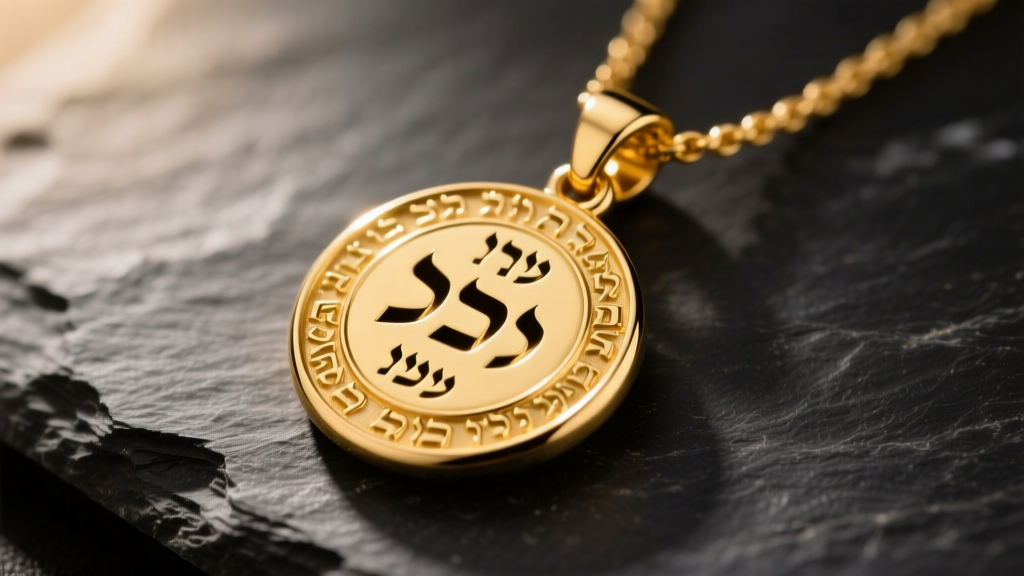
The Spiritual and Material Significance of the Shema Pendant
The Shema Yisrael is the central prayer of the Jewish faith, and wearing a Shema necklace keeps this profound declaration of faith close to the heart. Because these pendants rest directly against the skin, they are constantly exposed to sebum, sweat, cosmetic lotions, and environmental pollutants. Over time, this exposure degrades the metal's luster and traps debris within the intricate Hebrew engravings. Proper care is not just about maintaining aesthetic brilliance; it is about preserving the legibility and sanctity of the sacred text, whether it features the single word 'Shema' (שמע) or the full first verse of the prayer.
Unlike simple geometric pendants, Shema necklaces often feature deep CNC-milled or hand-engraved Hebrew letters. The crevices of the Shin (ש), Mem (מ), and Ayin (ע) act as microscopic traps for dead skin cells and dust. Furthermore, many of these pendants feature intentional oxidation (antiquing) to make the letters stand out against the polished metal. Using the wrong cleaning agents can strip this dark patina, rendering the sacred text flat and difficult to read. This comprehensive guide provides metallurgically sound, expert-level maintenance protocols for your Shema jewelry in 2026.
Material Breakdown: What is Your Shema Necklace Made Of?
Before applying any cleaning solution, you must identify the exact metal grade of your pendant and chain. Different alloys react differently to chemical surfactants and mechanical agitation. Below is a breakdown of common Shema necklace materials and their specific care requirements.
| Material Grade | Alloy Composition | Tarnish Risk | Recommended Cleaning Agent |
|---|---|---|---|
| 925 Sterling Silver | 92.5% Silver, 7.5% Copper | High (Copper oxidizes) | Mild dish soap & distilled water |
| 14k Yellow Gold | 58.3% Gold, Copper/Silver/Zinc | Low | Warm water & ammonia-free surfactant |
| 18k White Gold | 75% Gold, Palladium/Nickel, Rhodium plated | Very Low (but plating wears) | Professional ultrasonic & rhodium re-plating ($45-$85) |
| 316L Stainless Steel | Iron, Chromium, Nickel, Molybdenum | None | Isopropyl alcohol or mild glass cleaner |
According to the Gemological Institute of America (GIA), understanding your metal's alloy composition is the first step in preventing irreversible chemical damage, particularly for gold alloys which can suffer from stress corrosion cracking if exposed to harsh chlorides.
Step-by-Step Cleaning Guide for Engraved Shema Pendants
To safely remove impacted debris from deep Hebrew engravings without damaging the metal or the antiquing, follow this four-step protocol. This method is safe for solid silver, gold, and platinum Shema pendants.
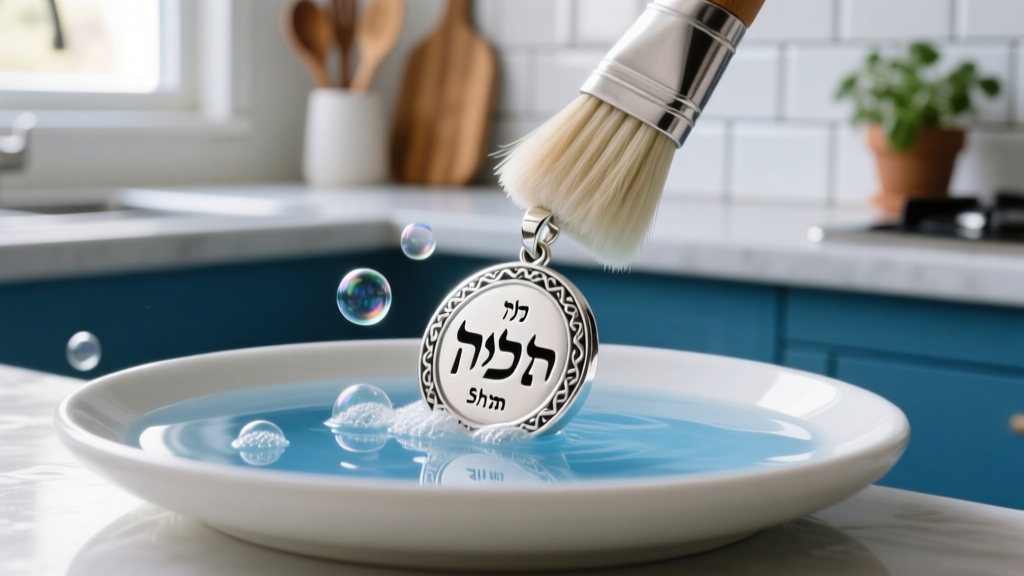
- Step 1: The Surfactant Soak. Fill a small glass bowl with distilled water (tap water contains hard minerals that can leave micro-spots). Add three drops of a mild, phosphate-free dish soap (like Dawn). Submerge the pendant and let it soak for 15 to 20 minutes. This breaks down the lipid bonds of skin oils and lotions.
- Step 2: Micro-Agitation. Remove the pendant and use a soft-bristled baby toothbrush (bristle diameter of 0.1mm or less). Gently brush the Hebrew letters in a circular motion. Do not use a standard adult toothbrush, as the stiffer bristles can micro-scratch high-polish gold and silver surfaces.
- Step 3: The Distilled Rinse. Rinse the pendant thoroughly under a gentle stream of distilled water to wash away the suspended debris and soap residue.
- Step 4: Capillary Drying. Pat the pendant dry with a clean, lint-free microfiber cloth. Avoid paper towels, which shed cellulose fibers that easily become wedged inside the tight corners of the Ayin and Mem letters.
Special Care for Scroll and Mezuzah-Style Pendants
Some Shema necklaces are designed as miniature mezuzahs or hollow scrolls that contain an actual parchment scroll (klaf) inscribed by a scribe (sofer). Never submerge these pendants in water. Moisture will cause the parchment to warp, mold, and render the scroll halachically invalid. For these specific designs, use a slightly damp microfiber cloth to wipe only the exterior metal casing, and use a dry, soft-bristled brush to gently sweep dust out of the exterior engravings.
Chain Maintenance: Preventing Tarnish and Breakage
The chain of a Shema necklace requires as much attention as the pendant. The most common chain styles for these pendants are 18-gauge (1.02mm) cable chains and 16-gauge (1.29mm) box chains. Box chains, while highly durable and resistant to pulling, feature tight, square interlocking links that act as magnets for sebum and cosmetic powders.
If your chain is solid gold or sterling silver without intentional oxidation, an ultrasonic jewelry cleaner is the most efficient way to blast debris out of the chain links. However, if your chain features a blackened antiqued finish, ultrasonic cavitation will strip the dark patina from the recesses of the links. For antiqued chains, stick to the manual soaking and brushing method described above. Always inspect the jump ring connecting the pendant to the chain; the constant friction of the Shema pendant swinging against the jump ring can cause the metal to thin and eventually snap. Have a jeweler check this connection point annually.
Common Mistakes That Ruin Hebrew Engravings
When caring for religious jewelry, well-intentioned but misinformed cleaning methods can cause permanent damage. Avoid these critical errors:
- Using Silver Dip (Thiourea-based cleaners): Liquid silver dips chemically strip tarnish instantly, but they will also strip the intentional black oxidation used to highlight the Shema lettering. Once the antiquing is gone, the Hebrew letters will look flat and faded, requiring a jeweler to manually re-apply liver of sulfur and re-polish the high points.
- Scrubbing with Toothpaste: Toothpaste contains hydrated silica, which has a Mohs hardness of around 5. Sterling silver and 14k gold are relatively soft metals. Scrubbing with toothpaste will leave a web of micro-scratches across the pendant's surface, permanently dulling the mirror finish.
- Wearing in Chlorinated Pools or the Dead Sea: Chlorine reacts violently with the copper and zinc alloys in 14k and 18k gold, causing 'stress corrosion cracking.' This can cause the bail (the loop holding the pendant) to become brittle and snap off. The high salinity and mineral content of the Dead Sea will also rapidly pit and tarnish sterling silver.
Expert Insight: Polishing is not the same as cleaning. Cleaning removes foreign debris; polishing removes a microscopic layer of the metal itself to smooth out scratches. Over-polishing a Shema pendant will round off the sharp, crisp edges of the Hebrew letters, eventually making them illegible. Only polish when absolutely necessary, and rely on regular surfactant cleaning for routine maintenance.
Storage Solutions for Long-Term Preservation
How you store your Shema necklace when not wearing it dictates how often it needs deep cleaning. Sterling silver tarnishes when exposed to hydrogen sulfide in the ambient air. To prevent this, never leave your necklace sitting out on a bathroom counter or dresser where humidity fluctuates.
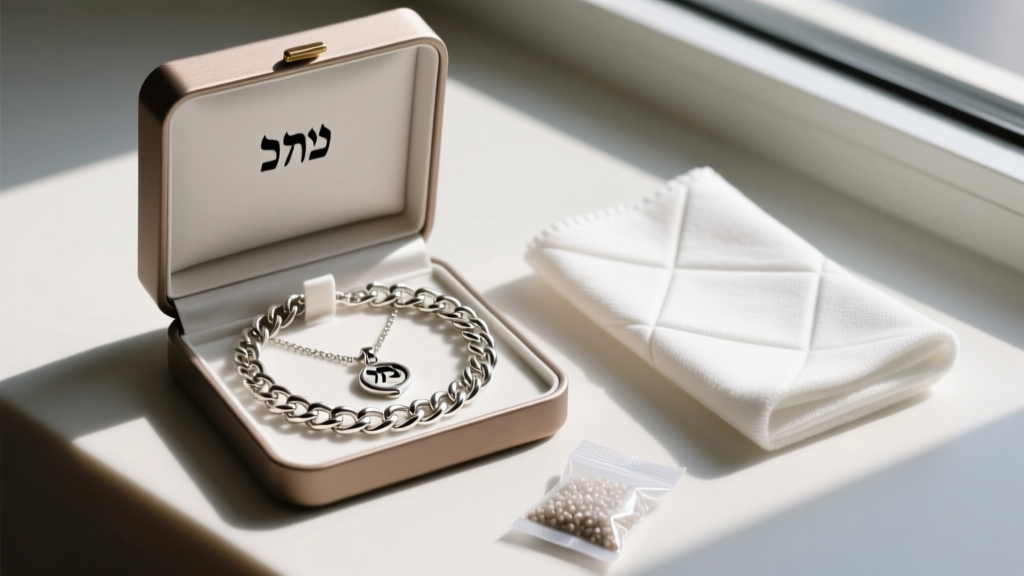
Store your necklace in an airtight polyethylene bag alongside a 3M anti-tarnish strip and a small silica gel desiccant packet to control moisture. Ensure the chain is fully unclasped and laid flat or hung to prevent kinking. For ultimate protection, invest in a jewelry box lined with Pacific cloth or treated anti-tarnish flannel, which actively absorbs corrosive gases before they can reach the silver or copper alloys in your gold.
Expert FAQs
Can I use a jewelry polishing cloth on my Shema pendant?
Yes, but only on the raised, high-polish areas of the metal. Avoid pressing the polishing cloth deep into the engraved Hebrew letters, as the mild abrasives in the cloth can slowly wear away the dark antiquing over time.
How often should I clean my Shema necklace?
If worn daily against the skin, a light cleaning with mild soap and water should be performed every two to three weeks. A deeper inspection of the chain links and jump ring should be done every six months.
For more information on the metallurgical properties of precious metals and safe cleaning protocols, consult resources from Rio Grande Jewelry Supply, a leading authority on jewelry fabrication and care.


