Medic Alert Necklace Materials: Titanium vs Steel Guide
Compare medic alert necklace materials like titanium, surgical steel, and silver. Learn about durability, skin safety, and engraving clarity.

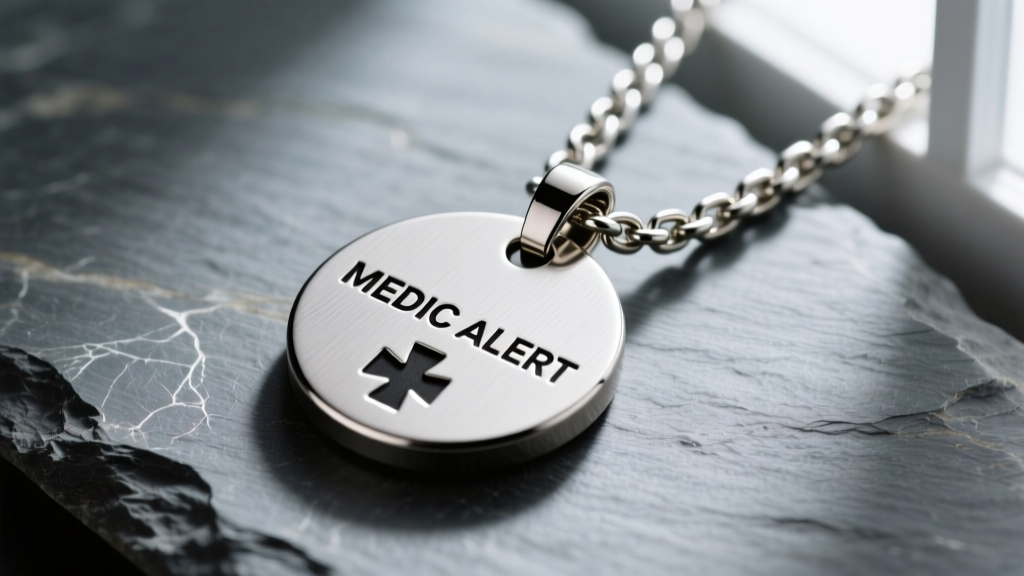
Why Material Choice Dictates Medical Safety
When selecting a medic alert necklace, most buyers focus exclusively on the aesthetic design or the clasp type, treating the pendant metal as an afterthought. However, from a metallurgical and emergency-response perspective, the material of your medic alert necklace is a critical failure point. In a medical emergency, first responders rely on immediate visual identification of allergies, conditions, and emergency contacts. If your pendant metal tarnishes, scratches, or causes contact dermatitis that forces you to take it off, the jewelry fails its primary life-saving purpose.
This guide provides a deep-dive material comparison of the most common metals used in medical ID jewelry. We will analyze Vickers hardness, biocompatibility standards, engraving legibility, and long-term wear characteristics to help you choose the safest, most durable option for your specific lifestyle.
The Big Three: Titanium, Stainless Steel, and Sterling Silver
Grade 23 Titanium (Ti-6Al-4V ELI): The Hypoallergenic Standard
Not all titanium is created equal. While Grade 2 (Commercially Pure) titanium is common in cheap fashion jewelry, high-end medic alert necklaces should utilize Grade 23 (Ti-6Al-4V ELI). This is the exact aerospace and medical-grade alloy governed by FDA standards for surgical implants. The 'ELI' stands for Extra Low Interstitial, meaning it has reduced oxygen, nitrogen, carbon, and iron content, drastically improving its fracture toughness and biocompatibility.
With a tensile strength of roughly 895 MPa and a Vickers hardness of 330 HV, Grade 23 titanium is incredibly resistant to bending and scratching. More importantly, it is 100% nickel-free. For individuals with severe contact dermatitis or systemic nickel allergies, titanium is the only metal that guarantees zero allergic response, ensuring you never have to remove your medical ID.
316L Surgical Stainless Steel: The Durable Workhorse
316L stainless steel is the most popular material for medical ID jewelry due to its excellent balance of cost, weight, and durability. The 'L' denotes low carbon, which prevents carbide precipitation during welding and manufacturing, ensuring structural integrity. It also contains 2-3% molybdenum, which provides exceptional resistance to chloride corrosion—meaning it will not rust or pit when exposed to sweat, swimming pools, or ocean water.
However, 316L does contain 10-14% nickel. While the nickel is tightly bound within the alloy's crystal lattice and generally passes the EU Nickel Directive for prolonged skin contact, individuals with hyper-sensitive nickel allergies may still experience localized rashes. According to the Mayo Clinic, even trace nickel exposure can trigger severe dermatitis in sensitized patients, making steel a risky choice for this specific demographic.
925 Sterling Silver: The Classic but High-Maintenance Option
Sterling silver (92.5% silver, 7.5% copper) offers a traditional, high-polish aesthetic that blends seamlessly with fine jewelry. With a Vickers hardness of only 60-70 HV, it is significantly softer than steel or titanium. This means sterling silver medic alert pendants will accumulate micro-scratches from daily wear, which can eventually obscure shallow engravings.
The primary failure mode of sterling silver in a medical context is tarnish. The copper alloy reacts with atmospheric sulfur and human sweat to form silver sulfide (Ag2S), a black layer that can render laser-engraved text completely illegible to a paramedic in a poorly lit ambulance. Unless you commit to weekly polishing or purchase a rhodium-plated variant, silver is a poor choice for critical medical identification.
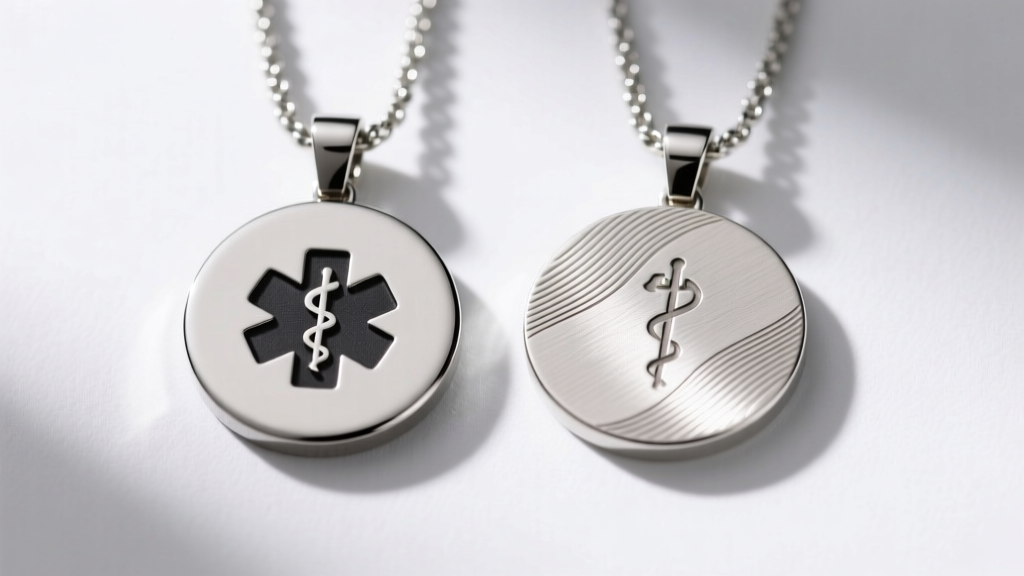
Material Properties Comparison Chart
Understanding the physical properties of these metals helps contextualize their real-world performance. The table below outlines the critical metrics that dictate how a medic alert necklace will perform under stress and over time.
| Property | Grade 23 Titanium | 316L Stainless Steel | 925 Sterling Silver |
|---|---|---|---|
| Vickers Hardness (HV) | ~330 HV | ~150-200 HV | ~60-70 HV |
| Nickel Content | 0% (Hypoallergenic) | 10-14% (Bound) | 0% (Contains Copper) |
| Corrosion Resistance | Exceptional | Excellent (Chloride safe) | Poor (Tarnishes easily) |
| Engraving Method | Fiber Laser (Annealed) | Fiber Laser (Shallow) | Rotary CNC (Deep cut) |
| Avg. Price Range (Pendant) | $45 - $90 | $25 - $50 | $40 - $120 |
Engraving Legibility: How Metals React to Lasers
The legibility of your medical data is paramount. The MedicAlert Foundation emphasizes that first responders need high-contrast, easily readable text. The engraving method used depends entirely on the base metal.
Fiber Laser Engraving (1064 nm): This is the industry standard for titanium and stainless steel. On Grade 23 titanium, the fiber laser alters the surface oxide layer through controlled heat (annealing), turning the engraved text a deep, permanent black without removing any material. This creates a flush, high-contrast mark that will never fade or collect dirt. On 316L steel, the laser creates a shallow, frosted mark. Because steel does not anneal black as easily as titanium, manufacturers often use a secondary process to rub black enamel into the shallow laser grooves to improve contrast. Over years of friction, this enamel can wear out, reducing legibility.
Rotary CNC Engraving: Because sterling silver reflects laser wavelengths and conducts heat too rapidly for clean fiber laser marks, it requires rotary engraving. A diamond or carbide drag bit physically cuts into the soft silver, creating deep, tactile grooves. While highly legible initially, these deep grooves act as traps for dead skin cells, lotions, and tarnish, requiring frequent cleaning with a soft brush to maintain contrast.
Chain Mechanics: Break Strength and Clasp Failures
A medic alert pendant is useless if the chain snaps or the clasp fails. The pendant material often gets all the attention, but the chain is the structural weak point.
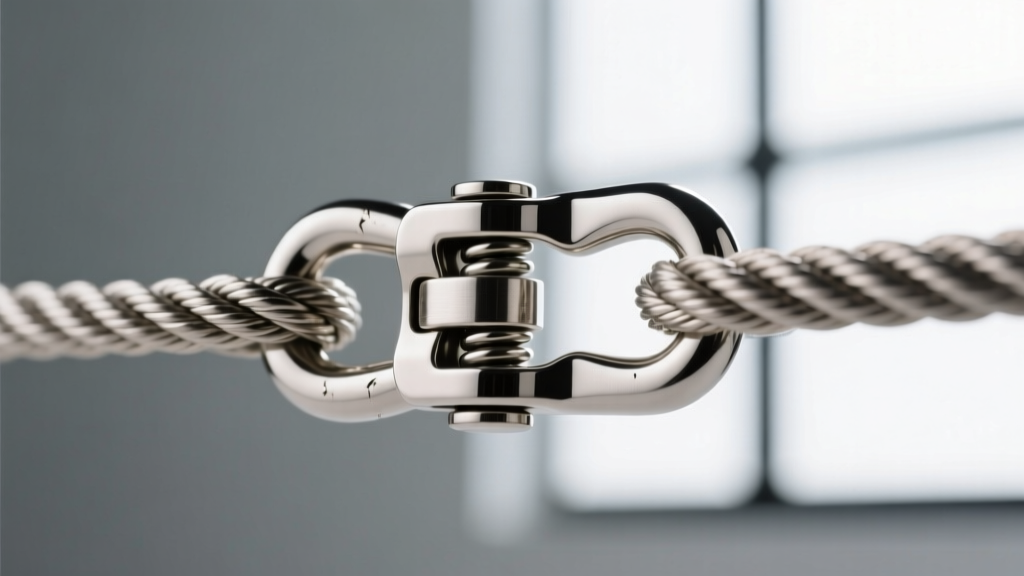
Chain Link Architecture
Box Chains: While visually appealing and popular for medical IDs, box chains are constructed from interlocking square links that lack structural reinforcement. A standard 2.0mm sterling silver or steel box chain has a tensile break strength of only 12 to 18 lbs. If the pendant snags on clothing or equipment, the lateral torque will easily pop the square links open.
Rope and Welded Cable Chains: For genuine security, opt for a rope chain or a welded cable chain. The twisted geometry of a 2.5mm rope chain distributes stress across multiple contact points, pushing the break strength well over 45 lbs. Welded cable chains, where every individual link is soldered shut, offer the highest security, ensuring that a sudden yank will break the clasp spring rather than tearing the chain links apart.
Clasp Selection
Avoid spring-ring clasps at all costs for medical jewelry. The internal tension springs degrade rapidly with exposure to sweat and chlorine, leading to unexpected failures. Always upgrade to a heavy-duty lobster clasp or a magnetic safety clasp with a secondary locking mechanism. Lobster clasps feature a solid cast body and a thicker internal spring, providing vastly superior lateral shear strength.
Lifestyle Matching: Which Metal Fits Your Daily Routine?
Your daily environment dictates which material will perform best over a 5-to-10-year lifespan.
- The Swimmer & Athlete: If you wear your necklace in chlorinated pools, the ocean, or during heavy sweating, Grade 23 Titanium is mandatory. While 316L steel resists chlorides well, the enamel fill in the engraving can degrade from constant chemical exposure. Titanium's annealed black marks are impervious to pool chemicals.
- The Office Worker & Professional: If you work in a climate-controlled environment and want a piece that mimics fine jewelry, a rhodium-plated sterling silver pendant on a welded cable chain is acceptable, provided you maintain a monthly polishing schedule to prevent silver sulfide buildup.
- The Manual Laborer & Mechanic: For those working with their hands, 316L stainless steel offers the best impact resistance. It will absorb scratches and dents without compromising the structural integrity of the pendant, and its lower replacement cost makes it practical for harsh environments.
Final Verdict: Making the Safest Choice
When engineering a piece of jewelry meant to save your life, aesthetics must take a backseat to metallurgical reliability. Grade 23 Titanium emerges as the undisputed champion for medic alert necklaces. Its absolute biocompatibility, immense tensile strength, and the permanent, high-contrast nature of fiber-laser annealed engraving make it the most fail-safe material available. If budget constraints are a primary concern, 316L surgical stainless steel is a highly capable runner-up, provided you do not suffer from severe nickel sensitivities and you pair it with a high-tensile rope chain and a robust lobster clasp. By prioritizing material science over superficial design, you ensure that your medical ID remains legible, intact, and ready to speak for you when you cannot.


