How to Clean and Care for Your Buffy Cross Necklace
Learn how to clean, polish, and maintain your Buffy cross necklace. Expert tips for sterling silver, pewter, and plated replicas to prevent tarnish.

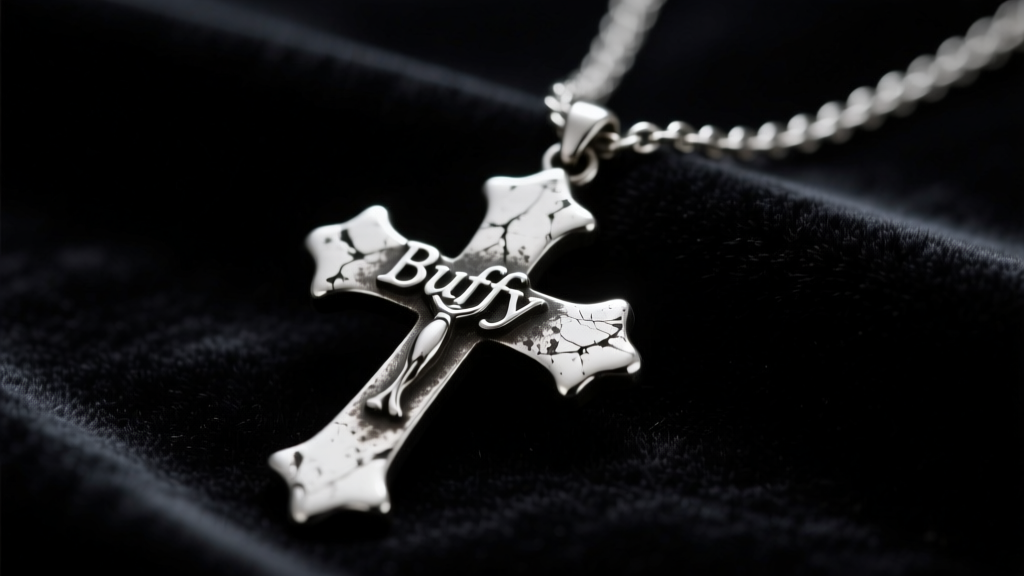
For fans of 90s and early 2000s pop culture, the Buffy cross necklace is more than just a piece of jewelry; it is a symbol of empowerment, nostalgia, and iconic television history. Whether you own an original screen-used prop, a high-end sterling silver replica from a master silversmith, or a mass-produced pewter version from a convention vendor, maintaining its condition requires specific, material-aware care. Daily wear exposes the pendant and chain to sebum, dead skin cells, cosmetics, and environmental sulfur, all of which accelerate degradation.
Unlike simple, smooth-band rings, the Buffy cross features intricate crevices, intentional antiquing, and delicate chain links that trap grime and moisture. Using the wrong cleaning method can strip intentional oxidation, scratch soft alloys, or permanently ruin silver plating. In this comprehensive guide, we break down the exact metallurgical properties of your necklace and provide a step-by-step maintenance framework to keep your Slayer cross in pristine, camera-ready condition.
Identify Your Cross Material First
The most critical mistake collectors make is applying a universal cleaning method to an unknown metal. The 'Buffy cross' has been manufactured in dozens of variations over the last three decades. Before applying any liquid or polish, you must identify your base material. According to the Jewelers of America, treating plated base metals with silver polish will instantly strip the microscopic top layer, exposing the brass or zinc beneath.
| Material Type | Visual Cues & Stamps | Tarnish Risk | Primary Cleaning Danger |
|---|---|---|---|
| Sterling Silver (925) | Stamped '925' or 'Sterling'; bright but develops black/yellow patina. | High (Silver Sulfide) | Stripping intentional crevice oxidation. |
| Pewter / Britannia Metal | Heavy, dull grey, no stamp; feels slightly soft to the touch. | Low (Oxidizes slowly) | Abrasive scratching (Mohs 1.5-2.0). |
| Plated Base Metal | No stamp; flaking reveals yellow/brass or grey/zinc underneath. | Extreme (Once plated) | Chemical stripping of the silver wash. |
Step-by-Step Cleaning for Sterling Silver Replicas
If your necklace is solid sterling silver, your primary enemy is silver sulfide ($Ag_2S$), the black compound that forms when silver reacts with hydrogen sulfide in the air. While many internet hacks suggest the 'aluminum foil and baking soda' electrochemical bath, do not use this on your Buffy cross. This method strips all oxidation, including the intentional black antiquing applied by the jeweler to make the cross's intricate gothic details pop.
The Mild Surfactant Method
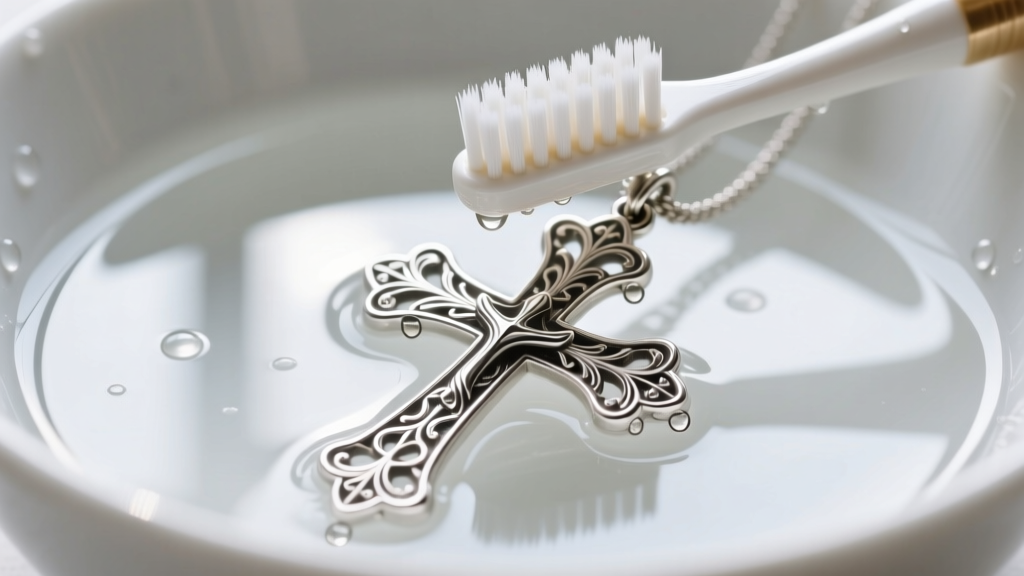
For routine cleaning of sterling silver, rely on a mild surfactant rather than chemical reducers. Mix three drops of phosphate-free dish soap (like Dawn) into a bowl of lukewarm distilled water. Submerge the necklace for exactly three minutes to loosen sebum and cosmetic buildup. Avoid hot water, which can cause rapid thermal expansion and weaken the solder points at the bail (the loop connecting the cross to the chain).
Tackling the Intricate Crevices
The Buffy cross features deep, ornate grooves that a cloth cannot reach. Use a brand-new, extra-soft baby toothbrush. Dip the bristles in your soapy solution and use gentle, circular motions to agitate the dirt out of the crevices. Never use a standard adult toothbrush or a wire brush; the nylon bristles on adult brushes are often stiff enough to leave micro-scratches on highly polished silver surfaces. Rinse thoroughly under distilled water and pat dry with a lint-free microfiber cloth. Finish by gently buffing the raised, polished areas with a treated silver polishing cloth, carefully avoiding the darkened recesses.
Safe Cleaning Methods for Pewter and Base Metal Alloys
Many affordable replicas are cast in pewter or a zinc-aluminum alloy. Pewter is exceptionally soft, ranking just 1.5 to 2.0 on the Mohs hardness scale. It does not tarnish black like silver; instead, it develops a dull, cloudy grey patina over time.
To clean a pewter Buffy cross, use only a damp microfiber cloth with a tiny drop of mild soap. Never soak pewter in water for extended periods, and absolutely never use commercial silver dips or abrasive polishing pastes. These products will strip the protective wax coating often applied by the manufacturer and leave the soft metal vulnerable to deep, permanent scratching. For base-metal plated versions, limit cleaning to a quick wipe with a barely damp cloth. If the plating is already flaking near the bail or the clasp, cease all wet cleaning immediately to prevent the underlying zinc from oxidizing and turning your skin green.
Chain Maintenance and Clasp Care
The chain on a Buffy cross necklace is typically a delicate cable chain, which is highly prone to kinking and tangling. The mechanical stress points—specifically the jump ring connecting the chain to the clasp, and the springring mechanism itself—require periodic inspection.
- Un-kinking the Chain: If your cable chain develops a stubborn knot or kink, do not pull it. Lay the chain flat on a hard surface, apply a single drop of baby oil or mineral oil to the knot, and use two sewing needles to gently tease the links apart. Wipe away the excess oil with a soft cloth afterward.
- Clasp Lubrication: Springring clasps often become stiff due to dried lotion or soap scum trapped in the tiny spring mechanism. Use a wooden toothpick dipped in a minuscule amount of sewing machine oil to lubricate the hinge. Wipe away all excess to prevent attracting dust.
- Jump Ring Security: Inspect the split jump ring at the clasp. If the gap is open, use two pairs of smooth-jawed chain-nose pliers to twist it closed. Never pull the ring apart laterally, as this weakens the metal's temper.
Proper Storage to Prevent Tarnish and Scratches
How you store your necklace when you are not patrolling the Hellmouth is just as important as how you clean it. The Gemological Institute of America (GIA) emphasizes that controlling the micro-environment of your jewelry storage is the most effective way to halt chemical degradation.
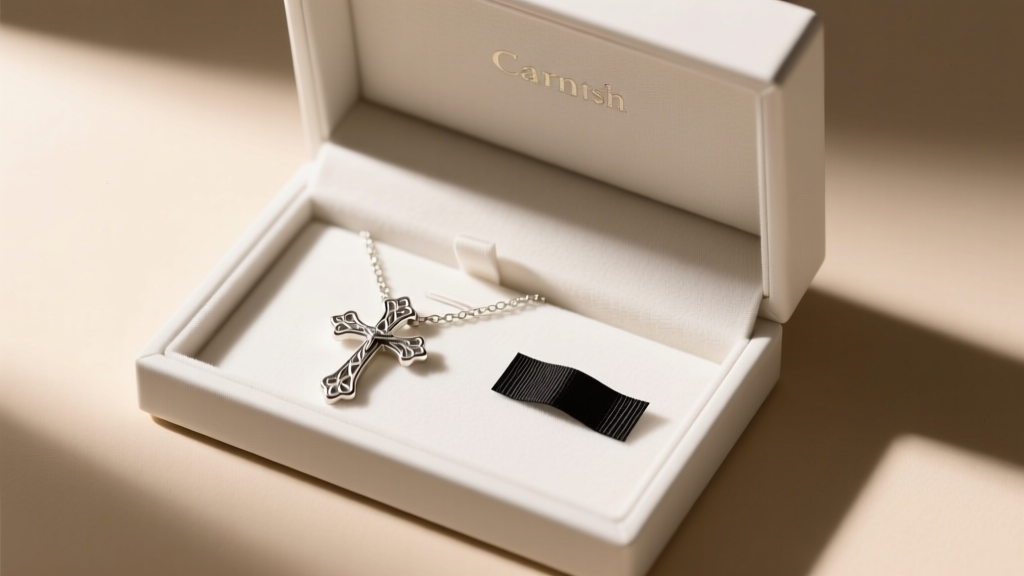
Silver tarnishes rapidly in high humidity and in the presence of sulfur compounds (which are often off-gassed by certain woods, rubbers, and even wool). Store your Buffy cross necklace in an airtight, zip-seal polyethylene bag. Inside the bag, include a 3M anti-tarnish strip, which actively absorbs sulfur gases from the trapped air. Replace these strips every six months. Never store the necklace loosely in a communal jewelry box where the cross pendant can swing against harder gemstones or diamond rings, which will easily gouge the silver or pewter surface. By combining material-specific cleaning with rigorous environmental control, your iconic necklace will remain a pristine artifact of television history for decades to come.


