Expert Guide to Types Chain Necklace Links: Gauge, Strength, and Wear
An expert technical breakdown of chain necklace links, analyzing gauge, tensile strength, failure modes, and pendant weight limits for fine jewelry.

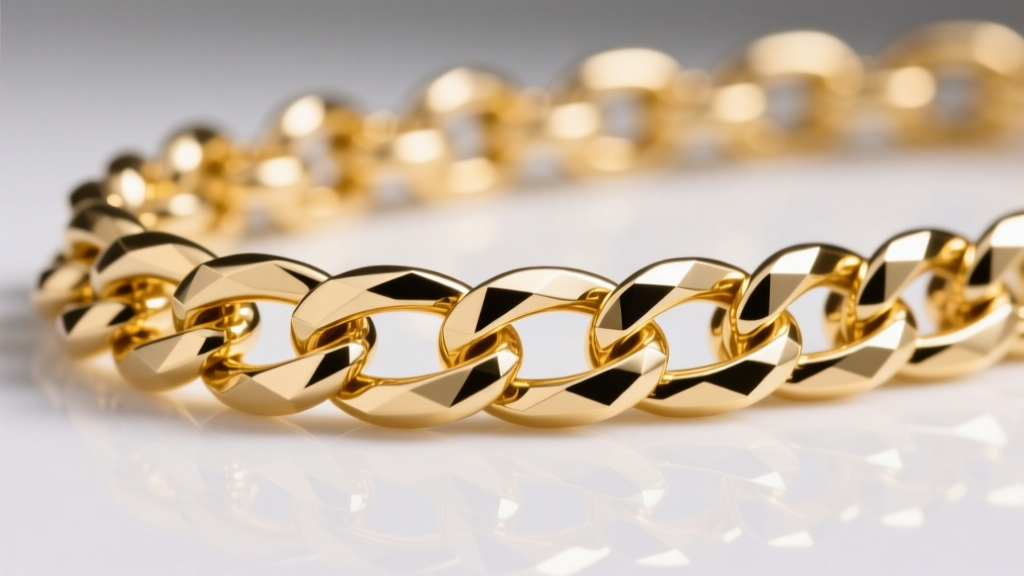
Fine jewelry is as much about structural engineering as it is about aesthetics. When evaluating the various types chain necklace designers and master jewelers utilize, one must look beyond the surface polish and examine the metallurgical realities of the links. A chain is only as strong as its weakest solder joint or most fatigued hinge. In this technical deep dive, we explore the mechanical properties, gauge standards, and failure modes of the most prevalent chain link architectures in the modern jewelry market, providing a definitive framework for jewelers, collectors, and engineers alike.
The Metallurgy and Mechanics of Wire Drawing
Before a chain can be linked, the base metal must be transformed. Precious metal alloys—such as 14k or 18k gold, or platinum-iridium—begin as thick cast rods. These rods are pulled through a series of progressively smaller tungsten carbide dies in a process known as wire drawing. This severe plastic deformation aligns the metal's crystalline grain structure, drastically increasing its tensile strength through a phenomenon called work hardening.
However, work hardening also introduces extreme internal stresses and brittleness. To restore ductility, the wire must undergo annealing—heating the metal to a specific recrystallization temperature (e.g., roughly 1200°F for 14k yellow gold) and then quenching or air-cooling it. According to technical resources from Rio Grande Jewelry Supply, precise temperature control during annealing is critical; under-annealed wire will snap during the mechanical linking process, while over-annealed wire will lack the structural rigidity required to support heavy pendants.
Structural Analysis of Core Chain Architectures
The geometry of a chain link dictates how it distributes mechanical stress. When comparing the most popular types chain necklace manufacturers produce, we must analyze their load-bearing capabilities and friction points.
Cable and Rolo Chains (The Baseline)
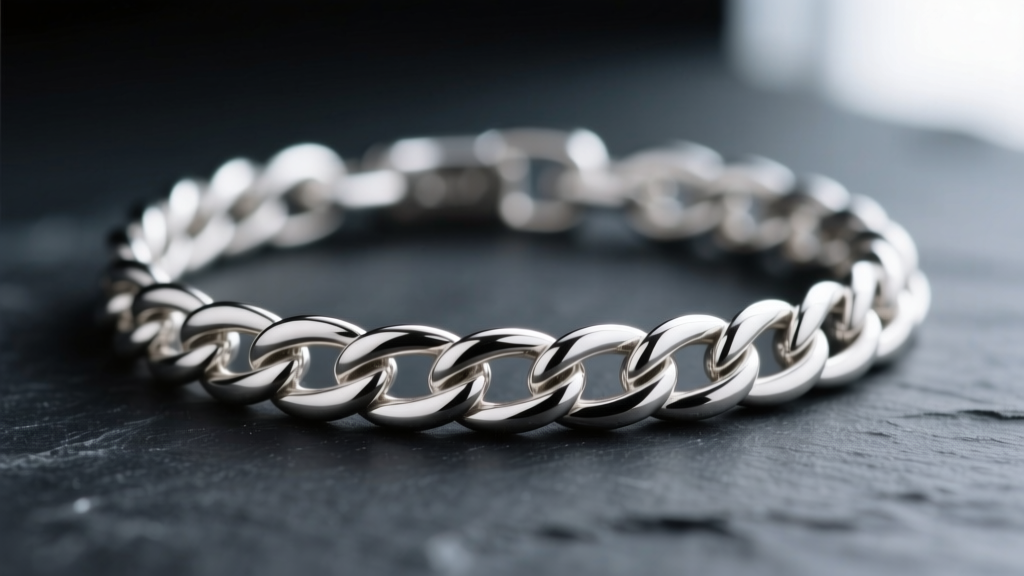
Cable chains consist of uniform round or oval links connected in a simple, alternating pattern. Because each link operates on a single plane of articulation, the stress is concentrated entirely on the two contact points where the links meet. Rolo chains, a subset of cable chains, feature thicker, wider links that provide greater surface area for weight distribution, making them marginally more resistant to abrasive wear at the joints.
Curb and Figaro Chains (Interlocking Durability)
Curb chains are created by taking a cable chain and flattening the links, usually via a rolling mill or a mechanical hammering process. This flattening forces the links to interlock and lay flat against the skin. From an engineering standpoint, this interlocking geometry provides exceptional torsion resistance. When a curb chain is subjected to lateral twisting, the flattened edges brace against one another, distributing the torque across multiple links rather than isolating it on a single solder joint.
Box and Wheat Chains (Complex Geometry)
Box chains utilize square, hollow links that interlock at 90-degree angles. While visually striking, the internal corners of box links are prone to accumulating microscopic debris and skin oils, which act as an abrasive paste over time. Wheat chains, conversely, are constructed from four strands of twisted oval links woven together in a continuous, braided pattern. This multi-strand architecture offers the highest tensile strength-to-weight ratio of any standard chain type, as the load is distributed across four distinct structural vectors.
Tensile Strength and Pendant Weight Ratios
Selecting the correct chain for a specific pendant requires an understanding of tensile yield. The following data table outlines the approximate mechanical limits of standard chain types when manufactured in 14k yellow gold. Note that these figures assume traditional torch-soldered links; laser-welded links may exhibit a 15-20% higher yield strength due to a smaller, more precise heat-affected zone.
| Chain Type | Standard Gauge (mm / AWG) | Approx. Tensile Yield (lbs) | Max Pendant Weight (g) | Primary Failure Point |
|---|---|---|---|---|
| Cable (Round) | 1.2mm / 16 AWG | 18 - 22 lbs | 8g - 12g | Solder joint fatigue |
| Rolo (Flat) | 2.0mm / 12 AWG | 35 - 40 lbs | 15g - 25g | Link deformation (stretching) |
| Curb | 1.5mm / 14 AWG | 28 - 32 lbs | 12g - 18g | Abrasive wear at flat edges |
| Box | 1.0mm / 18 AWG | 12 - 15 lbs | 5g - 8g | Internal hinge friction |
| Wheat | 1.5mm / 14 AWG | 45 - 55 lbs | 25g - 35g | Clasp spring failure |
Common Failure Modes and Preventative Maintenance
Even the most robust chain architectures will eventually fail if subjected to cyclic loading. Understanding these failure modes is critical for both jewelry designers and consumers.
Solder Joint Porosity and Fatigue
The weakest point of any standard chain is the soldered seam. During traditional torch soldering, flux and heat can introduce microscopic gas bubbles into the solder alloy, creating porosity. When a porous solder joint is subjected to the cyclic stress of daily wear, micro-fractures propagate through the voids, leading to sudden, catastrophic failure. Modern high-end manufacturers increasingly utilize laser welding to close chain links, which melts the base metal itself without adding a lower-melting-point solder alloy, virtually eliminating porosity.
Work Hardening and Link Stretching
When a chain is subjected to a sudden shock load—such as a pendant catching on a piece of clothing—the links can stretch. Because the metal is already work-hardened from the manufacturing process, this sudden stretching causes the metal to exceed its yield strength, resulting in permanent deformation. Once a link stretches, the cross-sectional thickness of the wire decreases, making it highly susceptible to snapping under future, much lighter loads.
Clasp Spring Degradation
The clasp is often the true limiting factor of a necklace's security. Spring ring clasps rely on a tiny internal steel or white gold spring. Over time, exposure to chlorinated water, lotions, and sweat can corrode this spring, or the repeated compression can lead to metal fatigue. For any pendant exceeding 10 grams, master jewelers universally recommend upgrading to a solid cast lobster claw clasp, which utilizes a thicker, more robust internal lever mechanism that is far less prone to fatigue.
Expert Sourcing and Hallmark Verification
When sourcing fine chains, verifying the metallurgical composition is non-negotiable. The Federal Trade Commission (FTC) Jewelry Guides mandate strict tolerances for precious metal fineness. For example, 14k gold must contain a minimum of 58.5% pure gold, but the remaining 41.5% alloy composition (typically copper, silver, and zinc) drastically affects the chain's hardness and tarnish resistance.
Chains with a higher copper content will exhibit greater tensile strength and a warmer color but are more prone to oxidation and skin discoloration. Conversely, higher nickel or palladium content (in white gold) increases hardness but can cause contact dermatitis in sensitive wearers. Always look for the manufacturer's hallmark alongside the fineness stamp (e.g., "14K"), as this ensures traceability and accountability in the event of a metallurgical defect.
"A chain is a continuous series of microscopic hinges. The moment you ignore the friction at those hinges, you compromise the entire structural integrity of the piece." — Master Jeweler and Metallurgical Consultant
For further reading on precious metal properties and grading standards, consult the educational resources provided by the Gemological Institute of America (GIA). By prioritizing mechanical engineering alongside visual design, you ensure that your jewelry not only captivates the eye but endures the physical demands of daily life.


