Choosing the Right Metal for a Necklace Cross: A Material Guide
Discover the best metals for a necklace cross. Compare sterling silver, gold, platinum, and titanium for durability, price, and skin sensitivity.

The Anatomy of Durability: What Makes a Cross Pendant Last?
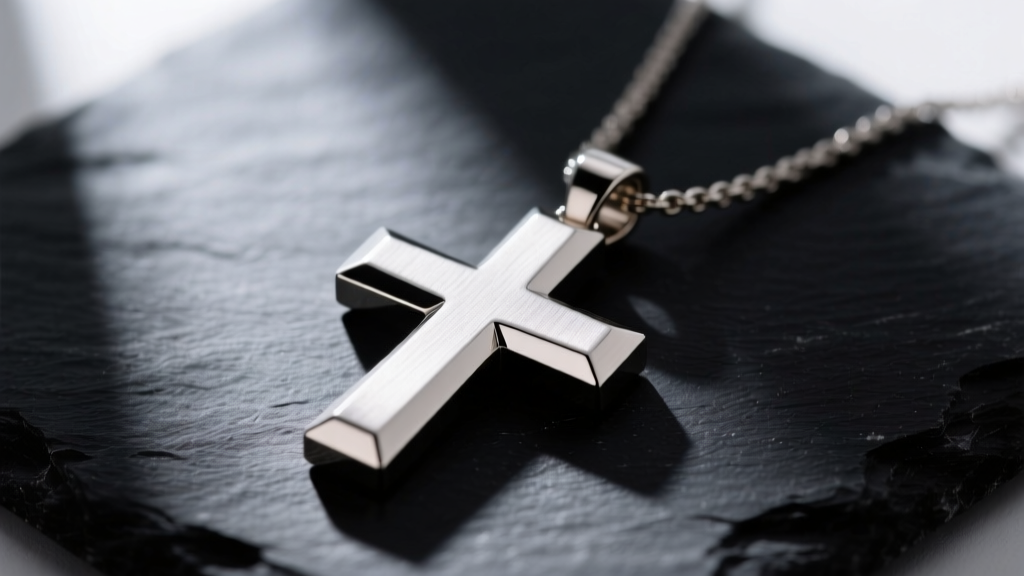
Selecting the right metal for a necklace cross goes far beyond simple aesthetics or brand prestige. Whether you are choosing a delicate baptismal gift, an everyday faith symbol, or a heavy, streetwear-inspired piece, the metallurgical properties of your chosen alloy will dictate its lifespan, maintenance requirements, and biological compatibility with your skin. Unlike rings, which suffer direct impact and abrasion from daily hand use, pendants face a unique set of mechanical stresses. The primary failure point of any pendant is the bail—the loop that connects the piece to the chain. Constant micro-friction against the chain can slowly saw through softer metals over a period of three to five years.
To understand which material will survive your lifestyle, jewelers rely on the Vickers Hardness (HV) scale, which measures a metal's resistance to permanent indentation and wear. Pure 24k gold, for instance, sits at a mere 25 HV, making it entirely unsuitable for daily wear. By alloying pure metals with elements like copper, zinc, or ruthenium, metallurgists can drastically increase the structural rigidity of the jewelry. According to the Gemological Institute of America (GIA), understanding these alloy compositions is critical for consumers looking to balance color, purity, and everyday durability.
Precious Metals: Gold, Platinum, and Silver Breakdown
14k vs. 18k Gold: The Alloy Balancing Act
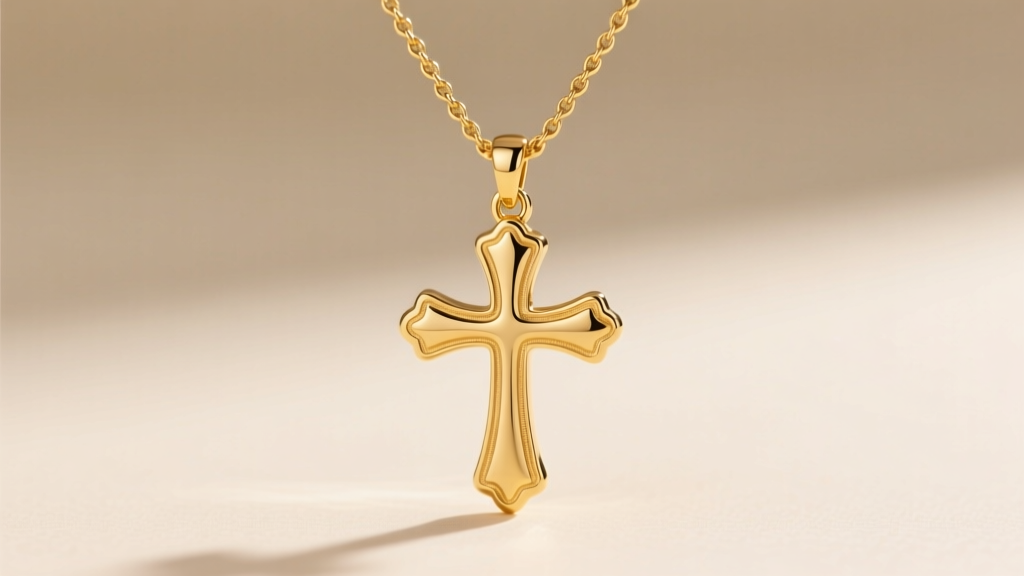
Gold remains the most popular choice for fine jewelry, but its karat weight fundamentally changes its physical properties. 14k gold contains 58.5% pure gold and is alloyed with metals like copper and silver. This composition pushes its hardness to approximately 135 HV, making it highly resistant to the friction caused by chain movement. 18k gold, containing 75% pure gold, offers a richer, deeper yellow hue but drops to around 115 HV. For a necklace cross worn daily—especially in environments involving sweat, chlorinated pools, or manual labor—14k gold provides superior structural integrity. Furthermore, white gold requires rhodium plating to achieve its bright white finish; this plating will inevitably wear off at the bail due to chain friction, requiring periodic re-plating.
Sterling Silver (925): The Tarnish Factor
Sterling silver is an alloy of 92.5% pure silver and 7.5% copper. While it is an accessible and beautiful option for a necklace cross, the copper content makes it highly susceptible to oxidation. When exposed to sulfur compounds in the air, humidity, and human sweat, the copper reacts to form silver sulfide, resulting in a dark tarnish. While rhodium plating can delay this process, the plating will eventually wear thin. If you choose sterling silver, opt for a cross with a high-polish finish rather than a matte or oxidized recessed finish, as polishing a high-shine surface at home is significantly easier than restoring a textured surface.
Platinum: The Heavyweight Champion
Platinum used in jewelry is typically 95% pure (Pt950), alloyed with 5% ruthenium or iridium. It boasts a high density and a Vickers hardness of around 110 HV to 130 HV, depending on the specific alloy mix. While it is technically softer than 14k gold, platinum possesses incredible tensile strength and malleability. When platinum is scratched, the metal is merely displaced, not lost. Over time, a platinum necklace cross will develop a soft, frosted patina that many collectors desire. More importantly, if the bail begins to thin, a jeweler can easily burnish the displaced metal back into place or laser-weld additional platinum without the risk of melting the surrounding details.
Alternative & Industrial Metals: Titanium and Stainless Steel
Grade 5 Titanium (Ti-6Al-4V) vs. Commercial Pure
Titanium has surged in popularity for modern, minimalist, and masculine cross designs. However, not all titanium is created equal. Commercially pure (CP) titanium is relatively soft, but Grade 5 titanium—an aerospace alloy containing aluminum and vanadium—boasts an impressive hardness of 340 HV. It is entirely hypoallergenic, highly resistant to saltwater corrosion, and incredibly lightweight. The major drawback of titanium is its repairability. If the bail of a titanium cross snaps, traditional jewelers' torches cannot solder it. It requires specialized TIG welding or laser welding in an argon atmosphere, meaning a broken titanium pendant is often a total loss.
316L Surgical Stainless Steel
Stainless steel offers an industrial aesthetic at a fraction of the cost of white gold or platinum. 316L steel contains molybdenum, which provides excellent resistance to chlorides and industrial solvents. However, it contains between 8% and 12% nickel. According to the Mayo Clinic, nickel is the leading cause of allergic contact dermatitis. If you have sensitive skin or a known nickel allergy, a stainless steel necklace cross resting against your sternum will likely cause a severe, itchy rash, especially when sweating. For those with metal sensitivities, titanium or high-karat gold are the only safe alternatives.
Material Comparison Matrix: Price, Hardness, and Allergens
Use the following data matrix to compare the physical and economic properties of common cross pendant materials. Pricing is estimated for a standard 1-inch solid cast pendant without gemstones.
| Metal / Alloy | Hardness (HV) | Tarnish Resistance | Nickel Content | Avg. Price (1" Pendant) |
|---|---|---|---|---|
| 14k Yellow Gold | ~135 | Excellent | None (usually) | $350 - $600 |
| 18k Yellow Gold | ~115 | Excellent | None | $500 - $900 |
| Sterling Silver (925) | ~65 | Poor | None | $40 - $120 |
| Platinum (Pt950) | ~125 | Excellent | None | $800 - $1,500+ |
| Grade 5 Titanium | ~340 | Perfect | None | $80 - $200 |
| 316L Stainless Steel | ~150 | Very Good | 8% - 12% | $20 - $60 |
Chain Pairing: Matching the Cross to the Right Cable
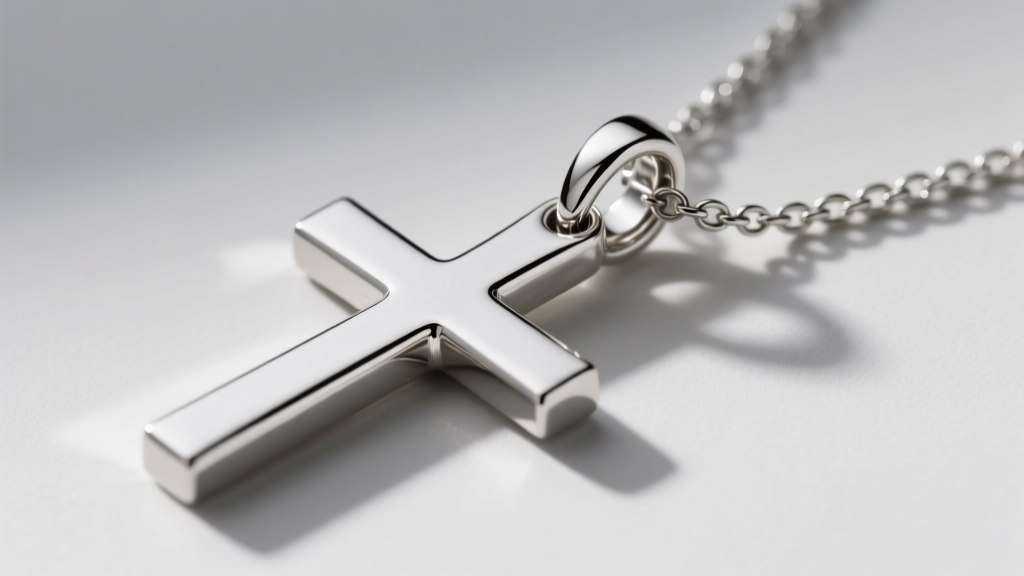
A common mistake consumers make is pairing a heavy, solid-cast cross pendant with a delicate, lightweight chain. This creates a mechanical mismatch that accelerates wear. The fundamental rule of pendant pairing is that the chain's width should be roughly one-third to one-half the width of the pendant's bail interior.
If you are hanging a 10-gram solid gold cross on a 1.0mm rope chain, the thin chain will act like a wire saw against the inside of the bail. Over a few years of daily wear, the friction will completely sever the pendant. For crosses weighing over 5 grams, Jewelers of America recommends upgrading to a minimum 1.5mm to 2.0mm box chain or a reinforced wheat chain. Box chains are particularly advantageous because their flat, interlocking square links distribute the friction across a wider surface area inside the bail, drastically reducing localized wear.
Furthermore, pay close attention to the clasp. Spring ring clasps are notorious for failing under the pendulum-like swing of a heavy cross. Always ensure your chain is equipped with a heavy-duty lobster claw clasp, preferably one with a welded jump ring at the opposite end to prevent accidental unhooking.
Final Verdict: Matching Your Lifestyle to the Metal
There is no single "best" metal for a necklace cross; the ideal choice depends entirely on your budget, skin chemistry, and maintenance tolerance. If you want a lifelong heirloom piece that requires minimal structural maintenance and holds immense intrinsic value, 14k or 18k gold remains the undisputed champion. If you work in healthcare, marine environments, or have severe contact dermatitis, Grade 5 titanium offers an indestructible, biologically inert alternative that will outlast you.
Expert Insight: "Never sleep in your necklace cross, regardless of the metal. The sudden torque applied to the chain and bail when you roll over in bed is the number one cause of snapped bails and stretched chain links. Take it off, wipe it with a microfiber cloth to remove daily skin oils, and store it flat."
By understanding the Vickers hardness, alloy composition, and friction dynamics of your chosen metal, you can select a necklace cross that not only symbolizes your faith or style but also stands up to the rigorous demands of daily life.


