The Ultimate Gold Necklace with Stars: Material Comparison Guide
Discover how to choose the perfect gold necklace with stars. Compare 14k vs 18k, gold vermeil, and alloy properties for durable celestial jewelry.

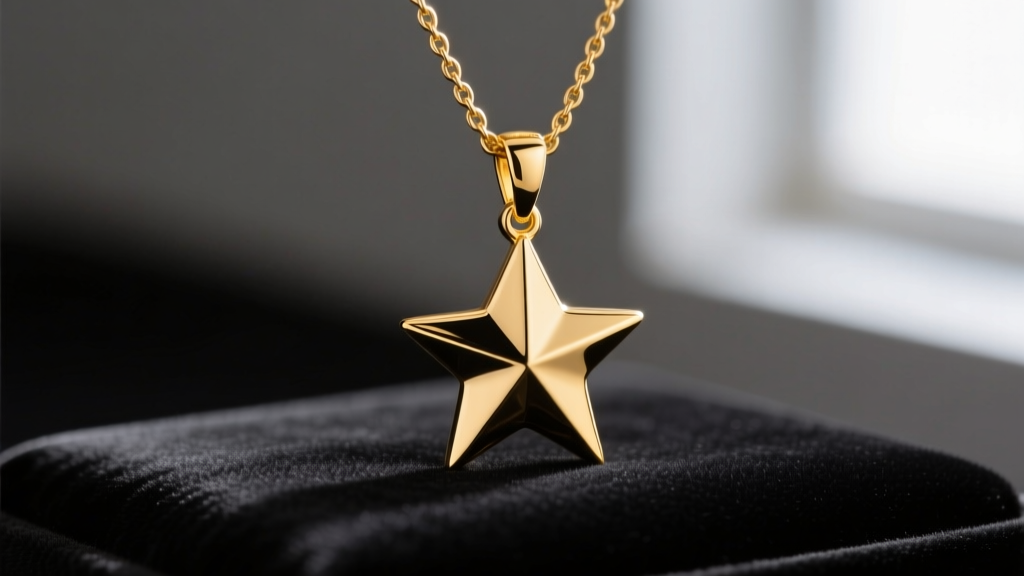
The Allure of Celestial Jewelry: Why Material Matters
When shopping for a gold necklace with stars, most buyers focus entirely on the aesthetic: the number of points on the star, the presence of diamond accents, or the overall silhouette. However, from a metallurgical and structural perspective, the material composition is the single most critical factor determining the lifespan of the piece. Star pendants possess acute angles and elongated points that are inherently vulnerable to a failure mode jewelers call 'snag-and-bend.' When a star point catches on a sweater or a seatbelt, the kinetic energy transfers directly to the tip. If the gold alloy lacks sufficient tensile strength and Vickers hardness, the point will permanently deform, bend, or snap off entirely.
In this comprehensive material comparison, we break down the exact alloy compositions, karat weights, and structural properties you need to consider before investing in celestial jewelry. As of 2026, with gold spot prices at historic highs, understanding these material nuances is essential to ensure you are paying for structural integrity, not just brand markup.
Karat Breakdown: 10k, 14k, 18k, and 24k Gold
The karat system dictates the ratio of pure gold to alloy metals in a piece of jewelry. Pure gold (24k) is measured at 24 parts gold out of 24. According to the Gemological Institute of America (GIA), the addition of alloy metals like copper, silver, and zinc is what gives gold jewelry its color and, crucially, its durability.
The Structural Vulnerability of Star Points
A 24k gold star pendant is a metallurgical disaster waiting to happen. Pure gold has a Vickers Hardness (HV) of roughly 60-80 HV, making it as soft as a fingernail. A 24k star point will bend the very first time it is pressed against the skin during sleep. Conversely, 10k gold (41.7% pure gold) boasts an HV of around 170-190, making it highly resistant to bending, but it suffers from a pale, washed-out color and a high copper content that can cause skin oxidation (greening) for some wearers.
14k Gold (58.3% pure gold): The undisputed champion for a gold necklace with stars. With an HV of 135-160, 14k gold offers the perfect equilibrium. It is hard enough to maintain the razor-sharp points of a star pendant over decades of daily wear, yet retains the rich, warm luster associated with fine jewelry.
18k Gold (75% pure gold): Prized for its deep color and prestige, 18k gold (HV 120-140) is softer. If you choose an 18k gold star pendant, ensure the star points are cast with a thicker cross-section. As of 2026, many manufacturers are hollowing out the backs of 18k pendants to reduce gram weight and retail price; avoid hollowed 18k stars, as the thin face is highly prone to denting.
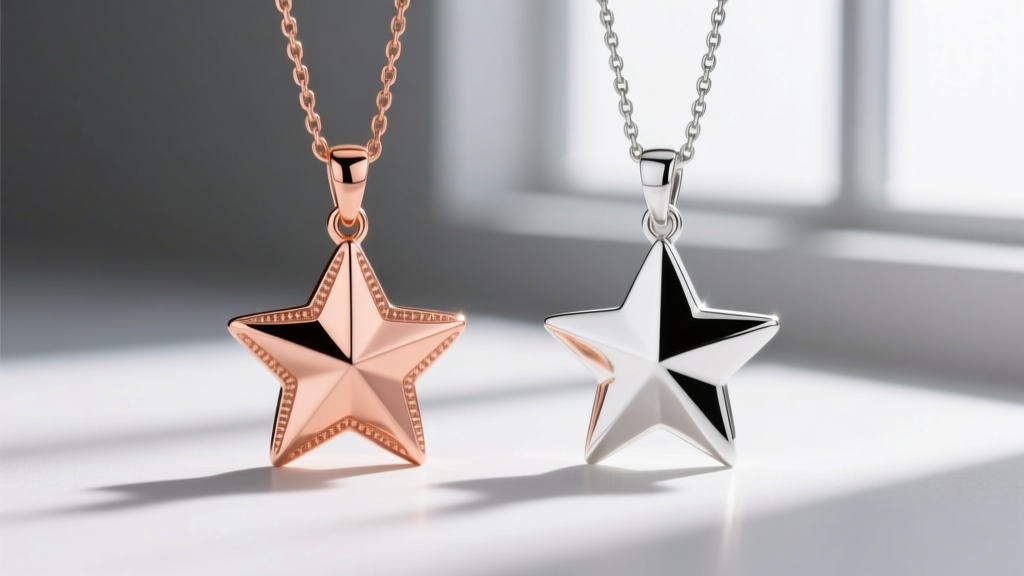
Gold Alloys: Yellow, White, and Rose for Star Pendants
Beyond the karat weight, the specific alloy mix dictates the color and long-term wear characteristics of your necklace. The World Gold Council outlines standard alloy recipes, but proprietary jeweler blends can vary slightly.
- Yellow Gold: Typically alloyed with silver and copper in roughly equal parts. For 14k yellow gold, a 50/50 split of the 41.7% alloy content yields the classic warm hue. It requires the least maintenance, as scratches can be easily polished out without losing surface material.
- White Gold: Alloyed with nickel, palladium, or manganese to bleach the yellow hue. Because natural white gold still retains a faint yellowish-gray tint, it is plated with rhodium. For star pendants, white gold is excellent because the rhodium plating adds a micro-layer of extreme hardness to the delicate points. However, as the star points snag and wear down, the rhodium will wear off first, requiring re-plating every 12 to 18 months.
- Rose Gold: Achieved by heavily skewing the alloy ratio toward copper (up to 22.25% copper in 18k rose gold). Copper is a remarkably strong metal, making rose gold slightly more durable and scratch-resistant than its yellow or white counterparts. This makes it an exceptional choice for intricate, multi-pointed starburst pendants.
Material Comparison Chart: Hardness and Pricing
To help you make a data-driven decision, refer to the table below comparing the physical properties and estimated 2026 market pricing for a standard 1-gram solid gold star pendant (excluding chain and labor costs).
| Material | Gold Content | Vickers Hardness (HV) | Tarnish Resistance | Best For Star Pendants? | Approx. Material Cost (per gram) |
|---|---|---|---|---|---|
| 10k Yellow Gold | 41.7% | 170 - 190 | Low (Prone to tarnish) | Yes (Highly durable) | $30 - $35 |
| 14k Yellow Gold | 58.3% | 135 - 160 | High | Yes (Optimal balance) | $45 - $52 |
| 18k Yellow Gold | 75.0% | 120 - 140 | Very High | Conditional (Needs thick casting) | $60 - $68 |
| 14k Rose Gold | 58.3% | 140 - 165 | Medium (Copper oxidizes) | Yes (Excellent strength) | $45 - $52 |
| 18k White Gold | 75.0% | 125 - 145 | High (Rhodium dependent) | Yes (Hard rhodium surface) | $65 - $75 |
Solid Gold vs. Gold Vermeil: Longevity and Wear
If your budget does not allow for solid gold, you will likely encounter 'gold vermeil' star necklaces. Vermeil is not mere gold plating; by FTC guidelines, it must consist of a sterling silver base heavily plated with at least 2.5 microns of 10k, 14k, or 18k gold.
While vermeil is a fantastic entry-level option, it presents a unique structural challenge for star shapes. Sterling silver (92.5% pure silver) is quite soft (HV 65-75). Even though the gold exterior is hard, the soft silver core means that if a star point is bent, the entire structural integrity is compromised. Furthermore, polishing a vermeil star pendant to remove scratches will quickly burn through the 2.5-micron gold layer, exposing the silver underneath. If you choose vermeil, treat the pendant as delicate, remove it before physical activity, and never use abrasive polishing cloths on the points.
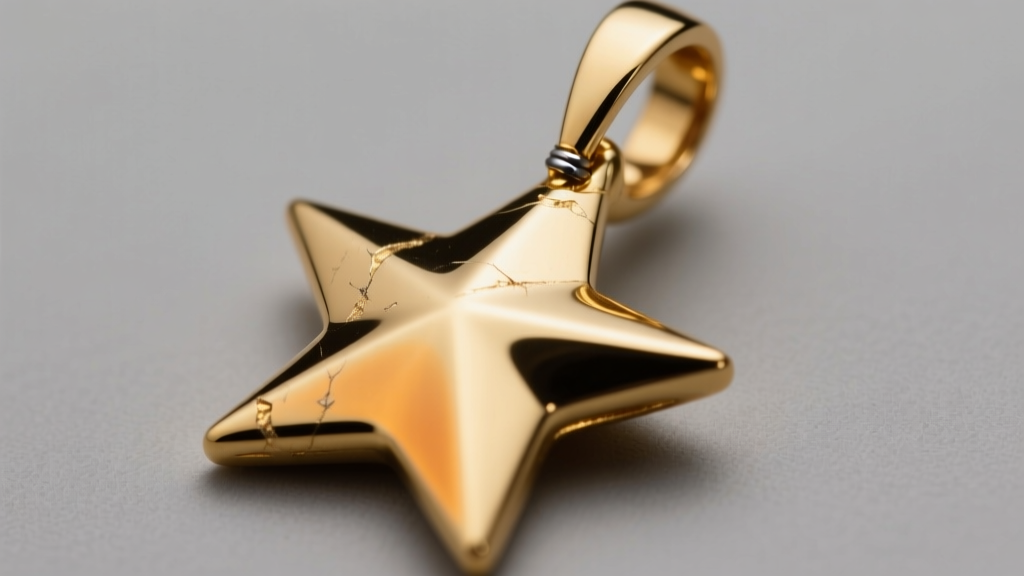
Chain Selection: Supporting the Celestial Centerpiece
A gold necklace with stars is only as strong as its weakest link—literally. The chain must complement the pendant both aesthetically and structurally. Star pendants often feature integrated bails (the loop the chain passes through) or jump rings.
For a 1-gram to 3-gram star pendant, a 14k solid gold cable chain or rope chain in a 0.9mm to 1.1mm gauge is ideal. Cable chains reflect light beautifully, mimicking the celestial theme. Avoid hollow-cored box chains; while they look thick and substantial, the thin gold walls can easily crush or kink if the star pendant swings outward and the chain is pulled taut. Always ensure the jump ring connecting the star to the chain is soldered shut. An unsoldered jump ring will eventually pull apart under the pendulum-like weight of a star pendant.
Care and Maintenance for Intricate Gold Stars
Maintaining the sharp geometry of a star pendant requires specific care protocols. Never store a gold star necklace loosely in a jewelry box where it can be crushed by heavier items. The acute points of the star will easily scratch softer gemstones or become blunted against other gold pieces.
Expert Tip: If you own an 18k white gold star necklace, avoid ultrasonic cleaners. The high-frequency vibrations can loosen the microscopic prongs holding diamond accents in the star's center, and the harsh chemical solutions can prematurely strip the rhodium plating from the delicate points. Stick to warm water, a drop of mild dish soap, and a baby-hair brush to clean the crevices.
Final Verdict: Which Gold is Best for Your Star Necklace?
Choosing the right material for your gold necklace with stars ultimately depends on your lifestyle and budget. For everyday wearers who refuse to compromise on durability or luster, 14k solid yellow or rose gold remains the superior choice. It provides the necessary Vickers hardness to protect the fragile star points from bending while offering a rich, timeless color that requires minimal maintenance. If you prefer the prestige and deep color of 18k gold, opt for a smaller, thicker-cast star design rather than a large, sprawling silhouette to mitigate the risk of deformation. By prioritizing metallurgical properties over mere aesthetics, you ensure your celestial jewelry remains sharp, bright, and structurally sound for a lifetime.


