How to Choose a Diamond Necklace With Heart: Buyer's Guide
Discover what to look for when buying a diamond necklace with heart. Learn about the 4Cs, metal settings, chain types, and pricing in this expert guide.

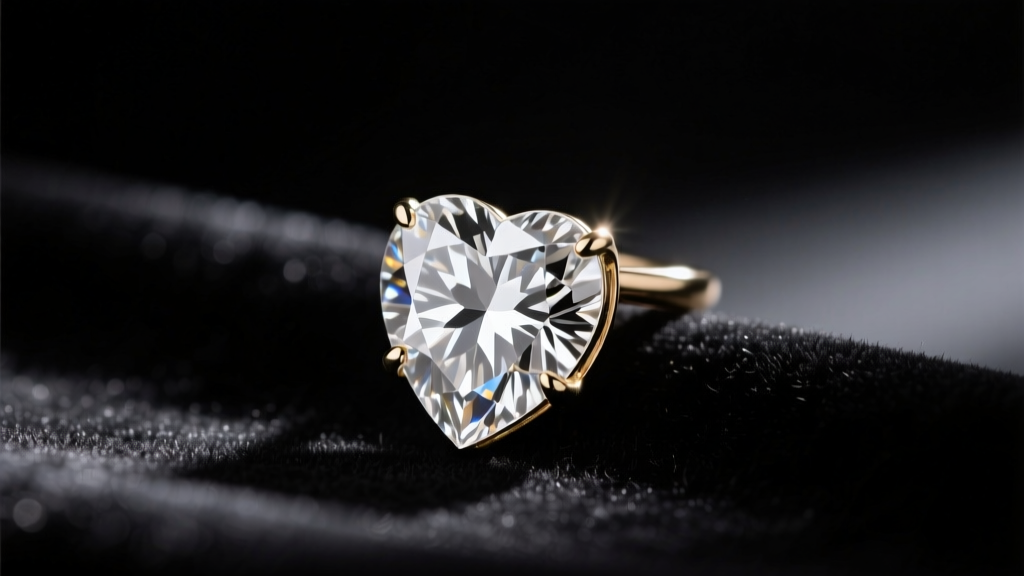
Choosing the perfect diamond necklace with heart is about much more than selecting a romantic symbol. The heart brilliant cut is one of the most complex and demanding fancy shapes in gemology. It requires master-level precision to balance symmetry, light performance, and structural integrity. A poorly cut heart diamond will exhibit dark shadows, lackluster sparkle, or worse, possess structural weak points that make it prone to chipping during daily wear. As we navigate the jewelry market in 2026, buyers are faced with an expanding array of lab-grown options, varied setting technologies, and diverse chain mechanics. This comprehensive buying guide breaks down the exact specifications, material grades, and structural details you need to evaluate before investing in a heart-shaped diamond pendant.
The Anatomy of a Heart-Cut Diamond
The heart shape is a modified brilliant cut, typically featuring 56 to 58 facets. Its defining characteristic is the cleft—the dip at the top of the stone. The depth of this cleft is the most critical factor in both the aesthetics and durability of your pendant. If the cleft is too deep, it creates a fragile, razor-thin bridge of carbon that is highly susceptible to chipping if the necklace is dropped or snagged. If the cleft is too shallow, the stone loses its romantic silhouette and begins to resemble a rounded triangle or a pear cut. According to the Gemological Institute of America (GIA), an ideal heart diamond should have a cleft depth that is roughly 5% to 10% of the stone's total width, providing a distinct shape without compromising the gem's structural core.
Evaluating the 4Cs for Heart Shapes
- Cut and Symmetry: Symmetry is paramount. The two lobes must be perfectly mirrored. Look for a length-to-width ratio between 0.90 and 1.10. Ratios below 0.90 result in a wide, squat heart, while ratios above 1.10 appear elongated and narrow. Beware of the 'bow-tie effect'—a dark shadow across the center of the stone caused by light blockage. Always request a 360-degree video to check for this flaw.
- Clarity: Because heart diamonds have a large, open table facet, inclusions are easily visible to the naked eye. We recommend a minimum clarity grade of VS2 or SI1. Ensure the inclusion is not located near the bottom point or the cleft, as these areas are already structurally sensitive.
- Color: The faceting pattern of a heart cut tends to retain more color than a round brilliant. For white gold or platinum settings, aim for a color grade of G or H to ensure the stone faces up icy white. If you prefer yellow or rose gold, you can safely drop to an I or J color, as the warm metal will mask the faint yellow tint.
- Carat Weight: Heart diamonds tend to look smaller face-up than round diamonds of the same carat weight due to their depth. For a pendant, the 0.50ct to 1.00ct range is the sweet spot, offering substantial visual presence without becoming overly heavy or cumbersome on the collarbone.
Metal Choices and Setting Styles
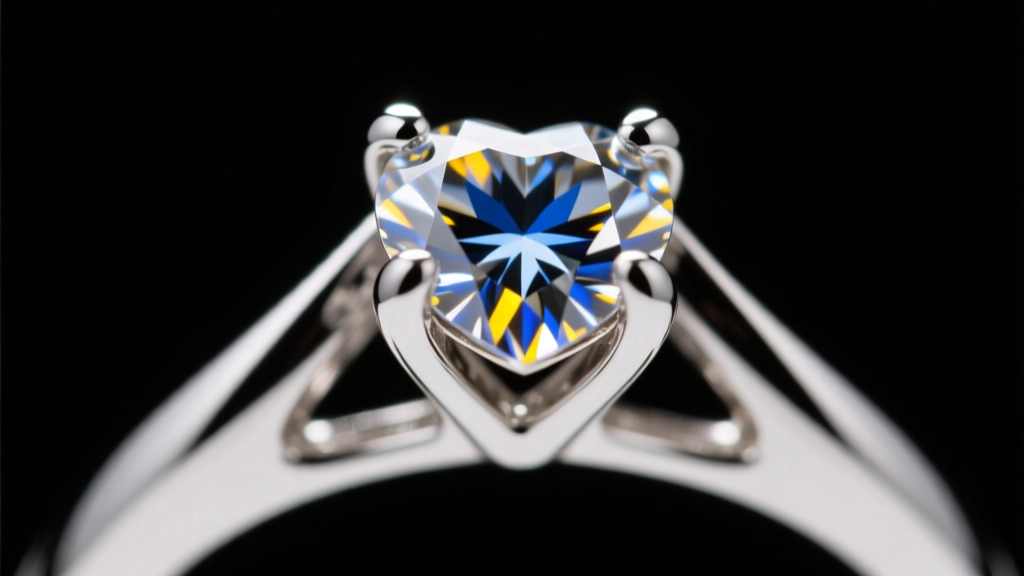
The setting of a heart diamond pendant must accomplish two things: maximize light entry and protect the vulnerable points of the stone. The bottom tip of a heart diamond is the sharpest and most fragile point on the gem. A standard prong will not suffice here; you must look for a setting that utilizes a V-prong at the bottom tip. The V-prong wraps around the sharp corner, shielding it from direct impact.
Prong vs. Bezel Settings
A 5-prong or 6-prong setting is the industry standard for heart pendants. Typically, this includes one V-prong at the tip, two prongs on the outer lobes, and two prongs securing the cleft. This configuration ensures the stone remains perfectly level against the chest. Bezel settings, where a thin rim of metal surrounds the entire perimeter of the diamond, offer superior protection and a sleek, modern aesthetic. However, a full bezel obscures the outline of the heart shape and can reduce the stone's perceived size by up to 10%. For maximum brilliance and traditional romance, the V-prong setting in 14k or 18k white gold remains the most popular and practical choice.
Chain Selection: Lengths, Gauges, and Hardware
A common mistake buyers make is pairing an exquisite diamond pendant with a flimsy, inappropriate chain. The chain must support the weight of the pendant while remaining delicate enough to maintain a feminine aesthetic.
| Chain Style | Recommended Gauge | Best Carat Range | Durability & Notes |
|---|---|---|---|
| Box Chain | 0.8mm - 1.1mm | 0.50ct - 1.25ct | Highly durable, resists kinking, lies flat against the skin. |
| Cable Chain | 0.9mm - 1.2mm | 0.25ct - 0.75ct | Classic look, but individual links can stretch if snagged. |
| Rope Chain | 1.0mm - 1.5mm | 1.00ct - 2.00ct+ | Very strong and heavy, best for larger, statement-sized hearts. |
| Snake Chain | 0.9mm - 1.2mm | Under 0.50ct | Sleek but prone to permanent kinking; not recommended for heavy pendants. |
For the clasp, always insist on a lobster clasp rather than a spring ring. Spring rings are notorious for catching on hair and popping open under the slight downward pull of a diamond pendant. A lobster clasp provides a secure, mechanical lock that ensures your investment stays safely around your neck.
Pricing Tiers: Natural vs. Lab-Grown in 2026
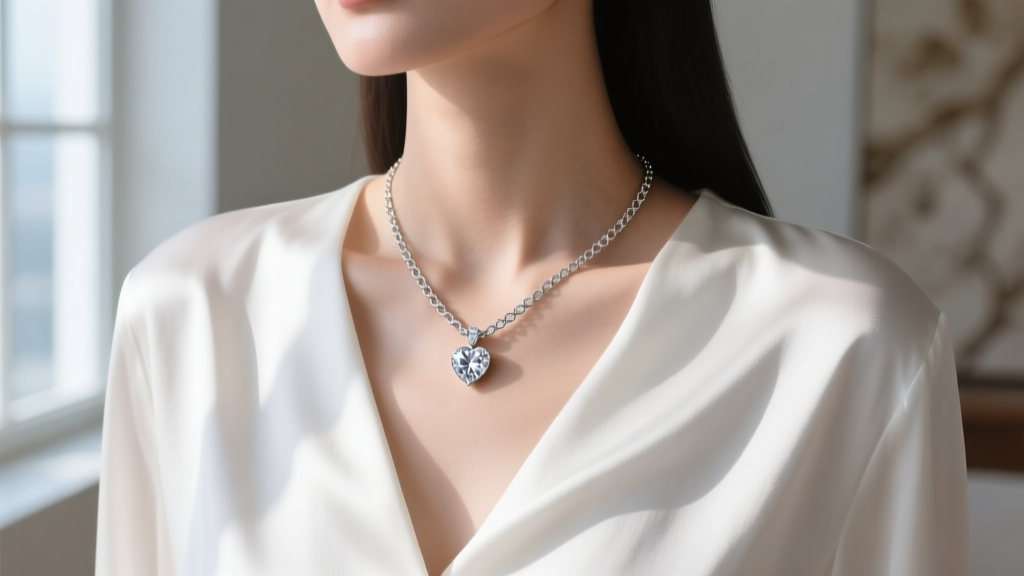
The market for diamond necklaces has shifted dramatically with the mainstream acceptance of lab-grown diamonds. Chemically, physically, and optically identical to mined stones, lab-grown diamonds offer a compelling value proposition, especially for fancy shapes where the rough yield is low. The GIA's comprehensive reports on lab-grown diamonds confirm their identical grading standards, giving consumers confidence in their purchases.
Expected Price Ranges
| Diamond Origin | Carat Weight | Color / Clarity | Average Price Range (USD) |
|---|---|---|---|
| Natural Earth-Mined | 0.50 ct | G / VS2 | $1,400 - $2,800 |
| Lab-Grown | 0.50 ct | G / VS2 | $350 - $700 |
| Natural Earth-Mined | 1.00 ct | G / VS2 | $5,500 - $11,000 |
| Lab-Grown | 1.00 ct | G / VS2 | $800 - $1,800 |
Note: Prices reflect the diamond only and do not include the metal setting and chain, which typically add $300 to $800 depending on the karat and weight of the gold or platinum used.
Care and Maintenance for Heart Pendants
Because of the intricate cleft and the sharp bottom point, heart diamond necklaces trap more skin oils, lotions, and dust than simpler round solitaires. A buildup of debris in the cleft will immediately kill the stone's fire and brilliance.
Expert Maintenance Tip: Avoid using ultrasonic cleaners on heart-shaped diamond pendants if the stone has been fracture-filled or if the prongs show any signs of wear. The high-frequency vibrations can loosen the V-prong or exacerbate hidden internal feathers near the cleft. Instead, soak the necklace weekly in a solution of warm water and a few drops of mild, ammonia-free dish soap, and gently brush the underside of the diamond with a soft-bristled baby toothbrush.
By prioritizing structural symmetry, insisting on a V-prong setting, and matching the pendant weight to an appropriately gauged box chain, you ensure that your diamond necklace with heart will remain a secure, sparkling, and deeply meaningful heirloom for decades to come.


