How to Authenticate & Restore a Juicy Couture Necklace in 2026
Learn how to authenticate, repair missing rhinestones, and stop tarnish on your vintage Juicy Couture necklace with expert troubleshooting tips.

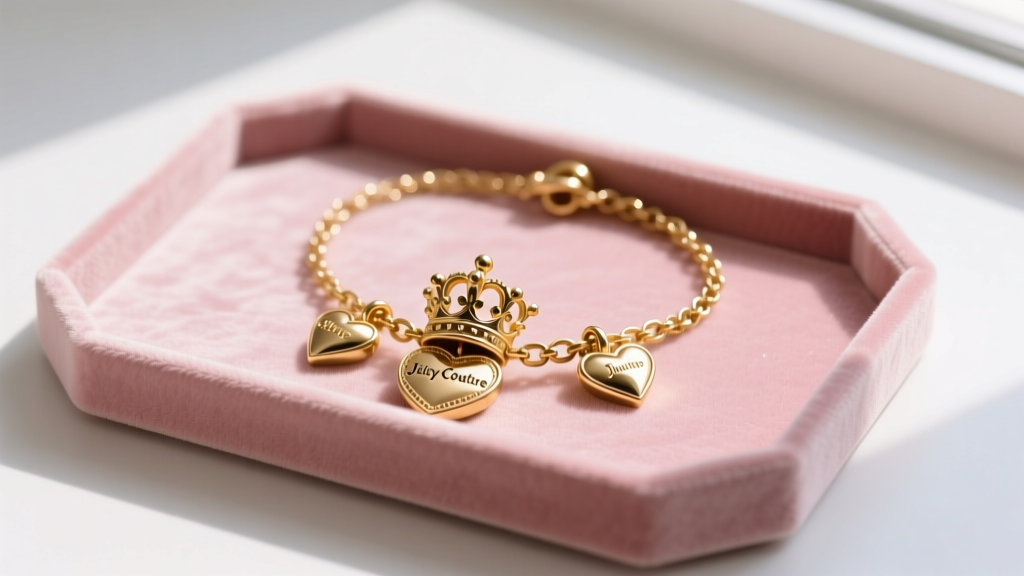
The Y2K Archival Market: Why Restoration Matters Now
The resurgence of Y2K fashion has pushed vintage Juicy Couture jewelry into the archival spotlight in 2026. Founded in 1997, the brand hit its peak jewelry production between 2004 and 2008, creating iconic charm necklaces featuring crowns, heart keyholes, and script-logo pendants. However, because these pieces were manufactured as fashion jewelry rather than fine jewelry, they are highly susceptible to material degradation over time. The base metals were typically zinc alloy (pewter-like) or brass, plated in 14k or 18k gold-tone finishes. Whether you are sourcing pieces on Depop, Poshmark, or estate sales, troubleshooting the common failure modes of a Juicy Couture necklace is essential for preserving its structural integrity and resale value.
Authentication Troubleshooting: Spotting the Replicas
As the demand for authentic Y2K pieces has surged, so has the market for counterfeit Juicy Couture jewelry. Fakes often flood online resale platforms, but they fail under close material inspection. Authentic pieces possess specific weight distributions, stamping characteristics, and rhinestone cuts that mass-produced replicas cannot replicate.
| Feature | Authentic Juicy Couture | Common Replica / Fake |
|---|---|---|
| Base Metal Weight | Heavy, dense feel (solid brass or high-quality pewter) | Lightweight, hollow feel (stamped aluminum or cheap pot metal) |
| Brand Stamp | Deep, crisp "Juicy" or "JC" stamp on the back of charms | Shallow, blurred, or completely missing stamps |
| Rhinestone Quality | Multi-faceted glass or high-grade acrylic with silver/gold foil | Dull plastic stones with painted-on backing that flakes easily |
| Chain Hardware | Sturdy 18-gauge jump rings with clean soldering or tight closures | Flimsy 22-gauge wire rings that pull apart under minimal tension |
If the gold plating on a suspect piece is flaking off in large, brittle sheets rather than wearing down smoothly to the brass base, it is likely a modern counterfeit using cheap electroplating over nickel.
Problem: Missing or Clouded Rhinestones
The Science of Foil-Back Degradation
The most frequent complaint with vintage Juicy Couture charm necklaces is rhinestones that have turned black or fallen out entirely. This is not a defect in the glass itself, but a failure of the foil backing and the adhesive. Vintage rhinestones rely on a microscopically thin layer of silver or gold foil glued to the back of the stone to create light refraction. When the original factory adhesive degrades due to humidity or skin oils, moisture breaches the bezel. The silver foil oxidizes almost instantly, turning the stone a cloudy, dead black.
Step-by-Step Rhinestone Replacement
Do not use E6000 or standard superglue for rhinestone repair. E6000 is far too viscous; it will seep over the facet lines of the stone, ruining the light refraction and creating a cloudy mess. Superglue (cyanoacrylate) emits fumes as it cures, which will permanently frost the inside of the glass bezel.
- Remove the Dead Stone: Use a fine sewing needle or a dental pick to gently pry the oxidized stone out of the brass bezel.
- Clean the Bezel: Dip a cotton swab in 90% isopropyl alcohol and thoroughly clean the inside of the metal cup to remove old adhesive and oxidation.
- Apply the Correct Adhesive: Use GS Hypo Cement. This is a capillary-action, jeweler-grade adhesive specifically designed for small bezels. Apply a microscopic drop to the center of the bezel.
- Set the Stone: Using a wax-tipped jewelers pick, place a replacement foil-back glass rhinestone (usually SS20 or SS34 sizes for Juicy crowns) into the bezel. Press gently and let it cure for 24 hours.
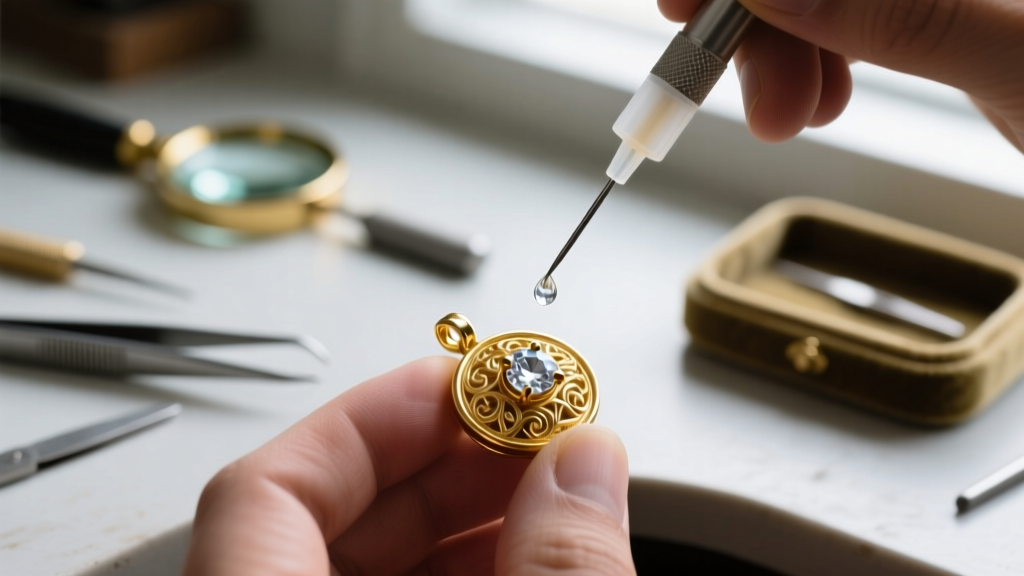
For deeper insights into the conservation of simulant stones and foil-back degradation, the Gemological Institute of America (GIA) provides excellent guidelines on handling and preserving vintage costume jewelry components without causing further structural damage to the host metal.
Problem: Tarnish and the Dreaded Green Neck
Juicy Couture necklaces are notorious for turning the wearer's skin green. This is not an allergic reaction, but a chemical one. The brand frequently used brass (an alloy of copper and zinc) for their heavier pendants and chain links. When the thin gold-tone plating wears away from friction, the exposed copper reacts with the lactic acid and salts in human sweat, creating copper chloride—a green compound that stains the skin.
The Troubleshooting Protocol: Cleaning and Sealing
Polishing tarnished brass with harsh chemical dips (like Tarn-X) will strip the remaining gold plating and ruin the piece. Instead, follow this preservation protocol:
- Mild Cleaning: Use a soft-bristled baby toothbrush and a drop of Dawn dish soap mixed with warm water to gently lift surface oils and dirt. Dry immediately with a microfiber cloth.
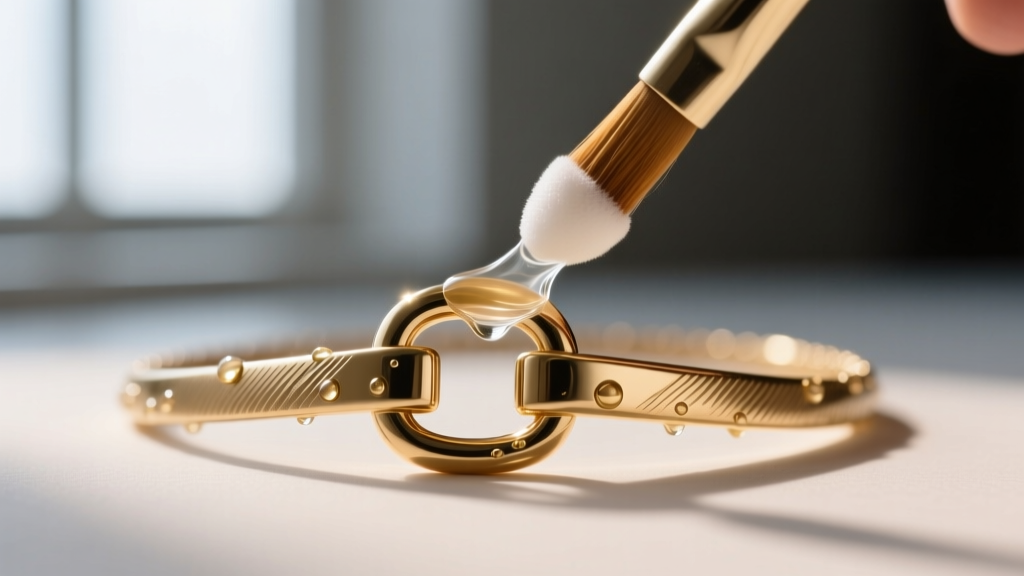
- Seal the Metal: To stop the copper reaction and prevent further tarnish, apply a polyurethane-based clear coat. Everbrite Coatings manufactures a product called ProtectaClear, which is the industry standard for sealing fashion jewelry. It is skin-safe once cured and optically clear.
- Application: Wipe the bare brass areas with acetone to remove all oils. Apply two ultra-thin coats of ProtectaClear using a small foam brush, allowing 2 hours of drying time between coats. This creates an invisible barrier that completely halts the copper-acid reaction.
Problem: Chain Breakage and Clasp Failures
The chains included with vintage Juicy Couture pendants were often delicate cable chains that struggle to support the heavy, solid-metal crown and heart charms. Over time, the jump rings connecting the charms to the chain stretch and pull open, leading to lost pendants. Additionally, the base-metal lobster clasps frequently suffer from internal spring corrosion, causing them to stick open or snap shut weakly.
Upgrading the Hardware
To troubleshoot a failing chain without compromising the vintage aesthetic, you must upgrade the structural weak points using proper jewelry-making techniques.
- Jump Ring Sizing: Most authentic Juicy charm jump rings are 5mm in outer diameter (OD). When replacing stretched rings, use 18-gauge (1.0mm) brass or stainless steel jump rings. Avoid 20-gauge or 22-gauge wire, as the heavy pendants will easily pull these thinner gauges apart.
- Proper Opening Technique: Never pull a jump ring apart laterally (outward like a C-shape). This warps the circle and weakens the metal. Use two pairs of chain-nose pliers to twist the ring open laterally (one hand pushes back, the other pulls forward), ensuring it closes flush and retains its structural integrity.
- Clasp Replacement: Swap the failing base-metal lobster clasp for a high-quality 12mm stainless steel or gold-filled lobster clasp. According to jewelry manufacturing experts at Rio Grande, using stainless steel findings for high-stress areas like clasps ensures longevity and prevents the clasp mechanism from seizing up due to oxidation.
By systematically addressing these common failure modes—from oxidized rhinestone foils to copper-induced skin staining—you can fully restore a vintage Juicy Couture necklace, ensuring it remains a pristine, wearable piece of Y2K history for years to come.


