Gingerbread Necklace Value Guide: Budgeting For Holiday Pendants
Assess the true value of a gingerbread necklace. Compare pricing, materials, and cost-per-wear for enamel, gold vermeil, and solid gold holiday pendants.

The Appeal of the Gingerbread Necklace: Novelty vs. Investment
The gingerbread necklace has evolved from a cheap, seasonal novelty item into a highly sought-after collector's piece in modern holiday jewelry collections. Whether you are looking for a whimsical charm to wear to an office holiday party or a fine jewelry heirloom to pass down, the market is flooded with options ranging from $12 to over $1,500. But how do you assess the true value of a gingerbread pendant? As a jewelry appraiser and style consultant, I see consumers consistently overpay for poorly constructed costume jewelry or miss out on exceptional value in the demi-fine category. This guide breaks down the material science, pricing tiers, and cost-per-wear metrics you need to make an informed budget assessment before purchasing your next holiday pendant.
Material Breakdown: What Are You Actually Paying For?
The price variance in the gingerbread necklace market is almost entirely dictated by base metals, plating thickness, and the type of enamel or gemstones used. Understanding these material grades is the first step in separating genuine value from seasonal markup.
Tier 1: Acrylic, Resin, and Base Metals ($10 - $35)
At the lowest price point, you are typically looking at stamped brass or zinc alloy bases coated in "cold enamel" (which is actually an epoxy resin, not true enamel). While these pieces offer high visual impact for a low upfront cost, they suffer from severe durability issues. Epoxy resin yellows when exposed to UV light and skin oils over time, and the thin flash-plating of gold or silver (usually less than 0.5 microns) will wear off within a single winter season. From a value perspective, these are purely disposable novelty items.
Tier 2: Gold Vermeil and Vitreous Enamel ($60 - $150)
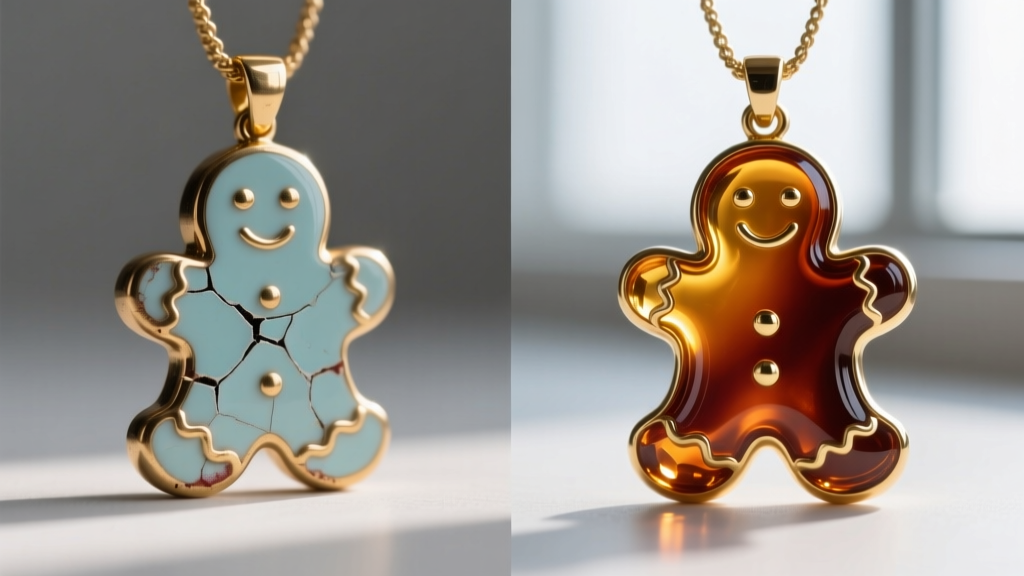
The demi-fine category offers the best balance of quality and budget for a gingerbread necklace. To be legally classified as gold vermeil in the United States, the Federal Trade Commission Jewelry Guides mandate a base of sterling silver plated with at least 2.5 microns of 10k, 14k, or 18k gold. When paired with vitreous enamel—a powdered glass fused to the metal in a kiln at over 1400°F—the result is a vibrant, scratch-resistant pendant that will not yellow or peel. A well-crafted vermeil and vitreous enamel gingerbread pendant in the $85 to $120 range represents exceptional value for seasonal wear.
Tier 3: Solid 14k/18k Gold and Gemstone Accents ($350 - $1,200+)
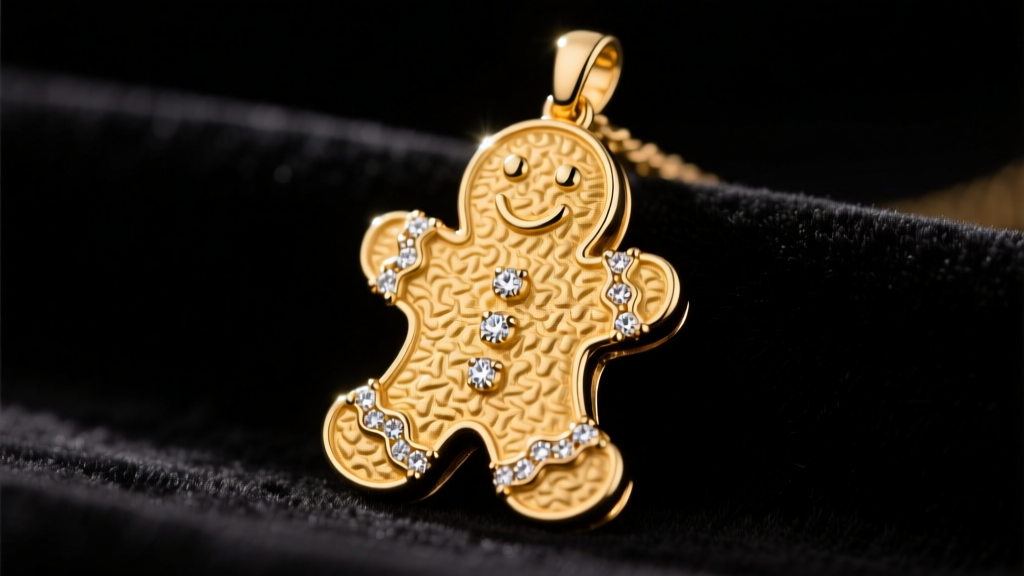
Fine jewelry versions of the gingerbread necklace are cast in solid 14k or 18k gold and often feature diamond melee accents. When assessing value here, pay close attention to the diamonds. According to the Gemological Institute of America (GIA), melee diamonds (typically under 0.15 carats) are often single-cut rather than full-cut, meaning they have fewer facets and less brilliance. A premium fine jewelry gingerbread pendant should use full-cut melee diamonds with a minimum clarity of SI1 and a color grade of G-H to ensure the "icing" details on the gingerbread man sparkle brilliantly against the yellow or rose gold.
Cost-Per-Wear Analysis: Is a Seasonal Pendant Worth the Premium?
A common critique of novelty jewelry is its limited wearability outside of November and December. To accurately assess the budget value of a gingerbread necklace, we must look beyond the sticker price and calculate the cost-per-wear (CPW) over a standard five-year period, assuming the piece is worn 15 times each winter season (75 total wears).
| Material Tier | Average Price Range | Expected Lifespan | Cost-Per-Wear (75 Wears) |
|---|---|---|---|
| Acrylic/Brass (Costume) | $15 - $35 | 1-2 Seasons | $3.00 - $7.00 (Requires Replacement) |
| Vermeil/Vitreous Enamel | $80 - $150 | 5-10 Seasons | $1.06 - $2.00 |
| Solid 14k Gold/Diamonds | $400 - $900 | Generational | $0.53 - $1.20 |
As the data illustrates, while the initial outlay for a solid gold or high-quality vermeil gingerbread necklace is higher, the long-term value proposition vastly outperforms cheap costume alternatives that end up in a landfill after the gold plating inevitably rubs off on your winter scarves.
Chain Considerations: Don't Let a Cheap Chain Ruin a Good Pendant
When budgeting for a gingerbread necklace, the chain is just as critical as the pendant itself. A heavy solid gold gingerbread charm will easily snap a hollow, 0.8mm rope chain. For pendants weighing between 3 and 8 grams, you need a solid-link chain with a minimum thickness of 1.2mm to 1.5mm. Cable chains and box chains offer the best tensile strength for novelty pendants, as their uniform links distribute weight evenly. Furthermore, always inspect the clasp. A high-value piece should feature a lobster clasp with a sturdy spring mechanism, rather than a flimsy spring-ring clasp that is prone to snagging on knitwear and failing in the cold.

How to Spot Overpriced "Costume" Gingerbread Pendants
Retailers often use deceptive marketing language to inflate the prices of low-quality holiday jewelry. Protect your budget by watching out for these red flags:
- "Gold Plated" without a base metal specified: If the retailer does not explicitly state the base metal (e.g., sterling silver) and the plating thickness (e.g., 2.5 microns), it is likely a thin flash-plating over brass or nickel, which can cause contact dermatitis and tarnish rapidly.
- "Crystal" or "Diamond Simulant": These are vague terms often used to mask the use of cheap acrylic rhinestones or low-grade cubic zirconia. If the piece claims to have real diamonds, it must specify the carat weight and quality.
- Overly thick dimensions with suspiciously light weight: A large gingerbread pendant that feels remarkably light is likely hollow-cast or made from injected resin, meaning it will dent easily if dropped on a hard surface.
Final Verdict: Where to Allocate Your Holiday Jewelry Budget
If you are buying a gingerbread necklace purely for a single holiday photo shoot or a themed office party, a $25 resin and brass piece will serve its temporary purpose. However, if you view jewelry as a curated extension of your personal style, the smartest budget allocation lies squarely in the $85 to $150 demi-fine tier. A sterling silver base with thick 14k gold vermeil and kiln-fired vitreous enamel offers the luxurious aesthetic of fine jewelry, the durability required to survive winter wardrobes, and a cost-per-wear that justifies the investment. By prioritizing material integrity over brand markup, you can secure a holiday pendant that remains a beloved staple in your winter rotation for years to come.


