The Diamond Necklace Affair: Care & Cleaning Tips for Galas
Prep your centerpiece for the ultimate diamond necklace affair. Expert cleaning, prong inspection, and chain maintenance tips for high-society galas.


The Anatomy of a Diamond Necklace Affair
When the invitation calls for black-tie, your jewelry must rise to the occasion. A 'diamond necklace affair' isn't merely a historical reference; it represents those pinnacle moments—galas, red-carpet premieres, and milestone anniversaries—where your diamond necklace is the undisputed centerpiece of your ensemble. However, the brilliance of a diamond is easily compromised by microscopic layers of sebum, cosmetic residue, and environmental dust. According to the Gemological Institute of America (GIA), a diamond's hydrophobic nature means it naturally attracts oils, which can reduce its light return and overall brilliance by up to 40%. To ensure your necklace performs flawlessly under the chandeliers, you need a meticulous, professional-grade care and maintenance protocol.
Pre-Affair Inspection: Securing the Pavilion and Prongs
Before introducing any liquids or vibrations to your necklace, a structural inspection is non-negotiable. High-carat diamond pendants and intricate rivière necklaces endure significant kinetic stress at the bale and clasp points. Using a 10x triplet loupe, examine the prong tips. For standard 4-prong martini or 6-prong Tiffany settings, the metal should wrap smoothly over the diamond's crown without any visible 'light leaks' or lifting. If the prong wire has worn down by more than 0.2mm, it requires laser welding or re-tipping by a bench jeweler before the event.
Additionally, inspect the chain's jump rings and the bale (the loop connecting the pendant to the chain). Prolonged friction can thin the interior of the bale, especially if the chain is a rigid style like a wheat or box chain. If you are wearing a multi-stone diamond tennis necklace, gently flex the links to check for loose stones. A telltale rattle or a stone that shifts when pressed with a wooden toothpick indicates a compromised bezel or channel setting that requires immediate professional tightening.
The Deep Clean: Ultrasonic, Steam, and Soak Protocols
Once structural integrity is confirmed, it is time to restore the diamond's optical performance. The pavilion (bottom) facets act as mirrors; any film here kills the stone's fire. For a routine soak, mix a few drops of mild dish soap (like Dawn) with distilled water. Distilled water is critical, as tap water contains calcium and magnesium that can leave microscopic hard-water spots on the diamond's table. Use a soft baby toothbrush to gently agitate the gallery, but avoid aggressive scrubbing that could bend delicate prongs.
| Method | Best For | Risks & Limitations |
|---|---|---|
| Mild Soak | Routine maintenance, fracture-filled diamonds | Cannot remove hardened cosmetic polymers from pavilion facets |
| Ultrasonic (40 kHz) | Deep cleaning pavilion/culet, removing sebum | Can shake loose stones; destroys Yehuda fracture fillings |
| Steam (100°C+) | Final polishing blast, drying hard-to-reach galleries | Thermal shock risk for heavily included diamonds or secondary gems |
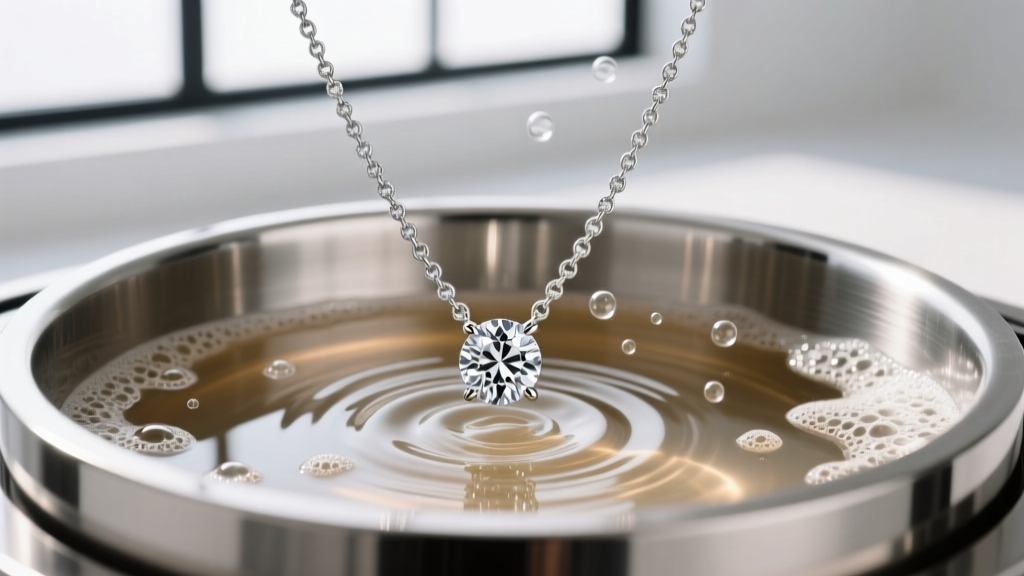
While a simple soak is the safest baseline, a true diamond necklace affair demands the optical perfection only achieved through ultrasonic cavitation. Ultrasonic cleaners operate at frequencies around 40 kHz, generating microscopic vacuum bubbles in the solution. When these bubbles implode against the diamond's surface, they create micro-jets that blast away hardened cosmetic residue from the culet and pavilion facets.
Crucial Warning: Never use ultrasonic or high-heat steam cleaners on fracture-filled diamonds (such as those treated via the Yehuda process). The intense vibrations and thermal shock can cloud the filling or cause it to leak, permanently damaging the stone's clarity. Similarly, if your necklace features tension settings, the vibrations can loosen the metal's grip on the diamond. Always consult the Jewelers of America guidelines or your original appraisal for treatment disclosures before utilizing mechanical cleaners.
Chain Metallurgy: Rhodium Flash and Platinum Patina
The metal holding your diamonds requires its own specialized care regimen, particularly for white gold and platinum chains. 18k and 14k white gold are alloyed with palladium or nickel, but they inherently possess a faint yellowish-gray hue. To achieve that mirror-like, silvery finish, they are electroplated with rhodium. A standard rhodium flash is between 0.75 and 1.0 microns thick. Aggressive polishing or frequent ultrasonic cleaning can accelerate the wear of this plating, exposing the yellowish alloy beneath. If your white gold chain looks dull or yellow at the nape of the neck—a high-friction zone—it requires a professional re-plating before your gala.
Platinum, conversely, does not lose metal when scratched; it displaces, creating a soft, matte finish known as a patina. While some collectors love this vintage look, a high-society diamond necklace affair usually demands a high-polish mirror finish. A jeweler can burnish the platinum chain, compressing the metal back into a smooth, reflective surface without sacrificing the chain's structural mass or thinning the links.
Event-Day Protocol: The Chemistry of Wear
The sequence in which you dress for a gala directly impacts your necklace's longevity. The golden rule of jewelry wear is 'last on, first off.' Hairsprays, perfumes, and setting sprays contain high concentrations of denatured alcohol and aerosolized polymers. When these settle on a diamond necklace, they create a stubborn, cloudy film that is highly resistant to standard soap-and-water cleaning.
Furthermore, if your diamond necklace incorporates secondary gemstones like emeralds, opals, or pearls, the alcohol in perfumes can strip their natural oils or dissolve the resins used in emerald clarity enhancement. Apply all cosmetics, fragrances, and hairsprays at least 15 minutes before clasping your necklace. When putting the necklace on, handle it by the chain's edges or the metal settings, avoiding direct contact with the diamond's table (top facet) to prevent transferring sebum from your fingertips.
Post-Affair Storage and Transport
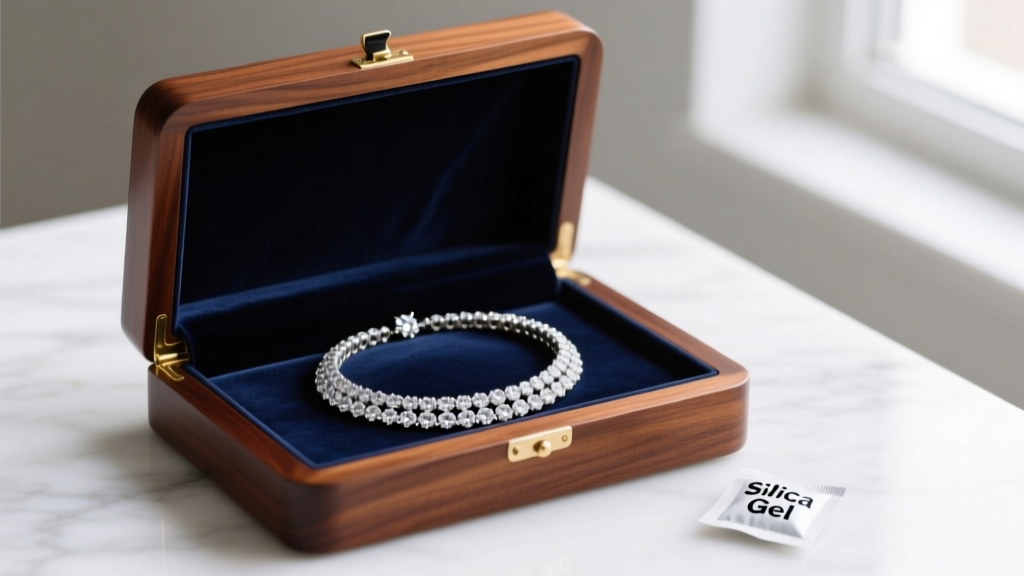
After the gala, how you store the necklace dictates its condition for the next event. Tossing a diamond rivière necklace into a crowded jewelry box is a recipe for disaster. Diamonds are a 10 on the Mohs hardness scale and will effortlessly scratch the metal settings, adjacent gold chains, or softer gemstones.
Transporting the necklace requires immobilizing the chain to prevent the dreaded 'bird's nest' tangles, which can warp delicate links and stress the solder points. A professional jeweler's trick is to thread one end of the chain through a plastic drinking straw before clasping it, keeping the chain rigid and tangle-free during transit. For long-term storage, use a dedicated, hard-shell jewelry case lined with anti-tarnish treated velvet. Include a 3M anti-tarnish strip and a small silica gel desiccant packet in the compartment to control ambient humidity and absorb sulfur compounds, which can accelerate the oxidation of alloy metals in the chain's solder joints. Store the necklace flat, fully extended, and isolated from all other pieces to preserve the pristine condition required for your next diamond necklace affair.


