Diamond Necklace Malayalam Movie: Mollywood Jewelry Trends
Explore how the Diamond Necklace Malayalam movie influenced Kerala jewelry trends. Discover South Indian diamond chokers, styling tips, and 2026 pricing.

The Cultural Footprint of Mollywood on South Indian Jewelry
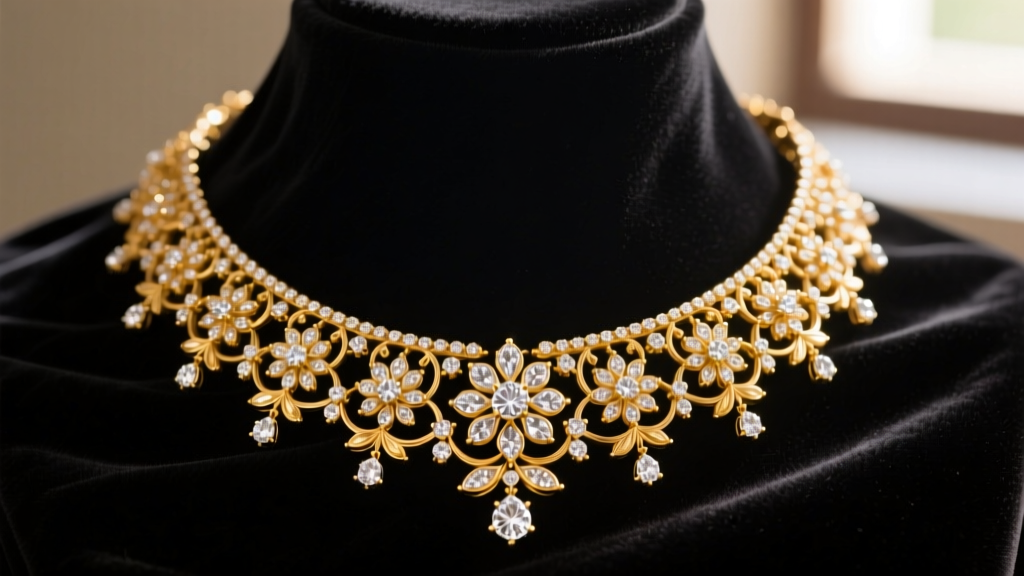
When jewelry historians and trend analysts examine the search volume surrounding the diamond necklace malayalam movie phenomenon, they uncover a fascinating intersection of regional cinema and heritage craftsmanship. The 2012 Malayalam film Diamond Necklace, starring Lal, used a high-value diamond necklace as a central plot device to explore themes of debt, aspiration, and the deep cultural significance of jewelry in Kerala society. While the movie is a cinematic piece, its lasting impact on Mollywood-inspired jewelry trends is undeniable. It catalyzed a shift among South Indian buyers, moving them away from purely traditional, heavy 22-karat gold temple jewelry toward more intricate, diamond-encrusted heritage pieces that balance ancestral motifs with modern wearable elegance.
As we navigate the jewelry landscape of 2026, the demand for 'cinematic' South Indian diamond necklaces—specifically those blending traditional Kerala designs like the Palakkad and Nagapadam with brilliant-cut diamonds—has surged. This style analysis breaks down the technical specifications, material grades, and styling frameworks required to master this distinct regional aesthetic.
Anatomy of a Kerala Diamond Necklace: Material Grades & Specifications
Authentic Kerala diamond jewelry is renowned for its meticulous craftsmanship, but integrating diamonds into traditional South Indian designs presents a metallurgical challenge. The core issue lies in the tension between cultural preferences for high-purity gold and the physical requirements for securing precious gemstones.
The 22K vs. 18K Gold Dilemma
Traditional Kerala jewelry is overwhelmingly crafted in 22-karat gold (91.6% purity) due to its investment value and cultural significance in bridal trousseaus. However, 22K gold is inherently soft, possessing a low tensile strength that makes prong settings highly susceptible to bending and stone loss. To solve this, master jewelers in Thrissur and Palakkad utilize a bi-metal construction technique.
| Component | Gold Purity | Function & Durability | 2026 Market Standard |
|---|---|---|---|
| Necklace Base / Chain | 22K (91.6%) | Provides structural weight, investment value, and traditional yellow hue. | Mandatory BIS HUID Hallmarked |
| Diamond Settings / Prongs | 18K (75.0%) or 14K | Offers the tensile strength required to securely grip diamond girdles. | Rhodium-plated for contrast |
| Backing Plates (Kundan) | Foil / Silver | Enhances the brilliance and color reflection of uncut Polki diamonds. | Used only in antique/Polki styles |
According to the Bureau of Indian Standards (BIS), modern hallmarking regulations require precise disclosure of these mixed-metal constructions, ensuring buyers know exactly what they are investing in.
Diamond Grading for Yellow Gold Settings
Unlike platinum or white gold settings that demand colorless diamonds (D-F scale), the warm, rich tones of 22K yellow gold pair best with near-colorless diamonds. Based on guidelines from the Gemological Institute of America (GIA), the optimal specification for Kerala diamond chokers is a G-H color grade with VS1-VS2 clarity. This combination ensures the diamonds appear brilliantly white against the gold without paying the steep premium for flawless, colorless stones that the yellow gold would slightly tint anyway.
3 Iconic Cinematic-Inspired Necklace Styles for 2026
To replicate the glamour seen in Mollywood cinema while maintaining contemporary wearability, focus on these three specific necklace archetypes that dominate the current South Indian luxury market.
1. The Modernized Palakkad Diamond Choker
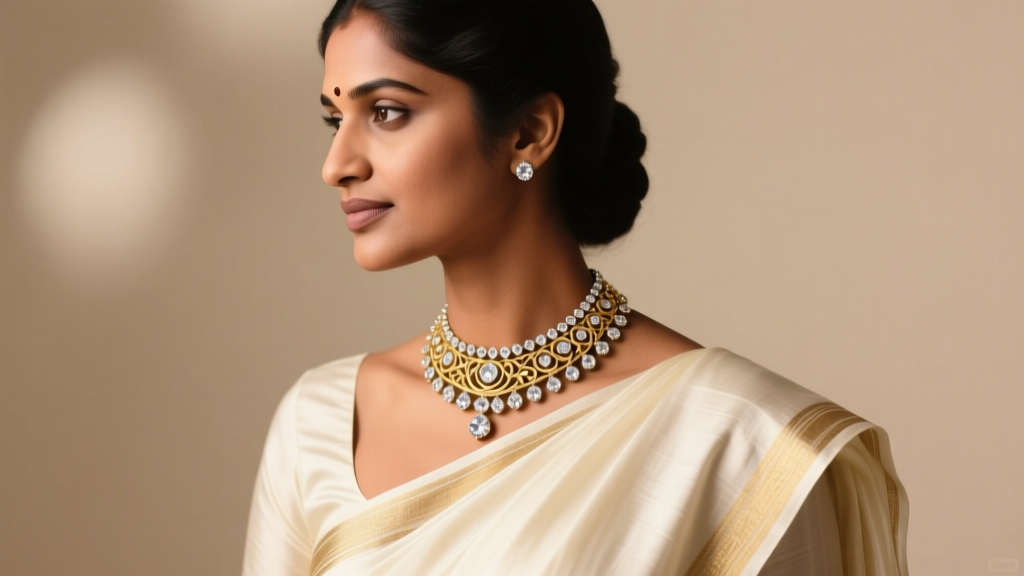
Originating from the Palakkad district, this style is characterized by broad, flat, geometric gold panels heavily encrusted with diamonds. The 2026 iteration replaces the heavy, bulky gold borders of the past with ultra-fine micro-pavé diamond settings. Weighing between 45 to 70 grams, these chokers sit flush against the collarbone. The intricate filigree work, known locally as thappa work, is now highlighted with 1mm round brilliant diamonds, creating a continuous ribbon of light that mimics the cinematic close-ups favored by Mollywood directors.
2. The Nagapadam Diamond Pendant
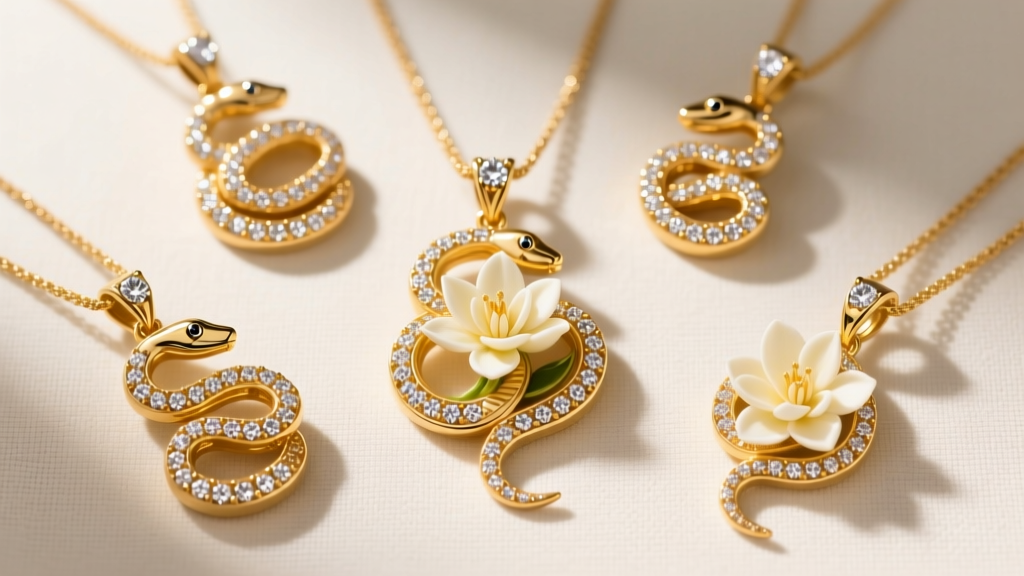
The Nagapadam (serpent motif) is one of the oldest and most sacred Kerala jewelry designs, traditionally featuring a central ruby or emerald surrounded by a diamond halo. The modern cinematic version scales up the central stone to a 3-carat cushion-cut ruby or emerald, flanked by marquise-cut diamonds that form the serpent's hood. Suspended on a 22K gold chain with a adjustable screw mechanism (allowing lengths from 16 to 20 inches), this piece transitions seamlessly from a traditional temple ceremony to an upscale evening reception.
3. The Mullamottu Diamond Cascade
The Mullamottu (jasmine bud) necklace traditionally consists of tightly woven gold buds resembling a jasmine garland. In the diamond-encrusted 2026 trend, the tips of each gold bud are capped with a single bezel-set round diamond (typically 0.05 carats each). A standard cascade features 50 to 75 individual buds, resulting in a total diamond weight (TDW) of 2.5 to 3.75 carats. The movement and light refraction of this piece make it a favorite for on-screen weddings and high-profile South Indian bridal editorials.
Neckline Pairing & Styling Framework
Styling heavy South Indian diamond necklaces requires a strategic approach to necklines to avoid visual clutter and ensure the jewelry remains the focal point.
- Traditional Kasavu Saree: The thick gold zari border of a Kerala Kasavu saree demands a choker (14-16 inches). A Palakkad diamond choker resting just above the gold border creates a stunning textural contrast between the woven metallic thread and the brilliant-cut stones.
- Indo-Western Anarkali / Lehenga: For deep V-necklines or sweetheart necks, opt for the Mullamottu cascade or a layered Nagapadam pendant set at 20-22 inches. The elongated silhouette draws the eye downward, complementing the plunging neckline without choking the neck.
- High-Neck Blouses: Avoid chokers entirely. Instead, utilize a long Oddiyanam-inspired diamond pendant (24+ inches) worn over the fabric, allowing the diamonds to catch the light against the dark silk or velvet of the blouse.
Investment Guide: Pricing & Hallmarking
Investing in cinematic-grade Kerala diamond jewelry requires a clear understanding of the pricing matrix, which is heavily weighted toward the gold content and the craftsmanship (making charges) rather than just the diamond carat weight.
2026 Pricing Benchmark: A high-quality, 50-gram Palakkad diamond choker with 2.00 carats of VS1/G-H diamonds typically ranges from ₹3,50,000 to ₹5,50,000 ($4,200 to $6,600 USD). Making charges for intricate bi-metal Kerala jewelry can account for 25% to 40% of the final retail price, reflecting the immense labor required to fuse 18K diamond settings into a 22K gold base.
When purchasing, always demand the BIS HUID (Hallmark Unique Identification) code laser-engraved on the 22K components, and a separate gemological certificate for the diamonds if the total carat weight exceeds 1.00 carat. By understanding the technical and cultural depths of these pieces, buyers can confidently acquire jewelry that honors the legacy of South Indian cinema while securing a timeless, wearable asset.


