Diamond Pave Necklace Settings: Platinum vs 18k Gold
Compare metal bases for your diamond pave necklace. We analyze platinum, 18k white gold, and 14k rose gold for prong durability and longevity.

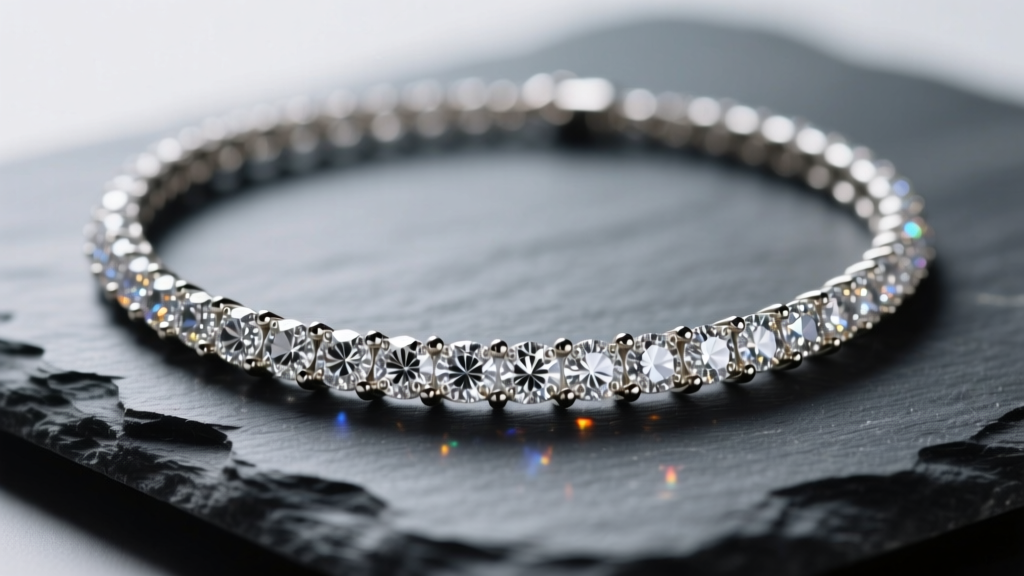
The Illusion of Continuous Sparkle
When evaluating a diamond pave necklace, the untrained eye is immediately drawn to the continuous ribbon of brilliance cascading across the collarbone. The term 'pave' (pronounced pah-vay) is derived from the French word for 'paved,' perfectly describing how the metal surface is entirely 'paved' with small melee diamonds. However, as a senior jewelry analyst observing market trends through 2026, I must emphasize that the true determinant of a pave necklace's lifespan, structural integrity, and long-term value is not the stones themselves, but the metal base and the micro-prongs securing them.
Choosing the correct metal alloy for a pave setting is an exercise in material science. The metal must be hard enough to withstand daily friction, yet malleable enough for a master setter to push over the girdle of a 1.3mm melee diamond without fracturing. In this comprehensive guide, we will dissect the material properties of Platinum 950, 18k White Gold, and 14k Rose Gold to determine which base offers the ultimate foundation for your diamond pave necklace.
The Structural Anatomy of a Pave Setting
Before comparing alloys, we must understand the mechanical forces at play in a pave setting. Unlike traditional prong settings that use four or six substantial claws, pave settings rely on micro-prongs or 'beads' raised directly from the surrounding metal sheet using a graver tool. In a high-quality micro-pave necklace, these prongs are exceptionally delicate, typically measuring between 0.8mm and 1.1mm in diameter.
The tolerance for error is microscopic. The stone seat—the gallery wire or depression where the diamond's pavilion rests—must be cut to an exact 45-degree angle. If the seat is too shallow, the diamond will sit proud and catch on textiles; if it is too deep, the metal beads will not reach the diamond's girdle securely. According to the Gemological Institute of America (GIA), the structural failure of pave settings is rarely due to the diamonds breaking, but rather the metal fatigue and wear of these microscopic prongs over time.
Metal Base Comparison: Platinum vs. Gold Alloys
The debate between platinum and gold for fine jewelry is centuries old, but when applied to the high-stress environment of a diamond pave necklace, specific metallurgical properties come to the forefront. Let us examine the three most common premium alloys used in 2026.
Platinum 950: The Benchmark for Durability
Platinum 950 consists of 95% pure platinum, typically alloyed with 5% ruthenium or cobalt to increase its baseline hardness. Platinum's defining characteristic in jewelry is its high density and unique wear behavior. When platinum is scratched or subjected to friction, the metal is not lost; it is merely displaced. This results in a soft patina over time. More importantly, when a platinum micro-prong is bent by a snag, it work-hardens and can often be pushed back into place by a jeweler without the need for adding new metal.
18k White Gold: The Rhodium-Plated Contender
18k White Gold is composed of 75% pure gold alloyed with bleaching metals like palladium, nickel, or silver. Out of the casting tree, 18k white gold has a slight yellowish-gray hue, requiring a flash of rhodium plating to achieve the stark, reflective white finish that mimics platinum. While 18k white gold is initially harder than annealed platinum, it wears differently. When gold alloys scratch, microscopic particles of metal are permanently lost. Over a decade, this metal loss can thin the micro-prongs of a pave setting, leading to stone loss.
14k Rose Gold: The Copper-Infused Alternative
14k Rose Gold (58.5% gold, heavily alloyed with copper and a touch of silver) offers a warm, vintage aesthetic that contrasts beautifully with white diamonds. The high copper content makes 14k rose gold significantly harder and more resistant to deformation than 18k yellow gold. However, copper is prone to oxidation and can cause galvanic skin reactions in sensitive individuals, making it a niche choice for everyday pave necklaces worn directly against the pulse point.
Material Properties Data Table
| Metal Alloy | Composition | Vickers Hardness (HV) | Prong Wear Behavior | Maintenance Cycle |
|---|---|---|---|---|
| Platinum 950 (Ru) | 95% Pt, 5% Ru | 135 HV (Work-hardens to ~200 HV) | Displaces metal (Patina), prongs bend but rarely snap | Polish every 3-5 years |
| 18k White Gold (Pd) | 75% Au, 25% Pd/Aloys | 125 - 140 HV | Loses metal to friction, prongs thin over time | Rhodium dip every 12-18 months |
| 14k Rose Gold | 58.5% Au, 41.5% Cu/Ag | 150 - 170 HV | Highly rigid, resistant to bending but can snap if forced | Ultrasonic cleaning caution |
Melee Diamond Material Properties
A diamond pave necklace is only as brilliant as the melee stones utilized. Melee diamonds generally range from 0.01 to 0.02 carats (approximately 1.3mm to 1.7mm in diameter). Historically, manufacturers utilized 'single cut' melee (featuring only 17 or 18 facets) to save on labor costs. However, the modern standard for premium pave necklaces is 'full cut' melee, which boasts the complete 57 or 58 facets of a large round brilliant diamond. This ensures maximum light return, creating the coveted 'crushed ice' or continuous mirror effect.
The market shift toward lab-grown diamonds has profoundly impacted pave manufacturing. Because lab-grown melee is now highly abundant and cost-effective, jewelers in 2026 are no longer forced to use lower-clarity natural melee (often I1 or SI2). It is now standard to find premium pave necklaces featuring VS-clarity, F-G color lab-grown melee, drastically reducing the gray or brown tints that once plagued lower-end pave settings.
Common Failure Modes in Pave Settings
Understanding how pave settings fail is critical for long-term maintenance. The Jewelers of America frequently cites pave settings as one of the most common items requiring bench repair. The primary failure modes include:
- Textile Snagging: The most common cause of stone loss. A micro-prong catches on a sweater or towel, bending the 0.8mm metal bead away from the diamond's girdle.
- Ultrasonic Vibrations: While ultrasonic cleaners are excellent for solid solitaires, the high-frequency vibrations can easily shake loosely seated melee diamonds right out of their pave settings.
- Rhodium Depletion: In white gold necklaces, as the rhodium plating wears away, the underlying porous gold alloy is exposed to sweat, cosmetics, and environmental acids, accelerating metal degradation around the stone seats.
The 2026 Inspection Framework for Buyers
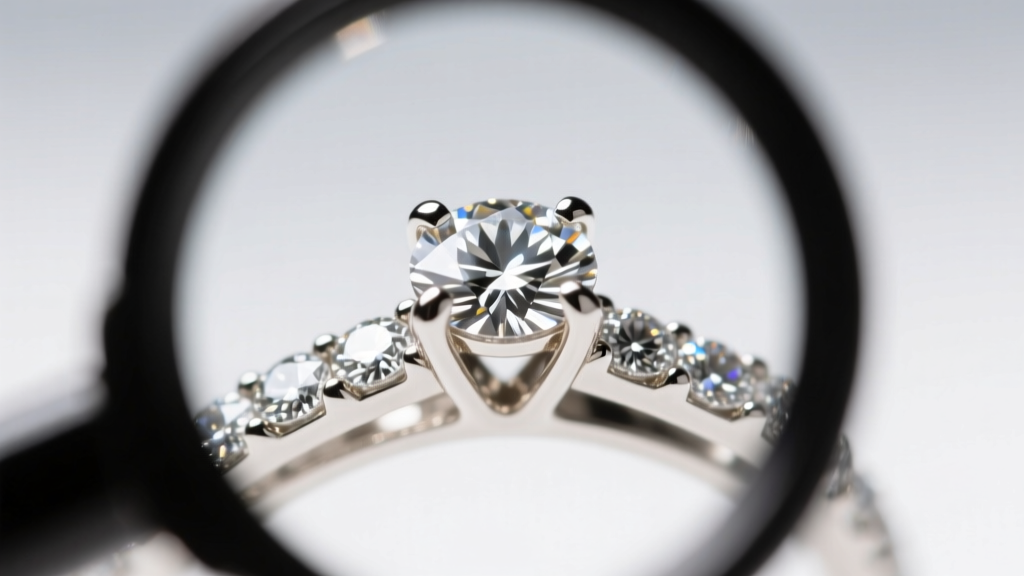
When purchasing a diamond pave necklace, do not rely solely on the naked eye. Request a 10x jeweler's loupe and perform the following structural audit:
- Check for Overlap: The girdles of the melee diamonds should sit flush against one another, but they must never overlap. Overlapping stones will eventually chip each other during thermal expansion or minor impacts.
- Inspect the Beads: The micro-prongs should be perfectly rounded and uniform in size. Flat, jagged, or overly large beads indicate sloppy hand-setting or poor casting quality.
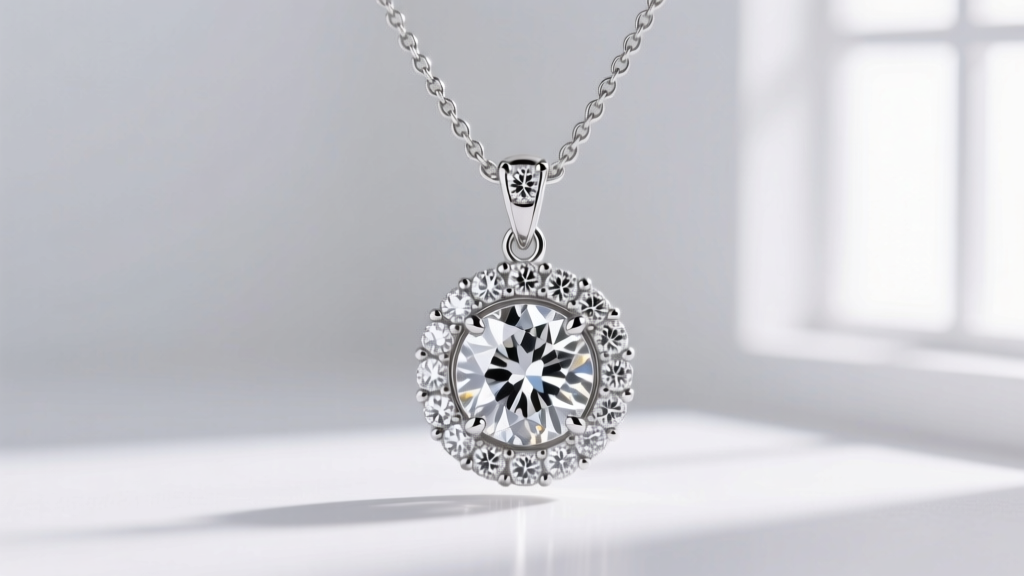
- Evaluate the Gallery Wire: Look at the underside of the pendant or chain. The gallery wire (the structural support beneath the stones) should be thick, well-polished, and feature properly sized honeycomb openings to allow light to enter the pavilion of the diamonds.
Ultimately, if you prioritize heirloom longevity and plan to wear your necklace daily without frequent maintenance visits, Platinum 950 remains the undisputed champion for diamond pave settings. If you prefer a lower initial price point and a brighter white aesthetic, 18k White Gold is an excellent choice, provided you commit to an annual rhodium and prong-check maintenance schedule with your local bench jeweler.


