How to Choose the Perfect Diamond V Necklace: A Buyer's Guide
Discover how to choose the perfect diamond V necklace. Our expert buying guide covers carat weights, chain pairings, settings, and pricing tiers.

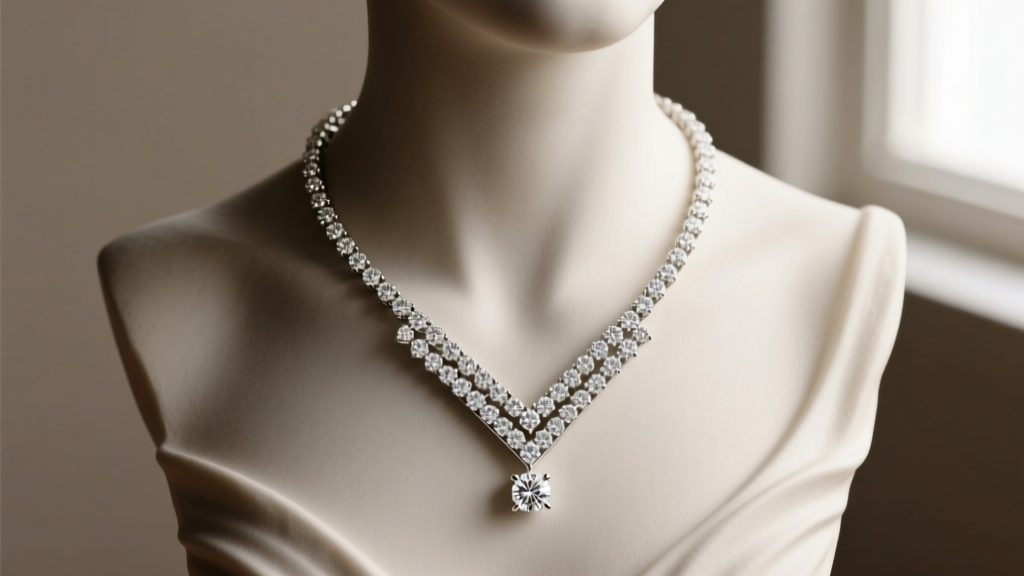
The diamond V necklace—often referred to as a chevron, lariat, or Y-necklace—is a masterclass in geometric elegance. By drawing the eye downward, the V-shape naturally elongates the neck and creates a striking focal point against the collarbone. However, navigating the market for these specific pendants requires a nuanced understanding of jewelry architecture. Unlike standard solitaire pendants, a diamond V necklace relies heavily on the interplay between multiple stones, precise setting techniques, and chain drape.
Whether you are investing in a delicate 0.25ct TCW (Total Carat Weight) piece for daily wear or a statement 1.50ct TCW chevron for evening events, this comprehensive buying guide will equip you with the technical knowledge needed to make an informed purchase in 2026.
The Anatomy of a Diamond V Necklace
Before evaluating diamond quality, it is crucial to understand the structural variations of the V-shape. The market generally categorizes these necklaces into three distinct silhouettes:
- The Chevron: A solid, continuous V-shaped metal framework paved with diamonds. This is the most traditional and structured style, offering a bold, modern look.
- The Lariat (or Y-Necklace): Features a V-shaped drop that extends into a vertical tail, often terminating in a single solitaire diamond or tassel. This style offers fluid movement and a bohemian yet luxurious aesthetic.
- The Open V (Outline): A minimalist approach where the V-shape is created by a thin metal wire or bezel-set stones outlining the negative space, rather than a solid block of diamonds.
According to the Jewelers of America, understanding the intended silhouette is the first step in matching the necklace to the wearer's personal style and typical wardrobe necklines.
Decoding Diamond Quality: Melee vs. Solitaire
The vast majority of diamond V necklaces utilize melee diamonds—small stones typically ranging from 0.005 to 0.15 carats each—paved or channel-set into the chevron framework. Because these stones are small, their grading parameters differ significantly from large center stones.
Color and Clarity Thresholds
When evaluating melee diamonds in a V-pendant, you do not need to pay a premium for D-color or Flawless clarity. The human eye cannot detect minor inclusions or slight color variations in stones under 2.5mm in diameter.
- Color: Aim for G-H (Near Colorless). If the pendant is set in yellow or rose gold, I-J color is perfectly acceptable and will blend seamlessly with the warm metal tones.
- Clarity: SI1 to SI2 (Slightly Included) is the sweet spot for melee. As long as the stones are 'eye-clean' and lack black carbon spots that dull the sparkle, higher clarity grades will not yield a visible return on investment.
For a deeper understanding of how inclusions affect light performance in smaller stones, refer to the GIA Diamond Clarity Grading guidelines. If your V-necklace features a single, large V-cut diamond (a rare and specialized lapidary cut), you must elevate your standards to VS1-VS2 clarity and D-F color, as the large table of the stone will expose any internal flaws.
Setting Styles That Define the V-Shape
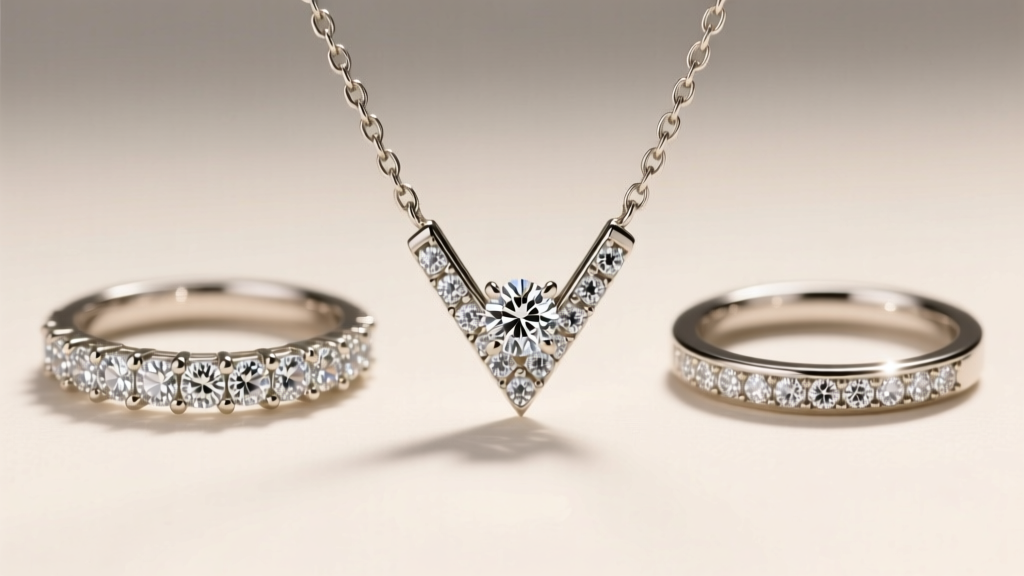
The setting style dictates not only the security of the diamonds but also the overall brilliance and maintenance requirements of the necklace. Because the V-shape features sharp angles and points, the setting at the vertex (the bottom tip of the V) is particularly vulnerable to snagging and impact.
| Setting Style | Brilliance | Durability | Maintenance | Best For |
|---|---|---|---|---|
| Channel Set | Medium | Excellent | Low | Active lifestyles, sleek modern looks |
| Prong Set (Shared) | High | Good | Medium | Maximum sparkle, classic elegance |
| Bezel Set | Low-Medium | Excellent | Very Low | Snag-free wear, contemporary aesthetics |
| Pave / Micro-Pave | Very High | Fair | High | High-glamour, intricate detailing |
Expert Tip: If you choose a shared-prong setting for your diamond V necklace, ensure the jeweler has reinforced the prongs at the vertex of the V. The acute angle at the bottom point experiences the most stress and friction against clothing, making prong failure most likely at this specific junction.
Chain Selection: The Backbone of the Pendant
A diamond V necklace is only as good as the chain that supports it. The weight distribution of a chevron pendant requires a chain that resists kinking and provides a smooth drape. Furthermore, the chain gauge must be proportional to the bail (the loop connecting the pendant to the chain).
Recommended Chain Types
- Box Chain (0.9mm - 1.2mm): The industry standard for V-pendants. The square links reflect light beautifully and are highly resistant to kinking. A 1.0mm 14k gold box chain can comfortably support up to 0.75ct TCW pendants.
- Cable Chain (1.0mm - 1.5mm): Offers a classic, traditional look. Ensure the links are soldered closed to prevent them from pulling apart under the weight of the chevron.
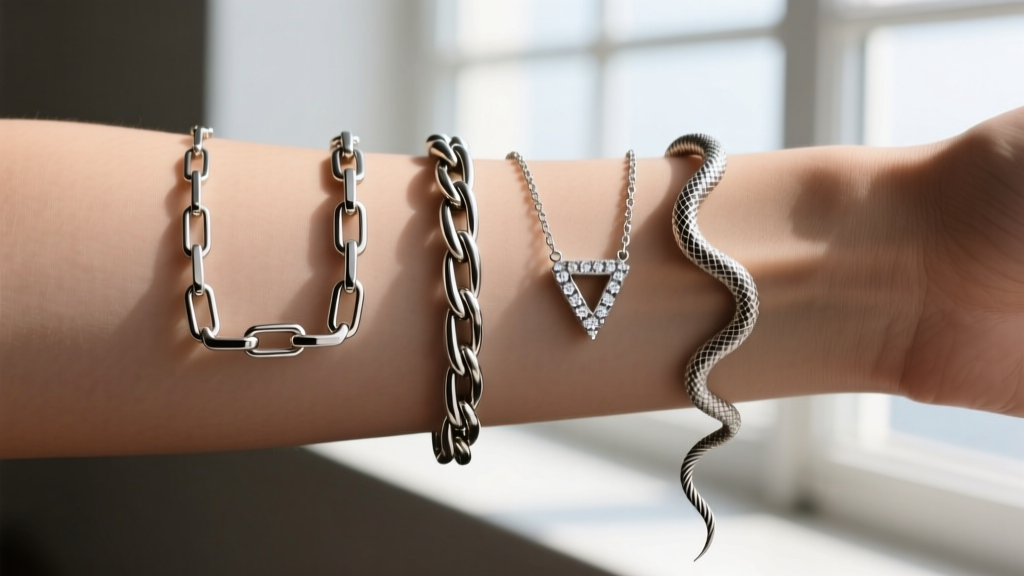
- Snake Chain (1.2mm - 1.5mm): Provides a fluid, liquid-metal drape that complements the sharp angles of the V. However, snake chains are prone to permanent kinking if bent sharply, so they must be stored flat or hung.
The Clasp Factor: Never pair a diamond V necklace with a spring-ring clasp. The weight of the pendant will cause the necklace to rotate, constantly placing the small, fragile spring ring at the front of the neck. Always opt for a sturdy lobster claw clasp, which is heavier and helps keep the clasp anchored at the nape of the neck.
Metal Choices and 2026 Pricing Tiers
The metal you choose impacts both the longevity and the price of your diamond V necklace. While 18k gold offers a richer color and higher purity, 14k gold is significantly harder and more resistant to scratching, making it the superior choice for everyday chevron pendants that rest against the collarbone. Platinum is the ultimate choice for durability and hypoallergenic properties, but it commands a 40% to 60% premium over 14k white gold.
Based on current market valuations and Gemological Institute of America (GIA) pricing metrics, here is what you should expect to pay for a quality 14k gold diamond V necklace:
- Entry-Level (0.15ct - 0.25ct TCW): $450 - $850. Ideal for delicate, minimalist layering. Stones will be approximately 1.0mm to 1.3mm in diameter.
- Mid-Range (0.35ct - 0.50ct TCW): $1,100 - $2,200. The most popular tier for standalone statement pieces. Offers excellent visual impact without overwhelming the neckline.
- Luxury (0.75ct - 1.00ct+ TCW): $2,800 - $5,500+. Features larger melee stones (1.7mm+) or a combination of baguette and round brilliant cuts for a high-jewelry aesthetic.
Always request a grading report or a detailed invoice that specifies the exact Total Carat Weight (TCW), the number of stones, and the metal purity. Reputable jewelers will transparently disclose if the diamonds are natural, lab-grown, or treated.
Neckline Pairings and Styling
The geometric nature of the diamond V necklace makes it incredibly versatile, but it requires strategic pairing with clothing necklines to maximize its elongating effect.
- V-Neck and Scoop Necks: The pendant should sit slightly above or perfectly parallel to the fabric's V-line. Avoid pendants that disappear into the fabric fold.
- Crew Necks and Turtlenecks: Opt for a longer chain (18 to 20 inches) with a larger, bolder chevron pendant (0.50ct TCW or higher) to break up the solid block of fabric and create a layered, textured look.
- Off-the-Shoulder and Strapless: A shorter 16-inch choker-style V-necklace or a delicate lariat Y-necklace draws attention to the exposed collarbones and elongates the neck beautifully.
Expert Verdict
Purchasing a diamond V necklace is an exercise in balancing structural integrity with optical brilliance. Prioritize a sturdy 14k gold box chain with a lobster clasp, select G-H color melee diamonds in a channel or reinforced shared-prong setting, and ensure the vertex of the V is properly protected. By focusing on these technical details rather than just the total carat weight, you will secure a piece that not only dazzles but endures a lifetime of daily wear.


