Pearl Necklace Cost Guide: Akoya, Tahitian & Freshwater
Discover the true pearl necklace cost across Akoya, Tahitian, and Freshwater varieties. Compare prices, luster grades, and nacre thickness for smart buying.

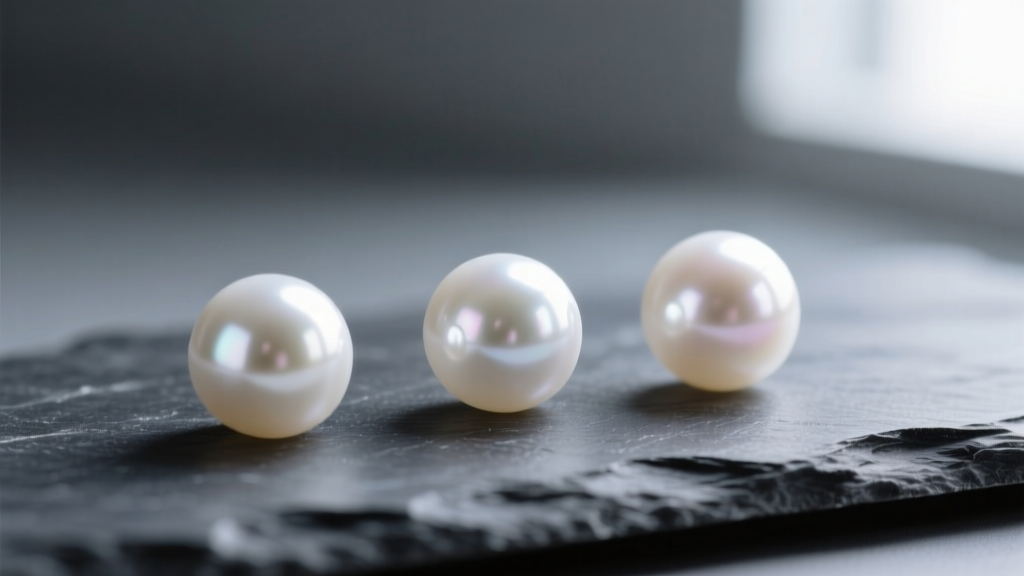
When evaluating the pearl necklace cost, buyers are often confronted with staggering price discrepancies. A seemingly identical 18-inch strand of white pearls can cost $150 at a department store or $15,000 at a high-end jeweler. Understanding these disparities requires moving beyond basic aesthetics and diving into the gemological realities of nacre thickness, nucleation methods, and grading standards. As of 2026, the pearl market has been heavily disrupted by advanced freshwater cultivation techniques, making it more critical than ever to know exactly what you are paying for.
This comprehensive guide breaks down the real market pricing for the three dominant pearl types—Freshwater, Akoya, and Tahitian—providing you with the technical metrics needed to assess true value and avoid overpaying for treated or inferior gems.
The Anatomy of Pearl Pricing: Why Costs Vary So Wildly
Before examining specific varieties, it is essential to understand the universal metrics that dictate pearl valuation. According to GIA's Pearl Quality Factors, the cost of any pearl necklace is anchored by five primary variables:
- Nacre Thickness: The most critical determinant of longevity and value. Thin nacre (under 0.3mm) will eventually peel or crack, rendering the necklace worthless.
- Luster: The sharpness and intensity of light reflected from the surface. High-luster pearls exhibit a mirror-like finish, while low-luster pearls appear chalky or dull.
- Surface Cleanliness: Blemishes, spots, and wrinkles reduce value, though minor imperfections are expected in natural gems and can prove authenticity.
- Shape and Symmetry: Perfectly round pearls command the highest premiums, followed by near-round, drop, and baroque shapes.
- Size: Measured in millimeters, price increases exponentially—not linearly—as diameter grows, due to the biological rarity of larger pearls.
Freshwater Pearl Necklace Cost: The Accessible Classic
Historically, freshwater pearls were small, rice-grain-shaped gems with muted luster. Today, the market is dominated by Edison pearls and advanced bead-nucleated freshwater varieties that rival saltwater pearls in size and roundness, fundamentally altering the pearl necklace cost landscape.
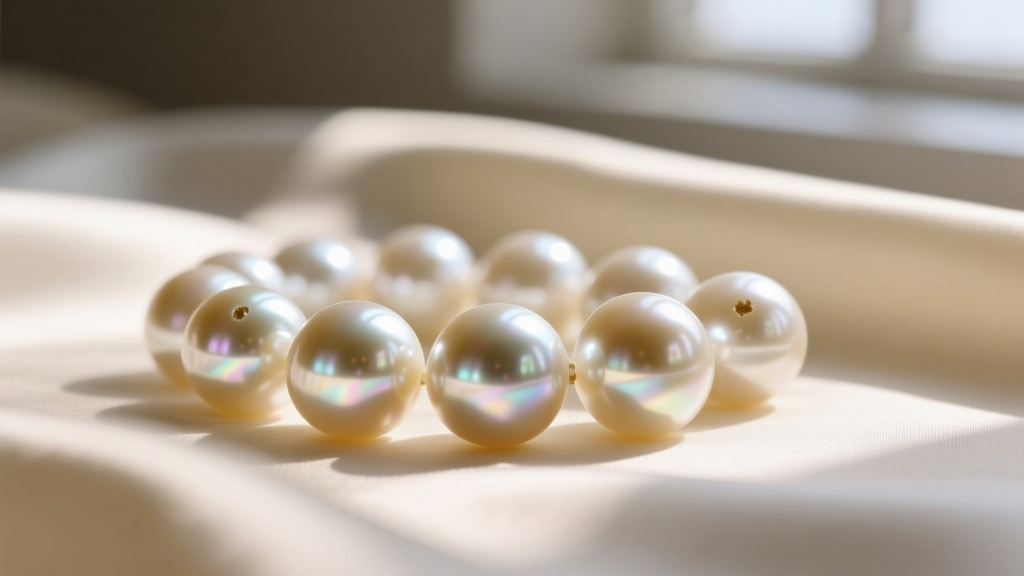
Tissue-Nucleated vs. Bead-Nucleated Freshwater
Traditional freshwater pearls are tissue-nucleated, meaning a tiny piece of mantle tissue is inserted into the mussel. The resulting pearl is 100% solid nacre, making it incredibly durable, though often slightly off-round. These strands typically cost between $50 and $300.
Conversely, modern Edison pearls are bead-nucleated with a round shell bead, similar to saltwater pearls. This produces large (11mm–14mm), perfectly round pearls with striking metallic luster. Because a single mussel produces only one or two Edison pearls (compared to 20+ tissue-nucleated pearls), the cost is higher. A high-quality, 18-inch Edison pearl necklace generally ranges from $800 to $2,500, offering a fraction of the cost of equivalent South Sea pearls.
Akoya Pearl Necklace Cost: The Mirror-Like Standard
Akoya pearls, primarily cultivated in the Pinctada fucata martensii oyster in Japan and China, are the quintessential white pearl. They are renowned for their sharp, mirror-like luster and subtle rose or cream overtones. However, the Akoya market is fraught with quality variations that drastically affect pricing.
The primary failure mode in cheap Akoya pearls is insufficient nacre thickness. Some commercial-grade Akoya pearls are harvested after only 6 to 8 months, yielding a nacre layer of just 0.1mm to 0.2mm. These pearls will quickly lose their luster and peel. High-quality Japanese Akoya pearls are left in the water for 18 to 24 months, achieving a nacre thickness of 0.4mm to 0.8mm.
Decoding the Hanadama Certification
For buyers seeking the absolute best, the Hanadama certificate (issued by the Pearl Science Laboratory in Japan) is the gold standard. To earn this designation, an Akoya pearl must possess a nacre thickness of at least 0.4mm and exhibit flawless luster with minimal blemishes.
When evaluating an Akoya strand, always request a certificate verifying nacre thickness. According to the GIA Pearl Description Guide, nacre quality directly impacts the pearl's optical properties and structural integrity over time.
Pricing Brackets for 18-Inch Akoya Strands (7.5mm - 8.5mm):
- Commercial Grade (Thin Nacre, Visible Blemishes): $200 – $500
- Fine Jewelry Grade (AAA, 0.4mm+ Nacre): $800 – $1,800
- Certified Hanadama (Gem Grade, 0.6mm+ Nacre): $2,500 – $6,000+
Tahitian & South Sea Pearl Necklace Cost: The Luxury Tier
At the apex of the market are Tahitian and South Sea pearls. These saltwater gems are cultivated in large oysters (Pinctada margaritifera and Pinctada maxima) and require 2 to 4 years of cultivation, resulting in exceptionally thick nacre (often 2mm to 4mm) and massive sizes.
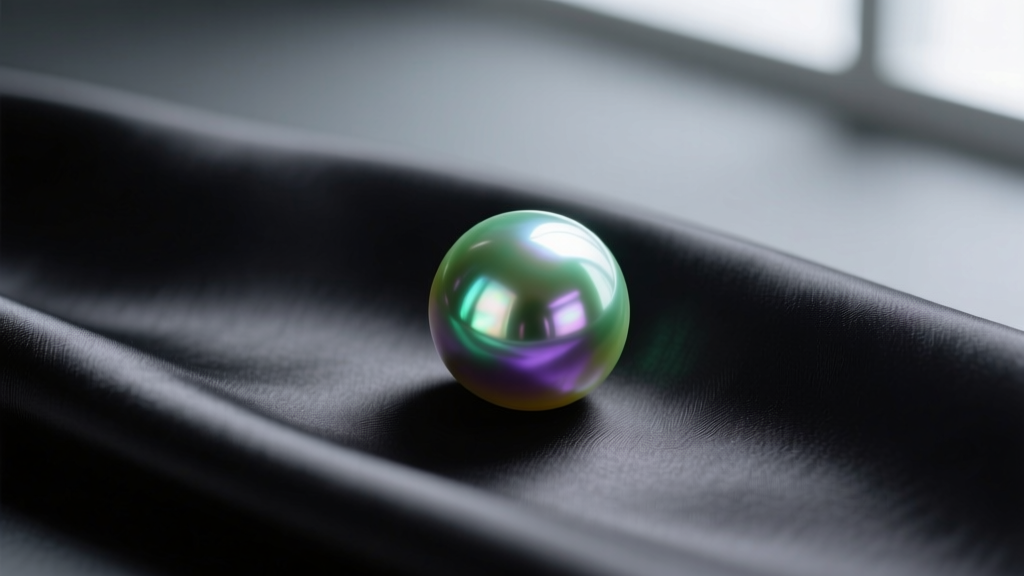
The Exponential Price Curve of Tahitian Pearls
Tahitian pearls are famous for their dark body colors and vibrant overtones, with the 'peacock' overtone (a mix of green, purple, and pink) commanding the highest premiums. The cost of a Tahitian pearl necklace is heavily dictated by size. Because large oysters are rare and biologically difficult to maintain, the price jumps exponentially with every millimeter.
A 9mm to 10mm strand of medium-luster Tahitian pearls might cost $1,500 to $3,000. However, a matched strand of 13mm to 15mm pearls with top-tier peacock overtones and clean surfaces can easily exceed $25,000 to $40,000. Buyers must also be wary of irradiated freshwater pearls dyed to mimic Tahitian colors; true Tahitian pearls will have a natural, deep grey or charcoal body color beneath the overtone, not a flat, painted black.
Comparative Pricing & Value Matrix
To synthesize the data, the table below provides a quick-reference matrix for standard 18-inch princess-length necklaces in the current market.
| Pearl Type | Nucleation | Avg Size | Nacre Thickness | Typical Cost Range | Best For |
|---|---|---|---|---|---|
| Freshwater (Standard) | Tissue | 6mm - 8mm | 100% Nacre | $50 - $300 | Everyday wear, budget-conscious buyers |
| Freshwater (Edison) | Bead | 11mm - 14mm | 2mm - 4mm | $800 - $2,500 | Statement pieces, South Sea alternatives |
| Akoya (Fine) | Bead | 7mm - 8.5mm | 0.4mm - 0.8mm | $800 - $2,500 | Bridal jewelry, classic elegance |
| Tahitian | Bead | 9mm - 13mm | 2mm - 4mm | $2,000 - $20,000+ | Luxury collectors, bold aesthetics |
Red Flags: Overpaying for Treated or Shell-Core Pearls
When assessing the pearl necklace cost, be highly suspicious of deals that seem too good to be true. The market is saturated with treatments designed to artificially inflate the appearance of low-grade pearls.
Maeshori Treatment: Common in lower-grade Akoya pearls, this process involves heating and cooling the pearls to tighten the nacre plates, temporarily enhancing luster. Over time, Maeshori-treated pearls become brittle and prone to cracking.
Shell-Core Beads: In extremely cheap 'pearl' necklaces, the core is not a mother-of-pearl bead, but rather a compressed shell or plastic core coated with a synthetic pearlescent paint (essence d'orient). These have zero gemological value and will peel within months of regular wear. Always perform the 'tooth test'—gently rubbing the pearl against the edge of your front tooth. Real nacre feels slightly gritty or sandy, while coated imitations feel perfectly smooth like glass.
Final Verdict: Matching Budget to Occasion
Ultimately, the ideal pearl necklace cost depends entirely on your intended use and longevity expectations. For durable, everyday wear that can be passed down through generations, a certified Hanadama Akoya strand or a high-grade Edison freshwater necklace offers the best intersection of beauty, durability, and value. Reserve the massive premiums of South Sea and top-tier Tahitian pearls for investment-grade collecting or milestone luxury purchases. By prioritizing nacre thickness and verified luster over mere brand names, you ensure that your investment retains its brilliance for decades to come. For further gemological verification, always consult resources like the GIA's Comprehensive Pearl Overview before making high-value acquisitions.


