How to Clean, Restore, and Fix a Gold and Onyx Necklace
Discover expert troubleshooting tips to clean, repair, and restore your gold and onyx necklace without damaging the porous stone or soft metal settings.

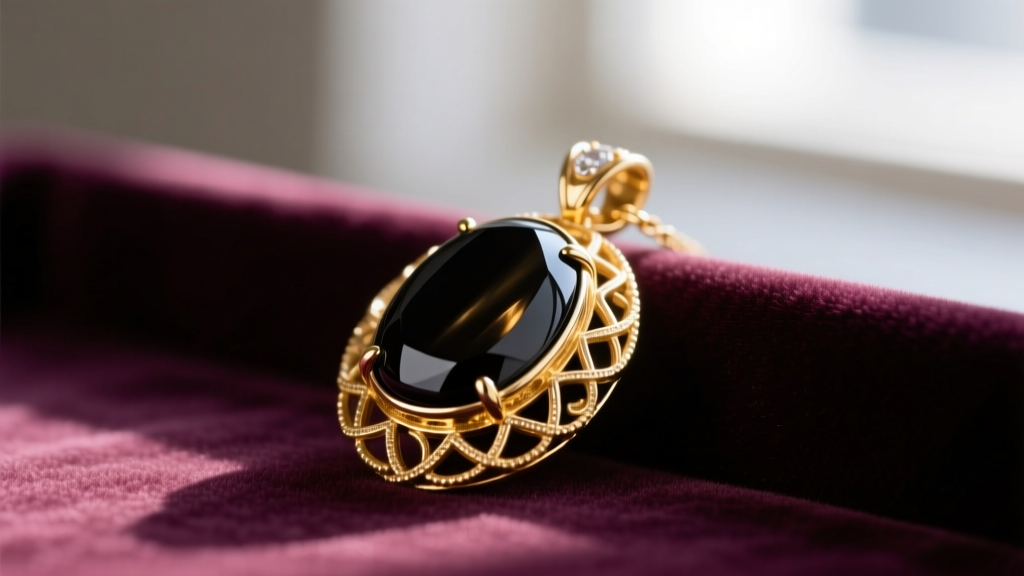
A gold and onyx necklace is a timeless staple, echoing the bold geometry of the Art Deco era and the sleek minimalism of modern fine jewelry. However, the striking contrast between luminous gold and deep black onyx hides a complex set of material vulnerabilities. Many owners unknowingly damage their pieces using standard jewelry cleaning methods, leading to cloudy stones, degraded settings, and irreversible dye leaching.
As a domain expert in gemology and jewelry conservation, I have compiled this comprehensive troubleshooting guide to help you diagnose, clean, and repair your necklace. Whether you are dealing with a vintage heirloom or a contemporary 14k gold piece, understanding the metallurgy and lapidary science behind your jewelry is the first step toward proper preservation.
The Unique Vulnerabilities of Onyx and Gold Alloys
To troubleshoot damage, you must first understand the materials. True black onyx is exceptionally rare in nature. According to the Gemological Institute of America (GIA), almost all commercial black onyx is actually gray or white agate that has been treated. The stone is soaked in a sugar solution and then boiled in sulfuric acid, which carbonizes the sugar and turns the stone a permanent, deep black.
While this treatment is stable under normal conditions, it makes the stone highly sensitive to extreme heat and harsh chemicals. Onyx also has a Mohs hardness of 6.5 to 7, but it features a conchoidal fracture pattern, meaning it can chip or shatter easily if struck against a hard surface.
The gold setting presents its own challenges. Pure 24k gold is too soft for jewelry, so it is alloyed with metals like copper, silver, and zinc. In 14k and 18k gold, these alloy metals can react with environmental sulfur, lotions, and even the residual acids from the onyx dyeing process, leading to localized tarnishing or structural weakening of the prongs and bezels over time.
Troubleshooting Common Gold and Onyx Necklace Issues
Below is a diagnostic matrix for the most frequent issues encountered with these necklaces, along with the appropriate intervention level.
| Symptom | Root Cause | DIY Fix | Pro Fix Required? |
|---|---|---|---|
| Cloudy or white-spotted onyx | Hard water mineral deposits or dye leaching | Distilled water wipe | Yes, if dye is leaching |
| Stone rattling in bezel | Impact damage or degraded vintage epoxy | None (stop wearing) | Yes (bezel tightening) |
| Gold setting turning black | Copper/silver alloy oxidation or trapped grime | Mild soap & baby brush | Yes, if severe pitting |
| Micro-fractures in the stone | Ultrasonic cleaner cavitation damage | None | Yes (lapidary re-cut) |
Issue 1: Cloudy or White-Spotted Onyx
If your onyx has lost its mirror-like polish and appears cloudy, the issue is usually one of two things. First, it may be hard water scale (calcium carbonate) left behind after showering or swimming. Second, and more concerning, the carbonized dye may be leaching out due to exposure to harsh chemicals like bleach, ammonia, or alcohol-based perfumes.
The Fix: Dampen a microfiber cloth with distilled water (never tap water) and gently buff the stone. If the cloudiness persists, the stone's polish has been chemically etched. You will need to take it to a lapidary to have the surface re-polished using cerium oxide on a felt wheel.
Issue 2: Loose Bezel or Prong Settings
Vintage gold and onyx necklaces often rely on a combination of mechanical friction and hidden adhesives (like shellac or jeweler's epoxy) to keep the heavy cabochon secure. Over decades, skin oils and temperature fluctuations degrade these adhesives.
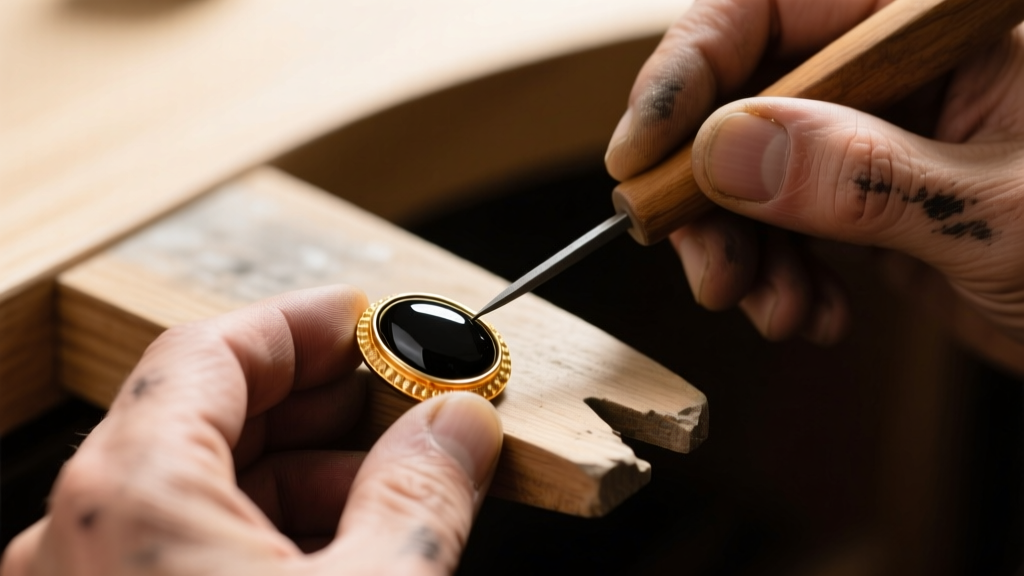
The Fix: Never attempt to bend gold prongs or push down a bezel wall yourself using metal tools; you risk scratching the gold or cracking the onyx. A professional jeweler will safely remove the stone, clean out the degraded adhesive from the gallery, and use a wooden or nylon pusher to snug the metal back against the stone's girdle.
Step-by-Step Safe Cleaning Protocol
The GIA Care and Cleaning Guide explicitly warns against using ultrasonic and steam cleaners on treated stones. The microscopic cavitation bubbles in an ultrasonic bath can violently shake loose the carbonized dye, leaving your black onyx looking patchy and gray. Follow this safe, manual cleaning protocol instead:
- Prepare the Solution: Mix lukewarm distilled water with a single drop of pH-neutral dish soap (like Dawn) in a glass bowl.
- Soak Briefly: Submerge the necklace for no more than 3 to 5 minutes to loosen sebum and cosmetic buildup from the gold setting.
- Agitate Gently: Use an extra-soft baby toothbrush to gently sweep the bristles behind the onyx stone and along the gold chain links. Never scrub the face of the onyx directly.
- Rinse and Dry: Rinse under a gentle stream of distilled water. Pat dry immediately with a lint-free microfiber cloth. Do not air dry, as water spots will form on the gold.
When to Seek Professional Lapidary Repair
Some damage to a gold and onyx necklace goes beyond surface cleaning and requires specialized intervention. You must consult a master jeweler or lapidary in the following scenarios:
- Deep Chipping: Because onyx fractures conchoidally (like glass), a chip on the edge of a cabochon cannot simply be glued. The stone must be removed from the gold setting and re-cut to remove the damaged section, which may alter the symmetry of the piece.
- Severe Gold Tarnish: If the gold alloy has developed deep, black sulfide tarnish that a polishing cloth cannot remove, a jeweler must use an electrolytic cleaning process or a mild cyanide-based dip (handled strictly in a lab environment) to strip the oxidation without harming the onyx.
- Chain Breakage: Fine gold chains, particularly 18k or 22k, stretch and snap. Modern jewelers use laser welding to repair broken links without applying a broad flame that could heat the adjacent onyx and cause it to shatter from thermal shock.
Preventative Storage and Wear Guidelines
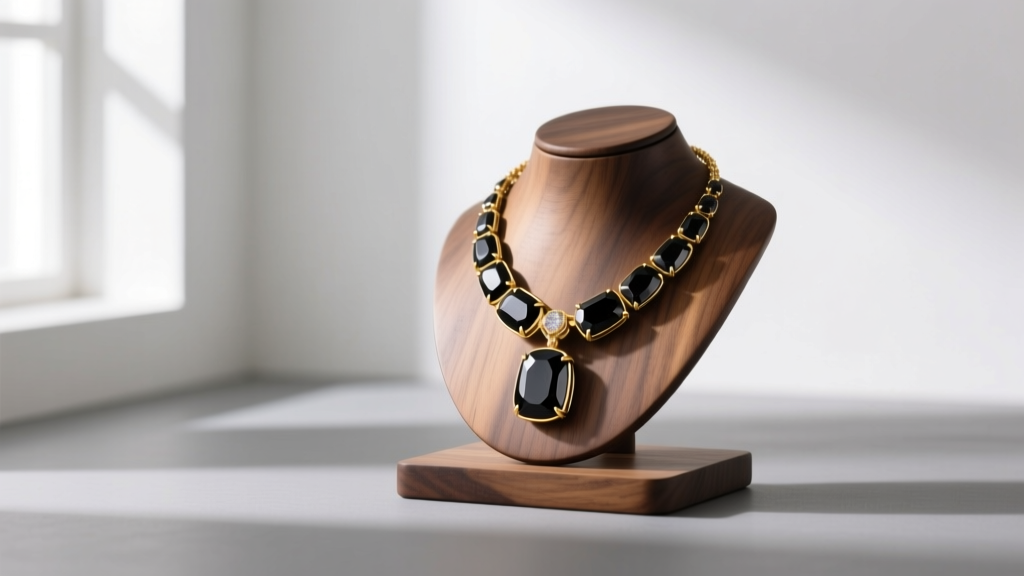
Troubleshooting is only half the battle; preventing damage ensures your necklace remains a lifelong asset. Onyx is easily scratched by harder gemstones like diamonds, sapphires, and quartz. Always store your gold and onyx necklace in an individual, anti-tarnish flannel pouch.
Furthermore, implement a strict "last on, first off" rule. Your necklace should be the final accessory you put on after applying perfumes, hairsprays, and lotions, and the very first thing you remove when returning home. By respecting the chemical sensitivities of the treated agate and the physical softness of the gold alloy, you will maintain the stark, breathtaking contrast that makes this jewelry combination so iconic.


