Diddy Triangle Necklace Buying Guide: What to Look For
Discover everything about the diddy triangle necklace. Our 2026 buying guide covers materials, chain pairings, stone grades, and pricing tiers.
The Rise of the Diddy Triangle Necklace in Streetwear
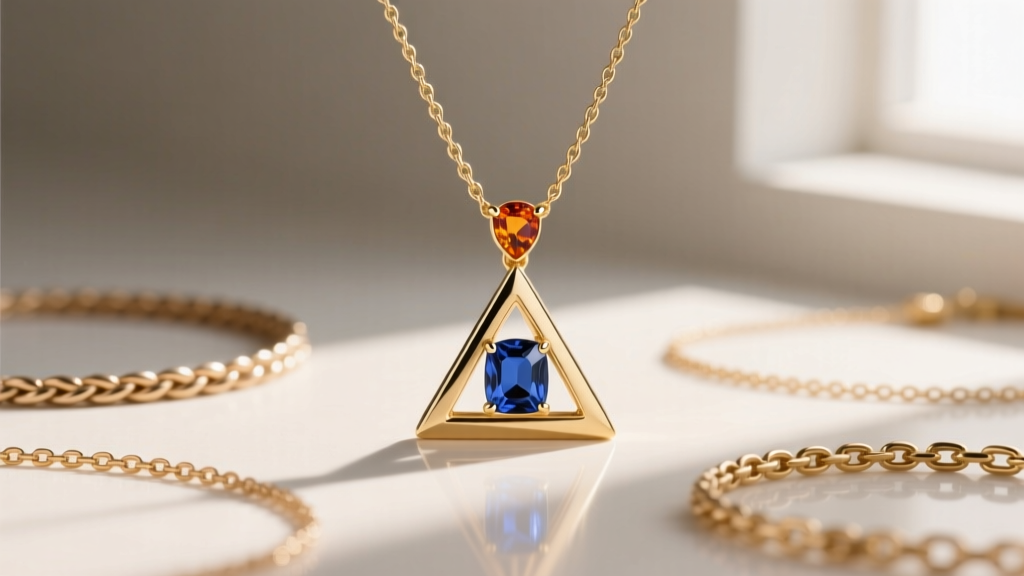
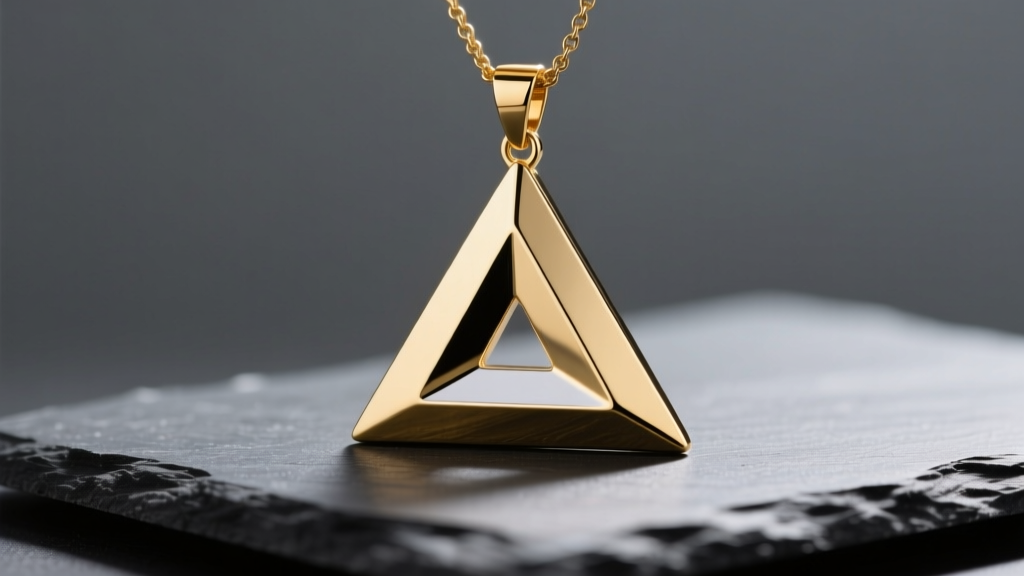
The intersection of hip-hop heritage and modern geometric minimalism has given rise to some of the most iconic jewelry silhouettes of the decade. Among these, the diddy triangle necklace stands out as a bold statement piece. Characterized by its sharp angles, substantial weight, and cultural resonance, the triangle motif represents hierarchy, resilience, and streetwear prestige. Whether you are looking at vintage-inspired Bad Boy era replicas or modern 2026 interpretations from boutique streetwear jewelers, knowing what to look for is critical. The market is flooded with cheap knockoffs that tarnish within weeks, making it essential to understand material grades, stone settings, and chain mechanics before making a purchase.
In this comprehensive buying guide, we break down the exact specifications you need to evaluate. From the micron thickness of gold vermeil to the tensile strength of Franco chains, we will equip you with the domain expertise required to buy a pendant that lasts a lifetime.
Material Grades: Solid Gold vs. Vermeil vs. PVD Plating
The base metal and plating method dictate the longevity, skin-safety, and resale value of your pendant. When evaluating a diddy triangle necklace, you will typically encounter three main material tiers.
1. Solid 14k and 18k Gold (The Investment Tier)
For a piece meant to be worn daily and passed down, solid gold is the only option. 14k gold (58.5% pure gold) offers the perfect balance of rich color and structural durability, resisting the bending and warping that can occur with softer 18k or 24k gold. A solid 14k gold triangle pendant of substantial thickness (approx. 2.5mm to 3mm) will typically weigh between 12 and 25 grams, depending on the overall dimensions.
2. Gold Vermeil (The Middle Ground)
Vermeil is not standard gold plating. By FTC guidelines, vermeil must consist of a sterling silver (925) base coated with at least 2.5 microns of 10k, 14k, or 18k gold. This thickness ensures the piece can withstand daily friction and sweat exposure for several years before requiring a professional re-dip. Always ask the jeweler for the exact micron count; anything under 2.0 microns is classified as standard gold-filled or flash-plated and will wear through to the silver base rapidly.
3. PVD Plated Stainless Steel (The Budget Beater)
Physical Vapor Deposition (PVD) is a vacuum-coating process that bonds gold or black titanium nitride to a 316L surgical stainless steel base. PVD is incredibly resilient, often outlasting standard electroplating by a factor of five. While it lacks the intrinsic value of solid gold or silver, a PVD-coated diddy triangle necklace is an excellent, hypoallergenic choice for gym wear, beach trips, or high-sweat environments.
Stone Settings: Moissanite, CZ, and Natural Diamonds
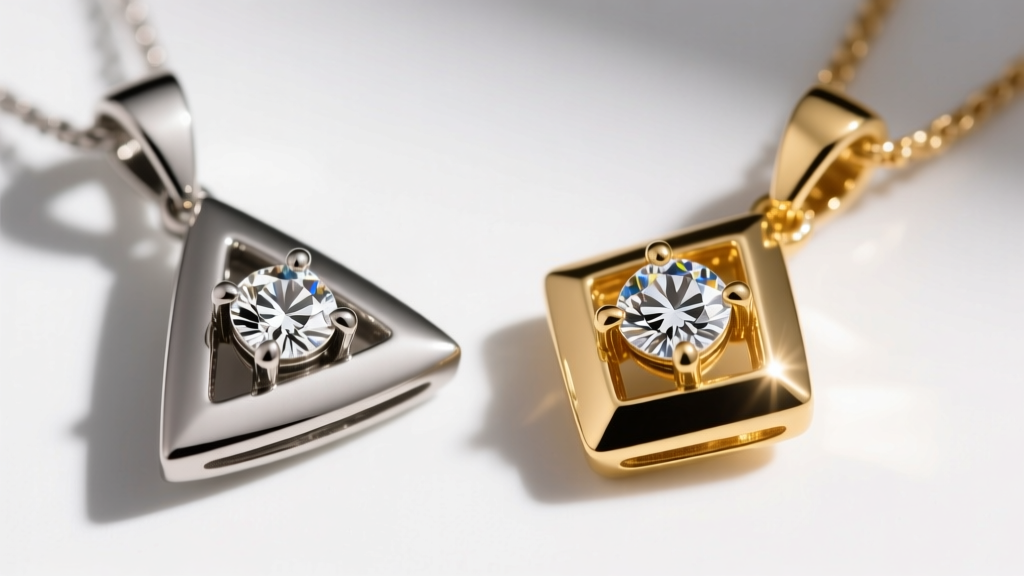
Many triangle pendants feature fully paved or accent stone settings along the geometric borders. The type of stone used drastically alters the price point and visual fire of the piece.
- Cubic Zirconia (CZ): Rated at 8-8.5 on the Mohs hardness scale. CZ is inexpensive but porous, meaning it will absorb oils and lotions, turning cloudy and dull within 6 to 12 months of daily wear.
- Moissanite: Rated at 9.25 on the Mohs scale. According to the Gemological Institute of America (GIA), moissanite possesses a higher refractive index (2.65) than diamond, giving it exceptional brilliance. It is the premier choice for streetwear jewelry, offering diamond-like durability and fire at a fraction of the cost. Furthermore, high-quality moissanite will pass standard thermal diamond testers.
- Natural Diamonds: For luxury tiers, look for SI1 to VS2 clarity grades. Since the stones in a paved triangle pendant are typically small (1.0mm to 2.0mm), paying for VVS clarity is unnecessary, as inclusions are invisible to the naked eye at that scale.
Expert Tip: Always inspect the setting under a loupe. High-end pendants use four-prong or six-prong metal settings. Avoid pendants where stones are simply glued into the metal cavities, as the adhesive will degrade upon contact with body heat and moisture, leading to lost stones.
Chain Selection: Gauge, Length, and Tensile Strength
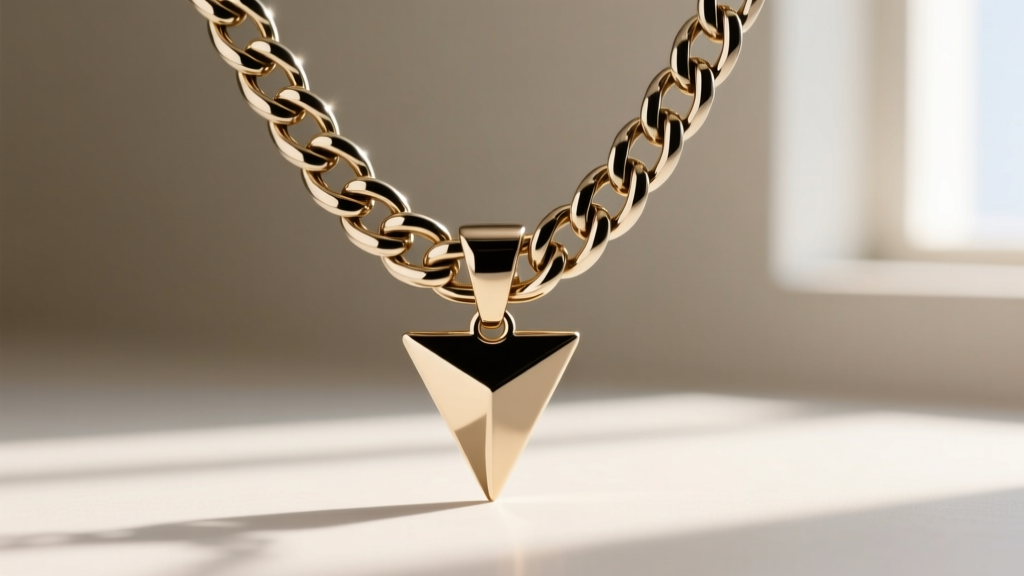
A heavy geometric pendant requires a chain that can support its weight without kinking or snapping. The bail (the loop connecting the pendant to the chain) on a diddy triangle necklace is usually wide, accommodating thicker chains. According to industry reports from JCK Online, chain breakage remains the number one cause of jewelry loss, making your chain selection just as important as the pendant itself.
| Chain Style | Ideal Gauge (mm) | Durability & Notes |
|---|---|---|
| Miami Cuban Link | 4mm - 8mm | Classic streetwear aesthetic. High tensile strength, but interlocking links can trap chest hair if not highly polished. |
| Franco Chain | 3mm - 6mm | The most durable option. The continuous V-link weave prevents kinking and distributes the pendant's weight evenly. |
| Rope Chain | 3mm - 5mm | Excellent light reflection. However, the twisted links are prone to stretching and snapping under heavy pendant loads. |
| Box Chain | 2mm - 4mm | Sleek and modern, but the square links can dent easily if the pendant swings and strikes the chain. |
Bail Construction and Clasp Hardware
Overlooking the bail and clasp is a common rookie mistake. A premium diddy triangle necklace will feature a solid, soldered bail rather than a pinch-bail or a simple jump ring. The inner diameter of the bail must be at least 6mm to 8mm to allow a 5mm Cuban or Franco chain to slide through without causing friction wear on the chain links.
For the clasp, avoid standard spring-ring clasps, which are notoriously weak and difficult to operate with one hand. Opt for a heavy-duty lobster clasp or, for chains 6mm and thicker, a custom box clasp with a secondary figure-eight safety latch. This secondary latch ensures that if the primary clasp mechanism fails, the chain will drape around your neck rather than dropping the pendant onto the concrete.
Red Flags: How to Spot a Low-Quality Pendant
When shopping online or in-person, use this checklist to identify poor manufacturing and avoid wasting your money:
- The 'Sweat Trap' Back: Flip the pendant over. Cheap manufacturers hollow out the back to save on metal weight, creating a concave cavity. This cavity traps sweat, dead skin, and moisture, leading to rapid tarnishing and severe skin irritation. Always demand a flat, solid back or a properly sealed honeycomb gallery.
- Weak Solder Points: Inspect where the bail meets the top vertex of the triangle. If the solder joint looks lumpy, porous, or incomplete, the bail will snap off under the pendulum motion of daily walking.
- Overly Sharp Edges: While the triangle motif relies on sharp geometry, the outer edges should be slightly beveled or softened by hand-polishing. Razor-sharp edges will snag on cotton t-shirts and scratch your collarbone.
- Magnetic Pull: If a seller claims the base metal is sterling silver or solid gold, but a neodymium magnet sticks to it, you are being sold a brass or steel core with a deceptive flash-plating.
Pricing Tiers: What Should You Expect to Pay?
Understanding the fair market value prevents you from overpaying for costume jewelry disguised as fine jewelry. Here is the 2026 pricing matrix for a standard 1.5-inch to 2-inch triangle pendant:
- Tier 1 ($45 - $120): Brass or 316L Steel base, PVD or electroplated gold finish, paved with AAA-grade Cubic Zirconia. Good for occasional wear and fast-fashion styling.
- Tier 2 ($180 - $450): 925 Sterling Silver base with 2.5-micron 14k Vermeil, or solid 10k gold. Paved with high-quality Moissanite. The sweet spot for daily streetwear enthusiasts.
- Tier 3 ($1,200 - $4,500+): Solid 14k or 18k gold, weighing 15+ grams, set with natural earth-mined diamonds (SI clarity, G-H color). A true heirloom piece that retains intrinsic scrap and resale value.
Final Verdict
The diddy triangle necklace is more than a fleeting trend; it is a geometric staple that commands attention and anchors any streetwear or high-fashion ensemble. By prioritizing solid or properly vermeiled metals, insisting on prong-set moissanite or natural diamonds, and pairing the pendant with a high-tensile Franco or Cuban chain, you ensure your piece remains a permanent fixture in your rotation. Always buy from jewelers who provide transparent micron counts and material assays, and never compromise on the structural integrity of the bail and clasp.


