DIY Pearl Necklace Materials: Pearl Types and Stringing Compared
Master your DIY pearl necklace project. Compare freshwater, Akoya, and shell pearls, plus silk, nylon, and wire stringing materials.

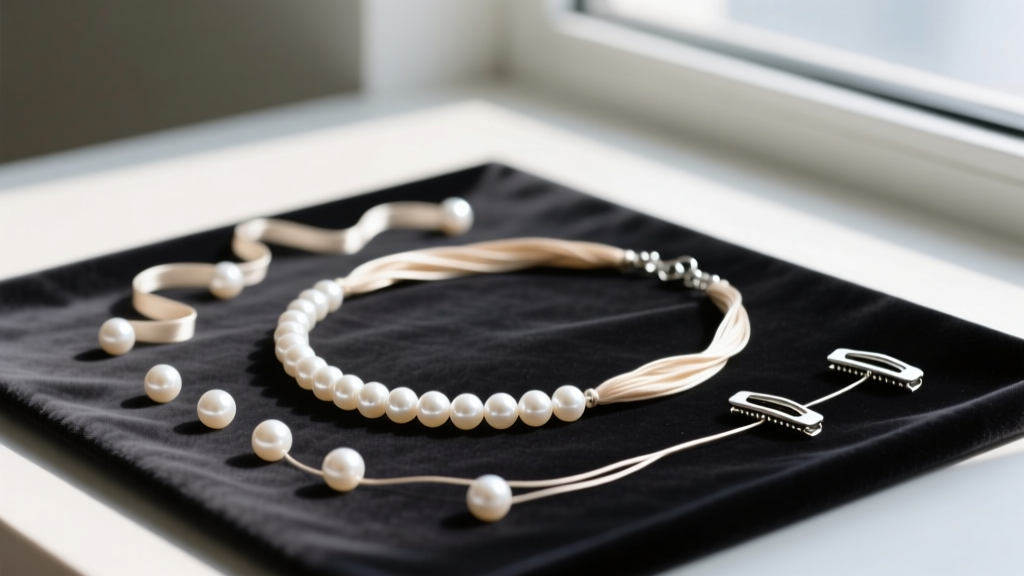
Creating a DIY pearl necklace is a rewarding endeavor that bridges the gap between fine jewelry craftsmanship and personal expression. However, the longevity, drape, and overall aesthetic of your finished piece depend entirely on the materials you select. Unlike stringing rigid glass beads, pearls are organic, porous, and require specific handling to prevent nacre damage. In this comprehensive material comparison, we will dissect the physical properties of various pearl types and evaluate the tensile strengths of modern stringing mediums to ensure your 2026 jewelry projects stand the test of time.
Pearl Types Compared: Nacre, Luster, and Drill Holes
The foundation of any DIY pearl necklace is the pearl itself. According to the Gemological Institute of America (GIA), a pearl's value and workability are dictated by its nacre thickness, luster quality, and drill hole precision. Here is how the most common DIY pearl varieties stack up.
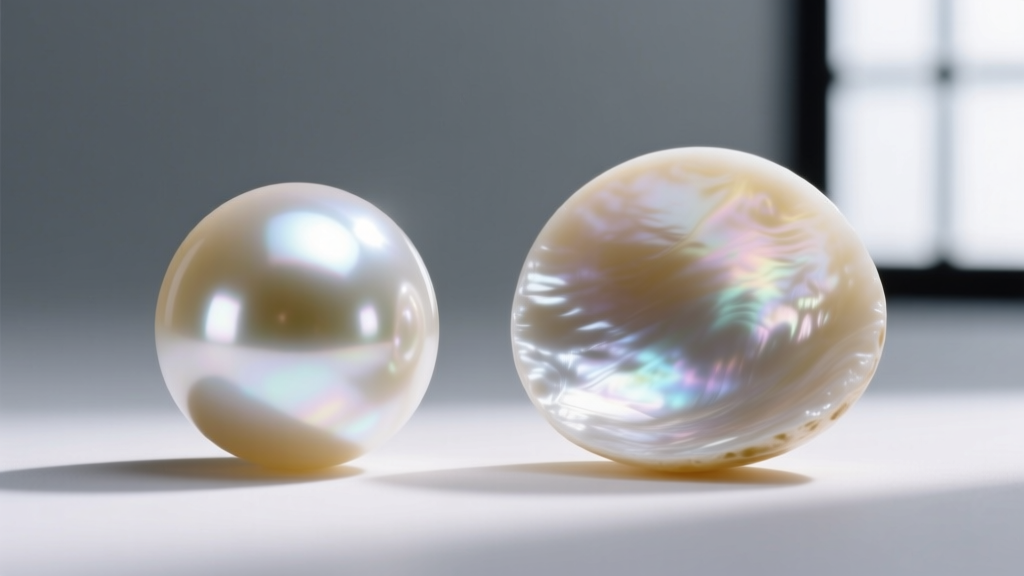
Freshwater Pearls
Freshwater pearls are the most popular choice for DIY enthusiasts due to their accessibility and diverse shapes. Composed of nearly 100% solid nacre (aragonite platelets bound by conchiolin), they are highly durable and resistant to chipping.
- Luster: Soft, satiny glow rather than a mirror finish.
- Drill Hole Size: Typically 0.7mm to 0.9mm, accommodating a wider variety of stringing materials.
- Pricing (2026): $2 to $15 per pearl for standard 7-8mm rounds.
Akoya Pearls
Akoya pearls are saltwater pearls renowned for their sharp, mirror-like luster. Because they are bead-nucleated, their nacre layer is much thinner (usually 0.2mm to 0.5mm) than freshwater pearls, making them more susceptible to peeling if subjected to harsh chemicals or friction.
- Luster: High-contrast, mirror-like reflection.
- Drill Hole Size: Very fine, typically 0.4mm to 0.6mm. This restricts you to fine silk or ultra-thin wire.
- Pricing (2026): $30 to $100+ per pearl for high-grade 7mm rounds.
Shell Pearls and Mother of Pearl
For budget-friendly or practice projects, shell pearls (glass beads coated in pearlescent paint) or carved Mother of Pearl offer uniform sizing and vibrant colors. While lacking the deep optical luster of genuine nacre, they feature large, consistent drill holes (1.0mm+) that easily accept heavy beading wires.
Stringing Materials: Silk vs. Nylon vs. Beading Wire
Selecting the correct stringing medium is the most critical technical decision in your DIY pearl necklace build. The material must pass through the pearl's drill hole, support the weight of the strand, and accommodate your chosen finishing technique (knotting vs. crimping).
| Material | Tensile Strength | Knotting Ability | Longevity | Best For |
|---|---|---|---|---|
| 100% Silk (Griffin) | Low to Medium | Excellent (traditional) | 3-5 years (degrades) | Heirloom Akoya & Freshwater |
| Nylon / Power Pro | Very High | Good (slippery) | 10+ years | Heavy freshwater strands |
| 49-Strand Micro Wire | Extremely High | Poor (cannot knot) | Lifetime | Shell pearls, modern designs |
Traditional Silk Thread
Griffin 100% silk remains the gold standard for knotted pearl necklaces. It drapes beautifully and allows for tight, uniform knots. However, silk is a protein fiber that absorbs body oils, stretches over time, and eventually rots. If you are using Size 2 silk (0.45mm) for fine Akoya pearls, you must use a beading needle with a twisted collapsible eye, as standard wire needles will not pass through the 0.5mm drill hole alongside the silk.
Modern Beading Wire
For unknotted designs or heavy shell pearls, a 49-strand micro beading wire (such as SoftFlex in 0.014-inch gauge) offers superior tensile strength. Unlike silk, wire will not stretch or degrade from moisture. The trade-off is that you cannot tie knots between the pearls; instead, you must use silicone spacers or rely on crimp beads and a secure clasp at the ends. As noted by Pearl Paradise, never use stiff beading wire with genuine saltwater pearls, as the metal wire will act like a saw against the delicate nacre around the drill hole over time.
Essential Hardware and French Wire
A common point of failure in amateur DIY pearl necklace projects is the connection point between the stringing material and the metal clasp. Metal clasps have sharp inner edges that will fray and eventually snap silk or nylon thread.
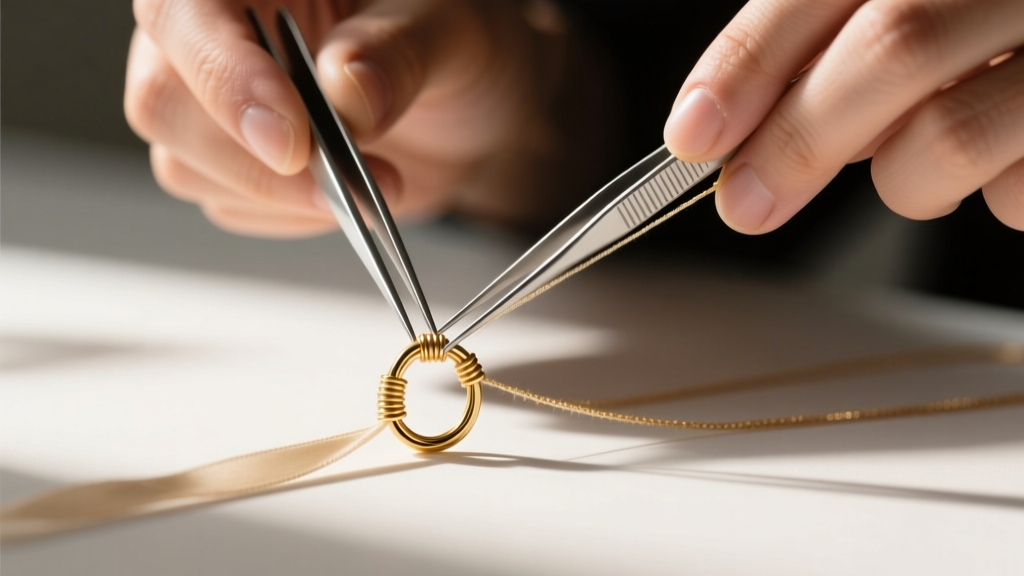
To prevent this, you must use French wire (also known as gimp or bullion). French wire is a microscopic, hollow coil of fine metal (usually sterling silver or gold-filled). You thread your silk through the coil, and then loop the coil through the clasp ring. The metal-on-metal friction protects your silk thread entirely. When purchasing French wire, ensure the inner diameter of the coil is slightly larger than your doubled thread thickness, typically around 0.8mm to 1.0mm for standard pearl knotting.
Common DIY Mistakes and How to Avoid Them
The most expensive mistake in pearl stringing is forcing a needle through a tight drill hole. This generates micro-fractures in the nacre that will eventually cause the pearl to crack or peel from the inside out.
To ensure professional-grade results, adhere to this troubleshooting framework:
- Ignoring Drill Hole Tolerances: Always measure your drill holes with digital calipers before ordering stringing materials. If an Akoya pearl has a 0.5mm hole, your combined thread and needle thickness must not exceed 0.48mm.
- Skipping the French Wire: Never tie silk directly to a metal jump ring or lobster clasp. The friction will sever the thread within months of regular wear.
- Using Super Glue on Knots: While a tiny dab of flexible jewelry adhesive (like G-S Hypo Cement) is acceptable to secure the final knot inside a bead tip, never use cyanoacrylate (Super Glue). It dries brittle, turns white, and will shatter when the necklace flexes.
Final Thoughts on Material Selection
Building a DIY pearl necklace requires a balance between aesthetic desires and material physics. If you are designing a classic, knotted heirloom piece, invest in high-grade freshwater or Akoya pearls and traditional Griffin silk, accepting that the strand will need to be professionally restrung every few years. If you prefer a modern, low-maintenance design, opt for durable shell pearls threaded on 49-strand micro wire with silicone spacers. By matching the physical properties of your pearls to the tensile strengths of your stringing medium, you will create jewelry that is both beautiful and structurally sound.


