The Double Name Necklace: 2026 Trend & Styling Guide
Discover the 2026 double name necklace trend. Expert styling tips, material durability guides, and chain gauge advice for personalized dual-plate jewelry.

The Evolution of Personalization: Why Dual Plates Are Dominating 2026
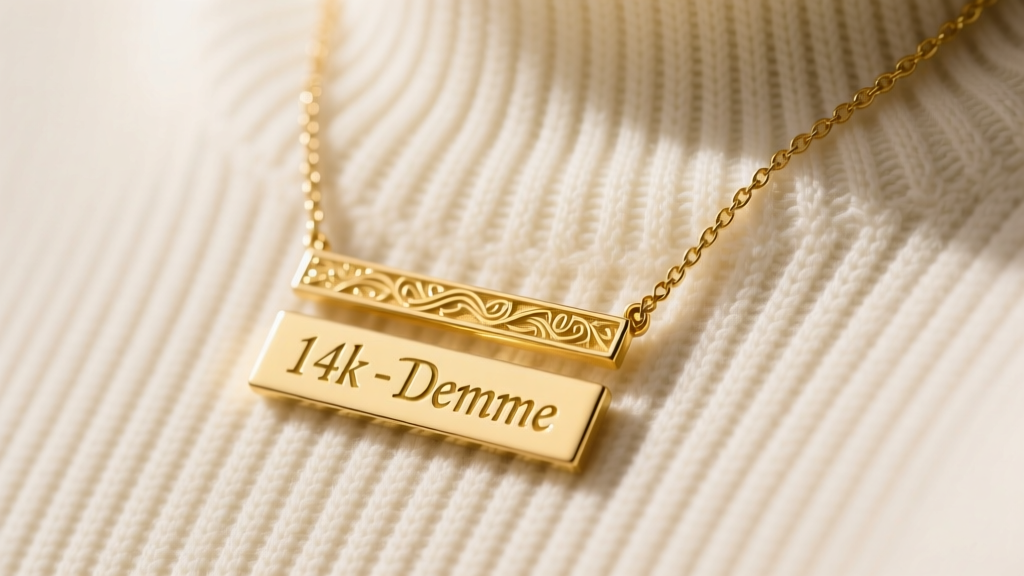
The single nameplate necklace, immortalized by early 2000s pop culture, has officially evolved. As we navigate the jewelry trends of 2026, the double name necklace has emerged as the definitive statement in personalized adornment. This shift is not merely aesthetic; it is deeply sociological. Modern consumers are using dual-plate pendants to represent hyphenated identities, blended families, mother-child bonds, and dual heritage. Unlike the flat, single-plane pendants of the past, today's double name necklaces require advanced structural engineering to balance the increased weight and prevent the dreaded 'pendant flip' that plagues poorly designed personalized jewelry.
From a style perspective, the double name necklace bridges the gap between sentimental keepsakes and high-fashion layering staples. However, because these pieces carry twice the metal weight and feature complex laser-cut typography, choosing the right material and chain gauge is critical. A poorly constructed dual-name piece will warp, tangle, and degrade within months. This guide breaks down the exact specifications, material grades, and styling frameworks you need to invest in a piece that actually lasts.
Material & Durability Matrix: What Actually Lasts?
When doubling the surface area of a custom pendant, the material's tensile strength and resistance to friction become paramount. According to the FTC Jewelry Guides, terms like 'gold vermeil' and 'sterling silver' have strict legal definitions, but not all manufacturers adhere to the structural requirements needed for heavy dual-plate pendants. Below is a comparative analysis of the most common materials used for double name necklaces in 2026.
| Material Grade | Average Price Range | Structural Integrity | Failure Modes & Wear Patterns |
|---|---|---|---|
| Sterling Silver (925) | $45 - $95 | Low to Moderate | Prone to bending if plates exceed 2 inches wide; oxidizes rapidly in high-humidity environments. |
| Gold Vermeil (2.5μm min) | $110 - $180 | Moderate | Gold layer wears off at the jump ring friction points; brass or silver core may cause skin discoloration over time. |
| Solid 14k Yellow Gold | $450 - $850+ | High | Extremely durable; can be polished indefinitely; holds complex cursive bridges without snapping. |
| Platinum (950) | $1,200 - $2,500+ | Exceptional | Heavyweight; requires thicker chain gauges to support the pendant; virtually impervious to tarnish. |
For a double name necklace, the increased surface area means more friction against the skin and clothing. If you opt for gold vermeil, ensure the manufacturer uses a minimum of 2.5 microns of gold plating over a sterling silver base, as mandated by industry standards. Anything less will rub off at the bail (the loop connecting the pendant to the chain) within six months of daily wear.
Chain Gauge and Clasp Mechanics: The Engineering of Dual Pendants
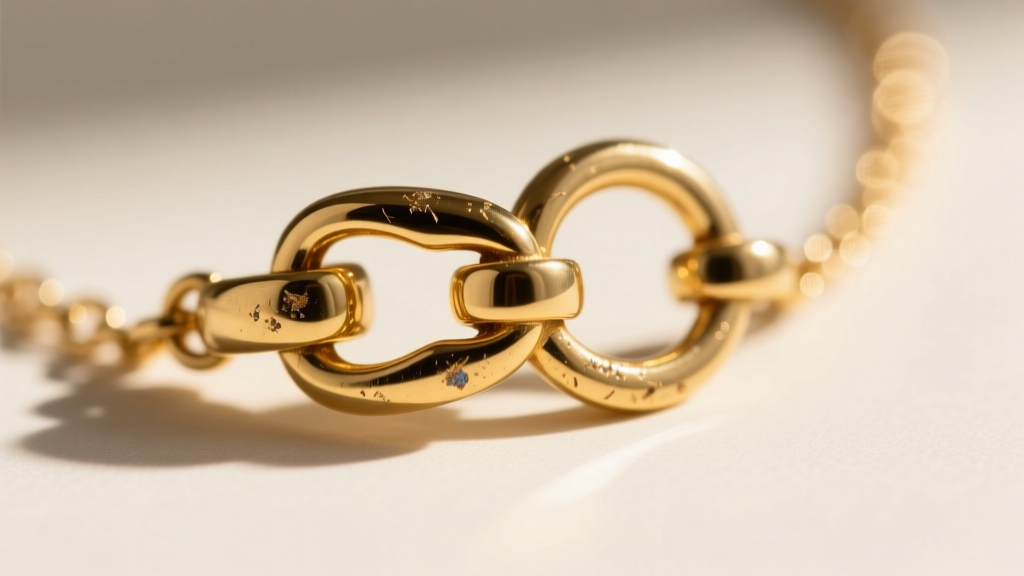
The most common point of catastrophic failure in a double name necklace is the chain. Dual plates add significant horizontal weight and kinetic drag. When you wear a double namepiece, the pendant acts as a pendulum, placing continuous lateral stress on the chain links and the clasp.
The 1.2mm Minimum Rule
Standard personalized necklaces often ship with delicate 0.8mm or 0.9mm cable chains. For a double name necklace, these gauges are structurally insufficient. The dual plates will cause a 0.9mm chain to stretch, kink, and eventually snap at the solder points. You must specify a chain width between 1.2mm and 1.5mm. Box chains and rounded curb chains are the superior choices for 2026, as their interlocking geometric links resist the twisting motion that causes dual plates to tangle.
Jump Ring and Clasp Specifications
Inspect the jump ring (the small circle connecting the pendant to the chain). On a heavy dual-plate necklace, this ring must be soldered shut. If it is merely split and pressed together, the horizontal drag of the two nameplates will eventually pull the gap open, and you will lose the pendant. Furthermore, upgrade from a standard spring-ring clasp to a lobster clasp. Spring rings lack the internal spring tension to support the counterweight of a double nameplate, often causing the clasp to slide to the front of the neck.
Typography and Manufacturing: The 'Bridge' Problem
Creating a double name necklace is not as simple as laser-cutting two names and welding them together. The typography dictates the structural integrity of the piece. According to manufacturing insights documented by the GIA Gem Encyclopedia regarding jewelry metallurgy, the way metal is cut and cast affects its grain structure and brittleness.
- Cursive Script Fonts: In cursive, the letters are connected by thin 'bridges'. If one name is significantly longer than the other (e.g., 'Alexandria' and 'Leo'), the laser-cutting process can leave thin bridges that are highly susceptible to snapping if the necklace is caught on a sweater. Always request reinforced connection points from the jeweler.
- Block and Serif Fonts: These require a continuous horizontal baseline bar to connect the disparate letters. This baseline adds structural rigidity, making block fonts inherently more durable for wide, double-name designs.
- The Staggered Stack: To prevent the 'flip' (where the two plates fold over each other and tangle), modern jewelers are staggering the names vertically on a curved contour bar, rather than placing them side-by-side. This lowers the center of gravity and keeps the pendant flush against the collarbone.
Neckline Pairing & Layering Frameworks
Styling a double name necklace requires an understanding of visual weight. Because the pendant is horizontally expansive, it can easily clash with complex necklines or busy patterns. Here is a practical framework for integrating this piece into your 2026 wardrobe.
The V-Neck and Scoop Neck Strategy
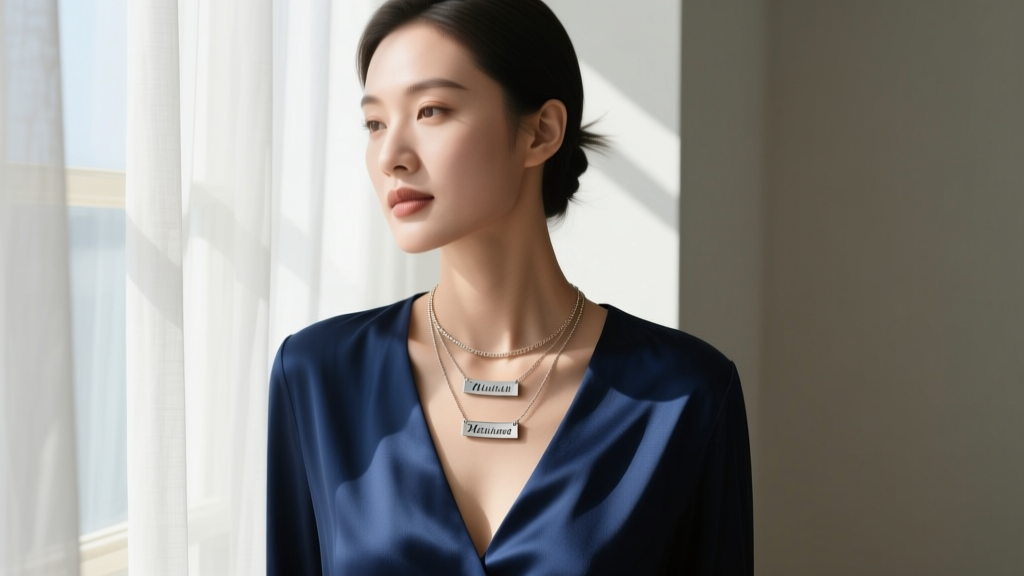
A double name necklace thrives in negative space. Pair a 16-inch dual-plate pendant with a deep V-neck or a wide scoop neck. The horizontal lines of the nameplates will contrast beautifully with the vertical plunge of the V-neck, drawing the eye directly to the collarbone. Avoid crew necks entirely; the high fabric line will push the pendant up, causing it to rest awkwardly against the throat and increasing the likelihood of the plates flipping.
The 2-Inch Layering Rule
If you wish to layer your double name necklace, you must adhere to strict mathematical spacing to avoid a tangled mess.
When layering personalized jewelry, always maintain a minimum 2-inch drop between the bottom of the upper chain and the top of the lower pendant. This prevents the clasps from interlocking during movement.For a 16-inch double name necklace, layer it with a 14-inch minimalist choker (like a 1.5mm herringbone chain) and an 18-inch solitary gemstone pendant. This creates a cascading effect that allows the dual names to remain the focal point without competing for physical space.
Final Verdict: Investment vs. Trend
The double name necklace is far more than a fleeting 2026 trend; it is a reflection of modern, multifaceted identities. However, its longevity in your jewelry box depends entirely on the engineering. By prioritizing solid 14k gold or heavily plated vermeil, insisting on a minimum 1.2mm box chain, and selecting typography with reinforced structural bridges, you transform a simple sentimental trinket into a durable, everyday heirloom. Whether you are honoring a blended family, celebrating a partnership, or embracing your own dual heritage, the right double name necklace is a masterclass in both personal storytelling and precision jewelry design.


