Madame Loisel The Necklace: Gemological Breakdown of Paste vs Diamonds
Explore the gemological reality of Madame Loisel the necklace. We analyze 1880s paste vs. real diamonds, antique settings, and valuation traps.

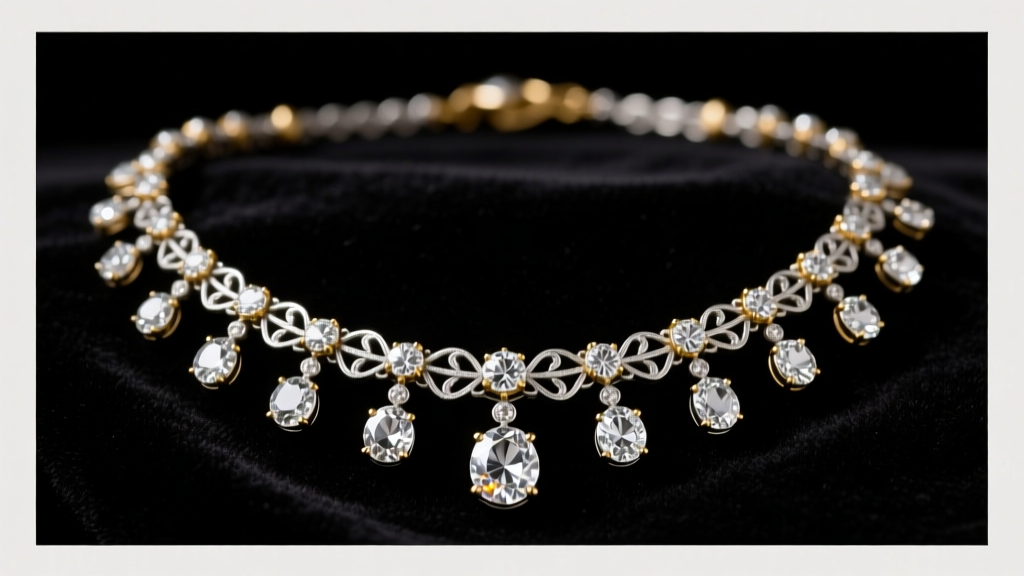
The Literary Catalyst: A Gemological Mystery
Guy de Maupassant’s 1884 short story, The Necklace, remains one of literature's most famous cautionary tales about vanity and deception. Mathilde Loisel borrows what she believes to be a stunning diamond rivière necklace from her wealthy friend, Madame Forestier, only to lose it and spend a decade in grueling poverty to replace it. The tragic twist—that the original was merely paste (costume jewelry) worth a fraction of the replacement cost—hinges entirely on a gemological misunderstanding. But from a modern jewelry expert's perspective, how could Madame Loisel have been so easily fooled? And what exactly did an 1880s 'paste' necklace look like compared to a natural diamond rivière of the era?
To understand the tragedy of Madame Loisel the necklace, we must strip away the literary romance and examine the piece through the lens of 19th-century metallurgy, lapidary arts, and gemology. The inability to distinguish high-quality strass glass from old mine cut diamonds was a common peril in the 1880s, driven by the specific optical properties of leaded glass and the lighting conditions of Parisian high society.
19th Century Paste vs. Natural Diamonds: A Technical Comparison
In the late 19th century, 'paste' did not mean cheap plastic. It referred to high-lead-content glass, often called strass, named after Georges Frédéric Strass who perfected the formula in the 1730s. By adding lead oxide to glass, jewelers dramatically increased its refractive index (RI) and dispersion, mimicking the brilliance and 'fire' of a diamond. However, under a modern gemological microscope, the differences are stark.
| Property | 1880s Strass Paste | Natural Diamond (Old Mine Cut) |
|---|---|---|
| Refractive Index (RI) | 1.70 - 1.90 | 2.417 |
| Mohs Hardness | 5.0 - 6.0 | 10 |
| Dispersion (Fire) | 0.060 (High) | 0.044 |
| Specific Gravity | 3.50 - 4.20 | 3.52 |
| Facet Edge Wear | Rounded, abraded edges | Sharp, crisp intersections |
| Internal Inclusions | Spherical gas bubbles, swirl marks | Crystals, feathers, clouds |
While paste actually exhibits higher dispersion (creating more colorful spectral flashes than a diamond), it lacks the deep scintillation and internal light return of a well-cut diamond. In the dim, gas-lit ballrooms of 1880s Paris, however, the high dispersion of paste was often mistaken for the fiery brilliance of top-tier diamonds.
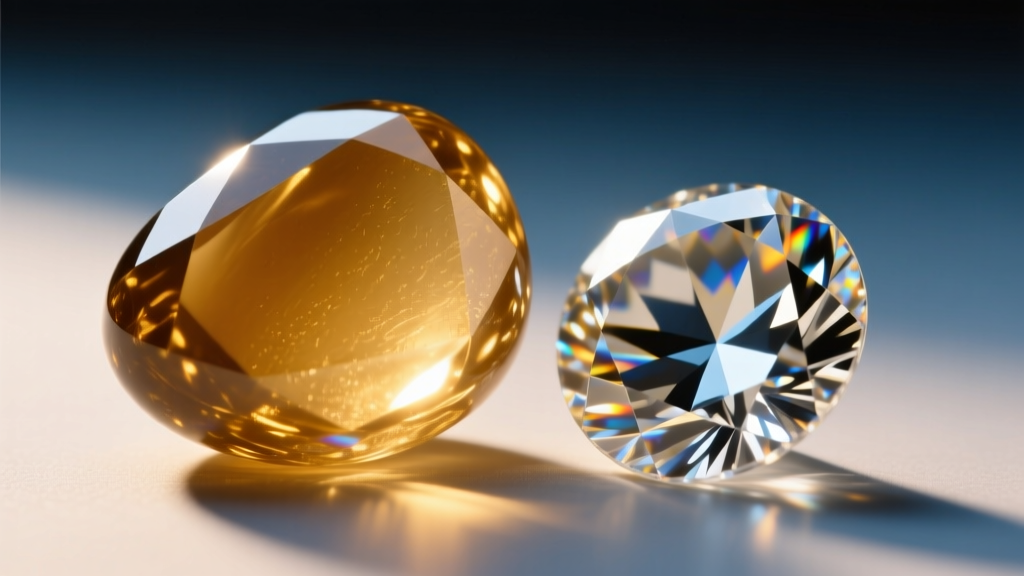
Anatomy of an 1880s Rivière Necklace
To truly analyze Madame Loisel the necklace, we must examine how it was constructed. A rivière (French for 'river') is a necklace consisting of a single continuous strand of identically sized, or gradually graduating, gemstones. In the 1880s, authentic diamond rivières were masterclasses in metalsmithing, primarily utilizing a technique known as 'silver-topped gold'.
The Silver-Topped Gold Standard
Platinum was not commercially viable for fine jewelry until the invention of the high-temperature oxyhydrogen torch in the late 1890s. To give diamonds a white metal setting that wouldn't cast a yellow reflection (which would lower the perceived color grade of the stone), 19th-century jewelers fused a thin layer of silver over a structural base of 14k or 18k yellow gold. The silver held the diamonds in a bright, white collet, while the gold backing prevented the necklace from tarnishing against the wearer's skin. Paste necklaces of high quality often mimicked this exact metallurgical construction, making the metal mountings virtually indistinguishable to the naked eye.
The Foil-Back Failure Mode
One of the most critical technical differences between Madame Forestier's paste necklace and a real diamond rivière lies in the backing. Because strass glass lacks the optical density to bounce light back through the top of the stone, 19th-century paste stones were almost always 'foil-backed.' A thin sheet of silver or tinted metallic foil was sealed inside the closed-back collet setting behind the glass to act as a mirror.
This created a massive vulnerability: moisture. If the wearer perspired, or if the necklace was exposed to high humidity, moisture would seep into the microscopic seams of the collet, oxidizing the foil. A degraded foil-back turns black, instantly killing the stone's brilliance and revealing it as a fake. According to the Victoria and Albert Museum's historical jewelry archives, the maintenance of closed-back foil settings was a constant burden for Victorian jewelers, and a tarnished foil was the most common giveaway of a simulant.
The True Cost of Replacement: 1884 vs. Modern Valuations
The financial ruin of the Loisels is anchored to the 36,000 francs they paid for the replacement diamond rivière. But what did 36,000 francs actually represent in 1884, and what kind of necklace did it buy?
In 1884, France was a founding member of the Latin Monetary Union, meaning the franc was pegged to a strict gold standard. One franc contained exactly 0.29032 grams of pure gold. Therefore, 36,000 francs equated to roughly 10,451 grams (over 336 troy ounces) of pure gold. In today's market, the raw melt value of that gold equivalent is nearly $700,000 USD. However, the Loisels weren't buying raw gold; they were buying a heavy, graduated old mine cut diamond rivière.
To reach that price point in the 1880s, the replacement necklace likely featured a massive total carat weight (perhaps 40 to 60 carats total) but compromised heavily on color and clarity. It would have featured diamonds in the J-K color range with prominent carbon inclusions (SI1 to I1 clarity). The tragic irony is that Madame Forestier's original paste necklace, despite its exquisite silver-topped gold craftsmanship, would have been valued at no more than 500 francs (roughly $10,000 in today's equivalent purchasing power for high-end costume jewelry).

Modern Gemological Testing: Avoiding Madame Loisel’s Fate
If Mathilde Loisel had access to modern gemological equipment, her decade of hardship could have been avoided in less than five minutes. Today, the Gemological Institute of America (GIA) outlines several non-destructive testing methods that instantly separate 19th-century paste from natural diamonds.
- Refractometry: A standard gemological refractometer will immediately show an RI reading of 2.42 for diamond, while paste glass will max out around 1.81 (often showing a vague shadow edge due to its single refractive nature).
- 10x Loupe Inspection: Under magnification, the Mohs hardness disparity becomes obvious. Antique paste stones almost always exhibit 'facet junction abrasion'—the sharp points where facets meet are worn down and rounded due to decades of friction. Diamonds, being the hardest natural material, retain razor-sharp facet junctions even after 150 years of wear.
- Thermal Conductivity Testing: Modern electronic diamond testers measure how quickly heat passes through the stone. Diamond is an exceptional thermal conductor, while glass is an insulator. A simple probe would have instantly flagged Madame Forestier's necklace as glass.
- UV Fluorescence: Under long-wave ultraviolet light, many natural old mine cut diamonds exhibit varying degrees of blue fluorescence due to nitrogen impurities. Strass paste glass is almost universally inert (non-fluorescent) under UV light.
Conclusion: The Ultimate Lesson in Jewelry Provenance
The tragedy of Madame Loisel the necklace is not just a story about the dangers of vanity; it is a profound lesson in the importance of gemological literacy and jewelry provenance. Mathilde assumed value based on the social status of the owner and the visual sparkle in dim lighting, failing to verify the material reality of the piece.
For modern collectors of antique jewelry, the story remains highly relevant. When evaluating 19th-century rivières, buyers must look past the surface brilliance. Inspecting the collet settings for foil degradation, checking facet junctions for glass-like abrasion, and verifying the thermal properties of the stones are mandatory steps. By understanding the technical nuances of 1880s strass paste versus natural diamonds, today's collectors can appreciate the artistry of antique simulants while avoiding the catastrophic financial assumptions that doomed Madame Loisel.


