Downton Abbey Necklace Value Guide: Replicas vs Vintage Art Deco
Assess the true value of a Downton Abbey necklace. Compare official replicas, vintage Art Deco originals, and budget alternatives for smart buying.

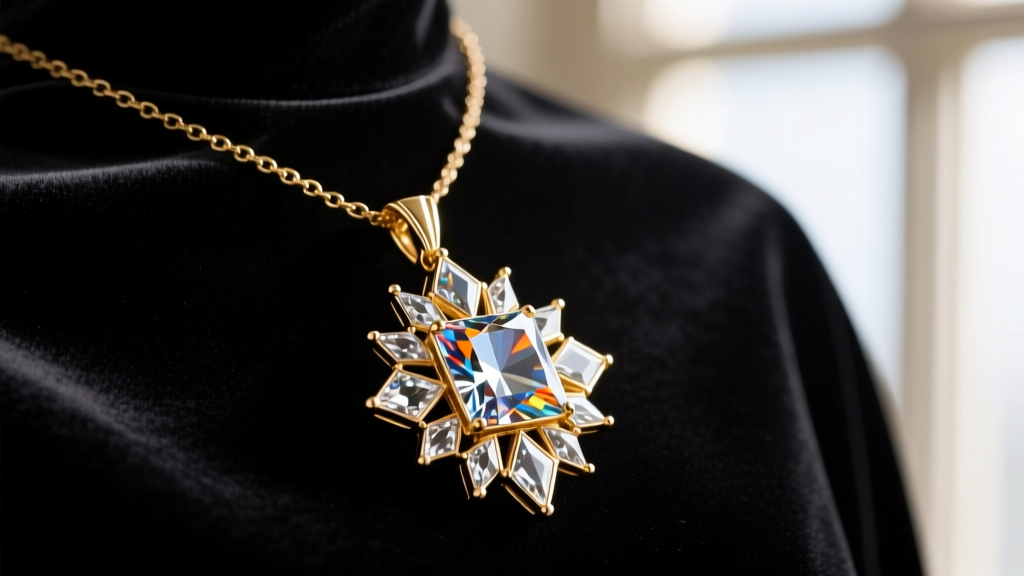
The Allure of the Downton Abbey Necklace: A Market Overview
The cultural footprint of Downton Abbey extends far beyond television; it has fundamentally reshaped the antique and replica jewelry market. When consumers search for a "Downton Abbey necklace," they are typically chasing the transitional elegance of the late Edwardian era bleeding into the geometric boldness of the 1920s Art Deco movement. However, from a budget and value assessment perspective, the market is heavily fragmented. Buyers must navigate a minefield of officially licensed replicas, high-end vintage originals, and mass-produced fast-fashion knockoffs. Understanding the intrinsic value, material integrity, and secondary market viability of these pieces is critical for any serious collector or style enthusiast in 2026.
Official Replicas vs. Vintage Art Deco: A Material Breakdown
To accurately assess value, we must categorize the market into three distinct tiers. Each tier offers a vastly different cost-per-wear ratio and long-term financial outlook. The table below outlines the fundamental material and pricing differences you will encounter when shopping for these iconic styles.
| Category | Base Metal & Purity | Gemstone Quality | Plating & Finish | Price Range (2026) | Long-Term Value |
|---|---|---|---|---|---|
| Official Licensed Replicas | 925 Sterling Silver or Brass | Swarovski Elements, CZ | 0.5 - 1.0 micron Rhodium/Gold | $120 - $350 | Depreciates 50% post-purchase |
| Genuine 1920s Art Deco | Platinum, 18k or 14k White Gold | Old European Cut Diamonds, Sapphires | Solid metal, natural patina | $3,500 - $25,000+ | Appreciates or holds intrinsic value |
| Budget / Etsy Alternatives | Zinc Alloy, Silver-Plated Copper | Glass Paste, Acrylic, low-grade CZ | Flash plating (< 0.1 microns) | $25 - $85 | Zero secondary market value |
Evaluating the "Lady Mary" Sunburst Pendant: Is It Worth the Hype?
The most heavily searched item in this niche is the Lady Mary sunburst pendant necklace. Official replicas, often distributed by The Bradford Exchange or Rarities, are heavily marketed as "heirloom quality." But do they hold up to metallurgical scrutiny?
Metal Purity and Plating Longevity
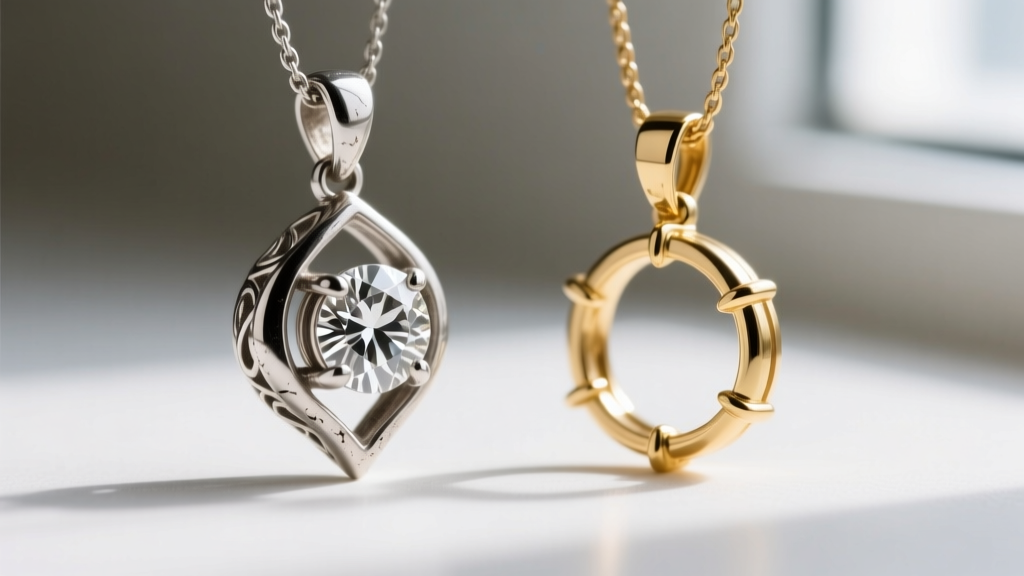
Most official replicas are cast in 925 sterling silver and finished with rhodium plating to mimic the bright, white luster of platinum. However, the thickness of this plating is the primary point of failure. Industry standards for "heavy electroplating" require a minimum of 2.5 microns of rhodium. Independent assays of licensed television replica jewelry frequently reveal plating thicknesses closer to 0.5 microns. At this depth, the rhodium layer will wear through at the clasp and pendant bail within 12 to 18 months of regular wear, exposing the silver to oxidation and requiring professional re-plating—a service that often costs more than the necklace itself.
Gemstone Substitutes: CZ vs. Lab-Created vs. Natural
The sunburst motif relies heavily on light refraction. Official replicas typically utilize machine-cut Cubic Zirconia (CZ) or branded Swarovski crystals. While Swarovski Elements offer superior facet alignment and a proprietary lead-free crystal formula that maximizes brilliance, standard CZ used in budget alternatives suffers from a lower refractive index (2.15 compared to diamond's 2.42) and is prone to "clouding" from skin oils and micro-scratches over time. For buyers seeking the Downton aesthetic with genuine longevity, upgrading to lab-created moissanite (RI 2.65) set in solid 14k white gold is a vastly superior financial decision, offering better brilliance and permanent metal integrity for roughly $450 to $600.
The Vintage Reality: What the Show Actually Used
It is a common misconception that the actors wore genuine 1920s antique jewelry on set. While the production design team did source select vintage pieces, the majority of the "high jewelry" worn by Cora and Lady Mary were high-end pastes (lead glass) or custom-made replicas crafted by contemporary London jewelers to withstand the rigors of filming. According to the Lang Antiques' Antique Jewelry University, genuine 1920s Art Deco necklaces are characterized by specific die-stamping techniques, millegrain edging, and calibré-cut stones that are virtually impossible to replicate perfectly with modern lost-wax casting methods used for television replicas.
"When appraising a 1920s Art Deco necklace, we look for the specific platinum fabrication techniques of the era, such as pierced openwork and knife-edge wire settings. Modern replicas almost always feature cast, solid-backed settings that lack the architectural lightness of true period pieces." — Senior Appraisal Notes, Estate Jewelry Division.
Budget Alternatives: Finding Art Deco Style Without the Markup
If your budget precludes a $5,000 vintage platinum piece, but you refuse to settle for rapidly degrading zinc-alloy fast fashion, there is a strategic middle ground. Estate sales and specialized vintage dealers offer "transitional" pieces from the 1930s and 1940s that capture the Downton Abbey aesthetic at a fraction of the cost. When hunting for budget-friendly alternatives, apply this decision framework:
- Target 9k or 10k White Gold: In the UK and US, lower-karat white gold was heavily used during the Depression era to mimic platinum. These pieces offer solid metal longevity without the platinum premium.
- Embrace "Paste" and Onyx: High-quality lead glass paste set in sterling silver was incredibly popular in the 1920s. A genuine 1920s silver and paste necklace often costs between $300 and $800, offering actual historical provenance and superior craftsmanship compared to a modern $200 CZ replica.
- Check the Clasp Hardware: Genuine antique pieces will feature a "trombone" clasp or a simple spring-ring with a soldered jump ring. If the piece has a modern lobster claw, it is either a contemporary replica or an antique that has been altered, significantly reducing its collector value.
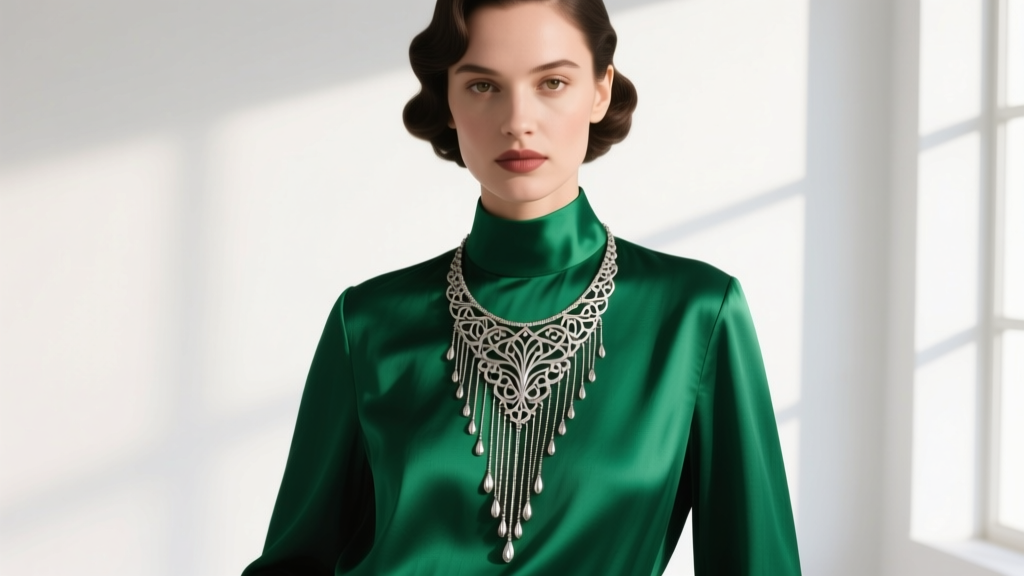
- Focus on Filigree Lariats: The 1920s dropped-waist fashion necessitated longer necklaces. Look for 24-inch to 30-inch opera-length or lariat necklaces featuring geometric filigree drops. These offer the dramatic silhouette seen on screen while utilizing less precious metal, keeping the price accessible.
Investment Value: Will Your Downton Abbey Necklace Appreciate?
From a strict financial perspective, we must separate sentimental value from market value. The Gemological Institute of America (GIA) consistently notes that jewelry appreciation is reserved for pieces with rare gemological characteristics, historical provenance, or high intrinsic metal weight.
Officially licensed Downton Abbey replicas are mass-produced consumer goods. The moment you remove the tag, the secondary market value drops by 50% to 70%. They are "costume jewelry" masquerading as fine jewelry, regardless of the sterling silver base. Conversely, genuine Art Deco necklaces from the 1920s have seen a steady annual appreciation of 4% to 7% over the last decade, driven by a finite supply of platinum and old European cut diamonds. If your goal is investment, bypass the licensed merchandise entirely and allocate your budget toward authenticated estate pieces.
Final Verdict: How to Buy Smart in 2026
If you are buying a Downton Abbey necklace purely for the joy of wearing a specific screen-accurate design, an official replica is a justifiable luxury expense, provided you treat it as costume jewelry. Store it in an anti-tarnish cloth, keep it away from perfumes, and accept that the plating will eventually require maintenance.
However, if you are seeking the true essence of the era—exceptional craftsmanship, historical weight, and enduring financial value—redirect your budget. A $400 investment in a genuine 1920s sterling silver, onyx, and marcasite pendant will outlast, outshine, and ultimately outvalue a $300 modern television replica every single time. True style, much like the Crawley family itself, is about legacy, not just the appearance of wealth.


