Dragon Necklace OSRS Inspired: Metal Property Guide
Discover how to craft or buy a dragon necklace OSRS fans love. We compare base metals, gemstones, and chain gauges for ultimate fantasy pendant durability.

The Metallurgy of Fantasy: Translating Pixels to Precious Metals
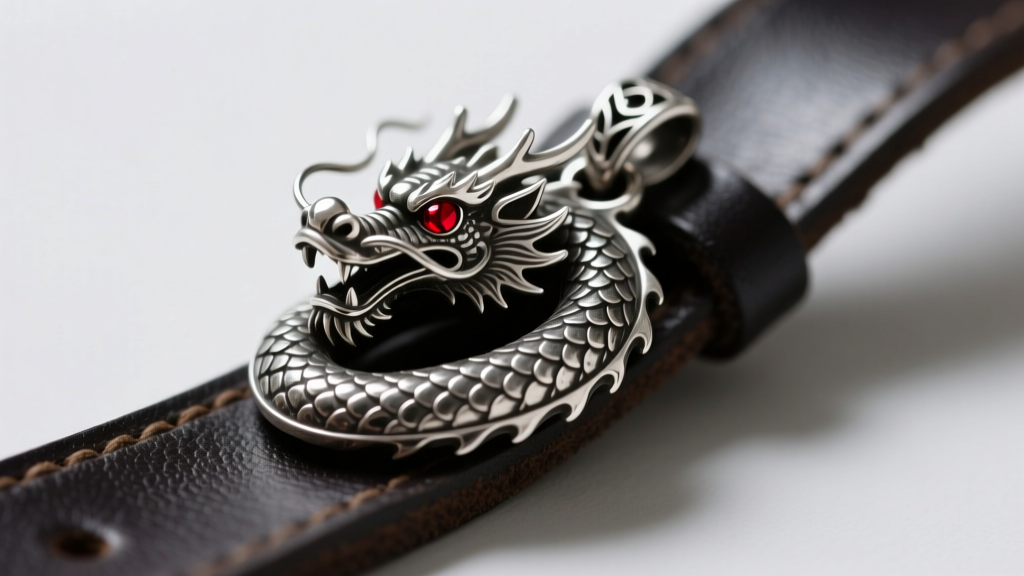
For millions of gamers, the dragon necklace OSRS players covet—most notably the iconic Dragonstone amulet or the intricate dragon medallion—represents a pinnacle of fantasy achievement. But translating these pixelated treasures into real-world, wearable jewelry requires a deep understanding of metallurgy, gemology, and structural engineering. As we navigate the bespoke jewelry landscape in 2026, fans and collectors are no longer satisfied with cheap, mass-produced zinc alloys. Today’s discerning collectors demand heirloom-quality pieces that capture the rugged, antiqued essence of Gielinor while surviving the rigors of daily wear.
Creating a high-fidelity dragon pendant involves balancing aesthetic authenticity with material durability. A dragon’s scales require deep relief casting, while its claws demand secure gemstone settings. In this comprehensive material guide, we break down the exact alloys, gemstones, and chain mechanics required to forge the ultimate fantasy necklace.
Base Alloys for Dragon Pendants: A Material Comparison
The foundation of any heavy fantasy pendant is the base metal. Dragon motifs require materials that can hold microscopic detail during the casting process while accepting chemical patinas to highlight the overlapping scales. According to master jewelers and suppliers like Rio Grande, the choice of alloy dictates both the lifespan and the visual weight of the piece.
| Metal Alloy | Vickers Hardness (HV) | Patina Potential | Best Application |
|---|---|---|---|
| Sterling Silver (925) | 65 - 120 | High (Oxidizes black) | High-detail scales, premium replicas |
| Silicon Bronze | 140 - 160 | Medium (Verdigris) | Rugged, ancient artifact aesthetics |
| Britannia Pewter | 25 - 35 | Low (Dulls gray) | Budget props, low-wear collectibles |
| Grade 5 Titanium | 330 - 350 | None (Anodizing only) | Hypoallergenic, ultra-lightweight wear |
Sterling Silver (925) remains the gold standard for high-end fantasy replicas. Composed of 92.5% pure silver and 7.5% copper, the copper content is actually a benefit here: it allows the metal to react with oxidizing agents, creating the dark, gritty shadows necessary to make dragon scales pop. With a Vickers hardness (HV) of around 65 in its annealed state, it is easily work-hardened to 120 HV, providing enough rigidity to prevent the delicate wings or horns from bending during wear.
Silicon Bronze (Everdur) is the premier choice for those seeking a warm, golden-brown antiquity. Unlike traditional bronze, which can suffer from tin sweat and porosity during casting, silicon bronze flows beautifully into intricate 3D-printed resin molds. It is significantly harder than silver and develops a stunning, earthy verdigris over time if left unsealed, perfectly mimicking ancient, excavated artifacts.
Britannia Pewter is a lead-free alloy composed primarily of tin, with trace amounts of copper and antimony. While it is the most budget-friendly option and captures extreme detail due to its low melting point, its low hardness makes it unsuitable for thin, protruding dragon horns or claw prongs, as they will easily snap under stress.
2026 Casting Techniques: Lost-Wax vs. Photopolymer Resin
The method used to birth the metal pendant drastically affects its porosity and detail retention. Traditional hand-carved wax limits the geometric complexity of interlocking dragon wings. In 2026, bespoke jewelers utilize ultra-high-resolution DLP (Digital Light Processing) 3D printers with castable photopolymer resins. These resins burn out cleanly at 750°C without leaving ash residue, a common flaw in older wax blends that causes pitting on the surface of the final bronze or silver cast. This technological leap allows for micro-textures—like individual pores on a dragon’s snout or the serrated edges of its teeth—to be captured flawlessly in the final metal grain.
Replicating the 'Dragonstone': Gemstone Properties
No OSRS-inspired dragon necklace is complete without a centerpiece gemstone that mimics the legendary, fiery red Dragonstone. In real-world gemology, achieving that deep, saturated crimson while maintaining daily-wear durability requires careful selection. The Gemological Institute of America (GIA) emphasizes the importance of the Mohs hardness scale for pendants, which, while less prone to impact than rings, still face environmental hazards.
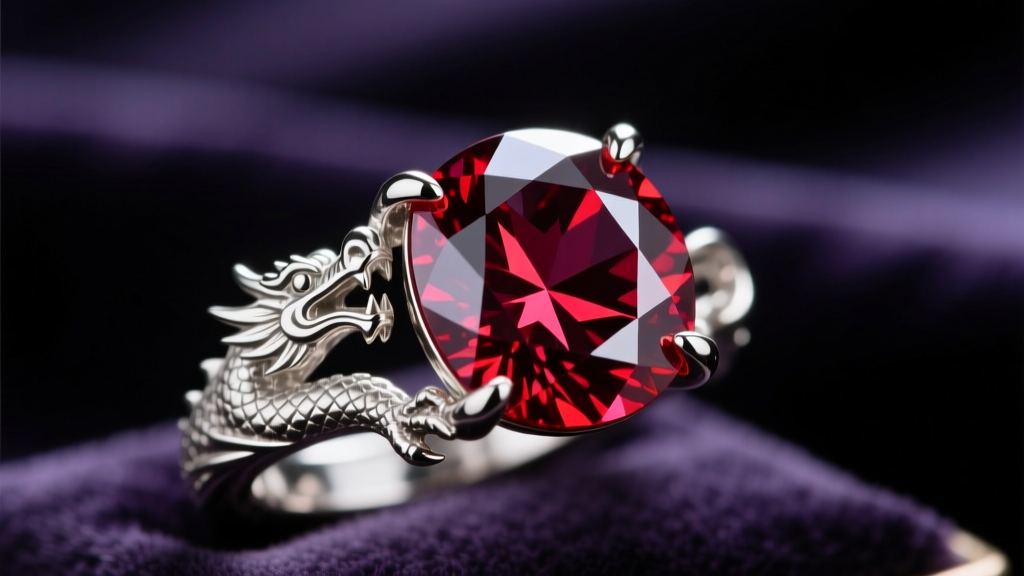
Red Spinel (Mohs 8) is the ultimate choice for a dragonstone replica. Unlike ruby, which can sometimes exhibit secondary purple or orange hues, high-quality red spinel offers a pure, vivid crimson with exceptional brilliance. Its single-refractive nature means it lacks the doubling effect seen in some gems, giving it a glassy, intense glow that perfectly mirrors the in-game asset. Furthermore, spinel lacks cleavage planes, making it highly resistant to chipping when set in aggressive, claw-style prong settings.
Pyrope Garnet (Mohs 7.5) serves as a highly affordable alternative. While slightly darker and more prone to extinction (light blockage) in larger carat weights, a well-cut 10mm round pyrope garnet provides a brooding, blood-red aesthetic that suits darker, oxidized bronze settings. However, garnets are susceptible to thermal shock, meaning jewelers must use extreme caution if sizing or repairing the pendant's bezel after the stone is set.
Chain Metallurgy and Gauge Requirements
A common failure point in heavy fantasy jewelry is the chain. A solid cast sterling silver or bronze dragon pendant can easily weigh between 25 and 45 grams. Suspending this weight on a standard 2mm chain will inevitably lead to link deformation, clasp failure, or catastrophic snapping.
For pendants in the 30-gram range, a minimum chain gauge of 4.5mm to 6.0mm is mandatory. Wheat (Spiga) chains are highly recommended for dragon motifs. Their woven, directional links visually mimic the overlapping scales of a dragon’s underbelly, creating a cohesive design language from the bail to the clasp. Structurally, the interlocking nature of the wheat chain distributes tensile stress across multiple links, offering superior weight support compared to standard cable chains.
Ensure the clasp is a heavy-duty lobster or a custom-forged toggle. Standard spring-ring clasps contain internal steel springs that will rust and fail under the constant pull of a heavy medallion.
Surface Finishing: The Art of Antiquing
The final step in achieving an authentic, rugged look is surface oxidation. Raw, polished silver or bronze looks too modern and sterile for a piece inspired by medieval fantasy. To create depth, jewelers use Liver of Sulfur (potassium sulfide), a chemical compound that forces rapid tarnishing.
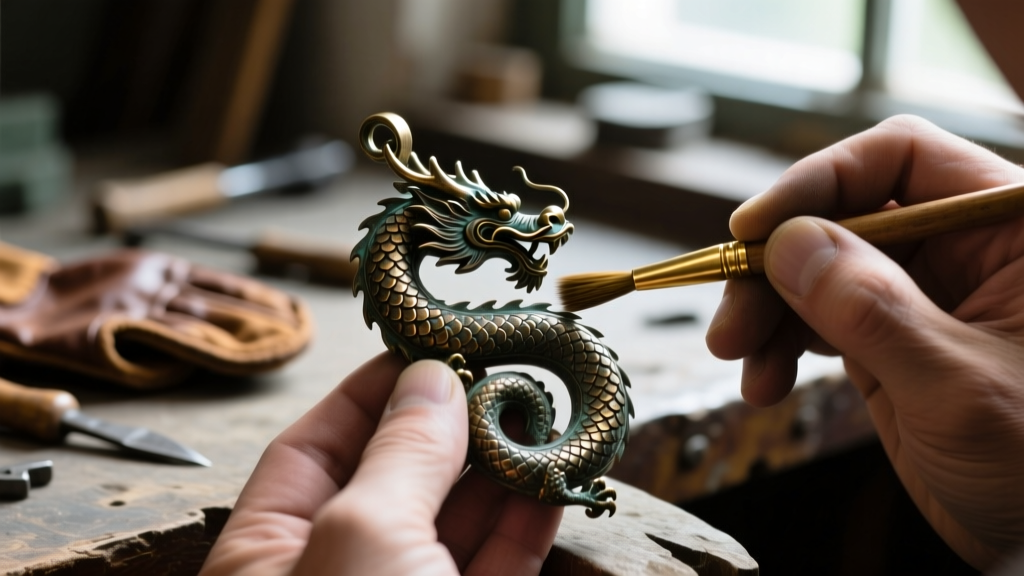
The pendant is submerged in a heated liver of sulfur solution until it turns completely black. Once dry, the jeweler uses a fiberglass scratch pen or a rotary brass brush to selectively polish only the highest points of the casting—the edges of the scales, the tips of the horns, and the bridge of the snout. This high-contrast finishing technique leaves the recessed areas pitch-black while the raised areas gleam, providing a three-dimensional effect that makes the dragon appear as though it is emerging from the shadows.
Conclusion: Forging Your Legacy
Crafting a piece worthy of a max-level adventurer requires respecting the laws of physics and chemistry. By selecting the appropriate base alloy, securing a durable spinel center stone, and pairing it with a structurally sound wheat chain, you ensure your fantasy necklace survives both the dungeon and the real world. Whether you are commissioning a bespoke jeweler or hunting for a master-cast replica, understanding these material properties guarantees your dragon amulet remains a legendary artifact for years to come.


