2026 Drop Diamond Necklace Trends: Style & Layering Guide
Discover 2026 drop diamond necklace trends, from kinetic bezel settings to lab-grown briolettes. Expert styling, layering, and buying guides.

The Evolution of the Drop Diamond Necklace in 2026
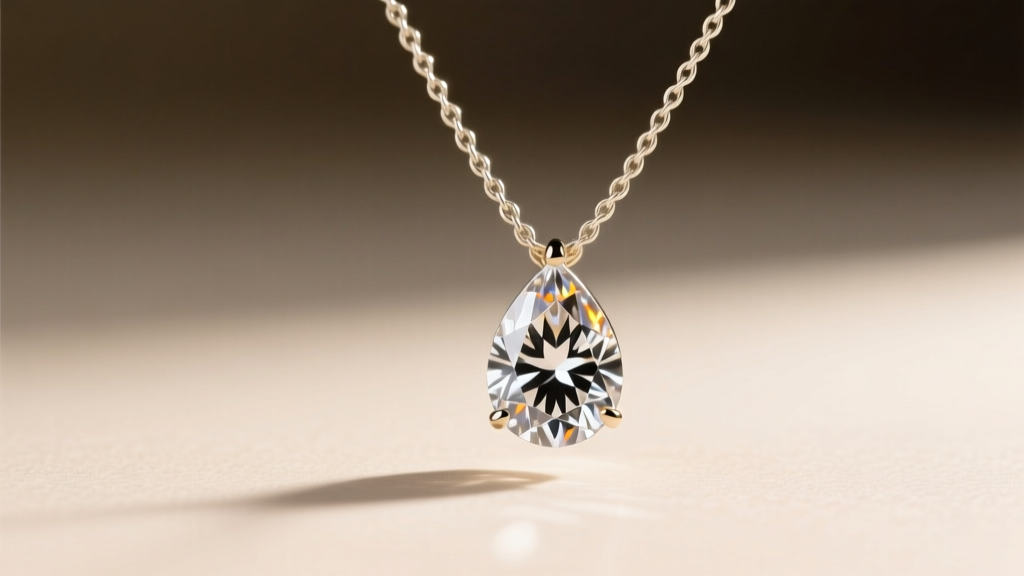
The drop diamond necklace has long been a staple of fine jewelry, but as we navigate the style landscape of 2026, the traditional solitaire pendant has undergone a radical, technically driven transformation. Today's collectors and style enthusiasts are moving away from static, heavy settings in favor of 'kinetic luxury'—pieces that emphasize movement, light return, and optical illusions. A modern drop diamond necklace is no longer just a stone on a chain; it is an exercise in precision engineering, balancing tensile strength with the illusion of a floating gemstone.
At Jewel Style Radar, we have analyzed the latest market shifts, from the dominance of elongated kite cuts to the structural nuances of hidden bails. Whether you are investing in a natural stone or exploring the rapidly advancing optical performance of lab-grown alternatives, understanding the anatomy and styling mechanics of the drop necklace is essential for making an informed, future-proof purchase.
Anatomy of a Modern Drop: Settings, Gauges, and Bail Mechanics
The success of a drop diamond necklace hinges entirely on the relationship between the stone's carat weight, the bail mechanism, and the chain's gauge. In 2026, the visible V-bail is largely considered dated for high-end drops, replaced by integrated and hidden bails that allow the chain to thread directly through the diamond's basket or a discreet horizontal loop.
Chain Gauge and Tensile Strength
A common failure mode in drop necklaces is chain kinking or snapping under dynamic stress. While a 1.00-carat diamond weighs a mere 0.2 grams, the kinetic force applied when the chain snags on a garment can exceed 3 pounds of pressure. Here is the technical framework for pairing chains with drop weights:
- 0.50mm - 0.65mm Cable Chains: Ideal for micro-drops (0.25ct to 0.50ct). These provide the coveted 'floating' illusion but lack the tensile strength for heavier stones. Break point: ~2.5 lbs.
- 0.75mm - 0.90mm Box or Wheat Chains: The 2026 sweet spot for 0.75ct to 1.50ct drops. Box chains offer superior structural integrity and resist kinking better than snake chains, while maintaining a delicate visual profile. Break point: ~6 lbs.
- 1.10mm+ Rope Chains: Reserved for statement drops (2.00ct+). While incredibly strong, a chain this thick visually competes with the diamond, breaking the continuous light line required for a seamless drop effect.
2026 Trend Matrix: Silhouette & Stone Cuts
The round brilliant solitaire, while timeless, has ceded significant market share to alternative cuts that maximize the vertical 'drop' effect. According to GIA grading and market reports, elongated shapes are currently dominating custom drop requests due to their superior face-up spread and modern aesthetic.
| Diamond Cut | Optimal Depth % | Best Setting Style | Visual Vibe & Trend Status |
|---|---|---|---|
| Pear / Teardrop | 58% - 62% | 3-Prong with V-Tip | Classic, romantic. The V-tip prevents cleavage-plane chipping. |
| Briolette | N/A (3D Cut) | Top-Drilled Wire Wrap | Bohemian kinetic. Swings freely, catching light from 360 degrees. |
| Kite Cut | 55% - 60% | Bezel or East-West Prong | Edgy, architectural. The leading trend for 2026 minimalist drops. |
| Marquise | 58% - 63% | North-South Bezel | Vintage revival. Elongates the neckline dramatically. |
Expert Insight: When selecting a pear or marquise cut for a drop necklace, always inspect the stone for the 'bow-tie effect'—a dark shadow across the center caused by light leakage. A depth percentage strictly between 58% and 62% usually mitigates this optical flaw, ensuring the drop remains brilliantly illuminated against the skin.
Lab-Grown vs. Natural: The Optical & Economic Reality
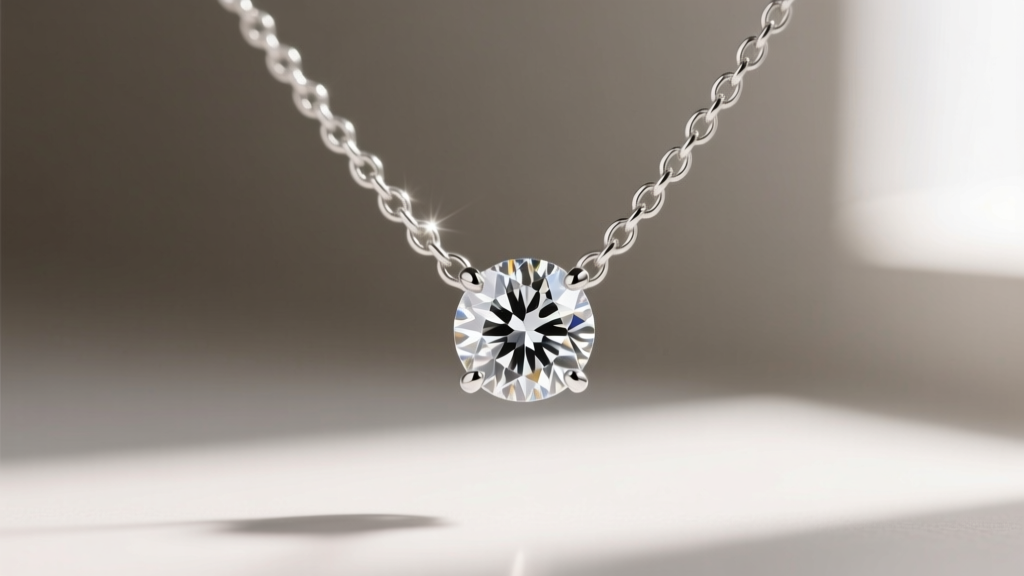
The 2026 jewelry market is defined by the normalization and price compression of lab-grown diamonds. According to the Bain & Company Global Diamond Report, lab-grown stones now represent a massive portion of the drop necklace market, particularly in the 1.50ct to 3.00ct range where natural stones become prohibitively expensive for everyday wear.
Pricing and Performance Breakdown
For a 1.50ct F-Color / VS1-Clarity drop diamond necklace, the economic divergence is stark. A natural earth-mined stone in this specification will command between $9,000 and $13,000, depending on fluorescence and cut precision. The exact optical equivalent in a CVD (Chemical Vapor Deposition) lab-grown diamond currently retails between $1,100 and $1,600.
From an optical standpoint, a high-quality CVD lab diamond is physically and chemically identical to a natural diamond. However, buyers must be wary of 'blue nuance' in some HPHT (High Pressure High Temperature) lab stones, which can give the drop a slightly synthetic, icy-blue tint in natural daylight. Always request a video of the drop necklace in mixed lighting before purchasing.
The Physics of Layering: Preventing the Tangle
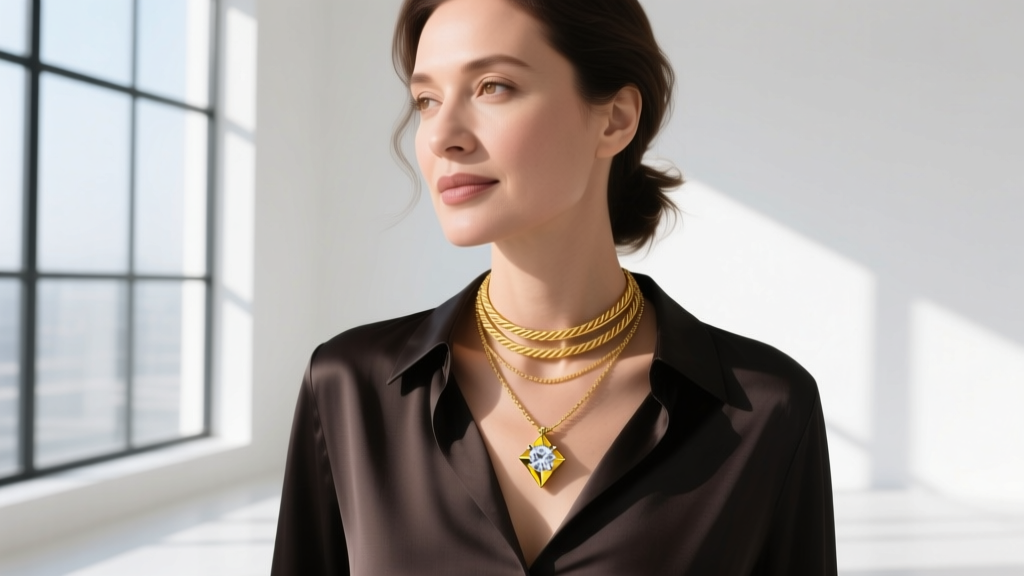
Layering a drop diamond necklace is a cornerstone of 2026 styling, but the physics of chain friction often leads to frustrating tangles. When two chains of the same style (e.g., two cable chains) are layered, their identical links act like gears, interlocking and knotting within minutes of movement.
To achieve a flawless, tangle-free layered look, you must manipulate the friction coefficients by mixing chain textures and maintaining strict length intervals:
- The 2-Inch Rule: Never layer chains with less than a 2-inch length difference. A 16-inch choker paired with an 18-inch drop necklace ensures the diamond pendant rests in the 'sweet spot' of the sternum without colliding with the upper chain's clasp.
- Texture Mixing: Pair your delicate drop chain (e.g., a 0.7mm box chain) with a contrasting texture, such as a smooth 1.2mm snake chain or a textured 14k gold paperclip chain. The differing surface geometries prevent the links from catching on one another.
- Weight Distribution: Ensure the drop necklace is the heaviest piece in the stack. If a secondary chain is heavier, it will swing outward and pull the delicate drop chain off-center, ruining the symmetrical alignment of the pendant.
Styling Frameworks for Necklines and Occasions
The versatility of the drop diamond necklace lies in its ability to adapt to various necklines, provided the chain length is calibrated correctly. Here is a definitive guide to matching your drop length with your wardrobe:
The Plunge and the V-Neck
For deep V-necks and wrap dresses, an 18-inch or 20-inch drop necklace is mandatory. The pendant should terminate exactly one inch above the apex of the fabric's V-line. A pear or kite cut is highly recommended here, as the downward-pointing geometry mirrors the neckline, creating a continuous, elongating visual vector.
The Crew Neck and High Collar
When wearing a crew neck or a high-collared silk blouse, opt for a shorter 16-inch drop necklace featuring a horizontal East-West setting or a compact round brilliant bezel. The stone should rest entirely on the skin or collarbone, rather than dangling over the fabric, which can cause the diamond to snag on woven fibers and suffer micro-abrasions to the girdle.
Maintenance and Failure Mode Prevention
Because drop necklaces feature a single, highly exposed focal point, they are uniquely vulnerable to specific wear patterns. To protect your investment, adhere to these Jewelers of America aligned maintenance protocols:
- Bail Friction Wear: If your drop utilizes a traditional jump-ring bail, the constant metal-on-metal friction will eventually wear through the chain's jump ring. Have a jeweler inspect the bail connection every 12 months for thinning.
- Prong Snagging: Drop necklaces are notorious for catching on cashmere and loose knits. If you wear prong-set drops frequently, request a 'tiffany wrap' or low-profile bezel setting to eliminate exposed prong tips.
- Ultrasonic Risks: Never place a fracture-filled or clarity-enhanced natural diamond drop into an ultrasonic cleaner. The high-frequency vibrations can shatter the stone or dissolve the filler. Stick to a soft-bristled brush and mild degreasing soap for weekly maintenance.
By understanding the intricate balance of chain gauge, diamond geometry, and modern setting mechanics, you can select a drop diamond necklace that not only captures the light but stands the test of time as a cornerstone of your 2026 jewelry wardrobe.


