Lingling O Necklace Troubleshooting: Fix Clasp & Tangles
Solve common issues with your Lingling O necklace. Learn expert fixes for pendant flipping, delicate chain tangling, and sticky clasp mechanisms.

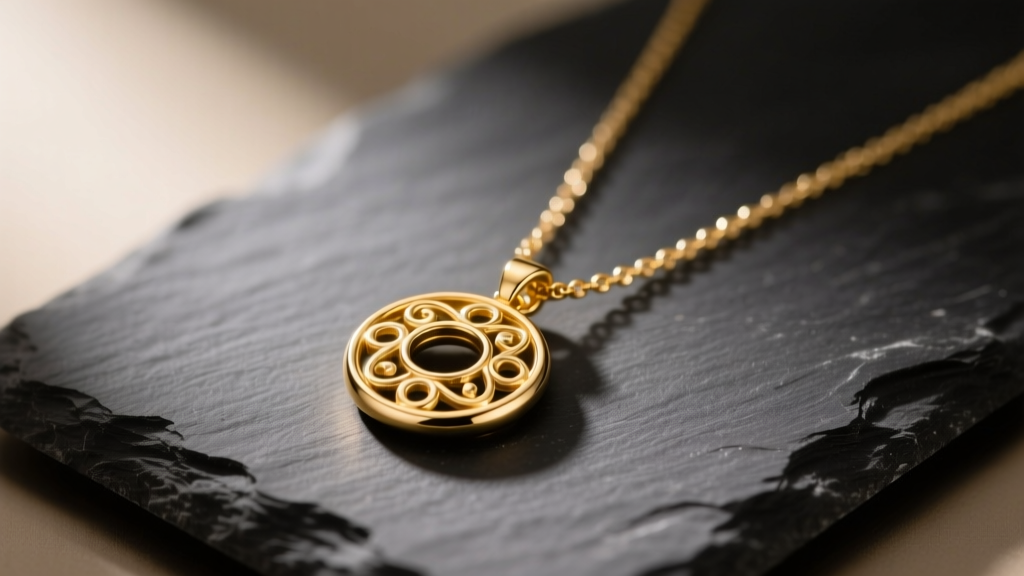
The Lingling O necklace has cemented its status as a quintessential piece in minimalist jewelry collections. Characterized by its perfectly symmetrical circular pendant and ultra-delicate cable chain, it offers an elegant, everyday aesthetic. However, the very design elements that make the Lingling O necklace so visually appealing also make it highly susceptible to specific wear-and-tear issues. From the pendant perpetually flipping upside down to the micro-chain tangling into unbreakable knots, owners frequently face frustrating maintenance hurdles.
As jewelry specialists, we have analyzed the structural mechanics of the Lingling O necklace to provide a comprehensive troubleshooting guide. Whether you are dealing with vermeil wear at the bail or a seized spring-ring clasp, this guide offers actionable, expert-level solutions to restore your piece to pristine condition.
The Physics of the Pendant Flip
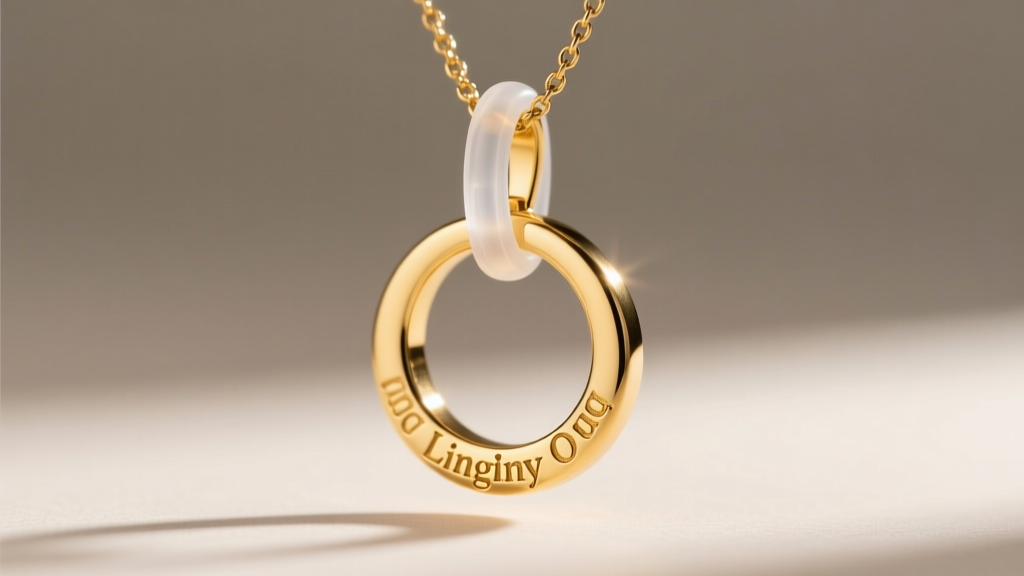
The most common complaint regarding the Lingling O necklace is the pendant's tendency to slide along the chain and rest upside down or at an awkward angle. This is not a defect, but rather a matter of physics. The O-pendant typically measures between 15mm and 18mm in diameter, making it top-heavy relative to the 1.2mm cable chain it hangs from. When the wearer moves, the center of gravity shifts, causing the pendant to slide toward the lowest point of the neckline.
The Silicone Stopper Hack
To solve this without altering the necklace permanently, you can use a micro-silicone O-ring stopper. These are commonly used for stud earring backs but work perfectly for necklace chains.
- Step 1: Purchase a pack of 1mm to 1.5mm clear silicone jewelry stoppers.
- Step 2: Thread the chain through the silicone stopper and position it directly behind the pendant's bail.
- Step 3: The friction of the silicone against the metal cable chain will act as an invisible counterweight, keeping the O-pendant perfectly centered at the hollow of your throat.
Untangling the 1.2mm Micro-Cable Chain
The Lingling O necklace typically features a 1.2mm cable chain constructed from ultra-fine 0.15mm wire. While this provides a beautiful, barely-there sparkle, it possesses a very low tensile strength—often deforming permanently under just 2 to 3 pounds of pressure. When stored loosely in a jewelry box, the micro-links easily weave through one another, creating dense "bird's nest" tangles.
The Baby Powder and Needle Method
Pulling at a micro-chain tangle will only tighten the knots and risk snapping the delicate links. Instead, use this professional jeweler's technique:
- Lay the tangled section flat on a hard, well-lit surface.
- Dust the knot generously with talcum powder or cornstarch. This reduces the friction between the metal links.
- Using a fine sewing needle or a straight pin, gently work the tip into the center of the knot. Do not pull; instead, use a vibrating or wiggling motion to loosen the links.
- Once the central knot is loose, use two pins to gently tease the outer loops apart.
- Wipe the chain clean with a microfiber cloth to remove the powder residue.
Vermeil Wear at the Bail Friction Point
Many versions of the Lingling O necklace are crafted using gold vermeil—a 925 sterling silver base plated with at least 2.5 microns of 14k or 18k gold. Because the pendant's bail (the loop connecting the charm to the chain) experiences constant metal-on-metal friction, it is usually the first area to show signs of wear, often revealing the bright silver underneath within six months of daily wear.
To mitigate this, avoid wearing the necklace during high-friction activities like working out or sleeping. If the bail has already worn through to the silver, a local jeweler can perform a targeted electroplating session to re-plate just the bail and pendant loop, which is significantly more cost-effective than re-plating the entire chain.
Rescuing a Sticky Spring-Ring Clasp
The standard 5mm spring-ring clasp used on the Lingling O necklace is notorious for becoming sticky or failing to snap shut completely. According to Jewelers of America, the primary culprit is the accumulation of sebum, dead skin cells, and body lotion inside the clasp's microscopic 0.5mm lever gap.
Ultrasonic vs. Chemical Cleaning
While ultrasonic cleaners are excellent for gemstones, they can sometimes rattle the tiny internal steel spring of a spring-ring clasp out of alignment if left in too long. Instead, opt for a targeted chemical clean:
- Dip a soft-bristled baby toothbrush in a mild solution of warm water and a single drop of grease-cutting dish soap.
- Gently scrub the clasp lever while repeatedly opening and closing it to work the soap into the internal mechanism.
- Rinse thoroughly and dry with a hairdryer on a cool setting to prevent water spots.
- Apply a microscopic drop of synthetic watch oil to the lever hinge to restore smooth operation.
Troubleshooting Matrix: Quick Fixes vs. Professional Repairs
Not every issue can be solved at home. Use the table below to determine when to DIY and when to consult a professional. For specialized chain repairs and clasp upgrades, suppliers like Rio Grande Jewelry Supply provide the exact specifications jewelers use to source replacement components.
| Issue | Root Cause | At-Home Quick Fix | Professional Repair |
|---|---|---|---|
| Pendant Flipping | Top-heavy O-shape center of gravity | Apply 1.5mm clear silicone stopper behind bail | Jeweler can micro-solder a flat bail to lock orientation |
| Chain Knotting | 1.2mm links weaving during storage | Talcum powder and dual-pin teasing method | Replace with a 0.8mm anti-tangle wheat chain |
| Sticky Clasp | Sebum and lotion in the 0.5mm lever gap | Dish soap scrub and synthetic watch oil lubrication | Upgrade to a 6mm lobster clasp for better leverage |
| Bail Tarnish/Wear | Friction wearing through 2.5-micron vermeil | Polish gently to blend the silver/gold transition | Targeted electroplating of the bail and pendant loop |
Preventative Storage Protocols
The longevity of your Lingling O necklace is heavily dependent on how it is stored. Because the 1.2mm chain is highly prone to kinking, it should never be tossed loosely into a drawer or jewelry box.
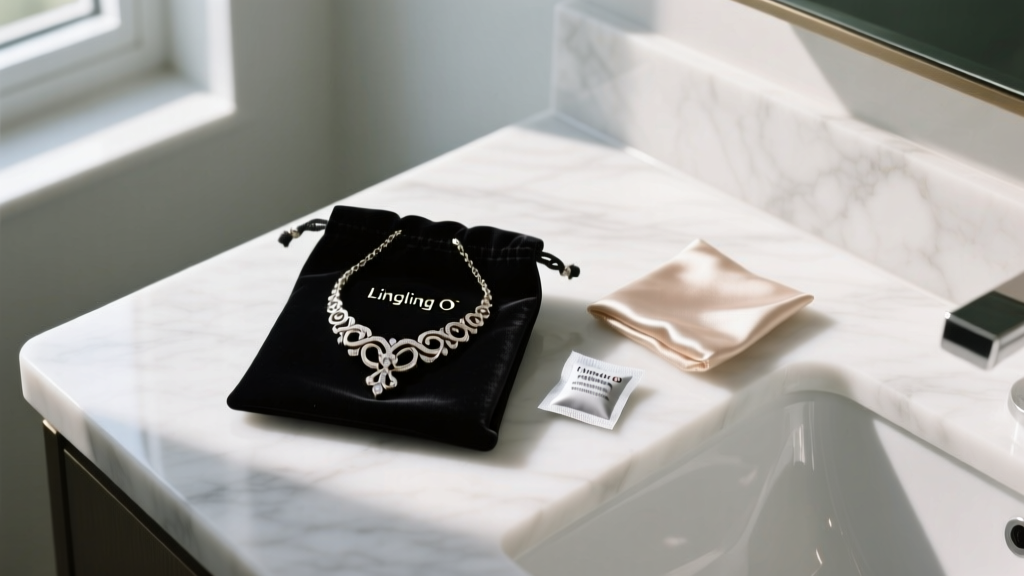
Adopt the "Hang or Lay Flat" rule. If you have a jewelry tree, hang the necklace by its clasp to let gravity keep the chain straight. If storing in a drawer, lay the necklace completely flat inside a ziplock bag with the clasp left outside the sealed edge. This prevents the clasp from snagging on the delicate links. Always include a small silica gel packet and an anti-tarnish strip in the storage area to absorb ambient moisture and sulfur compounds that accelerate the oxidation of the sterling silver base metal.
Final Thoughts on Long-Term Wear
The Lingling O necklace is a masterclass in minimalist design, but its delicate nature requires a mindful approach to wear and care. By understanding the mechanics of its bail, respecting the tensile limits of its micro-chain, and maintaining the internal springs of its clasp, you can ensure this piece remains a staple in your wardrobe for years to come. When in doubt, consult a certified bench jeweler who understands the nuances of working with fine-gauge chains and vermeil plating.


