How to Clean and Restore Mother of Pearl Necklaces
Learn how to safely clean, restore, and store mother of pearl necklaces. Expert steps to protect delicate nacre from damage and dehydration.

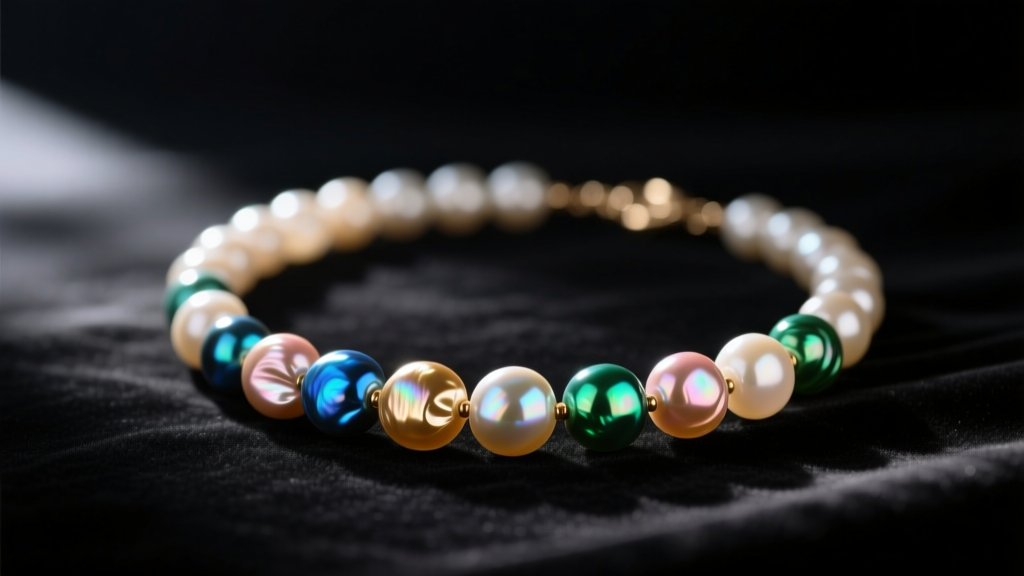
Mother of pearl necklaces possess a luminous, iridescent beauty that synthetic materials simply cannot replicate. However, the very organic composition that gives nacre its mesmerizing optical properties also makes it exceptionally vulnerable to environmental damage, chemical degradation, and physical scratching. Unlike harder gemstones such as diamonds or sapphires, mother of pearl requires a highly specific, scientifically grounded approach to maintenance.
In this comprehensive guide, we will break down the exact material science behind nacre, provide a meticulous step-by-step cleaning protocol, and detail professional restoration techniques to bring dehydrated or dull mother of pearl necklaces back to their original luster.
The Science of Nacre: Why Mother of Pearl is Fragile
To properly care for mother of pearl necklaces, you must first understand what they are made of. According to the Gemological Institute of America (GIA), nacre is a composite organic-inorganic material. It consists of microscopic hexagonal platelets of aragonite (a crystalline form of calcium carbonate) layered with conchiolin, an organic protein that acts as a biological glue.
This structure creates a Mohs hardness rating of just 2.5 to 4.5, meaning it can be easily scratched by everyday dust (which often contains quartz particles with a hardness of 7). Furthermore, the calcium carbonate is highly reactive to acids, while the conchiolin protein is susceptible to drying out, leading to micro-fractures, crazing, and a complete loss of iridescence over time.
Step-by-Step Guide to Cleaning Mother of Pearl Necklaces
Never submerge a mother of pearl necklace in water. Submersion can weaken the silk threading and degrade the adhesive used in bead settings. Follow this precise dry-to-damp protocol instead.
Step 1: The Dry Dusting Method
Before introducing any moisture, you must remove surface dust and silica particles to prevent them from acting as an abrasive paste during the wiping stage. Use a clean, ultra-soft makeup brush (such as a natural-hair powder brush) or a dedicated jewelers' microfiber dusting cloth. Gently sweep the brush between the beads and around the clasp hardware to dislodge trapped particulate matter.
Step 2: The Distilled Water Wipe
Tap water contains chlorine, fluoride, and dissolved minerals that can leave microscopic calcified deposits on the nacre, dulling its surface. Always use distilled water. Lightly dampen a lint-free microfiber cloth with distilled water—it should be barely moist, not dripping. Gently wipe each individual bead or carved pendant, following the natural grain of the nacre if visible.
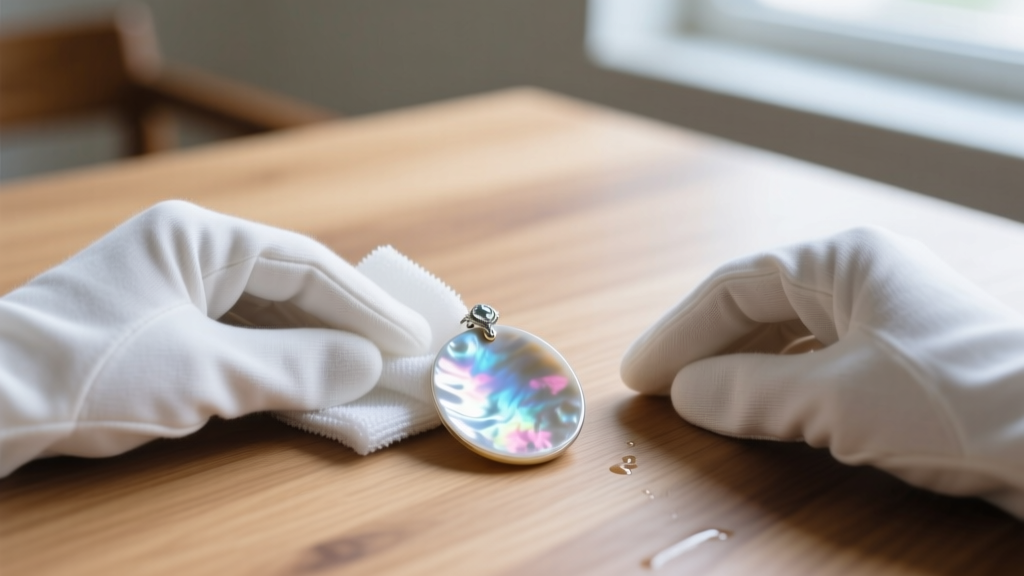
Step 3: Immediate Air Drying
Never use a hairdryer, heat lamp, or direct sunlight to dry your necklace. Rapid temperature changes cause the aragonite and conchiolin to expand and contract at different rates, resulting in structural delamination. Lay the necklace flat on a dry, absorbent cotton towel in a climate-controlled room (ideally 68°F with 50% relative humidity) and allow it to air dry completely before storing.
What to Avoid: The Nacre Danger Zone
The most common way collectors and casual wearers ruin mother of pearl necklaces is by applying standard jewelry cleaning methods to an organic gemstone. The American Gem Society strictly warns against using commercial ultrasonic cleaners or harsh chemical dips on any nacre-based jewelry.
| Cleaning Agent / Method | Chemical Composition | Effect on Nacre | Verdict |
|---|---|---|---|
| Ultrasonic Cleaners | High-frequency sound waves | Causes micro-vibrations that shatter the conchiolin matrix and delaminate the nacre layers. | NEVER USE |
| Ammonia / Windex | Alkaline solvents | Strips the natural moisture from the conchiolin protein, causing severe crazing and yellowing. | NEVER USE |
| Baking Soda Paste | Sodium bicarbonate (pH 9) | Acts as a harsh physical abrasive, permanently scratching the surface and removing the polish. | NEVER USE |
| Mild Castile Soap | Neutral pH plant oils | Safe in highly diluted amounts for stubborn grime, but must be rinsed immediately with distilled water. | USE WITH CAUTION |
| Distilled Water | H2O (Neutral pH 7) | Safely lifts water-soluble salts from perspiration without leaving mineral deposits. | HIGHLY RECOMMENDED |
How to Restore Dehydrated Nacre
If your mother of pearl necklace has been stored in a dry environment or exposed to excessive air conditioning, the nacre may appear chalky, dull, or develop tiny surface cracks (crazing). This indicates that the conchiolin protein has lost its vital moisture content.
To rehydrate the nacre, you must use a stable, non-oxidizing oil. Do not use olive oil, coconut oil, or vegetable oil, as these are polyunsaturated fats that will eventually oxidize, turn rancid, and leave a sticky, yellowed residue that is nearly impossible to remove from the porous nacre.
Expert Restoration Protocol: Apply a single drop of 100% pure, food-grade mineral oil to a soft cotton swab. Gently rub the oil over the surface of the mother of pearl beads. Allow the nacre to absorb the oil for exactly 15 minutes. Finally, buff the beads vigorously with a clean, dry microfiber cloth to remove any excess surface oil and restore the optical luster.
Perform this rehydration treatment no more than once every 12 to 18 months, or when the nacre visibly loses its depth of color.
Restringing: When to Seek Professional Help
Mother of pearl necklaces are traditionally strung on silk thread because silk possesses the ideal combination of tensile strength and flexibility, allowing the necklace to drape naturally against the collarbone. Over time, silk stretches, frays, and absorbs acidic perspiration, which weakens the fibers.
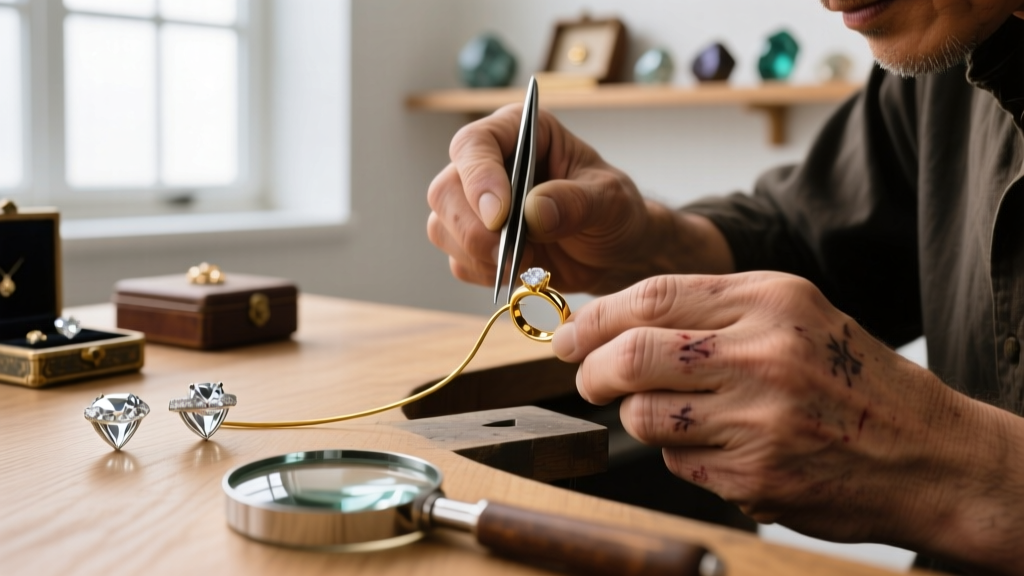
Inspect the spaces between the beads. If you can pull the thread and see more than 1-2 millimeters of stretched space between the knots, the necklace requires immediate restringing to prevent a catastrophic break. Professional jewelers typically use Griffin silk thread in Size E (0.35mm) or Size F (0.40mm) for standard 6mm to 10mm mother of pearl beads. Furthermore, the first and last three beads should be secured using French wire (gimp)—a microscopic coiled metal spring that protects the silk thread from friction against the metal clasp ring.
Long-Term Storage Protocols
Proper storage is the final pillar of mother of pearl preservation. Because nacre requires a baseline level of ambient humidity to prevent the conchiolin from drying out, storing your necklace in an airtight plastic bag or a bank safety deposit box (which are notoriously dry environments) will accelerate degradation.
Store your mother of pearl necklaces flat in a fabric-lined jewelry box, completely separated from harder gemstones and metal chains to prevent Mohs-scale scratching. If you live in an arid climate or use central heating during the winter, place a slightly damp cotton ball in a small, perforated plastic capsule inside the jewelry box compartment to maintain a localized relative humidity of 40% to 60%. Finally, always put your mother of pearl necklace on after applying perfumes, hairsprays, and lotions, as the alcohol and volatile organic compounds (VOCs) in cosmetics will rapidly dissolve the nacre's polished outer layer.


