Styling the Juicy Couture Necklace Crown: Y2K Guide
Discover how to authenticate, style, and care for a vintage Juicy Couture necklace crown. Your complete beginner guide to Y2K royal jewelry.

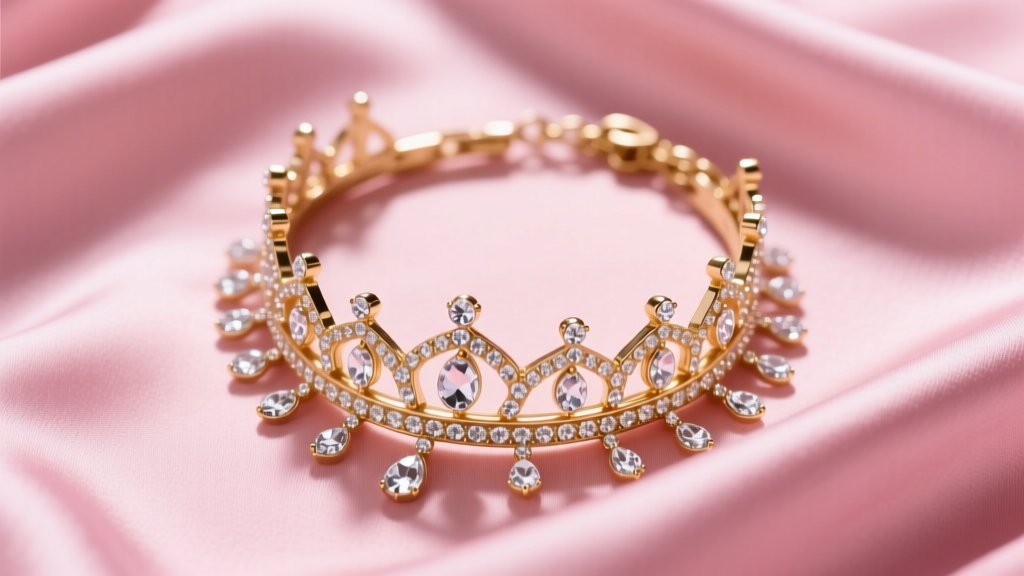
The Y2K Revival: More Than Just Nostalgia
The early 2000s were defined by unapologetic glamour, and no accessory captured that zeitgeist quite like the iconic juicy couture necklace crown. Originally designed as a symbol of accessible luxury and playful royalty, the crown motif became a staple of the Y2K aesthetic. Today, as vintage fashion continues to dominate the secondary market, these pieces have transitioned from mall-brand staples to highly sought-after collector's items. But navigating the vintage jewelry market requires more than just an eye for aesthetics; it demands an understanding of early-2000s metallurgy, manufacturing techniques, and modern styling frameworks.
Whether you are a vintage hunter scouring Depop or a jewelry enthusiast looking to incorporate nostalgic pieces into a contemporary wardrobe, this beginner-friendly explainer will decode everything you need to know about authenticating, styling, and preserving these iconic pendants.
Authentication 101: Spotting a Genuine 2000s Piece
The resurgence of Y2K fashion has inevitably led to a flood of modern replicas. To ensure you are investing in an authentic vintage piece, you must examine the hardware, stamping, and stone quality. According to Vogue's extensive coverage on Y2K fashion archives, the devil is always in the micro-details of early-2000s manufacturing.
Hallmarks and Stamping
Authentic Juicy Couture pendants from the 2000s typically feature specific hallmarks. Look for a deeply engraved "JC" or the full "Juicy" script on the flat back of the crown pendant. Additionally, inspect the small metal hang-tag attached near the lobster clasp on the chain. Genuine tags will have crisp, clean stamping, whereas modern fakes often feature shallow, laser-etched, or entirely missing hallmarks.
Rhinestone Refraction and Foil Backing
The crown motif relies heavily on pavé-style rhinestones. Authentic vintage pieces utilized glass rhinestones with a silver foil backing to maximize light refraction. Acrylic (plastic) stones, which are standard in modern fast-fashion replicas, lack this foil backing and appear cloudy or flat under direct light. Furthermore, authentic stones are usually set with tiny metal prongs or high-grade jeweler's epoxy, while fakes often feature stones that are simply glued onto a flat surface.
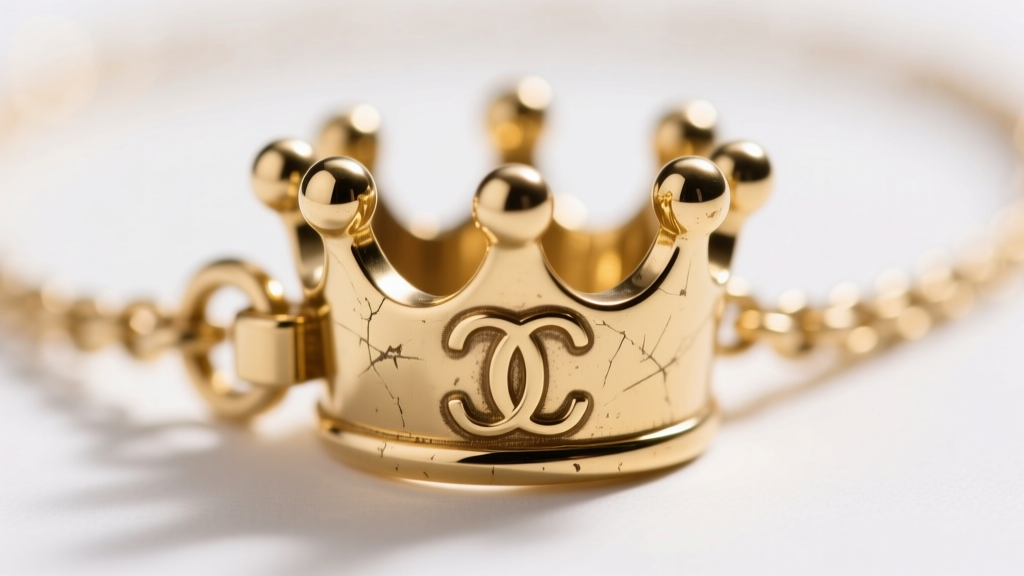
Material Science: What Your Vintage Crown is Actually Made Of
Understanding the material composition of your jewelry is critical for long-term care. Most Juicy Couture pieces from the 2000s were not cast in solid precious metals. Instead, they utilized advanced base-metal casting and flash-plating techniques.
| Component | Authentic 2000s Specification | Modern Replica Specification | Common Failure Mode |
|---|---|---|---|
| Base Metal | Zamak (Zinc-Aluminum-Magnesium-Copper alloy) or Cast Brass | Pewter or cheap Zinc alloys | Brittle snapping at the bail (loop) under tension |
| Plating | Flash Gold Plating (approx. 0.1 to 0.5 microns) over a copper barrier | Titanium Nitride (PVD) or painted gold finish | "Brassing" (wear at high-friction points revealing base metal) |
| Enamel Accents | Cold Enamel (Epoxy Resin) | Acrylic Paint or soft synthetic resins | Yellowing, chipping, or dissolving when exposed to alcohol |
| Chain Hardware | 2mm Brass Cable Chain with Spring Ring or Lobster Clasp | Hollow aluminum or steel alloys | Clasp spring failure or chain kinking |
Because the gold plating on authentic vintage pieces is incredibly thin (known as flash plating), it is highly susceptible to friction and chemical degradation. This is why finding a vintage crown pendant with zero "brassing" on the raised edges of the crown is rare and commands a premium price.
Pricing and Sourcing in the Secondary Market
If you are looking to purchase a juicy couture necklace crown today, you will primarily be navigating the secondary market. Here is a realistic pricing framework for 2026:
- Good Condition (Visible Wear/Brassing): $25 - $45. Ideal for buyers who want the aesthetic and plan to have the piece professionally re-plated.
- Excellent Vintage Condition: $60 - $120. The gold plating is intact, all rhinestones are present, and the original chain is included.
- New Old Stock (NOS) with Tags: $150 - $250+. Highly sought after by serious Y2K archivists and collectors.
Always request macro photos of the clasp, the back of the pendant, and the stone settings before purchasing from peer-to-peer platforms like Depop, Poshmark, or eBay.
Modern Styling: Elevating the Crown Motif
The biggest mistake beginners make with vintage mall-brand jewelry is treating it like a costume piece. To wear a Juicy Couture crown necklace in a modern, sophisticated way, you must employ contrast and intentional layering.
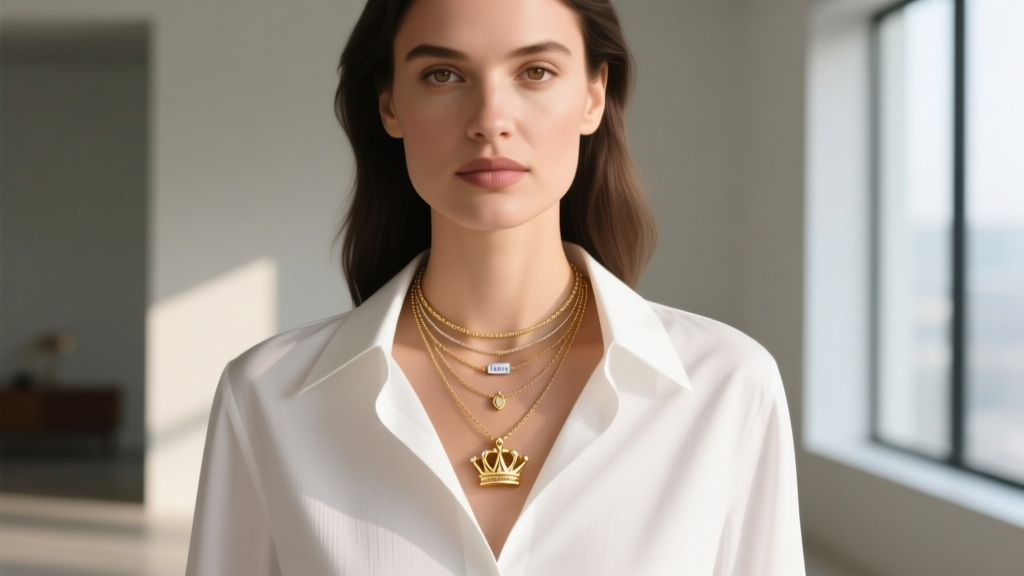
The High-Low Contrast Technique
Contrast the playful, rhinestone-heavy nature of the crown pendant with structured, minimalist clothing. A crisp, oversized white poplin button-down shirt or a sharply tailored charcoal blazer provides a neutral, sophisticated canvas that allows the vintage gold and crystals to pop without looking juvenile.
The Mixed-Metal Layering Stack
Y2K jewelry was heavily gold-toned, but modern styling embraces mixed metals. Try suspending the vintage crown pendant on a modern, matte-finish sterling silver snake chain. Pair it with a 14k gold-filled paperclip chain at a different length. This breaks up the "set" look and integrates the vintage piece into a curated, contemporary stack.
Preservation: Cleaning and Storing Plated Alloy Jewelry
Caring for flash-plated Zamak and brass requires a gentle touch. According to the Jewelers of America, improper cleaning is the leading cause of damage to vintage costume jewelry.
CRITICAL WARNING: Never place a vintage rhinestone pendant in an ultrasonic cleaner. The high-frequency vibrations will shatter the glass stones and strip the delicate silver foil backing, leaving you with dull, grayish stones that cannot be repaired.
Step-by-Step Cleaning Routine
- Dry Dusting: Use a clean, soft-bristled makeup brush to gently sweep away dust and skin oils from the crevices of the crown and around the rhinestone prongs.
- Spot Cleaning: If the metal is heavily soiled, mix a single drop of pH-neutral dish soap (like Dawn) into a bowl of lukewarm water. Dip a microfiber cloth into the solution, wring it out until it is barely damp, and gently wipe the metal surfaces. Avoid touching the enamel or the rhinestones.
- Drying: Immediately dry the piece with a separate, lint-free microfiber cloth. Do not let water pool in the stone settings, as it can cause the underlying jeweler's epoxy to degrade over time.
- Storage: Store the necklace in a sealed, anti-tarnish ziplock bag alongside a 3M anti-tarnish strip. Keep it away from direct sunlight and high humidity to preserve the cold enamel and prevent the base metal from oxidizing beneath the plating.
By understanding the material realities and historical context of your jewelry, you can confidently wear, collect, and preserve these iconic pieces of early-2000s fashion history.


