The Egyptian Necklace in 2026: Trend & Style Analysis
Discover how the Egyptian necklace is redefining 2026 jewelry trends. Explore modern styling, material grades, and motif interpretations for everyday wear.

The Resurgence of Ancient Aesthetics in 2026
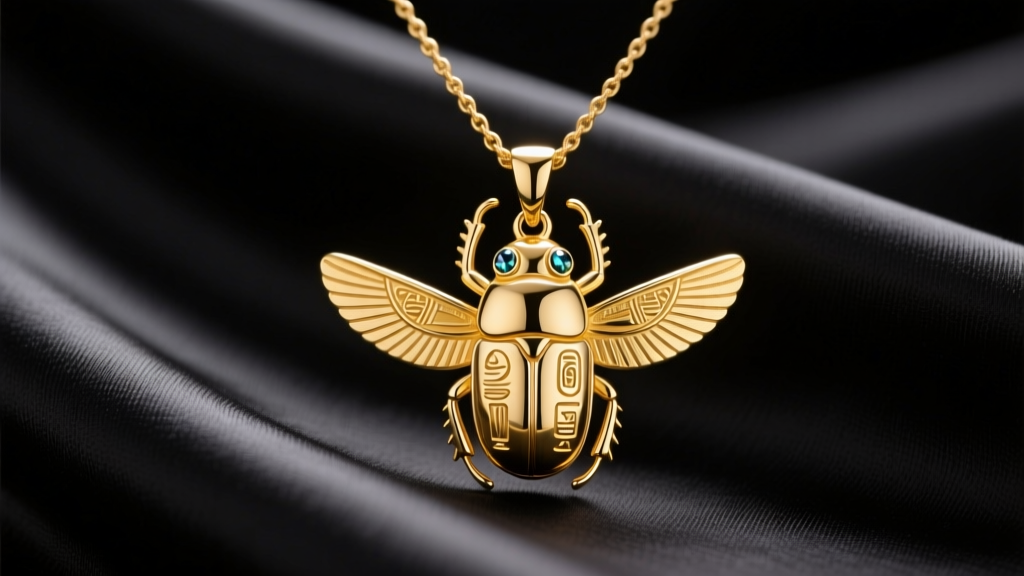
The jewelry landscape of 2026 has witnessed a definitive pivot away from ultra-minimalism, embracing instead a curated, historically grounded maximalism. At the forefront of this shift is the Egyptian necklace. No longer confined to costume jewelry bins or museum gift shops, ancient Egyptian motifs have been radically reinterpreted by contemporary high jewelers and independent artisans alike. This modern Egyptian revival is characterized by abstracted geometry, modular wearability, and a strict adherence to premium material grades. Whether you are exploring a delicate ankh pendant or a bold, enameled Usekh collar, understanding the nuances of this trend is essential for building a sophisticated, historically informed jewelry wardrobe.
Historically, jewelry in ancient Egypt was not merely decorative; it was deeply amuletic, designed to offer protection and signify status. Today, the modern wearer is drawn to these pieces for their architectural beauty and symbolic weight. However, the 2026 approach demands a departure from the heavy, literal reproductions of the 1970s revival. Instead, current trends favor negative space, mixed metal finishes, and the integration of ancient lapidary techniques with modern CAD precision.
Decoding the Motifs: Beyond the Ankh and Scarab
While the ankh (symbolizing life) and the scarab (representing rebirth and the sun god Khepri) remain foundational, the 2026 trend cycle has elevated lesser-known motifs to the mainstream. The Tjet (the knot of Isis) and the Wedjat (Eye of Horus) are being rendered in sleek, linear designs that appeal to modern sensibilities. Designers are stripping away the ornate, cluttered detailing of tourist-market replicas, focusing instead on the striking, brutalist silhouettes inherent in Middle Kingdom artifacts.
The Usekh Collar Reimagined
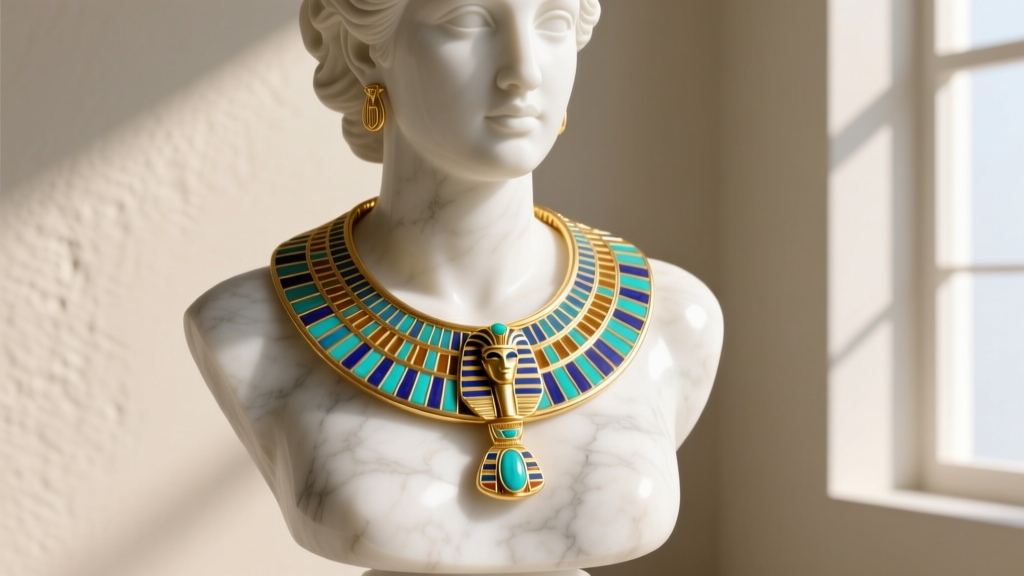
The Usekh, or broad collar, is perhaps the most iconic of all ancient Egyptian necklaces. Traditionally composed of rows of tubular beads made from faience, carnelian, and turquoise, it was a heavy, rigid garment worn by royalty and deities. According to the Metropolitan Museum of Art, these collars were often so heavy they required counterweights at the back to keep them balanced. In 2026, the Usekh has been reimagined for daily wear. Contemporary jewelers are utilizing articulated 18k gold links and micro-pavé diamonds to create flexible, lightweight collars that sit flush against the collarbone without the need for a counterweight. Widths have been scaled down from the historical 6-to-8 inches to a more wearable 1.5-to-2 inches, maintaining the visual impact while accommodating modern necklines.
Material and Pricing Matrix: What to Expect
When investing in an Egyptian necklace, understanding the material grades is critical. The ancient Egyptians prized lapis lazuli, turquoise, carnelian, and gold. Today, the market is segmented into distinct tiers based on material authenticity and craftsmanship. The Gemological Institute of America (GIA) notes that natural lapis lazuli must contain lazurite, calcite, and pyrite to be considered genuine, a standard that separates high-end pieces from mass-market imitations.
| Market Tier | Primary Materials | Gold Standard | Price Range (USD) | Best For |
|---|---|---|---|---|
| Fast Fashion | Dyed howlite, resin, glass | Flash plated (0.5 microns) | $40 - $120 | Costume events, fleeting trends |
| Artisan / Demi-Fine | Genuine turquoise, carved carnelian | Heavy Vermeil (2.5+ microns over 925 silver) | $250 - $800 | Everyday wear, layered styling |
| High Jewelry | Afghan lapis lazuli, custom faience | Solid 18k or 22k Gold | $2,500 - $15,000+ | Investment pieces, heirlooms |
For the discerning buyer in 2026, the Demi-Fine tier offers the best intersection of durability and authenticity. Ensure that any gold-plated silver piece is certified as vermeil, meaning it possesses a minimum of 2.5 microns of gold thickness, which is essential for preventing the rapid wear-through common with ancient-style textured finishes.
Styling Framework: Pairing Egyptian Necklaces with Modern Necklines
The architectural nature of Egyptian jewelry requires strategic styling. A piece that looks magnificent on a mannequin can easily overwhelm the wearer if paired with the wrong neckline. Use this framework to integrate these pieces seamlessly into your wardrobe:
- The Boatneck / Off-the-Shoulder: This is the ideal canvas for a modern Usekh collar or a wide, 1.5-inch choker. The horizontal line of the neckline mirrors the collar, creating a cohesive, regal silhouette. Opt for a 14-to-16-inch length that rests precisely on the clavicle.
- The Deep V-Neck: Pair this with a drop pendant featuring a vertical motif, such as an elongated ankh or a teardrop lapis lazuli scarab. A 20-to-24-inch princess or matinee length chain (like a 1.5mm rope chain) will draw the eye downward, elongating the neck and torso.
- The Turtleneck / High Collar: Heavy, textured chains work best here. A 28-to-30-inch opera-length chain featuring a substantial, carved carnelian pectoral or a large geometric Wedjat eye will sit perfectly over the fabric, providing a striking contrast in color and texture.
- The Asymmetric / One-Shoulder: Balance the asymmetry of the garment with a delicate, off-center pendant or a layered combination of a 16-inch wheat chain and an 18-inch snake chain, utilizing small, minimalist Egyptian charms to avoid visual clutter.
Authenticity and Sourcing: Avoiding Tourist Trap Trinkets
The global market is saturated with counterfeit Egyptian jewelry, particularly concerning lapis lazuli and faience. When sourcing a high-quality Egyptian necklace, you must employ basic gemological troubleshooting to verify authenticity.
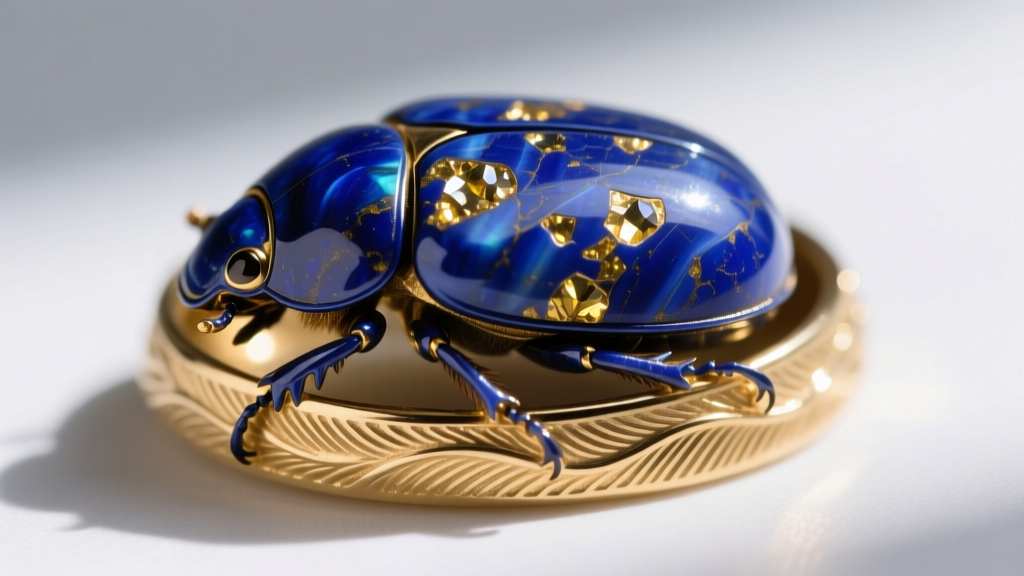
First, examine the lapis lazuli. Genuine Afghan lapis has a Mohs hardness of 5 to 5.5 and features a deep, mottled royal blue color with distinct, metallic flecks of pyrite and occasional white calcite veins. If the stone is a uniform, flat blue with no inclusions, it is likely synthetic or dyed howlite. A simple, non-destructive test involves taking a cotton swab dipped in acetone (nail polish remover) and rubbing an inconspicuous area of the stone. If the swab turns blue, the stone has been dyed and is not genuine high-grade lapis.
Second, scrutinize the faience. Ancient faience is a sintered-quartz ceramic that possesses a distinct, glassy luster and depth of color. Modern mass-market replicas often use molded resin or cheap enamel. Real faience will feel cold to the touch and significantly heavier than resin. Furthermore, antique or high-end artisan faience will show slight variations in the glaze pooling, whereas molded resin will have perfectly uniform, sterile coloring and visible seam lines from the manufacturing mold.
Final Verdict: Is the Egyptian Revival Here to Stay?
The 2026 iteration of the Egyptian necklace is not a fleeting novelty; it is a permanent integration of ancient architectural jewelry into the modern lexicon. By moving away from literal, costumey reproductions and embracing abstract geometry, premium material grades, and strategic styling, contemporary jewelers have ensured that these motifs remain relevant. Whether you are investing in a solid 18k gold scarab pendant or a meticulously crafted demi-fine Usekh collar, the key to mastering this trend lies in respecting the historical weight of the symbols while styling them with unapologetic modernity. Choose pieces that prioritize structural integrity and genuine gemstones, and your Egyptian necklace will transcend seasonal trends to become a cornerstone of your personal style.


