The Ultimate Emerald Bezel Necklace Buying Guide & Care Tips
Discover how to choose the perfect emerald bezel necklace. Learn about gemstone treatments, precious metal settings, and pricing tiers in our expert guide.

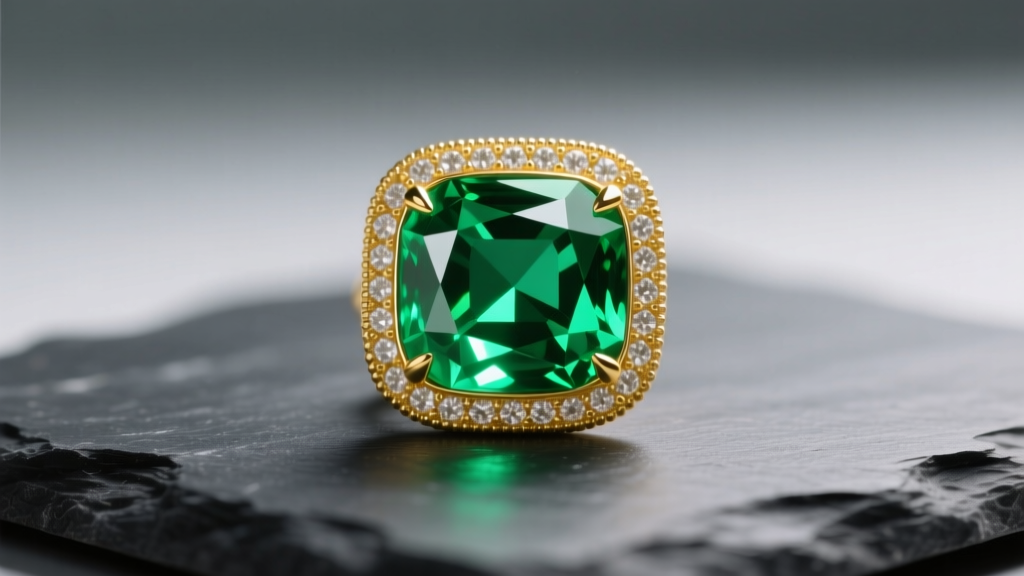
Why the Bezel Setting is Non-Negotiable for Emeralds
When shopping for an emerald bezel necklace, understanding the gemological reality of the stone is your first step. Emeralds rank 7.5 to 8 on the Mohs scale of hardness, which might suggest durability. However, hardness only measures scratch resistance. In terms of toughness—the ability to resist chipping and breaking—emeralds are notoriously poor to fair. This is due to their natural internal fissures and inclusions, romantically referred to as the jardin (French for garden).
Because of this inherent brittleness, traditional prong settings leave the vulnerable corners and girdle of the emerald exposed to catastrophic damage from everyday impacts. A bezel setting, where a continuous rim of precious metal completely or partially encircles the gemstone's girdle, is the gold standard for protecting emeralds. As we navigate the 2026 fine jewelry market, the bezel setting has surged in popularity not just for its sleek, modern aesthetic, but for its unmatched structural protection.
Decoding Emerald Quality: Color, Clarity, and Treatments
Before evaluating the metalwork of your necklace, you must assess the emerald itself. The Gemological Institute of America (GIA) evaluates emeralds primarily on color, with the most prized stones exhibiting a bluish-green to pure green hue with vivid saturation and medium-to-medium-dark tone.
The Reality of Fracture Filling
It is an industry secret that over 90% of natural emeralds on the market are fracture-filled. Because the jardin often reaches the surface of the stone, lapidaries fill these fissures with cedar oil, synthetic resins, or Opticon to improve apparent clarity. The Federal Trade Commission (FTC) mandates that sellers disclose these treatments. When buying an emerald bezel necklace, always ask for the treatment level: None, Minor (F1), Moderate (F2), or Significant (F3).
Expert Warning: Avoid stones graded 'Significant' (F3) for bezel settings. The mechanical pressure applied by the jeweler when burnishing the metal bezel wall over the girdle can cause heavily filled stones to crack or leak their resin fillers.
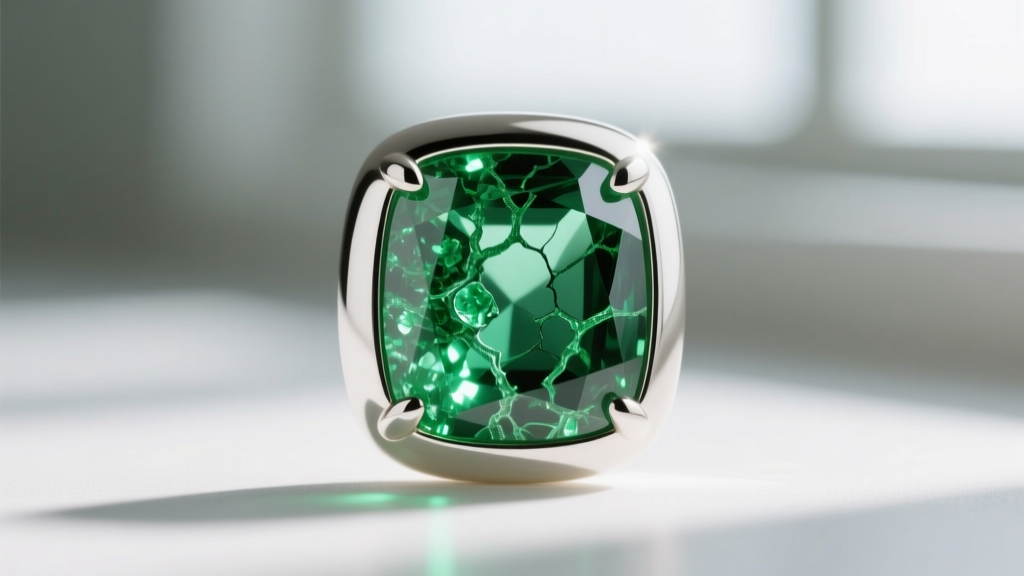
Anatomy of the Bezel: Full, Partial, and Milgrain
Not all bezels are created equal. The thickness of the bezel wall should ideally be between 0.35mm and 0.50mm for a 1-to-2-carat stone. Anything thinner risks warping upon impact; anything thicker unnecessarily blocks light return and adds bulky weight to the pendant. Here is how the three primary bezel styles compare:
| Bezel Type | Protection Level | Light Performance | Best Use Case |
|---|---|---|---|
| Full Bezel | Maximum | Moderate | Everyday wear, highly included stones, active lifestyles |
| Partial Bezel | Moderate | High | Cleaner stones (Minor oil), modern minimalist aesthetics |
| Milgrain Bezel | High | Moderate | Vintage designs, heirloom pieces, Art Deco revivals |
A full bezel offers 360-degree protection, making it ideal for an everyday pendant that will rest against the collarbone and face constant friction. A partial bezel leaves two sides of the emerald open, maximizing light entry and brilliance, but requires the wearer to be slightly more cautious.
Choosing the Right Chain and Metal Alloy
The structural integrity of your necklace relies heavily on the chain gauge and metal alloy. A 1.5-carat emerald set in a solid 14k gold bezel can easily weigh between 4 and 6 grams.
Chain Gauge and Styles
Do not pair a heavy bezel pendant with a delicate 0.8mm cable chain; it will snap under the dynamic weight of daily movement. Instead, opt for a 1.2mm to 1.5mm box chain or wheat chain. These styles feature interlocking geometric links that distribute weight evenly and resist kinking.
Metal Pairings for 2026
- 18k Yellow Gold: The traditional, historically accurate pairing. The warm undertones of yellow gold amplify the lush, grassy greens of Colombian emeralds.
- 14k White Gold / Platinum: Offers a high-contrast, contemporary look that makes the green appear icier and more vivid. Platinum is highly recommended for partial bezels due to its superior tensile strength.
- 14k Rose Gold: A trending choice for 2026, offering a romantic, vintage-inspired contrast that pairs beautifully with Zambian emeralds, which tend to have slightly cooler, bluish undertones.

Pricing Tiers: What Should You Expect to Pay?
The price of an emerald bezel necklace varies wildly based on the gemstone's origin, treatment level, and the karat weight of the precious metal. Use this framework to set realistic expectations:
- Commercial Tier ($300 - $900): Features lab-created emeralds or heavily treated (F3) natural stones with poor color saturation. Usually set in 10k or 14k gold with mass-produced, thin-walled bezels and lightweight cable chains.
- Fine Jewelry Tier ($1,200 - $4,500): The sweet spot for most buyers. Expect natural Colombian or Zambian emeralds with 'Minor' (F1) to 'Moderate' (F2) oil treatments, good color saturation, and solid 14k or 18k gold settings with precise, hand-finished bezel walls.
- High Jewelry / Investment Tier ($6,000 - $25,000+): Reserved for untreated or exceptionally rare 'Minor' oil emeralds with top-tier Vivid Green color and excellent clarity. Set in platinum or 18k gold, often featuring custom-milled bezels and designer provenance.
Critical Care and Maintenance Rules
The most common way owners destroy their emerald bezel necklaces is through improper cleaning. Never put an emerald in an ultrasonic cleaner. The high-frequency vibrations will shatter the stone along its natural fissures. Furthermore, the heat from steam cleaners will boil out the cedar oil filler, leaving your once-clear emerald looking cloudy and fractured with white lines.
The Only Safe Cleaning Method: Fill a small bowl with lukewarm water and a few drops of mild, phosphate-free dish soap. Let the necklace soak for 3 to 5 minutes. Gently agitate the water, then use a brand-new, extra-soft baby toothbrush to lightly sweep away dirt from the back of the bezel setting (the culet area). Rinse under a gentle stream of lukewarm water and pat dry with a microfiber cloth. Have a professional jeweler inspect the bezel wall for thinning or warping every 18 to 24 months.


