How to Craft, Patina, and Style the Witcher Necklace
Learn how to craft, age, and style the witcher necklace. Our step-by-step guide covers metal alloys, patina techniques, and everyday styling tips.

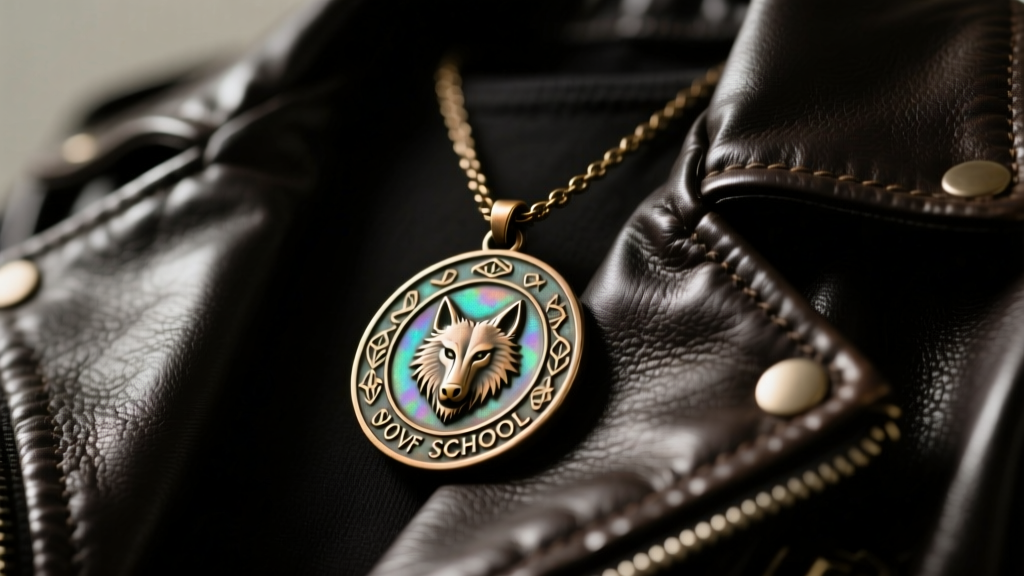
The Anatomy of an Iconic Fantasy Artifact
Since the franchise exploded into mainstream pop culture, the Wolf School medallion has transcended its origins as a mere cosplay prop to become a staple of dark fantasy and geek-chic jewelry. According to the lore detailed on the official Witcher Wiki, the medallion is a witcher's badge of office, vibrating in the presence of magic. In the real world, however, replicating this iconic piece requires a deep understanding of metallurgy, jewelry assembly, and antiquing techniques. Whether you are a seasoned bench jeweler, a 3D-printing enthusiast, or a stylist looking to integrate fantasy elements into modern menswear, mastering the creation and styling of the witcher necklace demands precision. This step-by-step guide will walk you through material selection, hardware assembly, chemical patinas, and contemporary styling frameworks for 2026.
Phase 1: Selecting Your Metal Alloy
The medallion is traditionally depicted as a heavy, cast-metal artifact. To achieve the correct visual weight and drape, the pendant should measure approximately 40mm to 45mm in diameter and 4mm to 6mm in thickness, weighing between 30 and 55 grams. Choosing the right base metal is critical for both the casting process and the final antiqued finish.
Metallurgical Comparison for Replica Crafting
| Material | Pros | Cons | Patina Method | Est. Cost (Raw) |
|---|---|---|---|---|
| Silicon Bronze (Everdur) | Warm gold/brown undertones, excellent castability, highly durable. | Requires high-heat crucible for melting. | Brass Blackener or LOS | $15 - $25 |
| 316L Stainless Steel | Hypoallergenic, sweat-resistant, zero maintenance. | Cannot be chemically darkened easily, requires PVD coating. | PVD or Paint Wash | $10 - $20 |
| Sterling Silver (.925) | Premium feel, takes intricate detail, easy to solder. | Expensive, soft, scratches easily. | Liver of Sulfur (LOS) | $40 - $70 |
| White Metal / Pewter | Low melting point, easy for beginners. | Brittle, heavy, lacks structural integrity for thin loops. | Acrylic Washes | $5 - $12 |
For the most authentic, rugged look that develops a natural patina over time with skin contact, silicon bronze is the superior choice. It mimics the aged, dirt-encrusted look seen in the games and shows far better than bright silver.
Phase 2: Chain Sizing and Hardware Assembly
A common failure mode in fantasy jewelry is pairing a heavy, 50-gram pendant with a flimsy 1.5mm cable chain. This results in broken links, neck strain, and an unbalanced silhouette. The witcher necklace requires robust hardware.
Step-by-Step Assembly Guide
- Select the Chain Profile: Opt for a 4mm to 6mm curb chain, Figaro chain, or rope chain. These profiles offer the necessary tensile strength and possess a masculine, utilitarian aesthetic that matches the medallion.
- Determine the Length: The medallion should rest on the sternum, not the collarbone. For most adults, a 24-inch to 28-inch chain is ideal. A 26-inch 5mm stainless steel curb chain provides the perfect drop over a t-shirt or henley.
- Upgrade the Jump Rings: Do not use standard 20-gauge open jump rings. The weight of the medallion will pull them apart. Use 14-gauge or 12-gauge jump rings with an inner diameter (ID) of 6mm to 8mm. For maximum security, solder the jump ring closed using silver solder and a butane torch, or use a heavy-duty split ring.
- Clasp Selection: Avoid small lobster clasps which can be difficult to operate with thick chains. A 12mm stainless steel lobster clasp or a custom toggle clasp ensures the piece stays secure during active wear.
Phase 3: Step-by-Step Patina and Antiquing
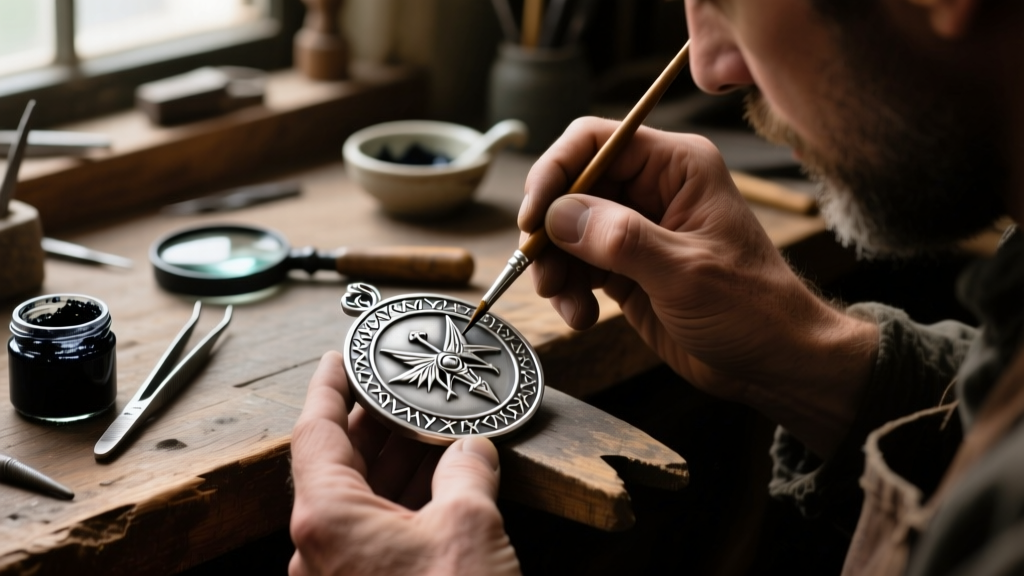
A freshly cast or polished medallion looks like a modern trinket, not a monster hunter's relic. To achieve the signature "Witcher" grime, you must force oxidation. Professional jewelers and prop makers frequently rely on chemical suppliers like Rio Grande for reliable patina solutions. Here is how to age your piece using Liver of Sulfur (LOS), a staple for darkening silver and bronze.
The Chemical Aging Process
- Preparation: Clean the medallion thoroughly with dish soap and a soft brush to remove any casting oils or polishing compounds. Any residue will cause blotchy oxidation.
- The Bath: In a well-ventilated area, dissolve a pea-sized amount of Liver of Sulfur gel in a cup of warm (not hot) distilled water. The solution should smell like rotten eggs.
- Oxidation: Submerge the medallion and chain into the solution. For a light antique finish, leave it for 30 seconds. For a deep, blackened grime look, leave it for 2 to 3 minutes, agitating gently.
- Neutralization: Immediately transfer the jewelry to a bath of water mixed with two tablespoons of baking soda to halt the chemical reaction.
- Selective Polishing: Once dry, the piece will be uniformly black. Use 1000-grit sandpaper, a Scotch-Brite pad, or a jewelry polishing cloth to gently buff the high-relief areas (the wolf's snout, the outer rim, the raised runes). Leave the recessed areas black to simulate decades of accumulated dirt and shadow.
Pro-Tip: If you are using a 3D-printed resin master for lost-wax casting, ensure your sprue placement does not obscure the intricate facial details of the wolf. Place the sprue on the flat back or the top bail loop to minimize post-casting cleanup on the front face.

Phase 4: Styling the Witcher Necklace in 2026
The challenge of wearing fantasy jewelry in everyday life is avoiding the "costume" trap. In 2026, the trend in menswear and alternative fashion leans heavily into "dark academia," rugged utilitarianism, and subtle geek-chic. Crafting communities on platforms like Instructables have long championed the integration of prop replicas into daily wardrobes, provided the styling is grounded in modern silhouettes.
Neckline Pairings and Layering Frameworks
- The Henley & Leather Combo: The medallion shines best against textured fabrics. A dark olive or charcoal henley shirt, left unbuttoned at the top, provides a perfect V-shaped canvas for the 26-inch chain. Layer a distressed brown leather moto-jacket over it. The metal will catch the light against the matte cotton and leather.
- The Minimalist Crew Neck: For a more subtle approach, wear the necklace over a high-quality, heavyweight black crew neck t-shirt. The contrast between the dark cotton and the antiqued bronze creates a striking, understated focal point.
- Multi-Strand Layering: To integrate the medallion into a bohemian or wanderer aesthetic, pair the metal chain with a secondary 2mm black leather cord worn slightly higher (around 20-22 inches). This breaks up the visual weight of the heavy metal chain and adds an organic, rugged texture to the neckline.
- Avoid the Formal Clash: Never wear the witcher necklace with a crisp button-down dress shirt or a suit. The aggressive, feral nature of the wolf motif clashes with the structured, clean lines of formal tailoring. Keep it relegated to casual, streetwear, or outerwear ensembles.
Maintenance and Long-Term Care
Because the medallion is designed to look weathered, you do not need to baby it. In fact, natural skin oils, sweat, and friction will only enhance the antiqued finish over time, wearing down the high points and darkening the crevices. However, if you used a brass blackener or acrylic washes instead of a true chemical patina, the finish may rub off onto your skin or clothing. To seal a surface-level patina, apply a micro-thin coat of Renaissance Wax or a matte jewelry sealant, allowing it to cure for 24 hours before wearing. With the right materials and styling, your witcher necklace will serve as a durable, conversation-starting artifact that bridges the gap between fantasy lore and contemporary fashion.


