Emerald Clover Necklace Value Guide: 2026 Pricing & Buying Tips
Discover the true value of an emerald clover necklace in 2026. Compare pricing tiers, natural vs. lab stones, and metal grades to buy smart.

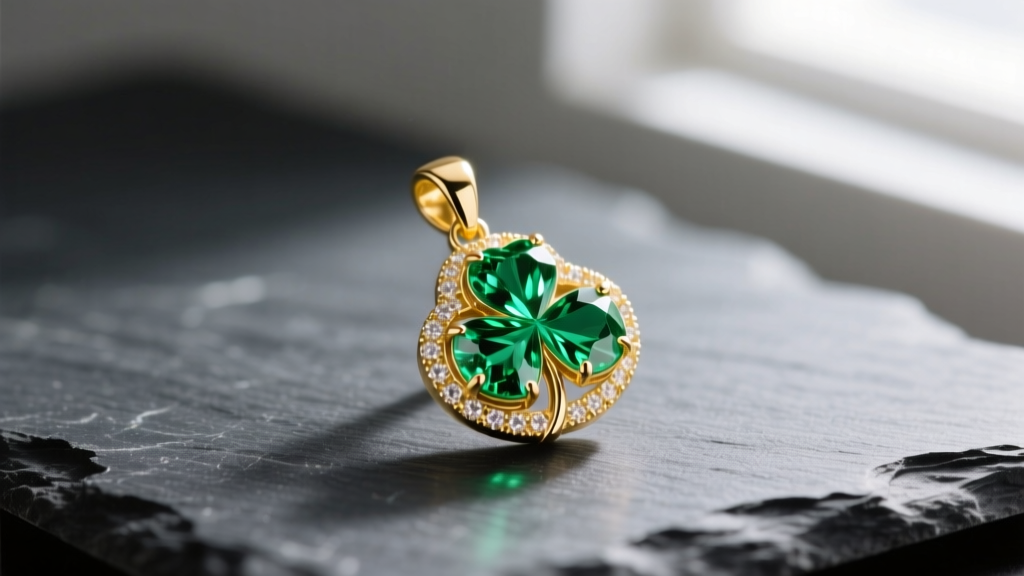
The Anatomy and Appeal of the Emerald Clover Necklace
The clover motif has been a symbol of luck and prosperity for centuries, but its modern incarnation in fine jewelry was largely popularized in 1968 with the introduction of the iconic Alhambra collection by Van Cleef & Arpels. Today, an emerald clover necklace represents a highly specific intersection of heritage design and vivid gemology. However, as we navigate the 2026 jewelry market, the price disparity between a genuine, investment-grade piece and a mass-market imitation has never been wider. Understanding the true value of these pendants requires a deep dive into lapidary techniques, gemstone treatments, and precious metal allocations.
Unlike standard round or oval pendants, the four-leaf clover shape presents unique structural challenges. The four distinct, curved outer edges of the clover are vulnerable to impact. When paired with an emerald—a gemstone belonging to the beryl family (Be3Al2(SiO3)6) with a Mohs hardness of 7.5 to 8—the risk of chipping at the girdle is substantial. Therefore, the the most critical factor in assessing the value of an emerald clover necklace is the setting. High-value pieces will almost exclusively utilize a precision-crafted bezel setting that wraps entirely around the clover's perimeter, whereas lower-tier or poorly engineered pieces may use prongs that leave the curved edges exposed to catastrophic failure.
2026 Pricing Tiers: What Should You Actually Pay?
To accurately assess value, we must segment the market into four distinct tiers. The prices below reflect 2026 retail averages for a standard 15mm to 18mm clover pendant, excluding the chain.
| Market Tier | Stone Type | Metal & Setting | Estimated Price Range | Value Retention |
|---|---|---|---|---|
| Entry / Fashion | Simulated / Nano-Emerald | 925 Sterling Silver / Vermeil | $80 - $350 | Poor (Depreciates immediately) |
| Accessible Luxury | Lab-Grown (Hydrothermal) | 10K or 14K Solid Gold | $600 - $1,800 | Fair (Retains ~30% resale) |
| Fine Jewelry | Natural AA Grade | 18K Gold with Bezel | $2,500 - $8,500 | Good (Retains ~60% resale) |
| Investment / Heritage | Natural AAA / Untreated | Platinum or 18K Gold | $15,000 - $60,000+ | Excellent (Appreciates over time) |
When shopping, always demand a a gemstone certificate for any piece priced above $3,000. Reputable grading labs like the Gemological Institute of America (GIA) provide detailed reports on origin, treatment levels, and color grading, which are non-negotiable for fine jewelry investments.
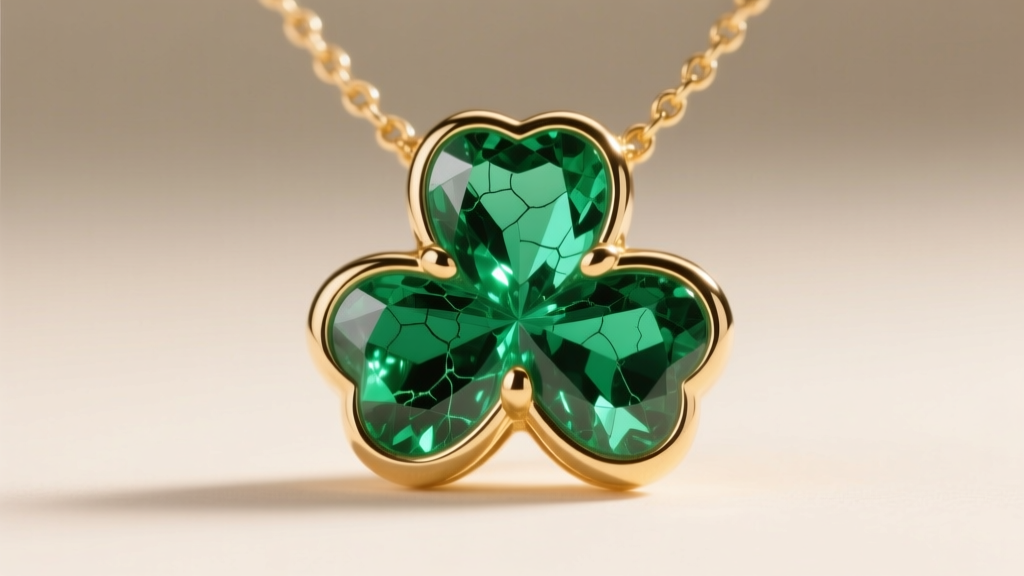
Natural vs. Lab-Grown: The 2026 Market Shift
The most significant factor dictating the price of your emerald clover necklace is the origin of the stone. In 2026, lab-grown hydrothermal emeralds have achieved near-perfect color saturation, often mimicking the highly coveted Colombian "Muzo" green. Chemically and optically identical to mined stones, lab-grown emeralds typically cost 70% to 85% less than their natural counterparts.
Understanding Treatments and the "Jardin"
Natural emeralds are famous for their "jardin" (French for garden)—the internal network of liquid and gas inclusions that form during the stone's crystallization. While heavily included stones are brittle and less valuable, a completely flawless natural emerald is exceptionally rare and commands a massive premium. According to the International Gem Society (IGS), nearly 99% of natural emeralds undergo clarity enhancement, typically through cedar oil or polymer resins.
Crucial Care Warning: If you purchase a natural, oil-treated emerald clover pendant, you must never clean it in an ultrasonic cleaner or use harsh chemical solvents. The vibrations and heat will expel the oil, leaving the stone looking cloudy and fractured. Lab-grown emeralds, which are generally inclusion-free and untreated, do not suffer natively to ultrasonic cleaning, making them a highly practical choice for everyday wear.
Metal Choices: 14K vs. 18K Gold Settings
The metal framing your emerald clover necklace drastically influences both its aesthetic warmth and its long-term durability. Because the clover motif relies on smooth, continuous curves, the metal must be malleable enough for a jeweler to craft a seamless bezel, yet durable enough to hold its shape.
- 14K Gold (58.5% pure gold): Harder and more resistant to scratching. It is the preferred choice for bezel settings on emeralds because the prongs or bezel walls can be made slightly thinner while maintaining structural integrity. However, the higher alloy content (often copper and zinc) can give the gold a slightly paler yellow hue, which may clash with the cool, deep green of a high-grade emerald.
- 18K Gold (75% pure gold): The industry standard for luxury clover necklaces. The rich, buttery yellow of 18K gold provides a stunning complementary contrast to the vivid green of the emerald. While slightly softer than 14K, an 18K bezel is thick enough to protect the stone while offering the premium luster expected in fine jewelry.
- Platinum: Rarely used for traditional vintage-style clover motifs due to its stark white color, which can wash out the warmth of the green stone. However, for modern, geometric clover interpretations, platinum offers unparalleled durability and requires rhodium plating.
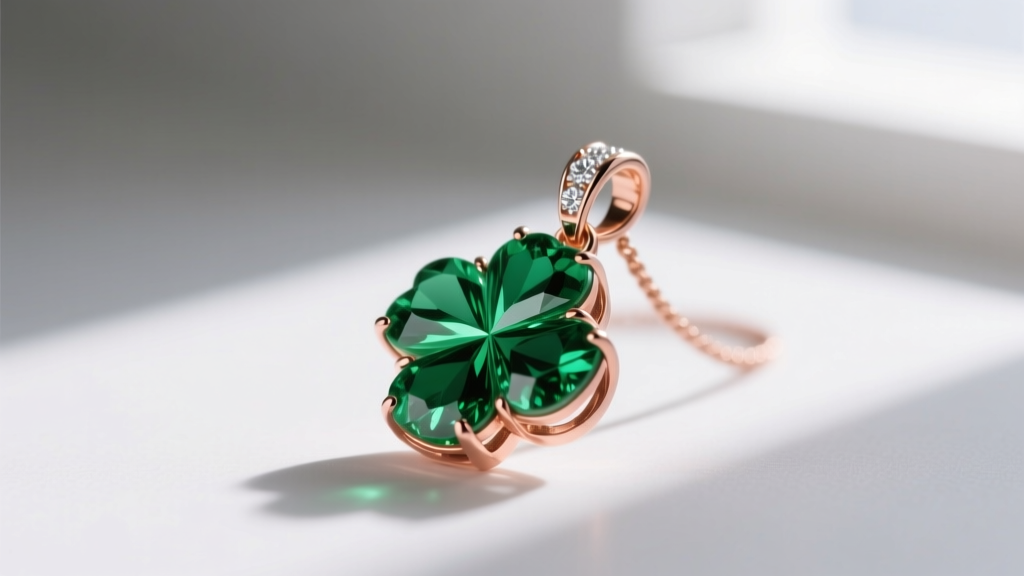
Red Flags: Spotting Overpriced or Fake Pieces
The secondary market and online boutiques are saturated with mislabeled emerald clover necklaces. To protect your budget, watch out for these specific failure modes and deceptive practices:
- "Emerald" Glass or Dyed Beryl: Some retailers sell dyed green beryl (the pale, non-gem-quality cousin of the emerald) or even green glass as "emerald." If the stone lacks internal depth and the color is concentrated in surface-reaching fractures, it is likely dyed. The price should not exceed $150.
- Epoxy Resin Fillers: Low-grade natural emeralds are sometimes filled with hard epoxy resins to mask severe fracturing. Over time, these resins yellow and shrink, ruining the stone's appearance. Always check the GIA or AGS report for the exact type of clarity enhancement.
- Glued-In Stones: In mass-market silver clover necklaces, the "emerald" is often merely glued into the bezel rather than secured by folded metal. This is a major red flag; the stone will inevitably pop out upon minor impact.
- Hollow Backs: To save on gold weight, some manufacturers hollow out the back of the clover pendant. While this lowers the price, it makes the piece highly susceptible to denting and prevents proper light refraction through the stone.
Final Verdict: Maximizing Your Investment
An emerald clover necklace is a timeless silhouette that bridges the gap between symbolic charm and high gemology. If your Apple is heirloom quality and investment retention, allocate your budget toward an 18K gold bezel setting housing a natural, minor-oil-treated AA or AAA grade emerald. If your priority is vivid color, everyday durability, and ethical sourcing without the anxiety of damaging a fragile natural stone, a hydrothermal lab-grown emerald set in 14K gold offers the best value-to-beauty ratio in 2026. Regardless of your tier, insist on a secure bezel setting, verify the treatment disclosures, and pair your pendant with a sturdy, appropriately gauged chain to ensure your lucky clover stands the test of time.


