Emerald Necklace Choker: A Gemological & Technical Buyer's Guide
Discover the technical nuances of selecting an emerald necklace choker. We analyze gem treatments, setting mechanics, and chain gauges for lasting wear.

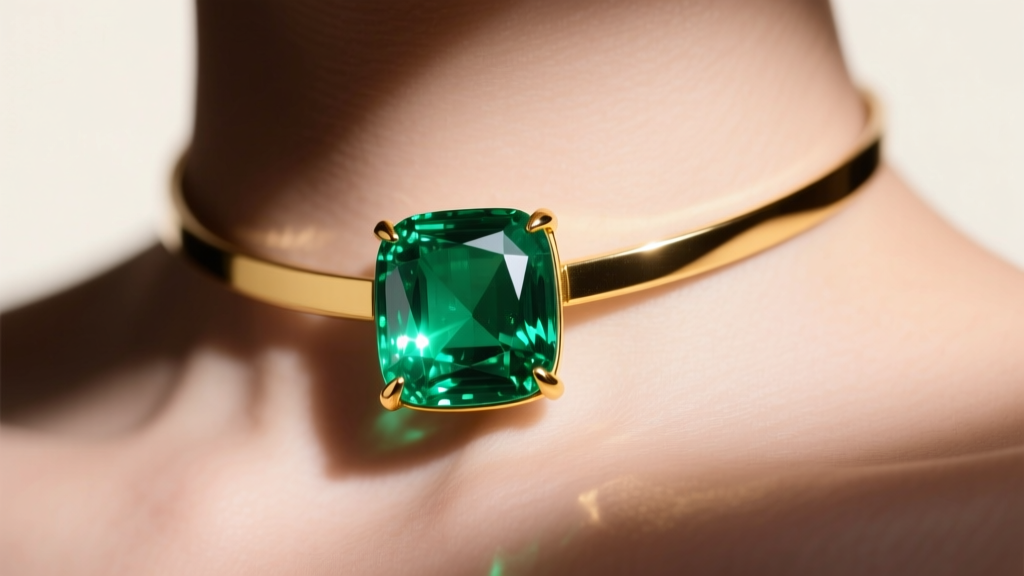
The Engineering Challenge of Emerald Chokers
Designing and wearing an emerald necklace choker presents a unique intersection of gemological vulnerability and mechanical stress. Unlike longer pendants that rest statically on the sternum, a choker (typically 14 to 16 inches in length) sits directly on the clavicle and base of the neck. This area is subject to constant kinetic movement: swallowing, turning the head, and looking down. When you pair this high-stress environment with emerald—a Type III clarity gemstone known for its inherent structural brittleness—the need for precise engineering becomes paramount. This guide bypasses basic aesthetic advice to provide a technical deep dive into the gemological grading, setting mechanics, and metallurgical requirements necessary for a durable emerald choker.
Gemological Deep Dive: Evaluating Emerald Quality
Emerald is the green variety of beryl, scoring a 7.5 to 8 on the Mohs hardness scale. However, hardness (scratch resistance) must not be confused with toughness (resistance to chipping). Due to its characteristic internal inclusions, known in the trade as 'jardin', emerald possesses poor to fair toughness. When evaluating stones for a choker, where accidental impacts against desks or mirrors are frequent, clarity and treatment history dictate the stone's survivability.
The Clarity and Treatment Matrix
Virtually all commercial emeralds undergo clarity enhancement to fill surface-reaching fractures. The type of filler drastically impacts both the stone's value and its maintenance requirements. The Gemological Institute of America (GIA) categorizes these treatments on a specific enhancement scale. Below is the technical breakdown of common fillers used in choker centerpieces:
| Treatment Type | Refractive Index (RI) | Stability | Ultrasonic Safety | Market Value Impact |
|---|---|---|---|---|
| None (Untreated) | N/A | Excellent | Moderate | Base + 300-500% |
| Cedarwood Oil | 1.52 | Poor (Dries out) | Fail (Leaches) | Standard Baseline |
| Opticon (Resin) | 1.55 - 1.57 | High | Fail (Clouds) | Base - 20% |
| Epoxies/Polymers | 1.58+ | Permanent | Fail (Cracks) | Base - 50%+ |
For an emerald necklace choker intended for daily wear, minor-to-moderate cedar oil is the traditional and most accepted treatment. However, buyers must be aware that body heat and environmental factors will cause the oil to degrade over 12 to 18 months, requiring professional re-oiling in a vacuum chamber to maintain optical clarity.
Color Saturation and Skin Undertones
From a colorimetry perspective, the most valued emeralds exhibit a bluish-green hue with medium-dark tone and vivid saturation. In choker designs, the stone sits directly against the skin of the neck. Stones with high iron content (often Zambian emeralds) lean darker and can appear black against deep skin tones unless set in high-polish 18k yellow gold to reflect ambient light. Colombian emeralds, driven by chromium and vanadium, offer higher fluorescence and brightness, making them optically superior for chokers worn in low-light evening settings.
Structural Mechanics: Settings That Survive Neck Movement
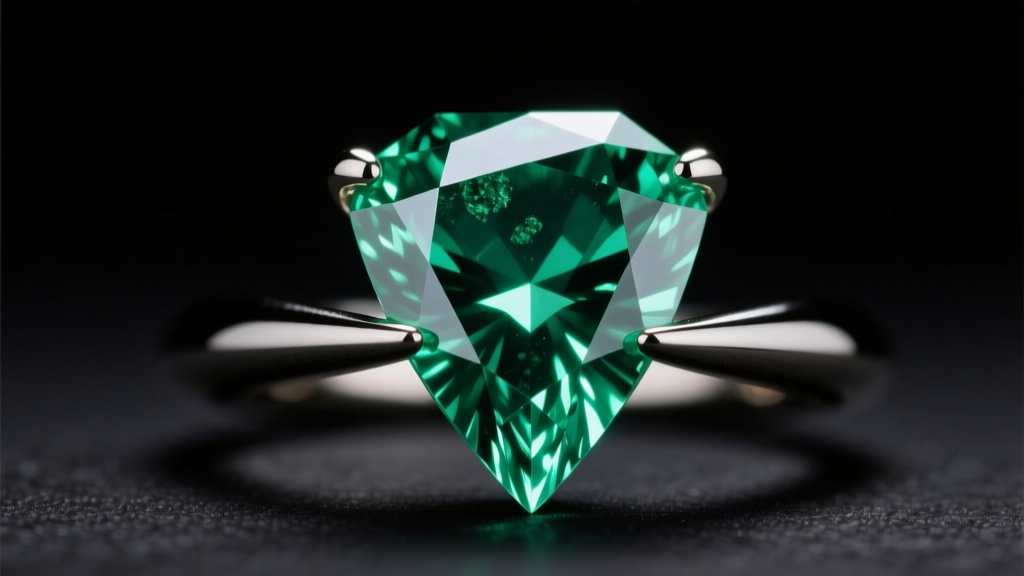
The setting of an emerald choker must mitigate tensile stress and protect the stone's vulnerable culet and crown corners. Standard prong settings, while maximizing light return, are a mechanical liability for emeralds in high-movement jewelry.
Bezel vs. Prong: Stress Distribution Analysis
A full bezel setting is the gold standard for emerald chokers. By wrapping a continuous rim of metal (ideally 0.3mm to 0.5mm thick) around the gemstone's girdle, the bezel absorbs lateral impact forces that would otherwise shatter the stone. For designers who demand the brilliance of an open setting, a modified V-prong configuration is mandatory. Standard rounded prongs exert point-pressure on the stone's corners. V-prongs, however, cradle the 90-degree angles of an emerald cut or princess cut, distributing kinetic energy across the metal rather than the brittle beryl lattice.
The Danger of Tension Settings
Tension settings rely on the compressive force of the metal band to hold the stone, often exerting up to 12,000 PSI of pressure on the girdle. While this works flawlessly for diamonds (Mohs 10, excellent toughness), applying this pressure to an included emerald will result in catastrophic structural failure. Never purchase an emerald choker utilizing a true tension setting.
Chain Gauge and Clasp Engineering for 14-16 Inch Lengths
The biomechanics of the human neck dictate that neck circumference can expand by up to 15mm during swallowing or muscle flexion. A rigid 15-inch choker without an extender will place immense tensile strain on the chain links and clasp mechanism.
- Chain Gauge: For a pendant-style emerald choker, the chain must possess a minimum wire gauge of 1.2mm. Cable, rolo, or wheat chains are preferred over snake chains, which are prone to permanent kinking when subjected to the repetitive bending of the neck.
- Extender Chains: A 20mm to 30mm extender chain is not merely a sizing convenience; it is a mechanical shock absorber. It prevents the clasp from bearing the full brunt of neck expansion forces.
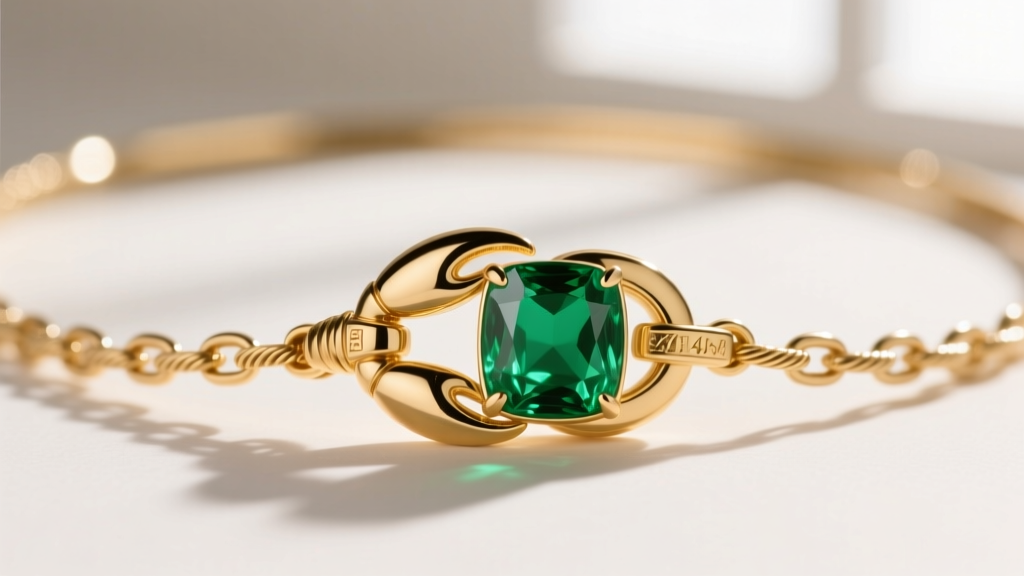
- Clasp Mechanisms: Spring ring clasps are entirely inadequate for heavy emerald centerpieces. A minimum 10mm lobster claw clasp, or a hidden box clasp equipped with double figure-8 safety catches, is required to prevent accidental unclasping and subsequent loss of the jewel.
Real-World Troubleshooting: The Cedar Oil Failure Mode
The most common point of failure for emerald necklace chokers occurs not from physical impact, but from improper maintenance by the end-user. Because 90% of emeralds are treated with cedar oil, exposure to ultrasonic jewelry cleaners is catastrophic. The high-frequency acoustic cavitation, combined with the heat and alkaline surfactants in standard cleaning solutions, will rapidly dissolve the oil filler.
Expert Insight: If an emerald in your choker suddenly appears opaque, white, and heavily fractured after cleaning, the stone has not cracked. The oil has simply been stripped from the surface-reaching fissures. The stone must be sent to a lapidary for dehydration and re-impregnation in a heated vacuum chamber.
To maintain an emerald choker safely, utilize only a soft-bristled brush, lukewarm distilled water, and a pH-neutral detergent. Dry immediately with a microfiber cloth to prevent water spotting on the gold or platinum setting.
Pricing Tiers and Market Realities
Understanding the pricing architecture of emerald chokers prevents overpayment for treated stones masquerading as natural investments. Based on current wholesale metrics, pricing for a 2-carat center stone in a 14k gold choker setting generally falls into three tiers:
Synthetic and Lab-Created
Hydrothermal synthetic emeralds offer flawless clarity and deep color at a fraction of the cost. A high-quality synthetic emerald choker typically retails between $400 and $900. While physically identical to natural beryl, they hold zero resale value and are strictly ornamental.
Commercial Natural (Heavily Treated)
Stones with heavy resin or polymer treatments, often sourced from Zambian or Brazilian mines with lower baseline clarity, range from $1,500 to $3,500. These are durable enough for occasional wear but are heavily discounted in the secondary market due to the permanence of the resin fillers.
Fine Natural (Minor Oil)
Colombian or high-grade Zambian emeralds with only minor, traditional cedar oil treatment, set in 18k gold with precision bezel or V-prong engineering, command $8,000 to $25,000+. These pieces are accompanied by reports from the GIA or the American Gem Trade Association (AGTA), verifying the 'Minor' enhancement status and ensuring long-term value retention.
Final Engineering Verdict
An emerald necklace choker is a triumph of jewelry engineering when executed correctly. By prioritizing protective bezel settings, selecting appropriate chain gauges to handle neck biomechanics, and strictly adhering to non-ultrasonic maintenance protocols, you can safely wear one of nature's most fragile, yet breathtaking, gemstones directly against the pulse point.


