Emerald Necklace Indian Care Guide: Cleaning and Storage
Discover expert care, cleaning, and storage tips for your emerald necklace. Indian jewelry requires specific maintenance to protect oiled gems and gold.

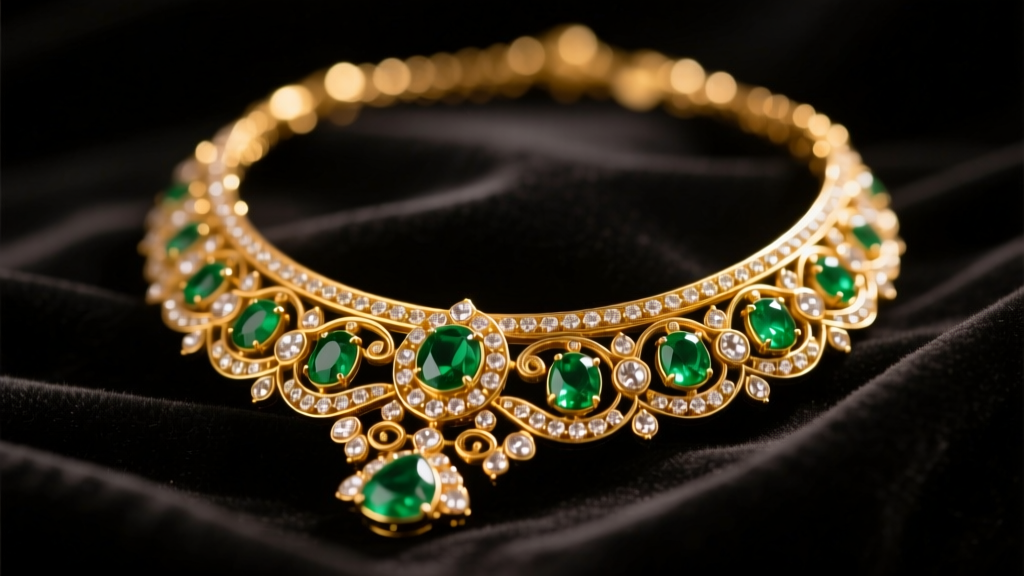
The Gemological Reality: Hardness vs. Toughness in Emeralds
A traditional emerald necklace Indian artisans create is a masterpiece of both gemology and metallurgy, but it is also inherently fragile. To properly care for these heirlooms, we must first separate the myth of the Mohs scale from the reality of gemstone toughness. Emeralds belong to the beryl family and boast a Mohs hardness of 7.5 to 8, meaning they resist surface scratching relatively well. However, their toughness—the ability to withstand impact and pressure—is classified as poor.
This structural vulnerability is due to jardin (French for "garden"), the dense network of internal fractures and liquid inclusions that give emeralds their unique fingerprint. Because of these natural fissures, over 90% of the world's emeralds are treated with oils (like cedar oil) or synthetic resins (like Opticon) to mask fractures and enhance color saturation. When you are cleaning an emerald necklace, Indian heritage settings introduce further complexities, such as 22-karat gold purity, Jadau lac backing, and delicate Meenakari enameling. Standard commercial jewelry cleaning methods will destroy these elements instantly.
The Hidden Dangers: What Destroys Indian Emerald Jewelry?
Before reaching for a cleaning cloth, you must understand the specific failure modes of Indian emerald jewelry. The intersection of treated gemstones and traditional Indian setting techniques creates a matrix of vulnerabilities:
- Ultrasonic Cleaners: The high-frequency vibrations in ultrasonic baths will aggressively shake the internal jardin, often causing the emerald to fracture or shatter completely. Furthermore, the vibrations can loosen the delicate 24k gold foil strips used in Kundan settings.
- Steam Cleaners: Heat is the enemy of fracture-filled emeralds. Steam will melt or evaporate the cedar oil inside the stone, causing the fractures to turn chalky white and the gem to lose its translucency. Heat also softens the lac (a natural shellac-based resin) used to secure stones in Jadau and Polki work, leading to stones falling out of their bezels.
- Chemical Solvents: Alcohol, acetone, and harsh degreasers will strip the oil from the emerald. Additionally, these chemicals can cause irreversible clouding to the silver or gold foiling placed behind the stone to reflect light.
- Abrasion: While the emerald itself might resist scratching, the 22k gold settings and the Meenakari (enamel) work on the reverse side are incredibly soft and easily marred by stiff bristles or abrasive polishing cloths.
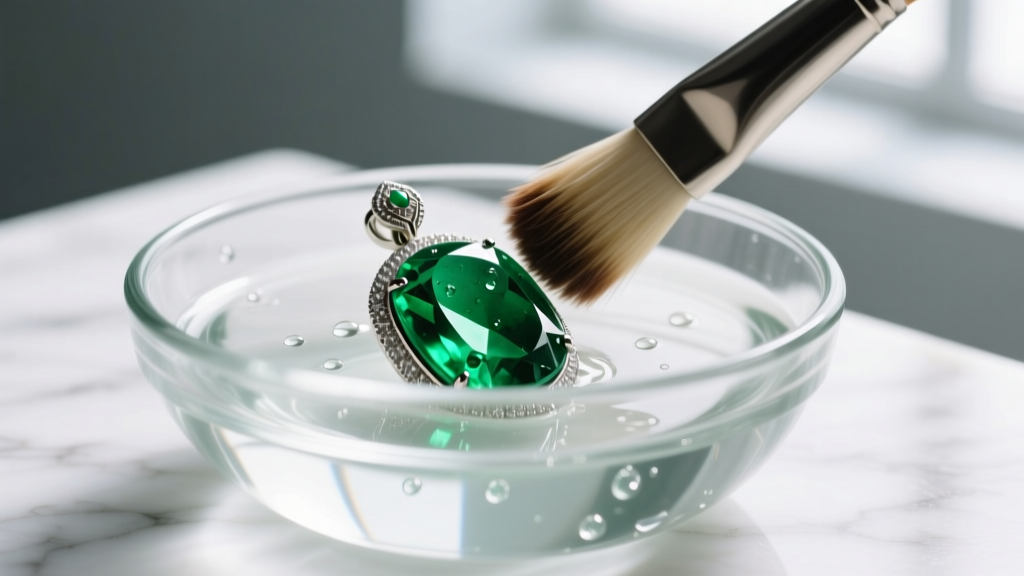
Step-by-Step Cleaning Protocol for Indian Emerald Necklaces
To safely remove skin oils, cosmetic buildup, and environmental dust, follow this strict, non-invasive cleaning protocol. This method is endorsed by gemological conservation standards for fragile, oil-treated beryls.
1. Preparation and Solution Mixing
Never use tap water, as the chlorine and heavy minerals can leave micro-deposits in the emerald's surface-reaching fractures. Instead, fill a small glass bowl with lukewarm distilled water. Add exactly two drops of a pH-neutral, dye-free cleanser, such as baby shampoo or a specialized gemological surfactant. Avoid any detergent containing moisturizers or citrus degreasers.
2. The Brief Soak
Submerge the emerald necklace in the solution for no more than three to five minutes. This brief window is enough to soften surface sebum and cosmetic residue without allowing water to penetrate the Kundan lac backing or compromise the Meenakari enamel on the reverse side.
3. Gentle Agitation
Using an extra-soft baby toothbrush or a specialized gem-cleaning brush with natural hair bristles, gently sweep the surface of the emerald. Critical Rule: Never scrub the back of the stone or the gold bezel. In Indian Kundan jewelry, the stone is held in place by pressure from refined gold strips and a lac base; aggressive brushing from the back can dislodge the stone or scratch the reflective foil.
4. Rinsing and Drying
Rinse the necklace under a very gentle stream of lukewarm distilled water. Do not plug the sink; use a strainer to prevent accidental loss if a stone is loose. Pat the piece dry with a lint-free microfiber cloth. Allow it to air-dry completely in a cool, shaded area before storing. Never use a hairdryer or place it in direct sunlight to accelerate drying.
Cleaning Methods & Safety Matrix
Use the following data table to quickly assess the safety of common jewelry cleaning methods when maintaining your Indian emerald pieces.
| Cleaning Method | Safety Level | Reasoning & Risk Factors |
|---|---|---|
| Lukewarm Distilled Water & Mild Soap | Safe | Removes surface oils without stripping internal fracture fillings or damaging lac. |
| Ultrasonic Cleaning | Extreme Risk | Vibrations shatter the jardin; loosens Kundan gold foil and lac settings. |
| Steam Cleaning | Extreme Risk | Heat evaporates cedar oil/resins; melts Jadau lac; damages Meenakari enamel. |
| Commercial Silver/Gold Dips | High Risk | Acidic thiourea compounds will permanently cloud the emerald and strip oils. |
| Microfiber Polishing Cloth | Safe (Gold Only) | Safe for 22k gold chains; avoid rubbing the emerald surface or enamel backing. |
Re-Oiling and Professional Gemological Maintenance
Over time, the natural oils inside an emerald will dry out or leach away due to environmental exposure. According to the Jewelers of America, an emerald that has lost its oil will exhibit a chalky, whitish appearance within its fractures and a noticeable drop in color saturation.
If your emerald necklace shows these signs, do not attempt to oil it yourself with household oils, which can turn rancid and yellow over time. Take the piece to a certified lapidary or a specialized Indian heritage jeweler. They will use a vacuum chamber to gently extract old, degraded fillers and introduce fresh, unhardened cedar oil or a stable synthetic polymer like Opticon under controlled pressure. This process restores the stone's optical clarity and structural stability without altering its natural color.
"An emerald's beauty is inextricably linked to its inclusions. Caring for it means accepting that the stone is a living, breathing matrix of geology that requires a gentle, chemical-free environment to thrive." — Gemological Conservation Guidelines
Storage and Humidity Control for Heirloom Pieces
How you store your emerald necklace is just as critical as how you clean it. Indian jewelry often features mixed media—emeralds, uncut diamonds (Polki), pearls, and 22k gold—all of which have different environmental tolerances.
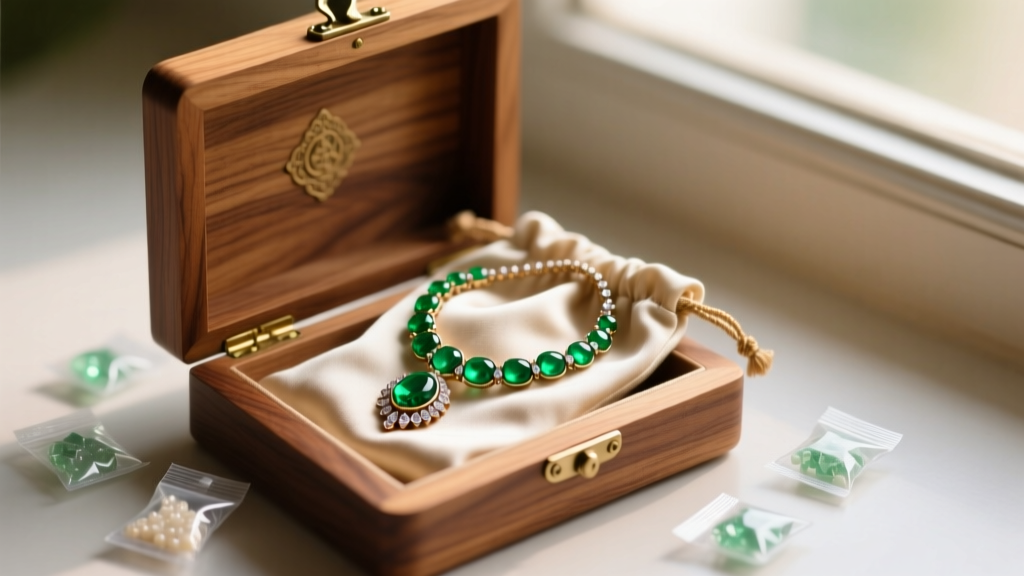
- Isolate from Harder Gems: While emeralds are relatively hard, diamonds and sapphires (Mohs 9 and 10) will easily scratch them. Always store your emerald necklace in its own individual anti-tarnish flannel pouch or a separate compartment lined with soft velvet.
- Humidity Management: Extreme dryness can accelerate the evaporation of the emerald's internal oils, while high humidity can cause the natural lac in Kundan settings to degrade or harbor mold. Store the necklace in a cedar-lined wooden jewelry box with a few silica gel packets to maintain a stable, moderate humidity level (around 40-50%).
- Lay Flat to Prevent Chain Stress: Heavy Indian temple necklaces or multi-strand emerald chokers should be stored flat. Hanging them on a hook places continuous tension on the 22k gold links and silk threading, leading to metal fatigue and eventual snapping.
Expert Troubleshooting: Loose Stones and Foil Tarnish
If you notice a stone rattling slightly when you gently tap the setting, or if the emerald appears dull and grayish from the front, the issue is likely the Kundan backing. In traditional Indian Jadau work, a piece of silver or gold foil is placed behind the gem to act as a mirror. If moisture breaches the bezel, this foil tarnishes or oxidizes, robbing the emerald of its reflective brilliance.
Do not attempt to pry the bezel open to clean the foil. The 22k gold or pure Kundan strips are incredibly soft and will tear or warp. Instead, seek out a master craftsman (a Karigar) who specializes in Jadau restoration. They can safely lift the stone, replace the oxidized foil, reapply the lac, and reseal the bezel using traditional agate burnishing tools, ensuring your heirloom remains structurally sound and visually breathtaking for generations to come.


