2026 Emerald Statement Necklace Trends & Styling Guide
Discover 2026 emerald statement necklace trends, gemological grading, setting engineering, and expert neckline pairings for fine jewelry.

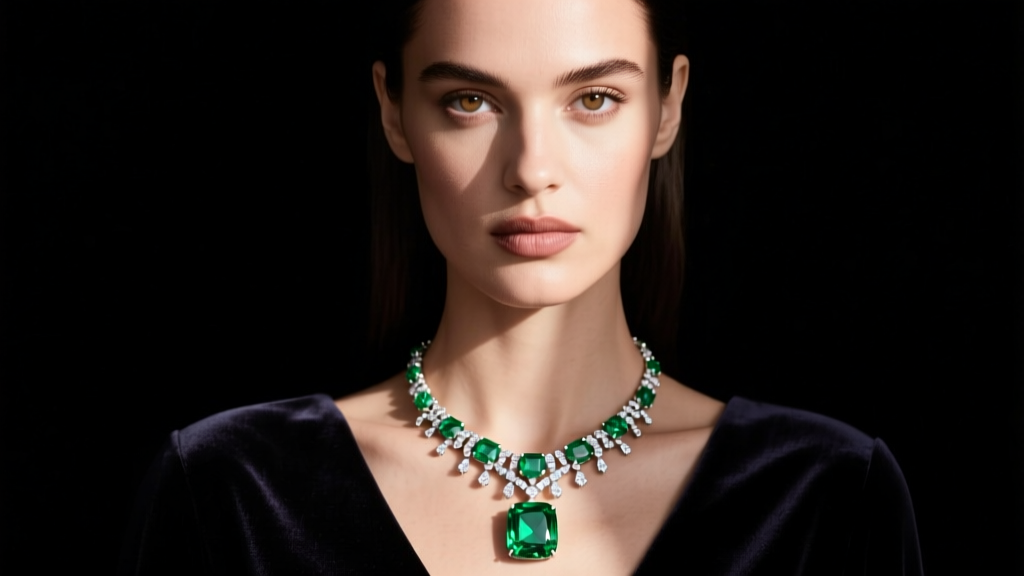
The landscape of high jewelry is undergoing a seismic shift as we move through 2026. While minimalist gold chains and subtle diamond pendants dominated the early 2020s, the current red carpet and haute couture runways are demanding volume, color, and unapologetic botanical energy. At the center of this maximalist renaissance is the emerald statement necklace. No longer confined to traditional, stiff collars, today's emerald masterpieces are architectural, asymmetrical, and deeply connected to the raw, unpolished beauty of nature.
The 2026 Shift: Redefining the Emerald Statement Necklace
In 2026, the definition of a 'statement piece' has evolved beyond mere carat weight. The modern emerald statement necklace is defined by kinetic movement and mixed lapidary techniques. Designers are juxtaposing highly polished, precision-cut emerald cabochons with raw, uncut hexagonal crystals. This contrast speaks to a broader luxury trend that values organic authenticity over sterile perfection. Furthermore, convertible engineering is paramount; high-end houses are creating necklaces that dismantle into brooches, hair cuffs, and smaller pendants, maximizing the utility of these six-figure investments.
Gemological Deep Dive: Colombian vs. Zambian Origins
When investing in a centerpiece emerald, understanding the geological origin is non-negotiable. The market is currently split between the legendary warmth of Colombian stones and the striking, cool clarity of Zambian emeralds. According to the Gemological Institute of America (GIA), trace elements like chromium, vanadium, and iron dictate not just the color, but the inherent stability of the crystal lattice. Under a Chelsea color filter, chromium-rich Colombian stones typically fluoresce a vibrant red, whereas vanadium-dominant Zambian stones often remain inert or show a weak pink hue—a critical field test for gemologists verifying origin at auction.
| Feature | Colombian (Muzo/Chivor) | Zambian (Kagem) | Brazilian (Itabira) |
|---|---|---|---|
| Color Profile | Warm, intense pure green | Cool, bluish-green | Lighter, yellowish-green |
| Clarity & Jardin | Heavy inclusions (jardin) | Eye-clean to moderate | Moderate, distinct veils |
| Standard Treatment | Traditional cedar oil | Epoxy/Polymer resin | Light oiling |
| Avg Price/Carat (Fine) | $15,000 - $80,000+ | $5,000 - $35,000 | $2,000 - $18,000 |
For a true statement necklace, Zambian emeralds are increasingly favored by avant-garde designers in 2026. Their higher natural clarity allows for larger, step-cut stones that don't require heavy fracture-filling, making them more durable for the physical stress of a heavy necklace mount.
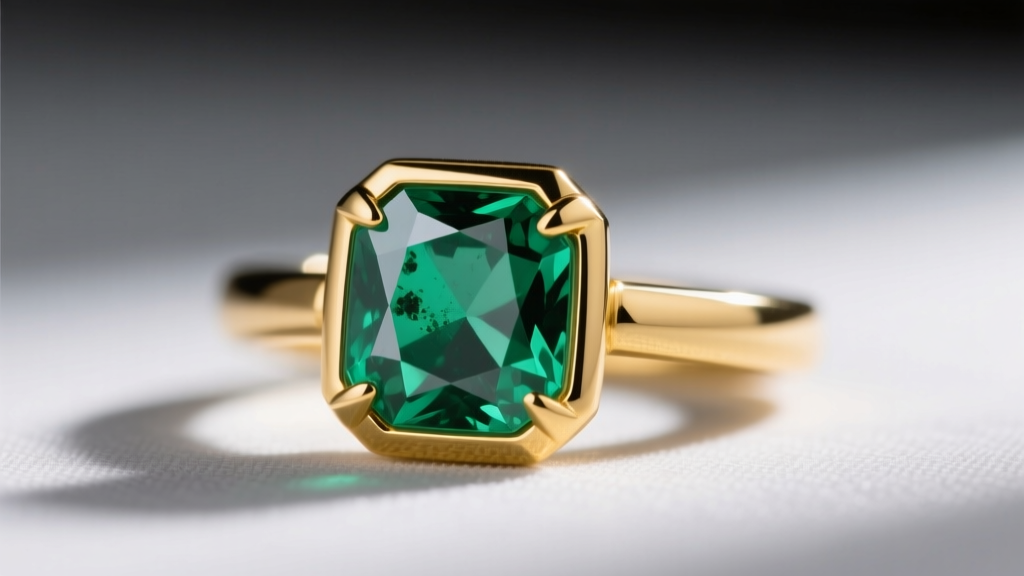
Structural Integrity: Engineering Settings for High Carats
Emeralds rank 7.5 to 8 on the Mohs scale of hardness, but their toughness (resistance to breaking) is notoriously poor due to internal fractures and surface-reaching fissures. A statement necklace weighing over 50 grams places immense torque on the central setting. If the wearer turns their head quickly, the inertia can snap a weak prong or shatter the stone against the collarbone.
Why Bezel Beats Prong for Statement Pieces
While prong settings maximize light return, they leave the brittle corners of an emerald exposed. The 2026 standard for high-carat emerald statement necklaces is the custom-milled 18k gold bezel. Master jewelers prefer 18k yellow gold over platinum for bezels because gold's higher malleability allows the setter to burnish the metal tightly against the stone's girdle without the sheer stiffness of platinum chipping the emerald's edge. A half-bezel setting is acceptable only if the protected corners align with the stone's natural fracture planes, verified via microscopic gemological mapping.
Neckline Architecture: Pairing Proportions Perfectly
A statement necklace must engage in a dialogue with the garment's architecture. The wrong pairing can visually truncate the neck or overwhelm the wearer's frame. Here is the 2026 framework for pairing emerald masterpieces with specific necklines:
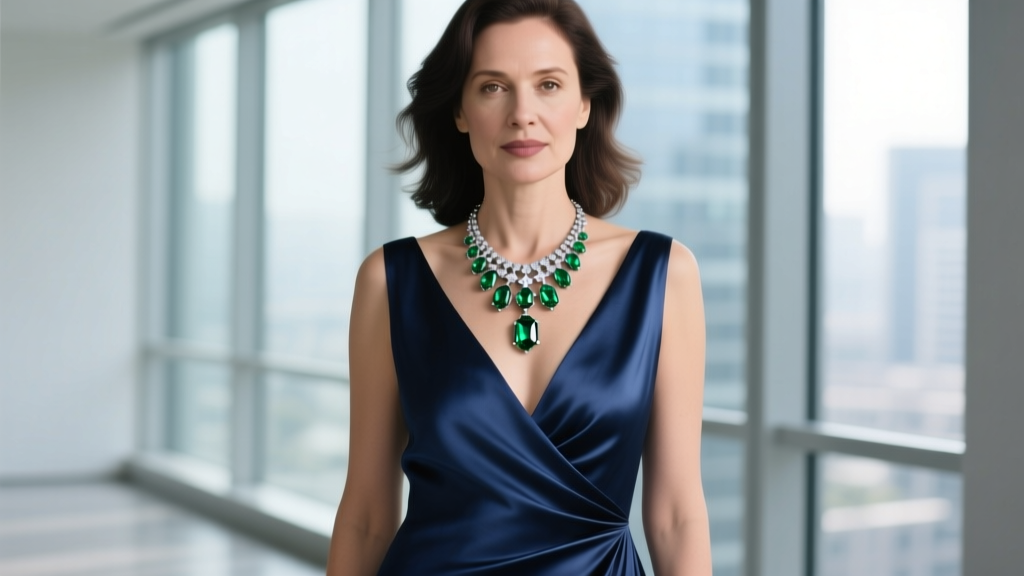
- The Plunging V-Neck: Demands a Y-drop or lariat configuration. The central emerald cluster should terminate exactly two inches above the garment's hemline, drawing the eye vertically without crossing the fabric's structural seams.
- The Sweetheart Bodice: Requires a collar or choker length (14 to 15 inches). The emerald elements should sit entirely on the skin, avoiding the dress's bustline to prevent a cluttered, competitive visual.
- The Asymmetrical One-Shoulder: Best matched with an organic, asymmetrical bib necklace. The heavier emerald clusters should cascade down the side opposite the shoulder strap, balancing the garment's inherent visual weight.
- The High Halter: Avoid traditional necklaces entirely. Instead, opt for a detachable emerald statement pendant that clasps directly onto the halter's structural hardware, a major trend seen on the Spring 2026 runways.
Investment vs. Occasion: Navigating the Price Tiers
The term 'statement necklace' spans a massive financial spectrum. Understanding where your piece falls is critical for insurance and acquisition strategies.
'A true investment-grade emerald statement necklace isn't just about the total carat weight; it's about the provenance of the rough and the absence of synthetic polymer treatments. Cedar oil is a historical necessity; epoxy is a modern compromise.' — Dr. Elena Rostova, Master Gemologist Appraiser
Tier 1: Haute Joaillerie ($150,000 - $2M+)
Features untreated or minimally oiled Colombian emeralds over 10 carats per stone, set in platinum and 24k gold alloys. These are museum-grade pieces, often sold at auction houses like Christie's or Sotheby's, and require specialized vault storage and scheduled riders on fine art insurance policies (such as Chubb or AXA Art).
Tier 2: Fine Jewelry Statement ($25,000 - $120,000)
Utilizes high-quality Zambian or treated Colombian stones, often accented with diamond pavé. These are the staples of red-carpet lending houses and are engineered for repeated wear, featuring reinforced safety catches and Kevlar-threaded internal wiring to prevent catastrophic chain failure.
Tier 3: Semi-Fine & Lab-Grown ($2,000 - $15,000)
The fastest-growing segment in 2026. Hydrothermal lab-grown emeralds offer flawless clarity and identical chemical composition without the jardin. While they lack geological rarity, they allow designers to create massive, 100-carat statement bib necklaces that would be physically impossible to source in nature, democratizing the bold, botanical aesthetic.
Care and Maintenance: The Reality of Oiled Emeralds
The most common point of failure for emerald statement necklaces occurs during cleaning. As noted by GIA's care guidelines, ultrasonic cleaners and steamers will boil the cedar oil out of the stone's surface-reaching fractures, leaving the emerald looking cloudy, white, and heavily fractured. Furthermore, the high-frequency vibrations can literally shake a fragile, heavily included stone apart.
To maintain a high-carat emerald necklace, use only lukewarm distilled water, a pH-neutral soap, and a baby-soft hairbrush. Gently sweep the back of the settings where skin oils and cosmetics accumulate. Once a decade, the piece should be sent back to the original lapidary to be carefully cleaned and re-oiled in a vacuum chamber, restoring the stone's internal light return and structural stability.
Ultimately, the emerald statement necklace in 2026 is a triumph of geological rarity and engineering prowess. By respecting the stone's inherent vulnerabilities and embracing modern, kinetic design, collectors can wear these verdant masterpieces with both confidence and historical awareness.


