How to Style the Iconic Necklace Nurse Jackie Wears
Learn how to recreate the iconic necklace Nurse Jackie wears. A step-by-step guide to snag-free, sanitizer-proof layered chains for medical pros.


The Anatomy of Jackie Peyton's Signature Look
When analyzing the most iconic jewelry in television history, the necklace nurse jackie wears stands out as a masterclass in character-driven styling. Edie Falco’s portrayal of Jackie Peyton in the hit series Nurse Jackie was defined by a brilliant duality: a tough, uncompromising exterior masking a deeply vulnerable interior. Her jewelry reflected this perfectly. Jackie frequently wore delicate, layered gold chains with small, meaningful pendants—often a subtle cross or a simple geometric disc. This wasn't just a fashion choice; it was a grounding talisman amidst the chaos of the emergency room.
For real-world medical professionals and minimalists alike, recreating this look requires balancing aesthetic elegance with the harsh realities of clinical environments. Hospital policies, infection control protocols, and the constant use of harsh chemicals mean that standard fashion jewelry simply won't survive. This step-by-step guide will teach you how to replicate the iconic necklace nurse jackie wears using medical-grade styling principles, ensuring your jewelry is snag-free, sanitizer-proof, and perfectly proportioned for scrub necklines.
Step 1: Selecting a Sanitizer-Proof Chain
The foundation of Jackie’s layered look is a remarkably delicate chain, typically ranging from 1.0mm to 1.5mm in width. However, in a healthcare setting, the metallurgy of that chain is far more important than its visual profile. According to the Gemological Institute of America (GIA), the alloy composition of gold dictates its chemical resistance. Medical professionals use alcohol-based hand sanitizers (containing 60-70% ethyl or isopropyl alcohol) dozens of times per shift. While alcohol won't dissolve solid gold, it rapidly degrades the copper and zinc alloys in lower-karat gold, strips the rhodium plating off white gold, and completely destroys gold vermeil or plated brass, leading to skin irritation and tarnished metal.
Material Breakdown for Healthcare Workers
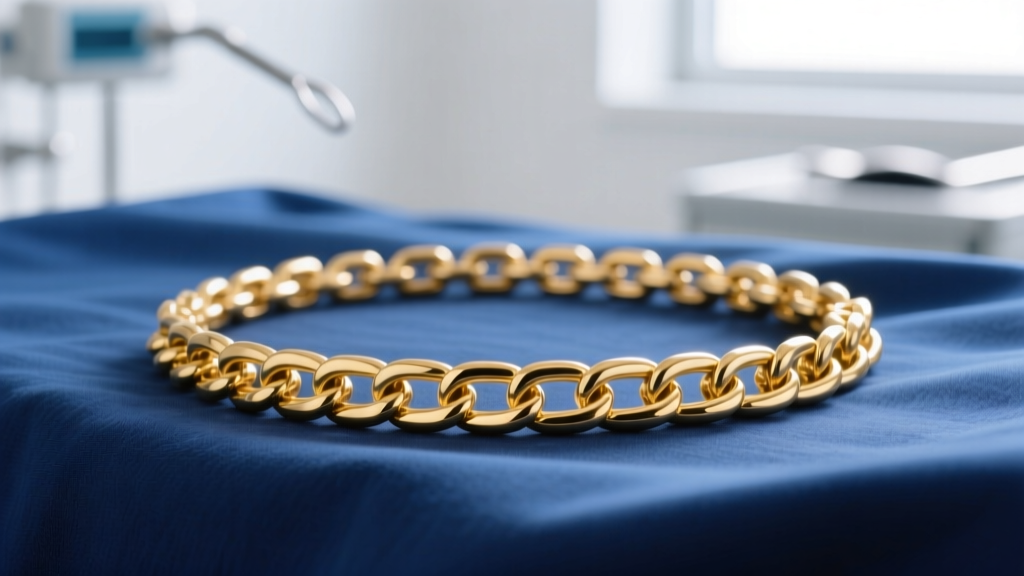
To achieve the warm, iconic yellow gold look seen on screen while surviving hospital sanitizers, 14k solid yellow gold is your optimal choice. It offers the perfect balance of durability, chemical resistance, and affordability (typically $150–$250 for a 16-inch chain). Avoid 18k gold for everyday clinical wear, as its higher pure gold content makes it softer and more prone to stretching or snapping if caught on a patient's bedrail.
| Chain Style | Width | Snag Risk | Clinical Verdict |
|---|---|---|---|
| Box Chain | 1.2mm | Very Low | Best Overall. Smooth, interlocking square links glide over nitrile gloves and sterile drapes without catching. |
| Cable Chain | 1.0mm | Low-Medium | Good. Classic and delicate, but individual oval links can bend and snag if pulled forcefully. |
| Snake Chain | 1.5mm | High | Avoid. The tight, smooth exterior catches on microscopic fabric fibers and snaps easily under tension. |
| Wheat Chain | 1.5mm | High | Avoid. Beautiful texture, but the woven links act like velcro to cotton scrubs and gauze. |
Step 2: Choosing a Snag-Free Pendant
The pendant on the necklace nurse jackie wears is never ostentatious; it sits flush and carries quiet personal significance. When selecting a pendant for clinical wear, you must eliminate any protruding elements. Traditional prong-set gemstones are a major hazard in nursing. A microscopic prong can easily tear a sterile nitrile glove, compromise a sterile field, or scratch a patient during a physical assessment.
The Solution: Bezel and Flush Settings. Opt for pendants where the gemstone or enamel is completely encased in a smooth rim of metal (bezel) or set directly into the metal surface (flush/gypsy setting). A small, bezel-set 3mm diamond or a smooth, enameled gold disc perfectly captures Jackie’s understated aesthetic while adhering to strict safety protocols. If you prefer the subtle cross pendant Jackie occasionally wore, ensure it is a solid metal casting with rounded, polished edges rather than a filigree design with sharp points.
Step 3: The Medical-Safe Layering Technique
Jackie Peyton often layered two delicate chains of varying lengths to create a textured, personalized look. However, the CDC's infection control guidelines and general hospital policies strongly discourage dangling jewelry that can swing into sterile fields or harbor pathogens. Tangling chains are also a sensory distraction during high-stress patient care.
To layer safely and effectively:
- Limit to Two Chains: A 14-inch choker length paired with a 16-inch collarbone length provides the visual depth of the TV show without excessive bulk.
- Use a Necklace Spacer Clasp: Instead of putting two separate clasps around your neck (which tangle and rub the skin raw), attach both chains to a single, flat, polished bar clasp or a figure-eight spacer. This keeps the chains perfectly parallel and prevents them from twisting during a 12-hour shift.
- Consider Permanent Jewelry: For nurses who want the layered look without the hassle of clasps or the risk of losing a chain, a welded permanent jewelry setup in 14k solid gold offers a seamless, clasp-free alternative that won't harbor bacteria in the clasp mechanism.
"In high-acuity environments, jewelry should never dictate your movement. The goal is to wear pieces that feel like a second skin—meaningful to you, but invisible to your workflow."
Adapting the Look for Different Scrub Necklines
The visual impact of the necklace nurse jackie wears changes dramatically depending on the uniform. Scrub manufacturers use varying necklines, and your chain length must be calibrated accordingly to maintain that elegant, collarbone-grazing silhouette.
- Standard V-Neck Scrubs: The most common style. A 16-inch chain will sit perfectly at the apex of the V-neck, drawing the eye without dipping into the chest area. If layering, use 14" and 16" lengths.
- Crew Neck / Mock Wrap Scrubs: These sit higher on the clavicle. A 16-inch chain will choke the neckline and hide beneath the fabric. Opt for a single 18-inch chain that rests just below the collarbone, or switch to a 14-inch choker that sits proudly above the fabric line.
- Scoop Neck Scrubs: The wide, curved neckline provides a broader canvas. This is the ideal scrub style for a three-chain layer (14", 16", and 18"), allowing you to fully replicate the bohemian-meets-clinical layering trend while keeping the longest chain safely above the sternum.
Step 4: Maintenance and Infection Control
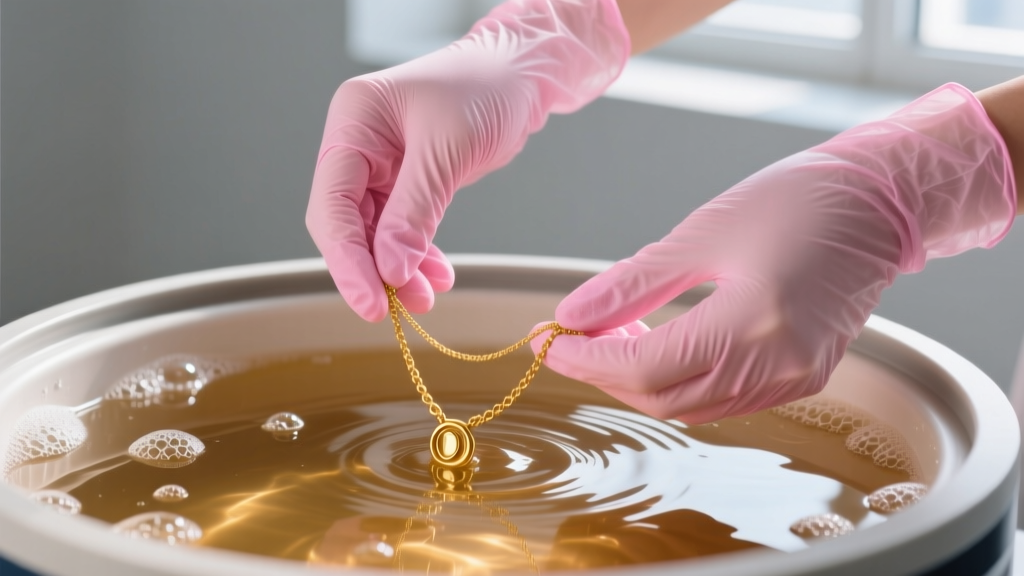
Even solid 14k gold requires maintenance when exposed to the cocktail of lotions, iodine, chlorhexidine, and sweat present in a hospital environment. Over time, a microscopic film of lotion and dead skin cells will build up in the links of your box or cable chain, dulling the gold and creating a potential reservoir for bacteria.
The Weekly Cleaning Protocol:
- Ultrasonic Cleaning: Once a week, place your necklace in a small ultrasonic jewelry cleaner with warm water and a single drop of mild, ammonia-free dish soap. The high-frequency sound waves will dislodge debris from the microscopic gaps in the chain links and bezel settings that a cloth cannot reach.
- Alcohol Wipe (With Caution): While you shouldn't soak solid gold in alcohol, wiping the clasp and the back of the pendant with a standard hospital alcohol prep pad at the end of a shift is an excellent way to sanitize the areas that touch your skin directly.
- Polishing: Use a treated jewelry polishing cloth once a month to restore the high-shine finish that catches the harsh fluorescent hospital lighting, keeping your piece looking as sharp as Jackie’s best days at All Saints' Hospital.
Final Thoughts
Recreating the necklace nurse jackie wears is about more than just copying a television costume; it is about embracing a philosophy of resilient elegance. By prioritizing 14k solid gold, selecting snag-free box chains, and utilizing flush-set pendants, you can wear a piece of personal armor that survives the rigors of modern healthcare. It is a subtle nod to one of TV's most complex nurses, adapted perfectly for the heroes working the floors today.


