How to Clean Necklace Chain: Expert Step-by-Step Guide
Learn how to clean necklace chain jewelry safely. Expert step-by-step methods for gold, silver, platinum, and vermeil to restore shine without damage.

The Metallurgy of Tarnish: Why Chains Degrade
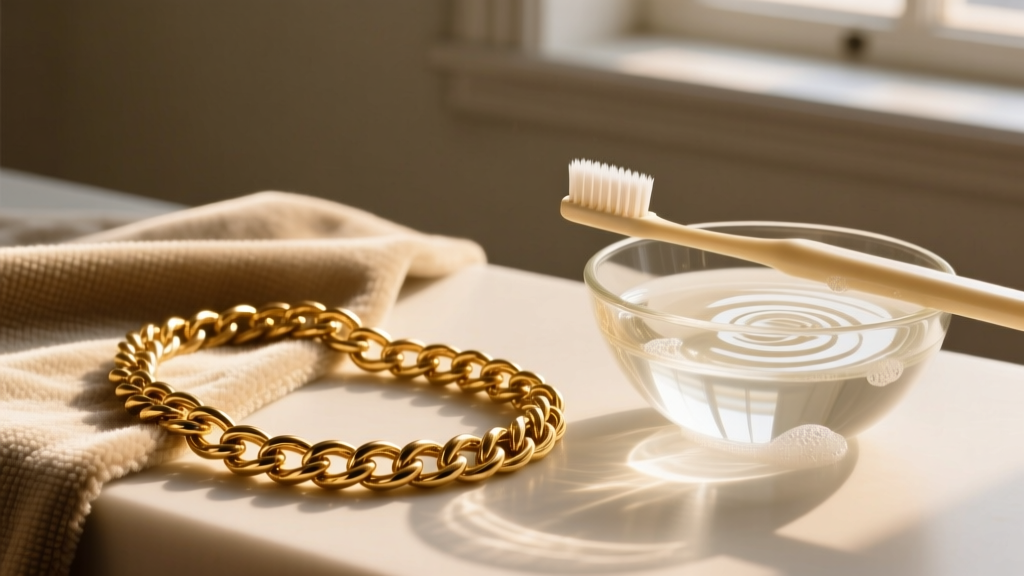
Understanding how to clean necklace chain jewelry begins with understanding the metallurgy of the piece itself. Pure 24k gold and pure platinum are highly resistant to tarnish, but they are too soft for daily wear. Therefore, jewelers alloy them with metals like copper, silver, zinc, and nickel to increase tensile strength. A standard 14k gold chain contains only 58.5% pure gold; the remaining 41.5% consists of these reactive alloys. When copper and silver are exposed to environmental sulfur, moisture, and the natural acids in human skin, they oxidize and create the dark, dull film we recognize as tarnish.
Sterling silver (925) is particularly susceptible to this chemical reaction due to its 7.5% copper content. Meanwhile, white gold chains are typically plated with rhodium to achieve a bright, silvery finish. Over time, this rhodium layer wears thin, revealing the slightly yellowish white gold alloy beneath, which many owners mistake for dirt or irreversible tarnish. When figuring out how to clean necklace chain pieces at home, identifying the exact metal composition and any surface treatments (like rhodium or gold plating) is the most critical first step to preventing catastrophic damage to the finish.
Universal Preparation: Gathering the Right Tools
Before introducing any liquids to your jewelry, you must prepare a safe workspace and gather the correct, non-abrasive tools. Avoid standard adult toothbrushes; their nylon bristles are often too stiff and can leave micro-scratches on high-polish finishes or matte-brushed surfaces.
- Cleaning Agent: Ammonia-free, phosphate-free mild dish soap (such as original Dawn).
- Water: Distilled or filtered water. Hard tap water contains dissolved calcium and magnesium that can leave stubborn mineral deposits in the crevices of intricate linkages.
- Agitation Tool: An extra-soft baby toothbrush or a dedicated, clean makeup brush with natural bristles.
- Drying Materials: Lint-free microfiber cloths and unbleached paper towels.
- Workspace: A bowl placed inside a larger basin, or a sink with a closed drain and a rubber mat to prevent accidental loss down the drain.
How to Clean Necklace Chain: Metal-Specific Protocols
There is no universal soaking method. The structural integrity of a delicate 1mm cable chain differs vastly from a solid 5mm Cuban link. Below are the precise protocols for the most common chain metals.
Solid Gold (14k, 18k) and Platinum
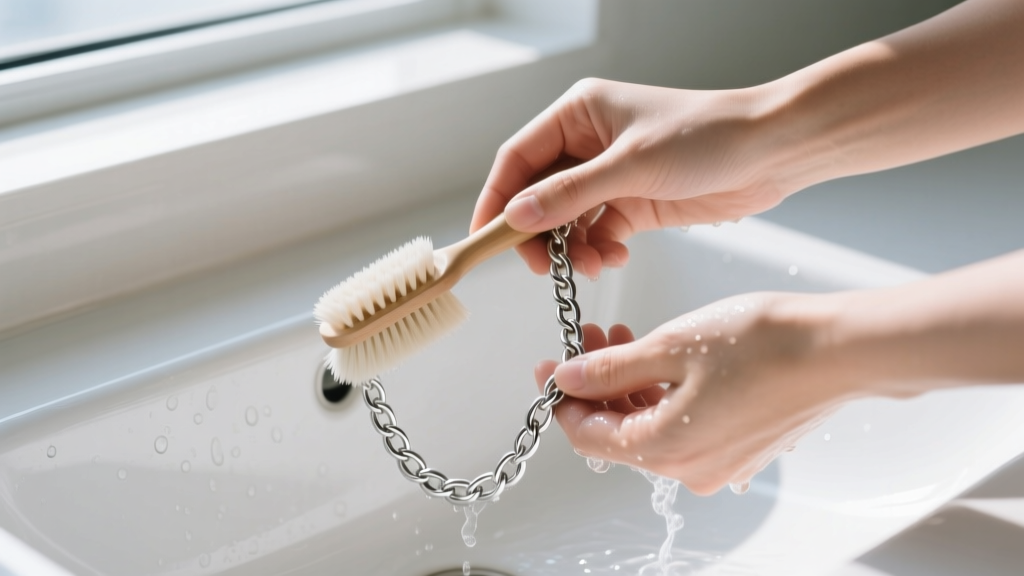
Solid gold and platinum are highly durable and can withstand gentle soaking. Add a few drops of mild dish soap to a bowl of lukewarm distilled water. Submerge the chain and let it soak for 15 to 20 minutes. This allows the surfactants in the soap to break down the lipid bonds of skin oils and lotions trapped between the links. After soaking, gently agitate the water, then use the extra-soft baby toothbrush to lightly sweep the bristles along the chain's surface. Pay special attention to the clasp mechanism and the jump rings, where debris accumulates most heavily. Rinse thoroughly under a gentle stream of lukewarm water.
Sterling Silver (925) and Argentium
For lightly soiled sterling silver, the soap-and-water method above is perfectly safe. However, for heavy black tarnish (silver sulfide), you need an electrochemical reaction rather than mechanical abrasion. Line a glass bowl with aluminum foil, shiny side up. Place the silver chain on the foil. Boil distilled water and pour it over the chain, then immediately add two tablespoons of baking soda. The chemical reaction between the aluminum, baking soda, and hot water transfers the sulfur from the silver to the aluminum foil. Leave it for 3 to 5 minutes, then remove with wooden tongs, rinse in cool distilled water, and pat dry. Note: Never use this method on oxidized silver chains where dark patina is intentionally used for contrast.
Gold Vermeil and Plated Chains
Gold vermeil consists of a thick layer of gold (minimum 2.5 microns) bonded over a sterling silver base. Standard gold-plated chains have an even thinner layer over brass or copper. Never soak vermeil or plated chains. Prolonged water exposure can seep into microscopic fissures in the plating, causing the base metal to oxidize and the gold layer to delaminate or flake. Instead, dampen a microfiber cloth with a highly diluted soapy solution, gently wipe the chain down, and immediately buff it dry with a clean, dry cloth.
Chemical Compatibility Matrix
Using the wrong chemical agent can permanently alter the surface of your chain. Refer to this compatibility matrix before applying any commercial cleaners or home remedies.
| Cleaning Agent | Solid Gold / Platinum | Sterling Silver | Vermeil / Plated | Risk Factor |
|---|---|---|---|---|
| Mild Dish Soap | Safe | Safe | Safe (Wipe Only) | Low |
| Baking Soda Paste | Avoid (Abrasive) | Use with Caution | Never | High (Scratches) |
| Ammonia Solutions | Safe (Brief Soak) | Never | Never | High (Strips Rhodium) |
| Aluminum Foil Bath | Never | Safe (Heavy Tarnish) | Never | Medium (Alters Patina) |
| Ultrasonic Cleaners | Safe (Solid Only) | Safe (Solid Only) | Never | Extreme (Link Snapping) |
Drying, Polishing, and Chain-Specific Storage
Improper drying is a leading cause of post-cleaning tarnish and water spotting. After rinsing, lay the chain flat on a clean, unbleached paper towel. Do not rub the chain vigorously, as this can cause kinking, especially in flat styles like herringbone or cobra chains. Instead, gently press another paper towel on top to absorb the bulk of the moisture.
Pro Tip: Hollow rope chains and intricate box chains trap moisture easily inside their internal cavities. After rinsing, submerge the chain briefly in a bowl of 90% isopropyl alcohol. The alcohol binds to the trapped water and evaporates rapidly, ensuring the internal links dry completely without causing rust or internal degradation.
Once completely dry, polish solid gold and platinum with a designated jewelry polishing cloth (such as a Sunshine cloth) using long, linear strokes rather than circular ones, which can create visible swirl marks. For storage, never toss multiple chains into a single compartment. The varying Mohs hardness of different metals and gemstone clasps will cause them to scratch one another. Store each chain individually in an anti-tarnish flannel pouch or a sealed ziplock bag with a 3M anti-tarnish strip to absorb ambient sulfur.
Critical Failure Modes: Methods to Strictly Avoid
According to the Gemological Institute of America (GIA), many common household cleaning hacks actually cause irreversible structural and cosmetic damage to fine jewelry. Avoid these critical failure modes at all costs:
- Toothpaste: Toothpaste contains hydrated silica, which ranks around a 7 on the Mohs hardness scale. Gold is roughly a 2.5 to 3. Scrubbing a gold chain with toothpaste is akin to sanding it with fine sandpaper; it will permanently dull the high-polish finish and create microscopic grooves that trap dirt faster in the future.
- Ultrasonic Cleaners: While excellent for solid cast rings, ultrasonic cleaners operate at frequencies between 35 and 45 kHz. These high-frequency cavitation bubbles can easily snap the delicate laser-welded links of a thin chain, shake pavé diamonds loose from their micro-prongs, and completely strip the gold plating off vermeil pieces.
- Chlorine Exposure: Chlorine (found in swimming pools and household bleach) reacts with the copper and silver alloys in karat gold to form chlorauric acid. This causes stress corrosion cracking, particularly at the solder points of the clasp and jump rings, leading to sudden chain breakage.
Long-Term Maintenance and Professional Care
The Jewelers of America recommends having your fine jewelry professionally inspected and cleaned at least once a year. While home maintenance is excellent for removing surface oils and light tarnish, a professional jeweler can utilize steam cleaners to blast away deeply embedded grime without chemical abrasion. More importantly, an annual inspection allows a jeweler to check the structural integrity of the clasp springs, ensure jump rings are properly soldered, and re-plate white gold chains with fresh rhodium when the underlying alloy begins to show through. By combining careful at-home washing with professional oversight, your necklace chains will retain their structural integrity and brilliant luster for generations.


