Cow Skull Necklace Materials: Bone, Silver & Brass Compared
Discover the best cow skull necklace materials. We compare real bone, sterling silver, and brass for weight, durability, patina, and skin safety.

The Anatomy of a Statement: Why Material Dictates the Vibe
In 2026, the cow skull necklace has fully transcended its traditional western and gothic roots, becoming a staple in avant-garde, boho-chic, and dark academia wardrobes. However, the visual impact and longevity of this striking pendant depend entirely on its material composition. Whether you are drawn to the raw authenticity of organic bone or the heirloom permanence of cast metals, understanding the physical properties of your chosen medium is critical. This guide breaks down the exact metallurgical and osteological properties of the three most popular materials used for cow skull pendants: bleached bone, 925 sterling silver, and cast brass.
Real Bone: The Organic Standard
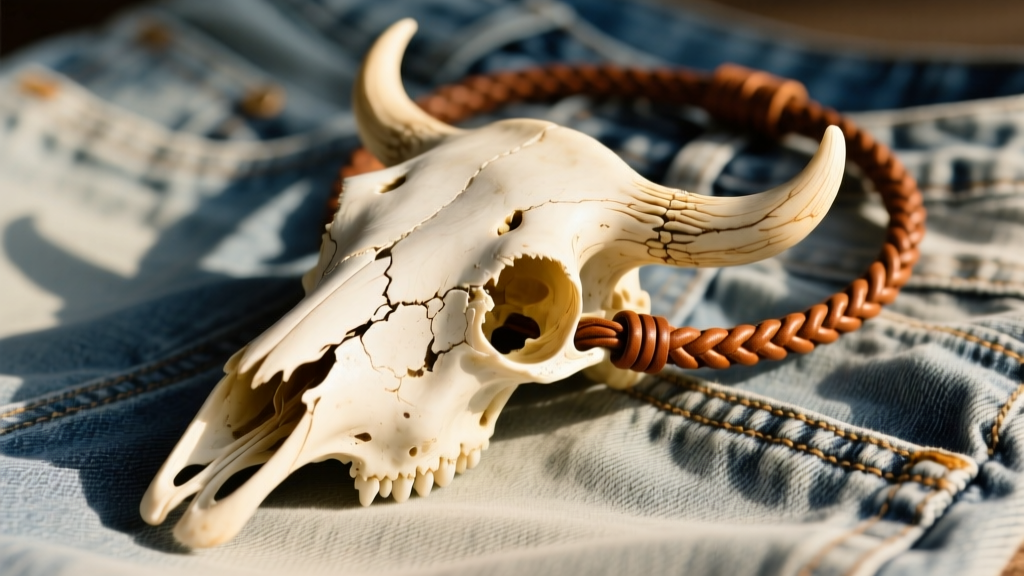
Authentic bone offers an unmatched, lightweight organic texture. The frontal and maxilla bones of a bovine skull are incredibly dense, providing a durable canvas for carving or natural display. However, working with and wearing real bone requires an understanding of its porosity and structural vulnerabilities.
Bleaching Methods and Structural Integrity
According to osteology preparation standards outlined by Bone Clones Osteology Resources, the method of bleaching drastically alters the bone's lifespan. Sun-bleached skulls retain more natural oils but may carry a subtle earthy scent and uneven coloration. Conversely, chemically bleached bone (typically using 30-volume hydrogen peroxide) achieves a stark, uniform white but becomes highly porous. This increased porosity means the bone will readily absorb sebum and sweat from your skin, eventually yellowing over time if not properly sealed. To mitigate this, high-end artisan bone jewelry is often micro-crystalline waxed (such as Renaissance Wax) to create a moisture barrier without obscuring the natural suture lines of the skull.
Weight and Sizing Realities
Bone has a relatively low density of approximately 1.8 g/cm³. A standard 1.5-inch cow skull pendant carved from solid bone will weigh a mere 8 to 14 grams. This lightweight nature makes it exceptionally comfortable for all-day wear, even on delicate chains, but it also means the material is brittle. Drill holes for bails must be created using diamond-tipped core bits with constant water lubrication; otherwise, micro-fractures will form along the nasal or frontal sutures, leading to eventual snapping under the tension of a heavy chain.
Cast Metals: Sterling Silver and Brass Breakdown
For those seeking durability and precise anatomical detailing, lost-wax cast metals are the superior choice. Metal casting allows for undercuts and deep ocular recesses that are impossible to achieve in natural bone without risking structural failure.
925 Sterling Silver: The Heirloom Standard
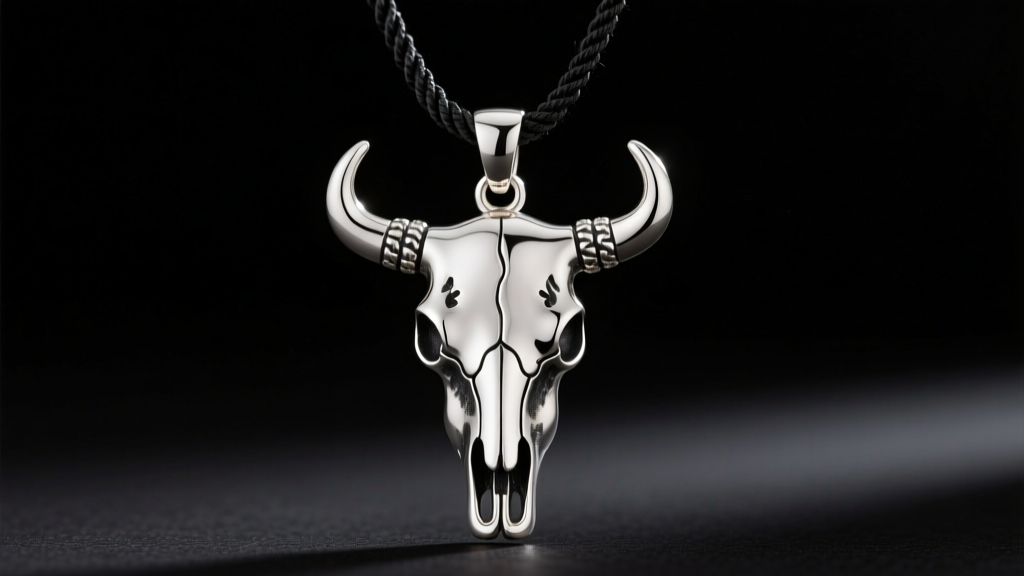
Sterling silver (92.5% pure silver, 7.5% copper or zinc alloy) is the benchmark for fine gothic and western jewelry. As detailed in Rio Grande's Metal Properties Chart, silver's density is 10.49 g/cm³—nearly six times heavier than bone. A solid 1.5-inch cast silver cow skull will weigh between 35 and 50 grams. This substantial heft provides a premium, luxurious drape but necessitates a robust chain. The 7.5% copper content in sterling silver is what causes it to oxidize and tarnish when exposed to atmospheric sulfur, allowing jewelers to apply deliberate liver of sulfur oxidation to the skull's eye sockets and teeth, creating dramatic, high-contrast shading that highlights the anatomical grooves.
Brass and Bronze: The Patina Play
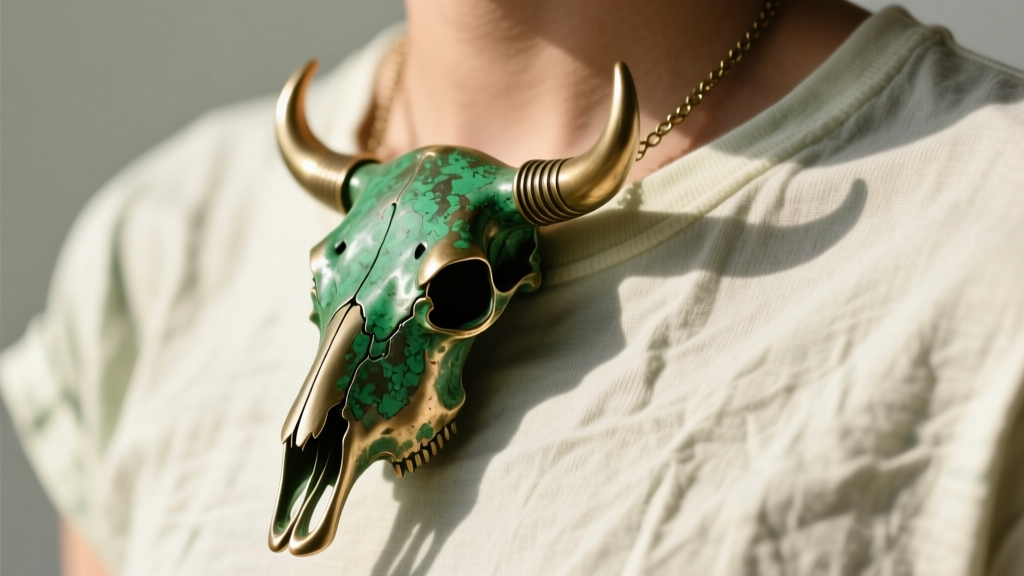
Brass (an alloy of copper and zinc) and Bronze (copper and tin) offer a warmer, earthier aesthetic that appeals to the rustic and steampunk demographics. Brass is highly malleable and captures intricate casting details beautifully. However, its high copper content (often 60-70%) makes it highly reactive to the lactic acid and urea in human sweat. This chemical reaction produces copper chloride, commonly known as verdigris, which will stain the wearer's skin green. To prevent this without sacrificing the outward patina, the back of a brass cow skull pendant should be coated with a specialized jeweler's lacquer like ProtectaClear, which cures into an invisible, skin-safe barrier.
Material Comparison Matrix
When selecting your cow skull necklace, use this data matrix to align the material properties with your lifestyle, budget, and maintenance preferences.
| Material | Density (g/cm³) | Avg. Weight (1.5" Skull) | 2026 Price Range | Maintenance Level | Skin Reaction Risk |
|---|---|---|---|---|---|
| Bleached Bone | 1.8 | 8 - 14g | $25 - $85 | High (Requires waxing) | None |
| 925 Sterling Silver | 10.49 | 35 - 50g | $120 - $350 | Low (Polishing cloth) | None (Hypoallergenic) |
| Cast Brass | 8.50 | 28 - 40g | $45 - $110 | Medium (Lacquering) | High (Green staining) |
| 3D Printed Resin | 1.15 | 5 - 8g | $15 - $40 | Low | Low (UV degradation) |
Hardware, Bails, and Chain Pairing
The failure point of most heavy pendants is not the skull itself, but the hardware connecting it to the chain. The Canadian Conservation Institute (CCI) notes that organic materials like bone are highly susceptible to stress fracturing at suspension points.
- For Bone Skulls: Avoid standard metal jump rings that pinch the drill hole. Instead, use a wide, smooth bale or thread the skull directly onto a 3mm to 4mm braided leather cord or waxed cotton rope. This distributes the kinetic energy of the pendant's swing across a wider surface area.
- For Silver and Brass Skulls: Cast metal skulls typically feature integrated metal loops or soldered 14-gauge sterling silver bails. These can easily support heavy metallic chains. Pair a 40-gram silver skull with a 3mm to 4mm Figaro, Cuban, or Rope chain. Anything thinner (like a 1.5mm snake chain) will eventually kink and snap under the pendulum effect of the heavy skull.
Care and Longevity Protocols
Maintaining a cow skull necklace requires material-specific care. If your bone pendant begins to yellow from skin oils, a gentle wipe with a barely damp microfiber cloth followed by a reapplication of micro-crystalline wax will restore its stark white finish. Never submerge bone in water, as the absorption and subsequent drying cycle will cause the maxilla suture lines to split.
For sterling silver, keep a treated silver polishing cloth on hand to remove sulfur tarnish from the high points of the skull, leaving the oxidized recesses dark for maximum anatomical contrast. Brass wearers should monitor the jeweler's lacquer on the back of the piece; once it begins to wear thin (usually after 12 to 18 months of daily wear), it must be cleaned with acetone and reapplied to prevent copper-sweat reactions.
"The true art of wearing a cow skull necklace lies in respecting the material. Bone demands gentle, organic pairings like leather and cotton, while cast metals invite the heavy, industrial drape of thick silver chains. Match your hardware to your medium, and the piece will outlast fleeting trends."


